Sydney Harbour Bridge
De imposante granieten pijlers aan elke hoek van de Sydney Harbour Bridge lijken integraal deel uit te maken van de structuur.
Volledig verhaal ontgrendeld in de tour
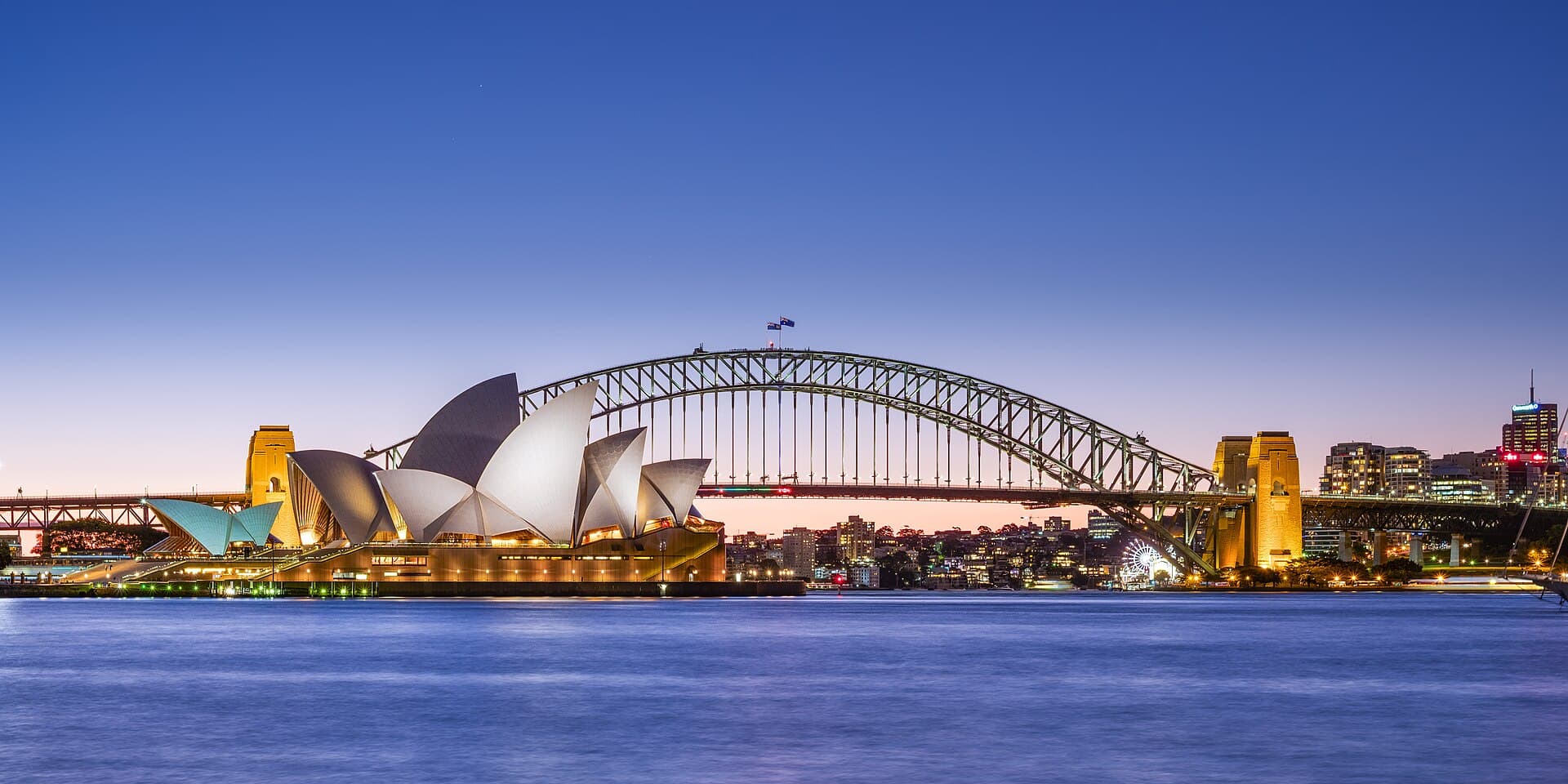 Benh LIEU SONG (Flickr) / CC BY-SA 4.0, via Wikimedia Commons
Zelfgeleide audiowandeling door Sydney — GPS-route, offline afspelen, meeslepende vertelling in 32 talen.
“Voorbij de iconische zeilen, een stad van onverwachte diepten.”
Niet de ansichtkaarten. De verhalen die zelfs locals niet kennen — gefluisterd in je oor, precies waar ze gebeurden.
De imposante granieten pijlers aan elke hoek van de Sydney Harbour Bridge lijken integraal deel uit te maken van de structuur.
Deze grandioze 19e-eeuwse winkelpassage, nu gevuld met luxe winkels, heeft bijna een heel ander lot ondergaan.
De prominente neogotische kathedraal van Sydney is een bewijs van blijvend geloof, maar de bouw ervan kende een vurig tegenslag.
Ontdek elk geheim van Sydney
Elk adres, elke onthulling volledig — in je oor, precies waar het gebeurde.
Jij kiest je stops. Jij wandelt. De stem onthult wat de anderen missen.
Je zelfgeleide audiotour van Sydney is klaar — kies je bezienswaardigheden, kies je taal en start zodra je aankomt.
KopenLume heeft een ingebouwde augmented-reality-gids. Houd je telefoon omhoog: de camera toont de straat voor je, met een oplichtende pijl over het echte beeld die altijd naar je volgende stop wijst — geen kaart om uit te puzzelen, geen verkeerde afslagen. Zoals alles in Lume werkt het volledig offline.
Sydney, de hoofdstad van New South Wales, is de grootste stad van Australië en een belangrijk internationaal centrum voor cultuur en financiën. Het is een stad die wordt gekenmerkt door zijn opmerkelijke natuurlijke haven, die kapitein Arthur Phillip, bij zijn aankomst in 1788, omschreef als "de mooiste haven ter wereld." Deze vochtige subtropische stad, met zijn milde winters en warme zomers, biedt een boeiende mix van architectonische bezienswaardigheden, uitgestrekte stranden en een levendige stedelijke ervaring.
Van het wereldwijd erkende Sydney Opera House en de imposante Harbour Bridge tot de gouden stroken van Bondi Beach, Sydney presenteert een boeiend scala aan bezienswaardigheden. Het uitgebreide openbaarvervoersysteem van de stad, inclusief veerboten, treinen en bussen, zorgt voor gemakkelijke navigatie door de diverse wijken en kustpaden. Of u nu op zoek bent naar buitenavontuur, culturele onderdompeling of gewoon een ontspannen sfeer, Sydney belooft een dynamische en memorabele reis.
Het verhaal van Sydney strekt zich tienduizenden jaren terug, lang voor de Europese vestiging. Aboriginal Australiërs bewoonden de regio Sydney al minstens 30.000 jaar, met bewijs van menselijke activiteit dat ongeveer 45.000 tot 50.000 jaar teruggaat. De traditionele beheerders van het land waar het moderne Sydney nu staat, zijn de Darug, Dharawal en Eora volkeren, die zichzelf onderhielden door vissen, jagen en verzamelen.
De Europese geschiedenis begon in 1770 toen kapitein James Cook de oostkust van Australië in kaart bracht en de Britse claim op New South Wales vestigde. Achttien jaar later, in januari 1788, arriveerde de Eerste Vloot, onder commando van kapitein Arthur Phillip, in Botany Bay. De vloot, bestaande uit meer dan duizend kolonisten, waaronder 736 veroordeelden, verhuisde al snel naar het meer geschikte Port Jackson en vestigde zich op 26 januari 1788 in Sydney Cove. Gouverneur Phillip riep op 7 februari 1788 formeel de kolonie New South Wales uit.
Sydney werd in 1842 tot stad verklaard en een lokale overheid werd opgericht. De ontdekking van goud in New South Wales in 1851 bracht verhoogde immigratie en welvaart, hoewel Melbourne Sydney gedurende deze periode kortstondig overtrof als de grootste stad van Australië. De late 19e eeuw zag aanzienlijke stedelijke ontwikkeling, met investeringen in infrastructuur zoals spoorwegen, trams, wegen en openbare gebouwen. Structuren uit deze periode zijn de Universiteit van Sydney (1854–61), het Australian Museum (1858–66), het Stadhuis (1868–88) en het Algemene Postkantoor (1866–92). Het Queen Victoria Building, ontworpen door George McRae in Romanesque Revival-stijl, werd voltooid in 1898 en diende oorspronkelijk als gemeentelijke markthal.
In 1901 fuseerden de Australische koloniën tot het Gemenebest van Australië, en Sydney werd de hoofdstad van New South Wales. Na de Tweede Wereldoorlog kende Sydney massale migratie, en in 2021 was meer dan 40% van de bevolking in het buitenland geboren, wat de culturele structuur verrijkte. De stad heeft talrijke internationale evenementen georganiseerd, waaronder de Olympische Zomerspelen van 2000, wat haar status als wereldstad verstevigde.
Sydney biedt een schat aan bezienswaardigheden, van architectonische wonderen tot de ruige schoonheid van zijn kustlijn. Het Sydney Opera House, een UNESCO Werelderfgoedlocatie, nodigt uit tot verkenning, met rondleidingen die de geschiedenis en operationele complexiteit ervan onthullen. Vlakbij kan de Sydney Harbour Bridge, liefkozend bekend als de 'kapstok', te voet worden overgestoken voor een weids uitzicht over de stad en de haven. Voor avonturiers biedt een BridgeClimb een opwindende klim naar de top van de boog.
Verken het The Rocks district, de locatie van de eerste Europese nederzetting van Australië, dat een tastbare verbinding biedt met het koloniale verleden van Sydney. Voor een mix van winkelen en architectonische grandeur, bezoek het Queen Victoria Building (QVB), een meesterwerk in Romanesque Revival-stijl met meer dan 180 winkels, cafés en restaurants. De Sydney Tower Eye biedt een 360-graden uitzicht over de stad, dat op een heldere dag reikt tot aan de Blue Mountains.
Buiten het stadscentrum is de Bondi to Coogee Coastal Walk een populaire 6 km lange klifwandeling met weidse uitzichten over de oceaan, stranden, parken en rotspartijen. Voor een rustig uitje biedt de Royal Botanic Garden diverse plantencollecties en uitzichten op de haven. De neogotische architectuur van St Mary's Cathedral, de langste kerk van Australië, staat indrukwekkend naast Hyde Park. Tot slot biedt Government House, een residentie in neogotische stijl met kantelen, inzicht in de vice-koninklijke geschiedenis van de staat en is gelegen in zorgvuldig onderhouden tuinen.
Sydney heeft een gematigd klimaat met vier verschillende seizoenen. De overgangsseizoenen lente (september tot november) en herfst (maart tot mei) worden over het algemeen beschouwd als de meest aangename tijden om te bezoeken. Gedurende deze periodes zijn de temperaturen mild en comfortabel, zijn de drukte kleiner dan in de piek van de zomer, en vinden er vaak diverse festivals en evenementen plaats. De lente biedt bloeiende tuinen en minder regen, terwijl de herfst aangenaam weer biedt voor sightseeing, hoewel met een grotere kans op buien.
Zomer (december tot februari) is hoogseizoen, met hete, vochtige dagen en drukke activiteiten, vooral rond Kerstmis en Oud en Nieuw, met gemiddelde temperaturen variërend van 18,6 - 25,8°C (65,5 - 78,4°F). Winter (juni tot augustus) is mild, met gemiddelde temperaturen tussen 8,8 - 17°C (47,8 - 62,6°F), minder drukte en meer betaalbare accommodatie.
Het openbaar vervoersysteem van Sydney is uitgebreid en omvat bussen, treinen, metro, lightrail en veerboten. Om het netwerk te doorkruisen, kunnen bezoekers een Opal card aanschaffen of een contactloze creditcard, bankpas of mobiel apparaat gebruiken om in en uit te checken. Opal cards zijn verkrijgbaar bij krantenwinkels, buurtwinkels, supermarkten en Sydney Airport. De Trip Planner tool is nuttig voor het plannen van routes.
Treinen zijn efficiënt voor reizen door de stad en naar buitenwijken, met de City Circle lijn die belangrijke locaties verbindt zoals Circular Quay, Town Hall en Central Station. Bussen bieden een uitgebreide dekking, inclusief routes naar stranden zoals Bondi, met sommige diensten die 24 uur per dag rijden. Lightrail biedt een soepele rit voor kortere afstanden en verbindt gebieden zoals Darling Harbour en Chinatown. Veerboten bieden een schilderachtige manier om Sydney Harbour te verkennen en verbinden met bestemmingen zoals Manly. Taxi's en rittendiensten zijn ook gemakkelijk beschikbaar.
Sydney — Koreaans, Chinees, Hebreeuws en nog 29 talen, elke stop verteld door een moedertaalspreker. Het grootste taalaanbod van alle zelfgeleide audiotours.
Beschikbaar in: