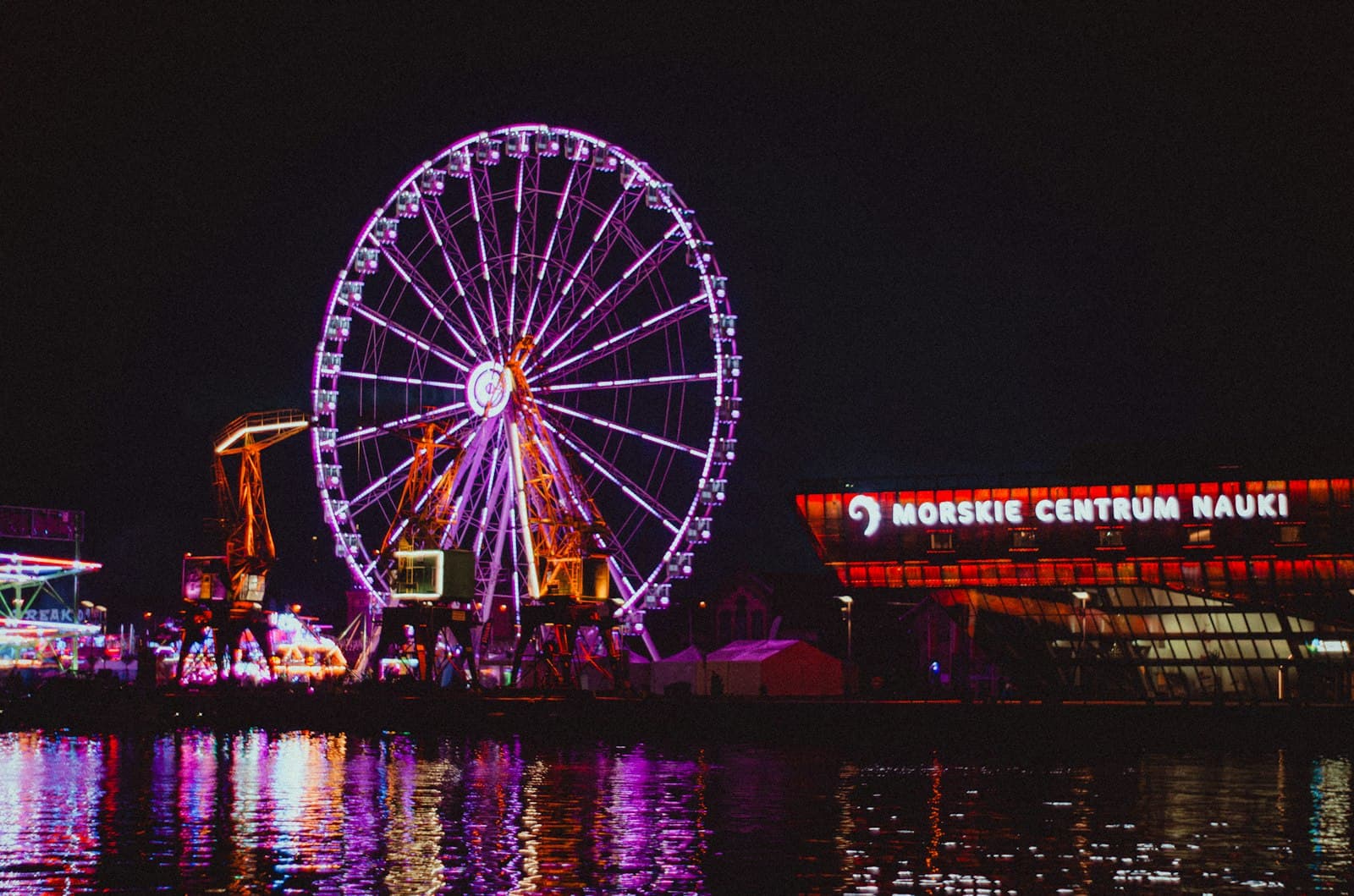
Szczecin, PolandSzczecinolog / CC BY-SA 4.0, via Wikimedia Commons
PL

Szczecin

Where the currents of history meet the pulse of the present.

The secrets of Szczecin

Szczecin, as no one tells it.

Not the postcards. The stories even locals don't know — whispered in your ear, right where they happened.

3 secrets below. Many more wait inside the tour.
Pomeranian Dukes' Castle

This castle, a symbol of Szczecin, once sheltered a figure who would alter the course of European history, though her early days here are often forgotten.

Full story unlocks in the tour
Archcathedral Basilica of St. James the Apostle

Observe the grand organs within Szczecin's soaring cathedral. Their construction defies expectation, appearing to float.

Full story unlocks in the tour
Central Cemetery

Szczecin's Central Cemetery is more than a burial ground; it is a thoughtfully designed expanse with a distinctive approach to remembrance.

Full story unlocks in the tour
The full tour

Discover every secret of Szczecin

Every address, every reveal in full — in your ear, right where it happened.

Get the key to Szczecin

You pick your stops. You walk. The voice reveals what the others miss.

Choose your time

How long do you have in Szczecin?

No tours available yet. Check back soon — we're preparing them.

About Szczecin

The story of Szczecin

Szczecin, historically known as Stettin, is a significant port city in northwestern Poland, situated along the Oder River, south of the Szczecin Lagoon and the Bay of Pomerania. As the capital of the West Pomeranian Voivodeship, it stands as the largest city in its region and the seventh-largest in Poland. The city's distinctive geography includes its location on both sides of the Oder and several substantial islands between the river's branches, encircled by dense forests, shrubland, and heaths. Often described as a compelling beauty, Szczecin offers a captivating blend of historical depth, scenic river vistas, and a singular atmosphere that continues to evolve.

While portions of Szczecin's medieval core suffered extensive damage during World War II, the city has been reconstructed, preserving its unique character and alluring charm. Its urban planning, with star-shaped squares and diverging avenues, has drawn comparisons to Paris, influenced by Baron G.E. Haussmann's concepts. Beyond its architectural appeal, Szczecin is a city profoundly connected to water and green spaces, with rivers, lakes, woods, and parks comprising half of its area. This makes it an engaging destination for those seeking a mix of cultural exploration and natural splendor.

History

## From Slavic Stronghold to Hanseatic Power Szczecin's recorded history traces back to the 8th century, when West Slavs and Vikings settled in Pomerania, establishing a fortified settlement on the site of the modern castle. By the 10th century, this area became part of the emerging Polish state under Mieszko I. The city was granted a town charter in 1243, modeled after the Magdeburg Charter, under Duke Barnim I the Good. During the 13th and 14th centuries, Szczecin thrived as a member of the Hanseatic League, primarily engaging in grain and fish trade. This period saw the construction of notable Gothic architecture, including the Old Town Hall and several churches, which are now part of the European Route of Brick Gothic.

## Shifting Powers and Prussian Fortification Over centuries, Szczecin, also known as Stettin, was under the authority of various powers, including Poland, the Duchy of Saxony, the Holy Roman Empire, and Denmark. From 1630, it came under the control of the Swedish Empire, serving as the capital of Swedish Pomerania until 1720. In 1720, Frederick William I of Prussia acquired Szczecin, transforming it into a formidable Prussian fortress with extensive defenses built between 1724 and 1740. This military focus, however, constrained the city's urban development for a significant period. During the 19th century, Szczecin evolved into a major industrial port, with its spatial development following a classical, geometrical town planning pattern, featuring radial squares and eclectic tenement houses influenced by Berlin's architecture.

## World Wars and Polish Identity The 20th century brought significant upheaval. During World War II, Szczecin endured heavy damage from Allied air raids. Following the Potsdam Conference in 1945, the city was assigned to Poland as compensation for its eastern territories lost to the Soviet Union. The official takeover by Polish administration occurred on July 5, 1945, and the city was renamed Szczecin. In the post-war era, Szczecin played a crucial role in Polish history, being the site of large protests in 1970 and 1980 that contributed to the rise of the Solidarity movement and ultimately the fall of communism in Poland. Today, Szczecin is the administrative and industrial center of the West Pomeranian Voivodeship and hosts the headquarters of NATO's Multinational Corps Northeast.

What to see

Begin your exploration at the Pomeranian Dukes' Castle, a Renaissance complex with Gothic origins that once housed the Griffin dynasty. Explore its courtyards, decorative facades, and ascend a tower for expansive city views. Nearby, the Archcathedral Basilica of St. James the Apostle is a Gothic marvel and the second tallest church in Poland, offering an elevator ride to its viewing platform for sweeping panoramas.

Walk along the Wały Chrobrego (Chrobry Embankment), a grand urban and architectural complex from the early 20th century, providing excellent views across the Oder River. Here, you will find impressive buildings like the National Museum and the Maritime University. For a distinctive perspective of Szczecin, consider an Oder River harbor cruise, passing by the Embankment, Old Town, and shipyards.

Delve into Szczecin's modern history at the Dialogue Centre Upheavals, an award-winning underground exhibition focusing on the city's social protests and journey to Polish independence. For a serene yet thought-provoking experience, visit the Central Cemetery, one of Europe's largest, designed as a park with historical tombs and abundant greenery. Observe the distinctive Szczecin Philharmonic building, often likened to an iceberg for its unique form. For a taste of local flavor, seek out a traditional pasztecik, a deep-fried pastry, a true culinary emblem of the city.

When to visit

The most pleasant time to visit Szczecin for warm-weather activities is from mid-June to late August, when average daily high temperatures exceed 66°F (19°C). July is the warmest month, with an average high of 73°F (23°C). This period is ideal for outdoor pursuits, river cruises, and enjoying the city's many parks. Summer also brings lively festivals and extended daylight hours.

Alternatively, spring (March to May) offers mild weather and blooming gardens with fewer crowds, while autumn (September to November) presents beautiful foliage and cultural events with cooler temperatures. Even winter holds its own appeal, with festive markets and inviting indoor attractions for budget-conscious travelers.

Practical

Szczecin is well-served by public transport, primarily buses and trams. Tickets can be acquired at kiosks, ZDiTM cash offices, ticket machines found throughout the city or in most vehicles, or via mobile apps such as Szczecin Mobile City Card, moBiLET, SkyCash, zbiletem, and Jakdojade. Single-fare time tickets are available for various durations, from 15 minutes to 24 hours, with specific regulations for night lines. A Szczecin Tourist Card can provide free public transport and reductions at various attractions.

The city also offers a 24/7 automatic bicycle rental system, Bike_S, which includes GPS-equipped bikes that can be rented and returned outside designated zones for an additional charge. For longer distances or convenience, taxi services are readily available, and ride-sharing apps like Bolt, Uber, and Free Now operate in the city. The local currency is the Polish Złoty (PLN).

Good to know
What is Szczecin known for?
Szczecin is recognized for its significant seaport, its distinctive urban planning with star-shaped squares reminiscent of Paris, its extensive history under various rulers, and its blend of architectural styles from Gothic to Renaissance and modern.
Is Szczecin a walkable city?
While Szczecin's points of interest are distributed across an area of about 10 km², making it not entirely walkable, public transport (buses and trams) is well-established and efficient for navigating the city.
What currency is used in Szczecin?
The currency used in Szczecin, as throughout Poland, is the Polish Złoty (PLN).
What language is spoken in Szczecin?
The official language spoken in Szczecin is Polish. However, due to its proximity to Germany and its historical ties, German may also be understood in some areas. English is increasingly common in establishments catering to visitors.
Is Szczecin good for a weekend trip?
Yes, Szczecin can be an excellent destination for a weekend trip, offering enough attractions to experience the city's atmosphere and key sights in 48 hours, with many cultural events and culinary experiences available.
Are there any natural attractions near Szczecin?
Yes, Szczecin is surrounded by diverse natural landscapes, including dense forests, shrubland, and heaths. The Baltic Sea coast, including places like Międzyzdroje and Świnoujście, and Wolin Island with its National Park, are easily accessible by public transport or car.
Szczecin
From€9.00
No booking · activate anytime · 12h to walk it
Get the key to Szczecin