Tashkent Metro Stations
Beneath Tashkent's busy streets resides a subterranean art gallery, a world once unrevealed to cameras.
Full story unlocks in the tour
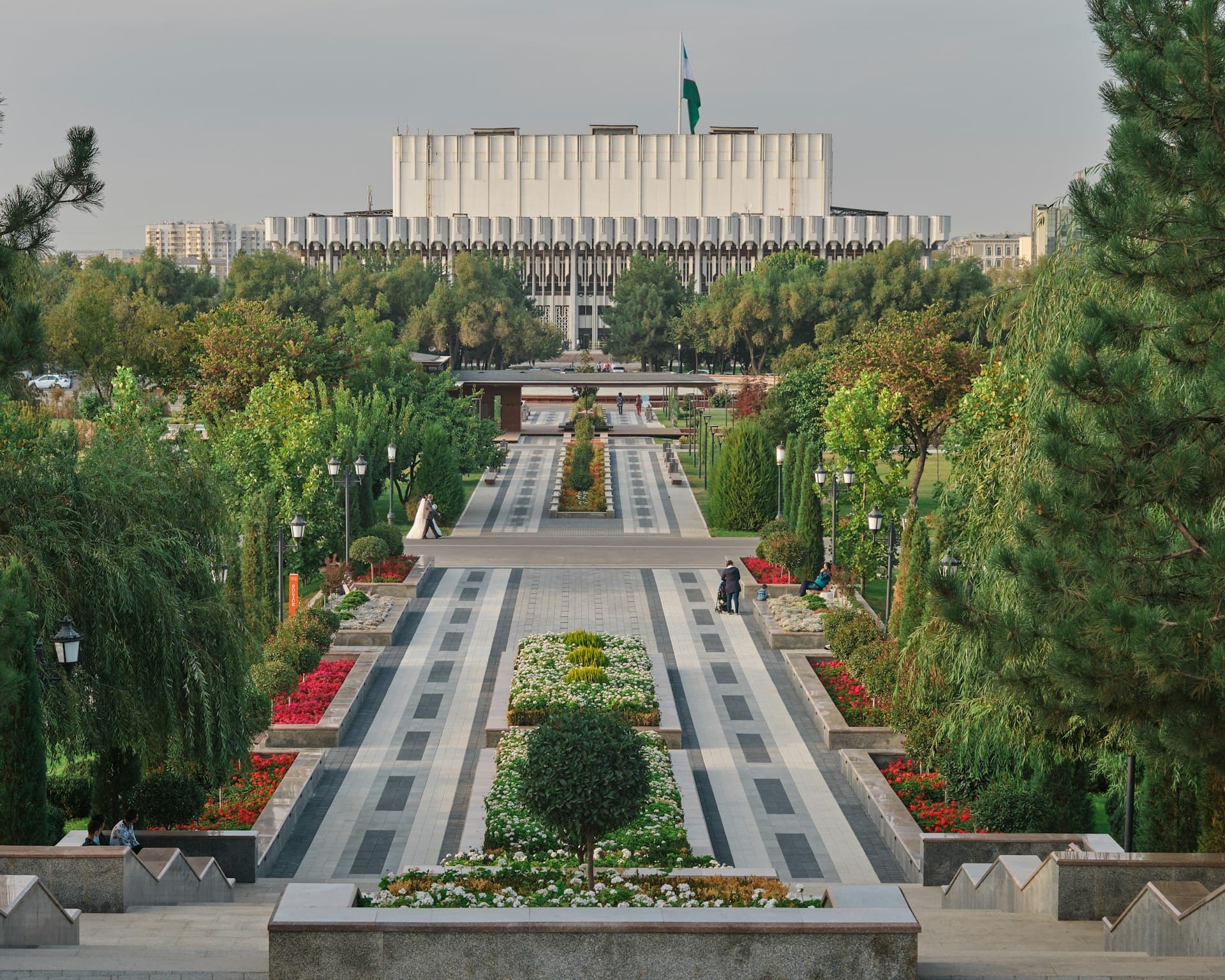 Photo: Far Chinberdiev / Unsplash
“Tashkent: Where ancient Silk Road echoes meet Soviet grandeur and a modern pulse.”
Not the postcards. The stories even locals don't know — whispered in your ear, right where they happened.
Beneath Tashkent's busy streets resides a subterranean art gallery, a world once unrevealed to cameras.
The striking blue-domed Chorsu Bazaar conceals an architectural narrative, a testament to endurance and clever design.
Uzbekistan's national dish, plov, is prepared in Tashkent as both a culinary spectacle and an engineering marvel.
Discover every secret of Tachkent
Every address, every reveal in full — in your ear, right where it happened.
You pick your stops. You walk. The voice reveals what the others miss.
No tours available yet. Check back soon — we're preparing them.
Tashkent, the capital of Uzbekistan, stands as Central Asia's largest and most populous city, a dynamic metropolis where over 3.1 million people reside as of July 1, 2025. Situated in the northeastern part of the country, within the Chirchiq River valley, the city has long served as a crucial intersection of cultures, goods, and ideas along the ancient Silk Road. This lively urban center offers a compelling blend of historical depth and modern development, presenting a unique architectural blend that weaves together medieval structures, elegant European designs from the Russian Turkestan era, Soviet-era concrete buildings, and contemporary glass-and-steel towers.
Often serving as the entry point to Uzbekistan for international travelers, Tashkent invites exploration beyond its role as a transit hub. The city, whose name translates to "Stone City" from Turkic languages, possesses a documented history spanning over 2,200 years. Despite extensive reconstruction after a devastating earthquake in 1966, which reshaped much of its urban landscape, Tashkent retains fragments of its ancient past while embracing its identity as a forward-looking capital. It is a city that continually reinvents itself, offering visitors a compelling glimpse into its layered identity.
Tashkent's history extends back over two millennia, with its earliest mentions appearing in Chinese chronicles from the 2nd century BCE, referring to it as Yueni or Shi. The territory was also known as Chach or Shash, a name reflected in earlier forms like Chachkent or Shashkent. By the 11th century, the name Tashkent, meaning "Stone City," had become established, possibly symbolizing the resilience of its inhabitants or the use of stone in its construction.
Throughout its long history, Tashkent thrived as a trade and handicraft center on the caravan routes connecting East and West. It experienced a succession of rulers and influences, including the Arabs in the 8th century, who brought Islam to the region. Following periods under various Muslim dynasties, the city fell to the Mongols in the early 13th century, an event that led to a period of decline before its rebuilding and resurgence. The Timurid Empire, under Amir Temur (Tamerlane), saw Tashkent transform into a significant fortress and trading post in the 14th and 15th centuries.
In the 19th century, Tashkent became part of the Khanate of Kokand before being captured by the Russian Empire in 1865. Under Russian rule, it was established as the administrative center of Russian Turkestan, leading to the development of a "New Town" alongside the older native city. The Soviet era brought significant growth and demographic changes, including forced deportations. A pivotal moment in modern Tashkent's history was the devastating 1966 earthquake, which destroyed much of the city and left 300,000 residents without homes. The subsequent rebuilding efforts, supported by the entire Soviet Union, transformed Tashkent into a model Soviet city with wide streets, parks, and monumental plazas. Since Uzbekistan's independence in 1991, Tashkent has continued to evolve as the capital of a sovereign state, blending its diverse historical layers into its contemporary identity.
Begin your exploration at the Chorsu Bazaar, a sprawling market beneath an iconic blue dome where you can immerse yourself in local life, sample spices, dried fruits, and freshly baked non bread. Nearby, visit the Hazrati Imam Complex (Khast Imam), the spiritual center of Tashkent, home to beautiful mosques, madrasahs, and the revered 7th-century Uthman Quran. The Tashkent Metro is an essential experience, with each station displaying unique Soviet-era architectural designs, often compared to underground art galleries.
For expansive city views, ascend the Tashkent Television Tower, one of Central Asia's tallest structures. Wander through Amir Temur Square, a central point featuring a statue of the historical figure Amir Temur, surrounded by significant buildings. The State Museum of Applied Arts offers a rich collection of Uzbek handicrafts, textiles, and ceramics. For a taste of Uzbekistan's national dish, make your way to the Besh Qozon Plov Center, where you can observe massive kazans (cauldrons) of plov being prepared.
The ideal times to visit Tashkent are during the spring (March to May) and autumn (September to November). Spring offers mild temperatures, blossoming parks, and a lively atmosphere, with average daytime temperatures ranging from 15°C to 25°C. Autumn also provides pleasant weather, with temperatures between 10°C and 20°C, and is known for its abundant harvest of fruits. Summers (June to August) can be intensely hot, with temperatures often exceeding 40°C, while winters (December to February) are cold with occasional snowfall.
The local currency is the Uzbekistani Sum (UZS). While ATMs are available in tourist areas, it is wise to carry cash as many local markets and smaller establishments may not accept cards. Exchange offices are located at the airport, hotels, and banks. When exchanging money, ensure banknotes are in good condition.
Navigating Tashkent is convenient with a network of taxis, buses, and the metro. For taxis, it is recommended to use official services or ride-hailing apps like Yandex Go or MyTaxi, and always agree on the fare beforehand to avoid inflated prices. The Tashkent Metro is efficient, affordable, and a sight in itself. It is a legal requirement to carry your passport at all times. Dress modestly, especially when visiting religious sites. Tap water quality can vary, so it is best to drink bottled or boiled water.