Las Rocas Pintadas (Les Pierres Bleues)
Imagina un vasto y árido paisaje salpicado de rocas colosales, pero con un sorprendente toque de color.
La historia completa se desbloquea en el tour
 rob Stoeltje / CC BY 2.0, via Wikimedia Commons
Tour de audio autoguiado de Tafraout — ruta GPS a pie, reproducción offline, narración en 32 idiomas.
“Donde las montañas rosadas se encuentran con tradiciones ancestrales.”
No las postales. Las historias que ni los locales conocen — al oído, justo donde ocurrieron.
Imagina un vasto y árido paisaje salpicado de rocas colosales, pero con un sorprendente toque de color.
El precioso aceite de argán, a menudo llamado 'oro líquido', es un básico marroquí, pero su creación tradicional implica un participante inesperado.
Cada febrero, un tranquilo valle cerca de Tafraout experimenta una sorprendente y fragante transformación.
Descubre todos los secretos de Tafraout
Cada dirección, cada revelación al completo — a tu oído, justo donde ocurrió.
Eliges tus paradas. Caminas. La voz te revela lo que los demás ignoran.


Tu tour de audioguía por Tafraout te espera — elige tus lugares, tu idioma y empieza al llegar.
ComprarLume incluye una guía de realidad aumentada. Levanta el móvil y su cámara muestra la calle que tienes delante, con una flecha luminosa sobre la imagen real que siempre apunta a tu próxima parada — sin mapas que descifrar, sin giros equivocados. Como todo en Lume, funciona completamente sin conexión.
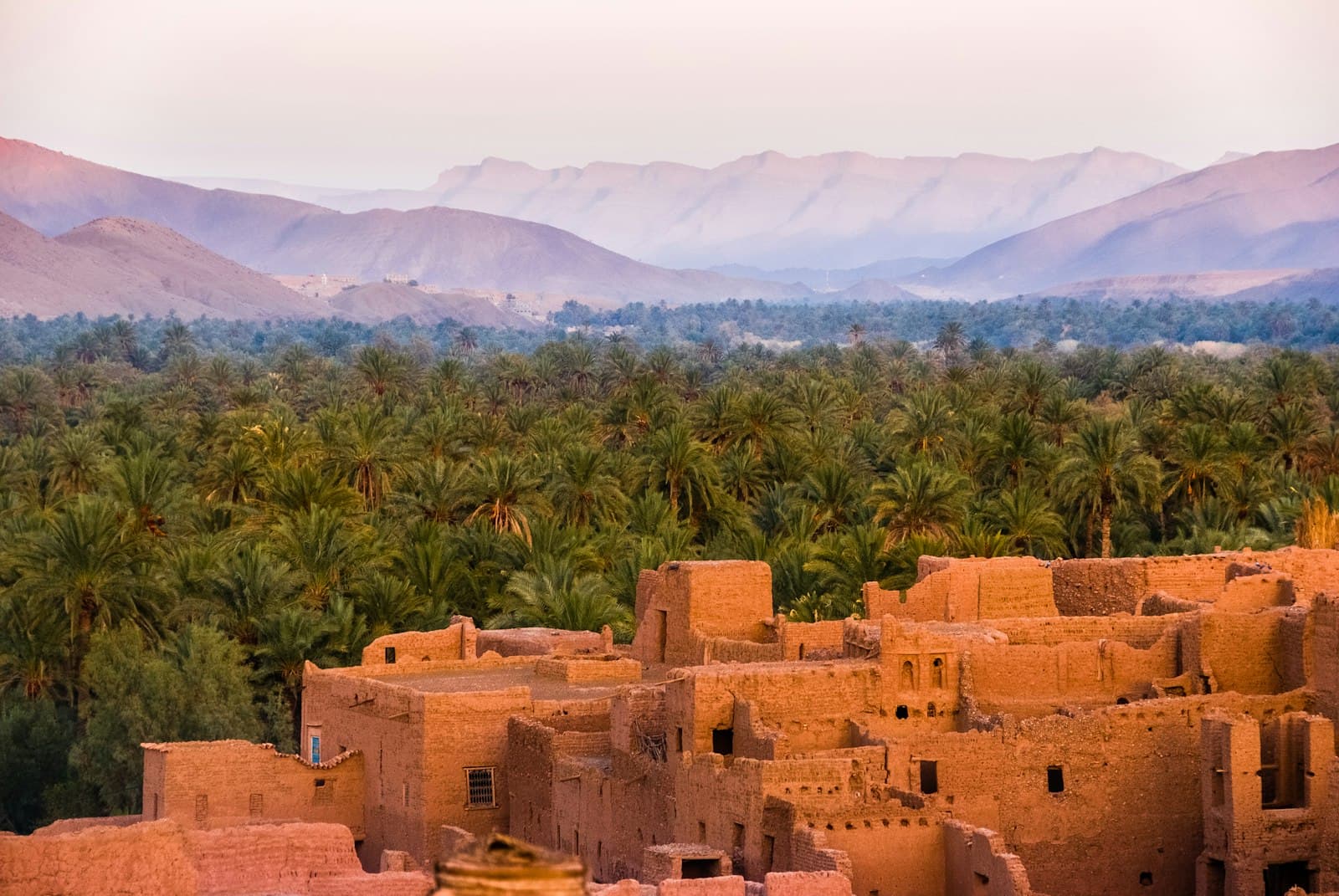
Tafraout, un pueblo sereno en las montañas del Anti-Atlas de Marruecos, ofrece una auténtica escapada de los centros turísticos más bulliciosos del país. A una altitud de aproximadamente 1.200 metros, el pueblo está acunado en un valle en forma de cuenca, abrazado por imponentes montañas de granito que adquieren un distintivo tono rosado, especialmente al amanecer y al atardecer. Esta ubicación relativamente aislada ha permitido a Tafraout mantener su carácter único, proporcionando un refugio pacífico que se siente en gran parte intacto por el turismo masivo.
La región es un bastión de la cultura amazigh (bereber), conocida por la calidez y hospitalidad de su gente. Los visitantes pueden explorar casas tradicionales de adobe, aprender sobre artesanías locales como la marroquinería y la producción de aceite de argán, y experimentar un ritmo de vida más lento. Tafraout no es solo un destino; es una experiencia inmersiva que combina la autenticidad cultural con paisajes naturales dramáticos, invitando a los viajeros a descubrir una parte menos transitada de Marruecos.
El viaje a Tafraout en sí mismo es parte del encanto, con carreteras sinuosas a través de terrenos accidentados, que ofrecen increíbles miradores y tranquilas vistas a la montaña. El pueblo sirve como una excelente base para explorar la región más amplia del Anti-Atlas, incluyendo kasbahs históricas, pueblos encantadores y otras maravillas naturales.
El área alrededor de Tafraout ha estado habitada desde tiempos prehistóricos, con evidencia de arte rupestre muy cerca del pueblo. Las comunidades bereberes han residido aquí durante siglos, y su arquitectura tradicional y prácticas culturales reflejan esta larga historia. El nombre "Tafraout" significa "fuente de agua" en el idioma amazigh, lo que subraya su importancia histórica como un suministro vital de agua en esta región semiárida. En una ocasión, esta pequeña ciudad de montaña incluso sirvió como capital del reino de Sous, siendo testigo de numerosos eventos históricos y culturales que han dado forma a su identidad única.
Aunque la región posee raíces antiguas, la ciudad moderna de Tafraout tal como se conoce hoy surgió en el siglo XX. El Protectorado Francés consolidó varias aldeas y douars existentes en el extremo sur del Valle de Ameln para formar un distrito administrativo, con Tafraout como su sede. La arquitectura en el Valle de Ameln es una interesante mezcla de estilos vernáculos elaborados con la piedra roja de la región, algunas estructuras de la era del protectorado y villas más nuevas y grandes. Muchas de estas casas más nuevas fueron construidas con fondos enviados por emigrantes que abandonaron la región para ir a ciudades marroquíes al norte o a otros países.
A pesar de su ubicación remota y sus desafiantes y sinuosas carreteras, Tafraout ha producido un número sorprendente de marroquíes notables, incluyendo altos funcionarios, ministros, distinguidos escritores, poetas, empresarios y comediantes. Este fenómeno, dadas las a menudo difíciles condiciones de vida en la ciudad, se considera uno de los misterios perdurables de Tafraout. El espíritu perdurable de la ciudad y el éxito de su gente resaltan una resiliencia profundamente arraigada en su tejido cultural.
El paisaje de Tafraout es un lienzo de maravillas naturales y artísticas. Las Rocas Pintadas, también conocidas como Les Pierres Bleues, son una instalación de arte única donde el artista belga Jean Vérame pintó enormes rocas de granito en vibrantes azules, rosas, rojos y negros en 1984. Esta vista surrealista se experimenta mejor al amanecer o al anochecer, cuando la luz realza los colores. A poca distancia en coche del pueblo, el Chapeau de Napoléon (Sombrero de Napoleón) es una roca colosal y redondeada cuya silueta se dice que se asemeja al famoso sombrero bicornio. Ofrece uno de los mejores miradores sobre Tafraout y el valle circundante.
Explora el Valle de Ameln, un exuberante oasis salpicado de pueblos bereberes tradicionales, campos en terrazas y una abundancia de almendros, argán y higueras. Pueblos como Oumesnat ofrecen una visión del arte bereber y las casas tradicionales. Para un espectáculo natural dramático, visita el Desfiladero de Aït Mansour, situado a unos 30 kilómetros de Tafraout. Este increíble desfiladero en las montañas del Anti-Atlas cuenta con refrescantes palmeras y espectaculares paisajes montañosos, ideal para practicar senderismo. No te pierdas el bullicioso zoco de los miércoles en Tafraout, donde los comerciantes locales se reúnen para vender productos, incluyendo carpintería, cuero y joyas de plata, a menudo a mejores precios que en las ciudades marroquíes más grandes.
El momento ideal para visitar Tafraout es de octubre a abril. Durante estos meses, el clima es cálido y soleado durante el día y fresco por la noche, con viento mínimo, lo que lo hace perfecto para actividades al aire libre como el senderismo y la exploración. De mayo a septiembre, el calor es intenso, a menudo superando los 35-40°C, lo que puede ser incómodo para muchos viajeros. Un punto culminante particular es febrero, cuando tiene lugar el Festival de la Flor del Almendro. El Valle de Ameln se transforma en una exhibición de flores rosadas y blancas, acompañado de música y danza tradicional bereber. Agosto también alberga un Festival de Música de Verano de Tafraout de tres días, con bandas locales y artistas de todo Marruecos.
Tafraout se encuentra aproximadamente a 150-160 km al sureste de Agadir, un viaje de unas tres horas en coche. Desde Marrakech, el trayecto es más largo, alrededor de seis a siete horas. No hay aeropuerto ni estación de tren en Tafraout, por lo que viajar en coche, autobús o gran taxi son las opciones realistas. Un coche es esencial para explorar lugares fuera de Tafraout, como las Rocas Pintadas y el Valle de Ameln. Se pueden alquilar bicicletas de montaña para la exploración local.
Aunque Tafraout es un pueblo pequeño, encontrarás algunos hoteles cómodos, a menudo con piscinas, y acogedores restaurantes que sirven platos tradicionales marroquíes como tajine y cuscús. Probar amlou, una crema local hecha de almendras, aceite de argán y miel, es una experiencia deliciosa. El pueblo tiene un banco con cajero automático y una oficina de correos en la Place al Massira. Para información turística y visitas guiadas, Tafraout Aventure, situado en la Place al Massira, es un recurso útil.
Tafraout en coreano, en chino o en hebreo — y 29 idiomas más, cada parada narrada por una voz nativa. La mayor variedad de idiomas de cualquier audioguía autoguiada.
Disponible en: