Ybor City is known for its cigars, but the workers who rolled them brought more than just their craft to Tampa.
Clément Bardot / CC BY-SA 4.0, via Wikimedia CommonsTampa
“Where Gulf Coast breezes carry the scent of Cuban cigars and an unexpected past.”
Tampa, as no one tells it.
Not the postcards. The stories even locals don't know — whispered in your ear, right where they happened.
Tampa features the longest continuous sidewalk in the world, and it holds a curious connection to a science fiction pioneer.
During Prohibition, a house along the Hillsborough River offered a discreet way to keep the good times flowing.
Discover every secret of Tampa
Every address, every reveal in full — in your ear, right where it happened.
You pick your stops. You walk. The voice reveals what the others miss.
How long do you have in Tampa?
No tours available yet. Check back soon — we're preparing them.
The story of Tampa
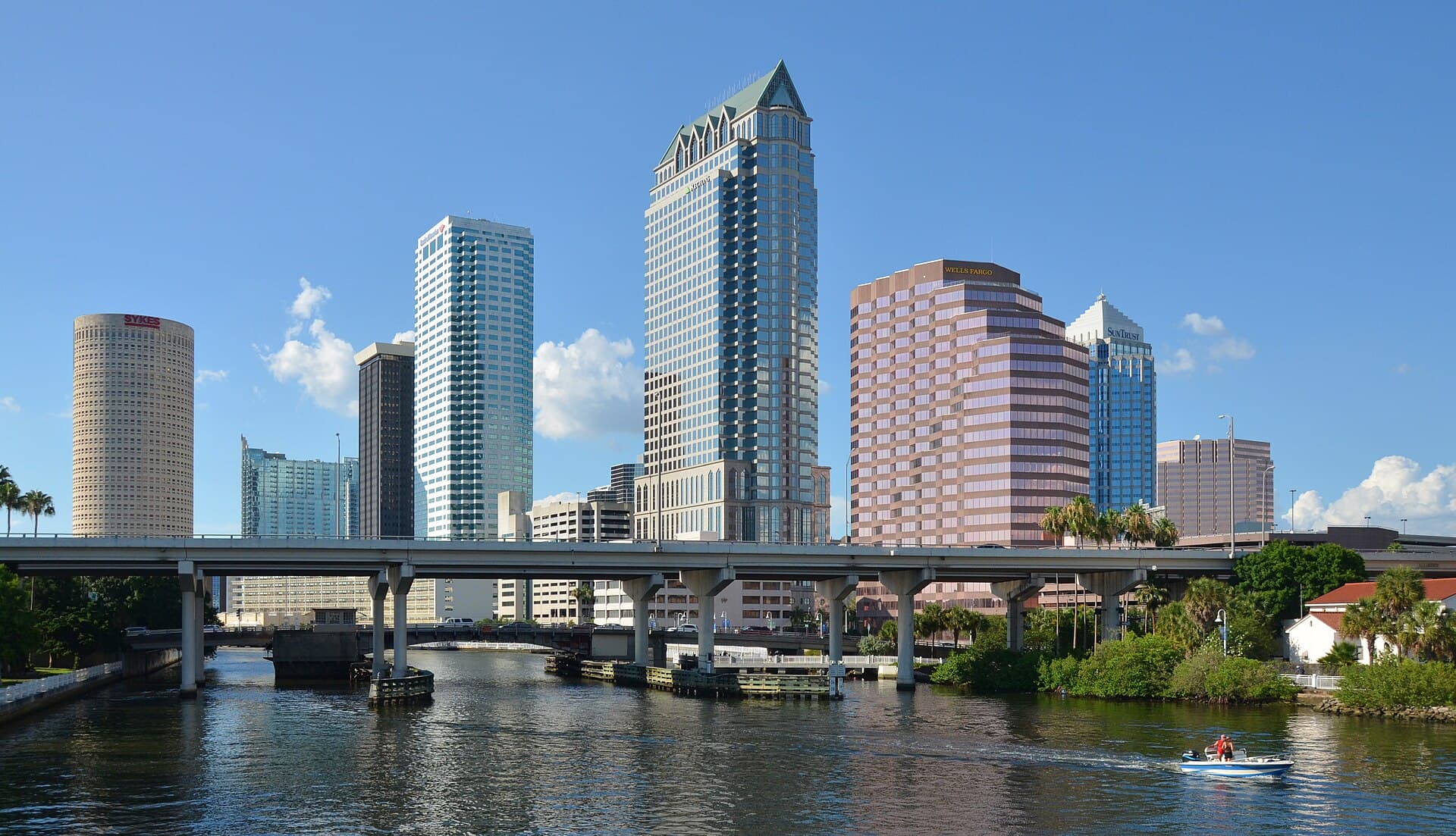
Tampa, a city on Florida's Gulf Coast, blends its deep historical roots with a modern, revitalized waterfront. The city sits on the northern shore of Tampa Bay, at the mouth of the Hillsborough River, and is part of a larger metropolitan area that includes St. Petersburg and Clearwater. Its name is believed to derive from the Calusa phrase “Sticks of Fire,” possibly referencing the frequent lightning strikes the area experiences.
Known as the "Sunshine City," Tampa holds a Guinness World Record for the most consecutive days of sunshine, averaging over 240 sunny days per year. This warm climate encourages an outdoor lifestyle, with waterfront dining, beaches, and numerous parks. From its historic cigar-making district to its active Riverwalk, Tampa offers a diverse range of experiences for every visitor.
From Frontier Outpost to "Cigar City"
The Tampa Bay area was first visited by Spanish explorer Ponce de Leon in 1513, and later by Hernando de Soto in 1539, though the Spanish initially focused their settlement efforts on eastern Florida. American settlement began in earnest with the establishment of Fort Brooke in 1824, a U.S. Army outpost at the mouth of the Hillsborough River, designed to protect the strategic harbor. Tampa was formally incorporated in 1849, but for decades it remained a small, isolated frontier town, grappling with poor transportation, conflicts with the Seminole tribe, and outbreaks of yellow fever.
A dramatic shift occurred in the 1880s with the arrival of Henry B. Plant's railroad, which connected Tampa to new areas and spurred economic growth. Plant also built lavish hotels along his rail line to attract visitors. Around the same time, the discovery of phosphate in the nearby Bone Valley region led to a mining and shipping boom. But perhaps the most transformative event was the arrival of Vicente Martinez Ybor, a Cuban cigar manufacturer, who moved his factory from Key West to Tampa in 1885, establishing what would become Ybor City.
Ybor City quickly became a thriving center for cigar production, drawing thousands of immigrants from Cuba, Spain, and Italy. By 1900, Tampa's population had surged from less than 800 residents in 1880 to over 15,000, earning it the nickname "Cigar City" and making it one of Florida's largest and most prosperous cities. The city also played a significant role in the Spanish-American War, serving as the primary outfitting and embarkation port for U.S. troops bound for Cuba, with figures like Teddy Roosevelt organizing his "Rough Riders" here. This period also saw the world's first scheduled commercial airline service, the St. Petersburg-Tampa Airboat Line, in 1914.
Growth continued into the 20th century, with major banks and corporations establishing themselves in downtown Tampa. Today, Tampa's port is the seventh largest in the nation, handling phosphate, trade in shrimp, and pleasure cruises. The city's military ties remain strong, with U.S. Central Command and U.S. Special Operations Command headquartered at MacDill Air Force Base.
Begin your exploration along the Tampa Riverwalk, a 2.6-mile path winding along the Hillsborough River, connecting many of the city's key attractions. Along the Riverwalk, you'll find the Florida Aquarium, home to a diverse array of marine life, and the Glazer Children's Museum, offering interactive exhibits for younger visitors. The Tampa Bay History Center provides a deep dive into Florida's past, including exhibits on pirates and early explorers. For art enthusiasts, the Tampa Museum of Art showcases ancient and modern collections.
A short drive from downtown, Busch Gardens Tampa Bay offers a blend of thrilling rides and animal encounters, functioning as a theme park and zoo. For a more relaxed natural escape, Lettuce Lake Park, just 15 minutes from downtown, features boardwalk trails through cypress swamps and oak hammocks, providing opportunities to spot birds, turtles, and alligators. Do not overlook Ybor City, a historic district known for its Cuban cigar factories, unique architecture, and active atmosphere. Here, you can still find master cigar rollers and experience the area's Latin culture.
The best time to visit Tampa is from late fall through early spring, specifically November to April, when the weather is mild and pleasant with temperatures typically ranging between 70°F and 80°F. This period offers ideal conditions for sightseeing and outdoor activities. For fewer crowds and potentially lower costs, consider the shoulder seasons of late spring (May) or early fall (September and October). Be aware that hurricane season runs from June 1 to November 30.
Tampa is located in Hillsborough County. The city is easily accessible, with Tampa International Airport serving as a major hub. Getting around Tampa is convenient with various options. The Tampa Riverwalk is excellent for walking, biking, or even scootering, connecting many downtown attractions. Water taxis also operate along the Hillsborough River and Garrison Channel, offering a scenic way to navigate. For broader travel, the city is connected to St. Petersburg and Clearwater by bridges and causeways. If you have questions about city services, the Utilities Call Center can assist with water service inquiries, and the City of Tampa website provides information on development and zoning. For visitor information, including maps and guides, you can contact the Tampa Bay Convention & Visitors Bureau.
- What is Tampa's nickname?
- Tampa is often referred to as the "Cigar City" due to its historical cigar industry in Ybor City. It's also known as the "Sunshine City" for its numerous sunny days.
- Is the Cuban sandwich from Tampa?
- Tampa claims to be the birthplace of the Cuban sandwich, which was created in the 1890s to feed cigar workers in Ybor City. The Tampa version uniquely includes Genoa salami.
- What is Gasparilla?
- Gasparilla is Tampa's annual pirate festival, held every January since 1904. It's a large celebration based on the legendary pirate José Gaspar, featuring a "pirate invasion" and a parade.
- Where can I see manatees in Tampa?
- While the Manatee Viewing Center is popular, you can often see manatees drawn to the warm water discharged from the Big Bend Power Station at Apollo Beach.
- What is the Tampa Riverwalk?
- The Tampa Riverwalk is a 2.6-mile continuous sidewalk along the Hillsborough River that connects many of the city's parks, museums, restaurants, and attractions.
- What is Tampa Bay, geographically?
- Tampa Bay is not technically a bay, but rather Florida's largest open-water estuary, where freshwater rivers mix with saltwater from the Gulf of Mexico. This creates a highly biodiverse marine ecosystem.