Zona de Finlayson
La fábrica de algodón Finlayson una vez operó con su propia moneda.
La historia completa se desbloquea en el tour
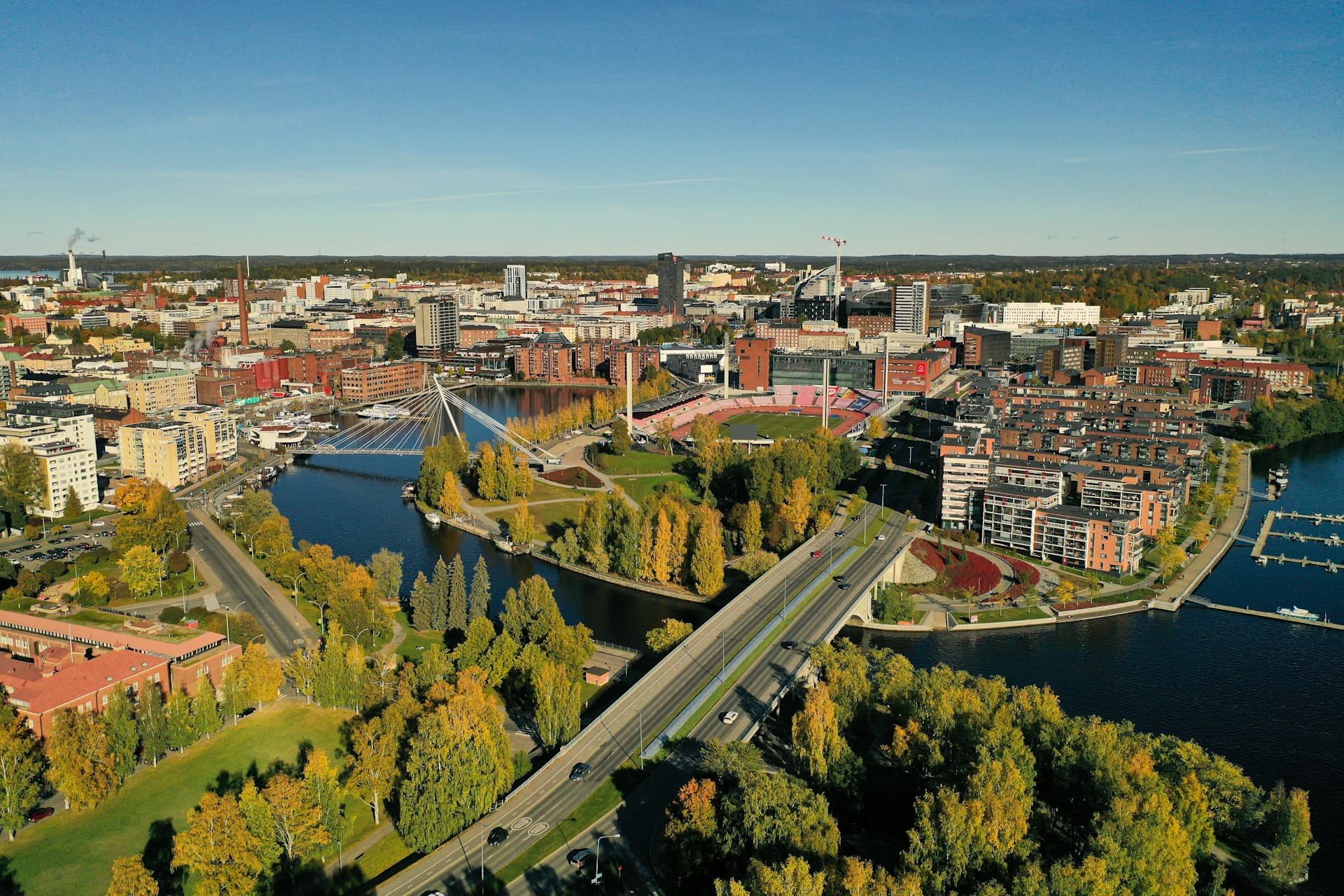 Photo: Frans Leivo / Unsplash
Tour de audio autoguiado de Tampere — ruta GPS a pie, reproducción offline, narración en 32 idiomas.
“Donde los ecos industriales se encuentran con aguas serenas.”
No las postales. Las historias que ni los locales conocen — al oído, justo donde ocurrieron.
La fábrica de algodón Finlayson una vez operó con su propia moneda.
Los célebres dónuts de Pyynikki poseen un ingrediente particular que eleva su atractivo.
Los frescos dentro de la Catedral de Tampere provocaron una considerable controversia tras su exhibición inicial.
Descubre todos los secretos de Tampere
Cada dirección, cada revelación al completo — a tu oído, justo donde ocurrió.
Eliges tus paradas. Caminas. La voz te revela lo que los demás ignoran.


Tu tour de audioguía por Tampere te espera — elige tus lugares, tu idioma y empieza al llegar.
ComprarLume incluye una guía de realidad aumentada. Levanta el móvil y su cámara muestra la calle que tienes delante, con una flecha luminosa sobre la imagen real que siempre apunta a tu próxima parada — sin mapas que descifrar, sin giros equivocados. Como todo en Lume, funciona completamente sin conexión.
Tampere, una ciudad acunada entre dos extensos lagos, Näsijärvi y Pyhäjärvi, presenta un estudio convincente de contrastes. Es un lugar donde el legado industrial de ladrillo rojo del pasado de Finlandia conversa con un presente vibrante y contemporáneo. Una vez reconocida como la 'Mánchester de Finlandia' por su prolífica industria textil, Tampere ha evolucionado con gracia de un centro de fábricas a un nexo de innovación, cultura y esplendor natural.
La geografía singular de la ciudad, que abarca los rápidos de Tammerkoski que unen sus dos grandes lagos, siempre ha sido integral a su identidad. Esta vía fluvial natural proporcionó la energía que impulsó su temprana expansión industrial y sigue siendo una característica definitoria, ofreciendo vistas pintorescas y actividades recreativas. Tampere ofrece una fusión convincente de refinamiento urbano y acceso conveniente a la naturaleza finlandesa, lo que la convierte en un destino distintivo para la exploración.
La narrativa de Tampere está profundamente conectada con los rápidos de Tammerkoski, un potente recurso natural que atrajo por primera vez el desarrollo industrial a finales del siglo XVIII. El establecimiento oficial de la ciudad por el rey Gustavo III de Suecia en 1779 fue un movimiento estratégico para crear un centro comercial e industrial en la región.
### El Rey del Algodón y Más Allá El verdadero impulso para la expansión de Tampere fue la fundación de la fábrica de algodón Finlayson en 1820 por el industrial escocés James Finlayson. Esta empresa, junto con otras fábricas textiles y metalúrgicas que pronto siguieron, transformó Tampere en el núcleo de la industria finlandesa. La ciudad fue pionera en muchos aspectos, presentando la primera iluminación eléctrica de Finlandia en 1882 en la fábrica Finlayson y una extensa red de infraestructura industrial.
### Una Cuna de Movimientos Obreros Con la rápida industrialización llegó una considerable población de clase trabajadora, y Tampere se convirtió en un centro fundamental para el movimiento obrero finlandés. La ciudad desempeñó un papel crítico en la Guerra Civil Finlandesa de 1918, experimentando algunos de los combates más intensos. Este período dejó una impresión duradera en la memoria colectiva y el tejido social de la ciudad.
### Reinventando la Era Postindustrial A medida que avanzaba el siglo XX, Tampere, como muchas ciudades industriales, se enfrentó al desafío de adaptarse a una economía global cambiante. El declive de las industrias pesadas tradicionales llevó a un período de reinvención. Muchos de los antiguos edificios de las fábricas, con su característica arquitectura de ladrillo rojo, han sido conservados y reinventados, albergando ahora museos, teatros, establecimientos de restauración y negocios. Esta reutilización adaptativa ha permitido a Tampere honrar su pasado mientras forja una nueva identidad como una ciudad contemporánea y dinámica centrada en la tecnología, la educación y la cultura.
Comience su exploración en los rápidos de Tammerkoski, el corazón histórico de Tampere, donde los edificios de las fábricas de ladrillo rojo se erigen como testimonios perdurables del pasado industrial de la ciudad. Muchas de estas estructuras, como las de la zona de Finlayson, han sido reurbanizadas para convertirse en espacios culturales y comerciales. Considere una visita al Centro de Museos Vapriikki, situado en una antigua fábrica, que ofrece una amplia gama de exposiciones, desde historia natural hasta el Museo Finlandés de Hockey sobre Hielo. Para los interesados en el arte, el Museo de Arte Sara Hildén a orillas del lago Näsijärvi exhibe una importante colección de arte moderno. Ascienda a la Torre de Observación Pyynikki para disfrutar de vistas panorámicas de la ciudad y sus dos lagos, y asegúrese de probar sus célebres dónuts. No pase por alto la impresionante Catedral de Tampere, una maravilla arquitectónica con sus distintivos frescos simbolistas. Para vislumbrar la vida local, pasee por el Mercado Central de Tampere, uno de los mercados cubiertos más grandes de los países nórdicos, que ofrece delicias regionales y productos artesanales.
Tampere ofrece encanto durante todo el año, pero el momento ideal para una visita depende de las preferencias individuales. El verano (junio-agosto) ofrece horas de luz prolongadas, temperaturas agradables y un ambiente animado con eventos al aire libre y actividades en el lago. El otoño (septiembre-octubre) trae consigo hermosos colores otoñales, mientras que el invierno (noviembre-marzo) transforma la ciudad en un paisaje cubierto de nieve, perfecto para experimentar los deportes de invierno finlandeses y encontrar consuelo en los cafés. La primavera (abril-mayo) ve a la ciudad despertar, con la naturaleza floreciendo y la llegada de un clima más suave.
El Aeropuerto de Tampere-Pirkkala (TMP) sirve a Tampere, ofreciendo conexiones convenientes con el Aeropuerto de Helsinki-Vantaa (HEL) y otras ciudades europeas. El centro de la ciudad es fácilmente accesible desde el aeropuerto en autobús o taxi. El sistema de transporte público de Tampere es eficiente, utilizando principalmente autobuses, y el centro de la ciudad es bastante transitable a pie. Los billetes se pueden adquirir en los R-kiosks, máquinas expendedoras o a través de la aplicación móvil Nysse. Las opciones de alojamiento varían desde hoteles boutique en edificios de fábricas reconvertidos hasta hoteles modernos y hostales económicos. El finlandés es el idioma oficial, pero el inglés es ampliamente comprendido, especialmente en las zonas frecuentadas por visitantes. La moneda es el Euro (€).
Tampere en coreano, en chino o en hebreo — y 29 idiomas más, cada parada narrada por una voz nativa. La mayor variedad de idiomas de cualquier audioguía autoguiada.
Disponible en: