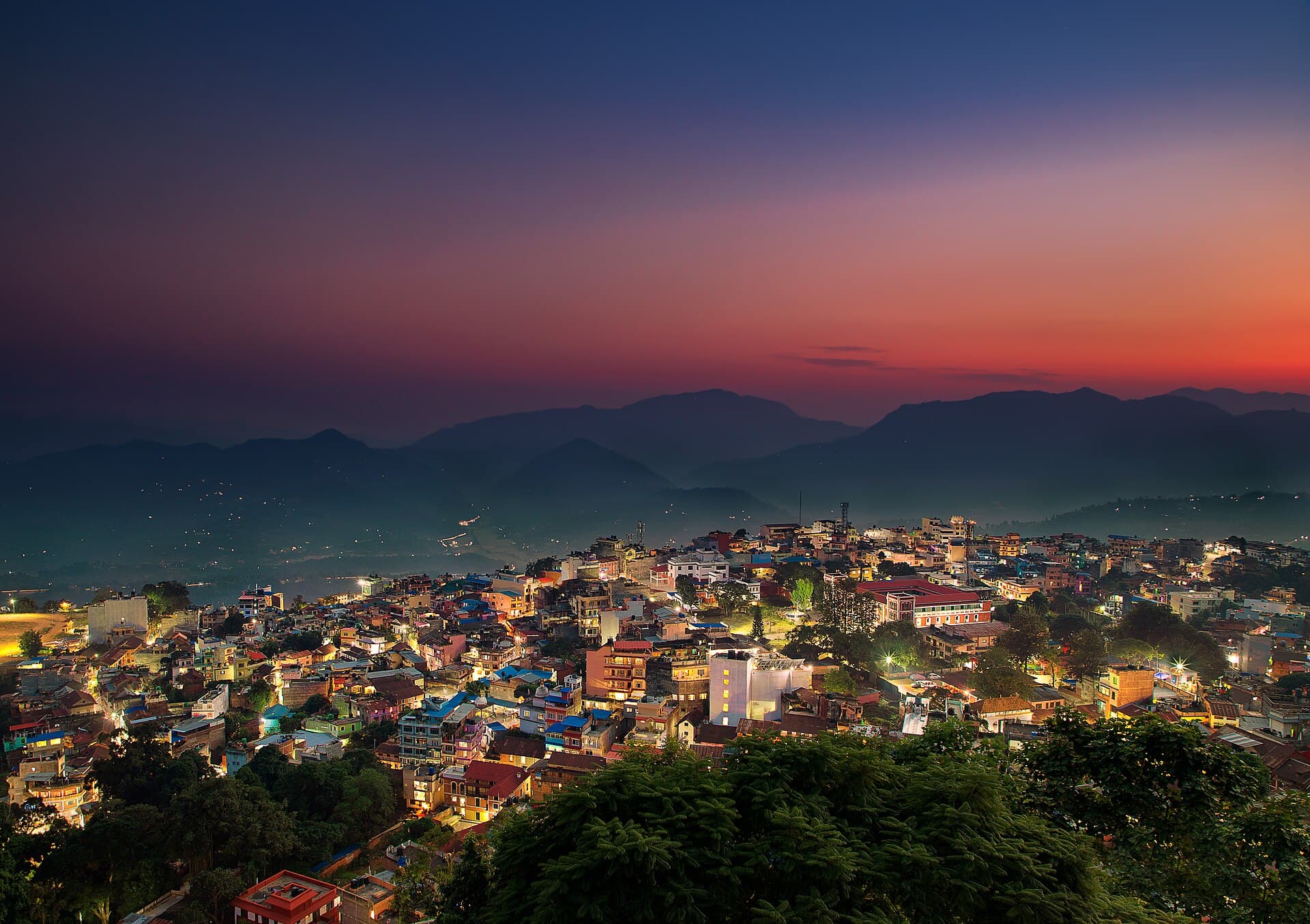
Tansen, NepalMithunkunwar9 / CC BY-SA 4.0, via Wikimedia Commons
NP

Tansen

Self-guided audio walking tour of Tansen — GPS route, offline playback, story-driven narration in 32 languages.

Where ancient pathways unfold and the Himalayas define the horizon.

The secrets of Tansen

Tansen, as no one tells it.

Not the postcards. The stories even locals don't know — whispered in your ear, right where they happened.

3 secrets below. Many more wait inside the tour.
Rani Mahal

Referred to as the 'Taj Mahal of Nepal,' this grand gesture of devotion stands far from any city's clamor. Yet, the narrative behind its distant placement speaks less of ease and more of profound sorrow.

Full story unlocks in the tour
Tansen Durbar

This significant palace in Tansen's core has been reconstructed, a testament to enduring spirit. Its renewed exterior, however, conceals a mark from a recent past, a reminder of a period when the town faced considerable adversity.

Full story unlocks in the tour
Amar Narayan Temple

Among Tansen's many sanctuaries, the Amar Narayan Temple distinguishes itself with intricate Newari architecture. Its distinctive construction might, in fact, hold a key to its enduring existence in a region prone to seismic activity.

Full story unlocks in the tour
The full tour

Discover every secret of Tansen

Every address, every reveal in full — in your ear, right where it happened.

Get the key to Tansen

You pick your stops. You walk. The voice reveals what the others miss.

Tansen — green trees and mountains under blue sky during daytime
Photo: Avel Chuklanov / Unsplash
Tansen — aerial photography of community on mountain
Photo: Kalle Kortelainen / Unsplash
Tansen — a small village on a hill with mountains in the background
Photo: Martin Skřivánek / Unsplash
Choose your time

How long do you have in Tansen?

Your self-guided audio tour of Tansen is ready — pick your landmarks, choose your language, and start the moment you arrive.

Buy
About Tansen

The story of Tansen

Tansen, the administrative heart of Palpa District, rests gracefully on a ridge of the Mahabharat Range in western Nepal. This historic hill town, often overlooked by conventional tourism, presents an engaging fusion of cultural legacy, traditional Newari architecture, and expansive Himalayan panoramas. Its stone-paved lanes, ancient sanctuaries, and lively local crafts cultivate an atmosphere that feels both genuine and unhurried.

Serving as a strategic interlude between the popular destinations of Pokhara and Lumbini, Tansen invites travelers to linger and immerse themselves in a distinct facet of Nepal. The crisp mountain air, the mingled scents of woodsmoke and incense, and the sincere warmth of its local community offer a peaceful reprieve from more bustling cities. It is a place where history is etched into every pathway and traditional ways of life continue to flourish.

History

From Powerful Kingdom to Trading Post

Tansen's story is deeply interwoven with the powerful Magar Kingdom of Palpa, also known as Tanahun. For centuries, it served as the capital of one of Nepal's most influential regional principalities before the rise of the Shah dynasty. In the 16th century, under the leadership of King Mukunda Sen, the Magar kingdom achieved its greatest expansion, even approaching the conquest of Kathmandu.

The name "Tansen" itself originates from Magar, meaning "northern settlement," reflecting the indigenous Magar people's enduring presence in the region. However, by the 18th century, the influence of the local Magar kings diminished. Tansen then transformed into a lively Newari marketplace, strategically positioned on the vital trade route connecting India to Tibet via the Kali Gandaki River and Mustang. Newar traders and artisans, migrating from the Kathmandu Valley, introduced their distinctive architectural styles and skilled crafts, which remain evident throughout the town today.

A Town of Resilience

Tansen's role as a district administrative center meant it was not untouched by the political upheavals of Nepal's past. In a significant event during the Nepalese Civil War, the historic Tansen Durbar (palace) compound was targeted and largely damaged in a Maoist assault in 2006. Following the conflict, the palace was among the initial government structures to be meticulously restored, now standing as a symbol of the town's enduring spirit and housing a museum that chronicles its compelling past.

Today, Tansen is recognized for its well-preserved Newari architecture, traditional crafts like Dhaka fabric weaving and 'karuwa' metalwork, and its serene hilltop views. It is currently on the UNESCO World Heritage Tentative List, underscoring its cultural and historical significance.

What to see

Tansen's compact and easily traversable old bazaar is a pleasure to explore, with steep, narrow lanes bordered by traditional Newari shophouses and sanctuaries. The intricate woodwork on these buildings speaks to the skilled craftsmanship introduced by Newar traders centuries ago.

At the core of the town lies Palpa Durbar Square, a lively area displaying traditional Newari architecture. The square's impressive Baggi Dhoka (main gate) offers a grand entry, and the reconstructed Tansen Durbar now functions as a museum, providing perspectives into the region's story. Nearby, the Amar Narayan Temple, built in 1806, exemplifies pagoda-style architecture with detailed carvings.

For expansive, far-reaching views, an ascent up Shreenagar Hill is highly recommended. From this forested ridge, you can witness glorious sunrises and sunsets, and on clear days, glimpse the Annapurna, Dhaulagiri, and other Himalayan ranges. Another significant location is Rani Mahal, often referred to as the 'Taj Mahal of Nepal,' a palace dramatically situated along the Kali Gandaki River. This romantic, neoclassical structure, erected in memory of a queen, offers a rewarding day trip for those who enjoy walking.

Observe local artisans at their work. Tansen is renowned for its Dhaka fabric, a handwoven textile with distinctive geometric patterns, and 'karuwa', traditional brass water vessels. You can discover these unique crafts in local establishments, offering authentic mementos.

When to visit

The ideal time to visit Tansen is during the autumn months, from September to November, and in spring, from March to May. During these periods, the weather is mild and agreeable, providing clear skies perfect for enjoying the expansive mountain views and colorful landscapes. Winter, from December to February, is also suitable, though it can be colder. It is advisable to avoid the monsoon season (June to August) due to heavy rains, which can lead to challenging road conditions such as landslides.

Practical

Tansen is a small, welcoming town where English is not widely spoken, yet locals are generally helpful. The town is navigable on foot, though its steep, narrow lanes require comfortable footwear. While ATM access can be limited, carrying cash is advisable. Accommodation options include guesthouses, homestays, and small hotels, many of which are family-operated and offer a warm, hospitable experience.

Reaching Tansen typically involves road travel. There are no direct flights to Tansen; the nearest airport is Gautam Buddha International Airport in Bhairahawa, approximately a two-hour drive away. Buses are available from major cities like Pokhara, Lumbini, and Butwal. From Kathmandu, you will generally need to take a bus to Butwal and then transfer to a local bus or shared jeep for the uphill journey to Tansen.

Good to know
Is Tansen safe for solo travelers?
Tansen is generally considered safe for individuals traveling alone, including solo female travelers. The local community is amiable and welcoming, and the incidence of crime is relatively low. However, it is always wise to be aware of your surroundings, especially after dark, and to secure your personal items.
What local crafts is Tansen known for?
Tansen is celebrated for two traditional crafts: Dhaka fabric and 'karuwa' metalwork. Dhaka is a handwoven textile featuring distinctive geometric patterns, frequently used in traditional Nepali attire like the Palpali Dhaka Topi. Karuwas are ornate brass jugs with spouts, a specialty of local Newari artisans.
How do I get to Tansen from Kathmandu?
There are no direct buses from Kathmandu to Tansen. The usual route involves taking a bus from Kathmandu to Butwal (approximately 7-9 hours), and then transferring to a local bus or shared jeep for the additional 1.5 to 2-hour uphill drive to Tansen. Alternatively, you can fly from Kathmandu to Bhairahawa (Gautam Buddha International Airport) and then take a taxi or bus.
What are the best viewpoints in Tansen?
Shreenagar Hill is the primary viewpoint, presenting far-reaching views of the Himalayas, including the Annapurna and Dhaulagiri ranges, particularly at sunrise and sunset. There is also a view tower in Shreenagar Park for elevated vistas. Another good viewpoint is at the top of Batasedaada, a short walk from Tansen.
What kind of accommodation is available in Tansen?
Tansen offers a range of lodging options, including budget-friendly hotels, guesthouses, and homestays. Many are family-operated, providing a more authentic and personal experience. While not typically luxurious, they offer comfort and a friendly atmosphere.
Is Tansen considered a UNESCO World Heritage site?
Tansen is currently on the UNESCO World Heritage Tentative List. While not yet a full World Heritage site, its inclusion on the tentative list underscores its significant cultural and historical value, particularly its well-preserved Newari architecture and historical importance.
On the map
Tansen
€9.90
No booking · activate anytime · 12h to walk it
Load on Wi-Fi, then walk offline — no roaming abroad
Get the key to Tansen