Torre Chindia
A torre que define o horizonte de Târgoviște já serviu a um propósito surpreendentemente mundano, porém crucial, além de sua função defensiva.
História completa desbloqueada no tour
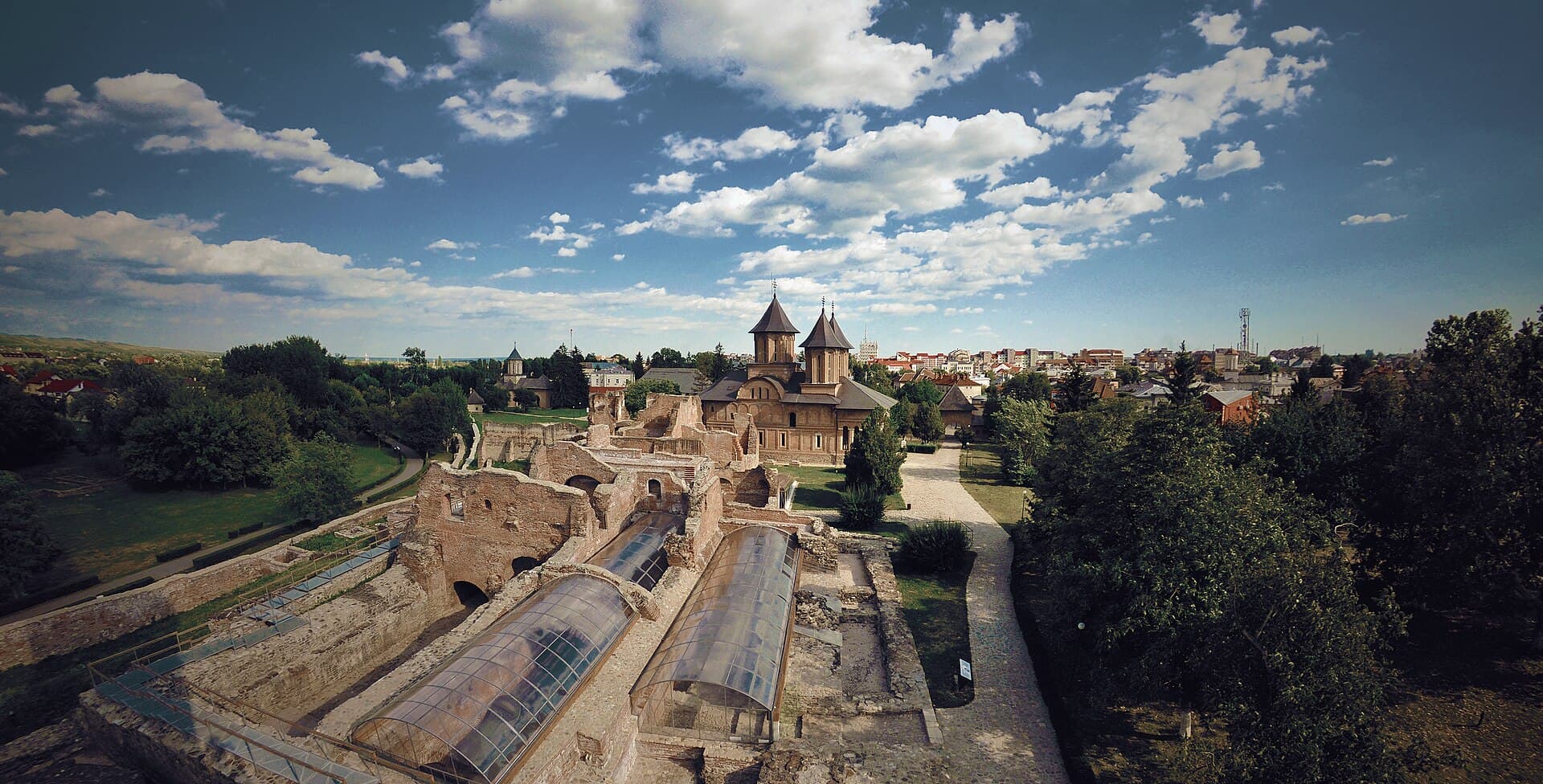 fusion-of-horizons / CC BY 2.0, via Wikimedia Commons
Tour de áudio autoguiado por Târgoviște — rota GPS a pé, reprodução offline, narração envolvente em 32 idiomas.
“Onde príncipes valáquios forjaram uma nação e os ecos da história ressoam.”
Não os postais. As histórias que nem os locais conhecem — sussurradas ao seu ouvido, exatamente onde aconteceram.
A torre que define o horizonte de Târgoviște já serviu a um propósito surpreendentemente mundano, porém crucial, além de sua função defensiva.
Vlad, o Empalador, a figura histórica por trás de Drácula, não foi apenas um governante aqui; ele utilizou uma característica arquitetônica específica para uma exibição arrepiante.
Este mosteiro tranquilo abriga os restos mortais de uma figura histórica romena renomada, mas talvez não a que você esperaria, dado o residente mais infame de Târgoviște.
Descubra cada segredo de Târgoviște
Cada endereço, cada revelação na íntegra — no seu ouvido, exatamente onde aconteceu.
Você escolhe as suas paragens. Você caminha. A voz revela o que os outros perdem.


A Lume inclui um guia de realidade aumentada. Levante o telemóvel: a câmara mostra a rua à sua frente, com uma seta luminosa sobreposta à imagem real que aponta sempre para a sua próxima paragem — sem mapa para decifrar, sem voltas erradas. Como tudo na Lume, funciona totalmente offline.
Târgoviște, uma cidade no condado de Dâmbovița, Romênia, repousa na margem direita do rio Ialomița, a aproximadamente 80 quilômetros a noroeste de Bucareste. Antiga capital da Valáquia de 1418 a 1659, desempenhou um papel fundamental na história romena como um significativo centro econômico, político, militar e cultural.
O peso histórico da cidade está profundamente entrelaçado com figuras como Vlad, o Empalador, que estabeleceu Târgoviște como sua sede principesca. Além de seu encanto medieval, Târgoviște também ocupa um lugar na história mais recente como local do julgamento e execução de Nicolae Ceaușescu e sua esposa Elena em dezembro de 1989, marcando o dramático fim da era comunista da Romênia.
Hoje, Târgoviște convida a uma jornada através do tempo, desde suas ruínas antigas e fortificações medievais até museus que narram seu passado multifacetado. É um lugar onde os ecos dos príncipes da Valáquia se misturam com narrativas mais modernas e revolucionárias, convidando os visitantes a explorar sua herança em camadas.
As origens de Târgoviște remontam a mais de um milênio, com evidências arqueológicas sugerindo habitação desde o período Neolítico. A cidade realmente ascendeu à proeminência sob Mircea, o Velho (1383–1419), tornando-se a terceira capital da Valáquia. Durante este período, Târgoviște expandiu-se, e uma comunidade saxã, vinda da Transilvânia no final de 1200 ou início de 1300, contribuiu para o seu desenvolvimento, introduzindo novos métodos de organização urbana.
A Corte Principesca, mencionada pela primeira vez em documentos por volta de 1400, tornou-se a residência dos príncipes da Valáquia. Serviu como centro de atividade política, militar e cultural, atraindo estudiosos, artistas e artesãos. As fortificações da cidade foram expandidas e reforçadas, notavelmente durante o reinado de Vlad, o Empalador, em meados do século XV. Vlad III Dracul utilizou Târgoviște como seu quartel-general administrativo e militar durante suas campanhas, fortificando suas defesas. A icônica Torre Chindia, um símbolo da cidade, foi iniciada durante o segundo reinado de Vlad, o Empalador, e serviu para fins militares, de observação e de armazenamento do tesouro.
Ao longo dos séculos XV e XVI, Târgoviște prosperou como um importante centro comercial, especialmente com mercadores poloneses, de Brașov e de Sibiu. No entanto, a cidade suportou numerosos cercos e invasões, incluindo ser incendiada por Bayezid I em 1395 e tomada por Stephen V Báthory em 1476. A capital da Valáquia alternou entre Târgoviște e Bucareste a partir de 1565 por dois séculos, muitas vezes por considerações políticas. A Corte Principesca sofreu danos significativos devido a guerras, terremotos e incêndios, levando ao seu eventual abandono em favor de Bucareste como capital permanente após a trágica morte de Constantin Brâncoveanu no início do século XVIII.
Na história mais recente, Târgoviște foi o local da tortura e execução de Tudor Vladimirescu em 1821 durante a revolta da Valáquia. Mais significativamente, em 25 de dezembro de 1989, Târgoviște tornou-se o local do julgamento e execução de Nicolae Ceaușescu e sua esposa Elena, marcando um momento crucial na Revolução Romena. A unidade militar onde este evento ocorreu está programada para abrir ao público como Museu da Tradição Militar em 2025.
A Corte Principesca (Curtea Domnească) é o coração das atrações históricas de Târgoviște. Este extenso complexo, outrora a residência dos príncipes da Valáquia, inclui as ruínas do palácio principal, duas igrejas bem preservadas e fortificações medievais. A Torre Chindia (Turnul Chindiei), uma torre de vigia do século XV construída durante o reinado de Vlad, o Empalador, tem 27 metros de altura e oferece vistas panorâmicas da cidade. Ela também abriga uma exposição de documentos, armas e objetos ligados a Vlad, o Empalador.
Dentro da Corte Principesca, a Grande Igreja Principesca (Biserica Domnească), construída entre 1583 e 1585, é notável por seus impressionantes afrescos do século XV e pela maior galeria de retratos de governantes da Valáquia. Perto dali, a Igreja de Santa Sexta-feira é o único monumento do século XV no sul da Romênia ainda preservado em sua forma original.
Além da Corte Principesca, considere uma visita ao Mosteiro Dealu, situado em uma colina com vista para a cidade. Este mosteiro histórico, reconstruído em 1499, é o local de sepultamento de Michael, o Bravo. Para aqueles interessados na história mais moderna da cidade, o Museu das Últimas Horas de Ceaușescu (o quartel militar onde os Ceaușescus foram julgados e executados) oferece um olhar comovente sobre o fim da era comunista. O Museu da Imprensa e do Livro Antigo Romeno também oferece insights sobre a história da impressão na Romênia.
Târgoviște é mais agradável de maio a setembro, quando as temperaturas são amenas, variando de 22°C a 28°C. Julho e agosto são os meses mais quentes, com máximas médias em torno de 27-28°C, tornando-os ideais para atividades ao ar livre e para explorar os sítios históricos ao ar livre da cidade. Embora junho registre a maior precipitação, o período geral oferece um bom equilíbrio entre dias ensolarados e chuvosos. O outono traz temperaturas mais frias e menos turistas, o que pode ser ideal para passeios turísticos.
Târgoviște está localizada a aproximadamente 80 quilômetros (50 milhas) a noroeste de Bucareste. Embora não tenha aeroporto próprio, o Aeroporto Internacional Henri Coandă de Bucareste (OTP) fica a cerca de 74 km de distância. De Bucareste, você pode chegar a Târgoviște de carro (aluguel disponível no aeroporto) ou de trem. Existem vários trens Accelerat e Personal diariamente, com tempos de viagem variando de 1,5 a 2 horas.
Uma vez em Târgoviște, o centro da cidade é caminhável, facilitando a exploração das principais atrações a pé. Para destinos um pouco fora do centro da cidade, como o Mosteiro Dealu, um carro é recomendado. Târgoviște é geralmente considerada segura, mas é sempre prudente estar atento aos seus pertences em áreas movimentadas e permanecer em ruas bem iluminadas à noite.
Opções de acomodação estão disponíveis, especialmente na área central, com preços razoáveis. Restaurantes locais oferecem ensopados saborosos e pão fresco, proporcionando um gosto da culinária tradicional romena.
Târgoviște — coreano, chinês, hebraico e mais 29 idiomas, cada parada narrada por uma voz nativa. A maior variedade de idiomas entre os passeios de áudio autoguiados.
Disponível em: