Museo de la Universidad de Tartu (Antiguo Observatorio)
Un innovador instrumento astronómico ostentó una vez el récord del telescopio refractor más grande del mundo.
La historia completa se desbloquea en el tour
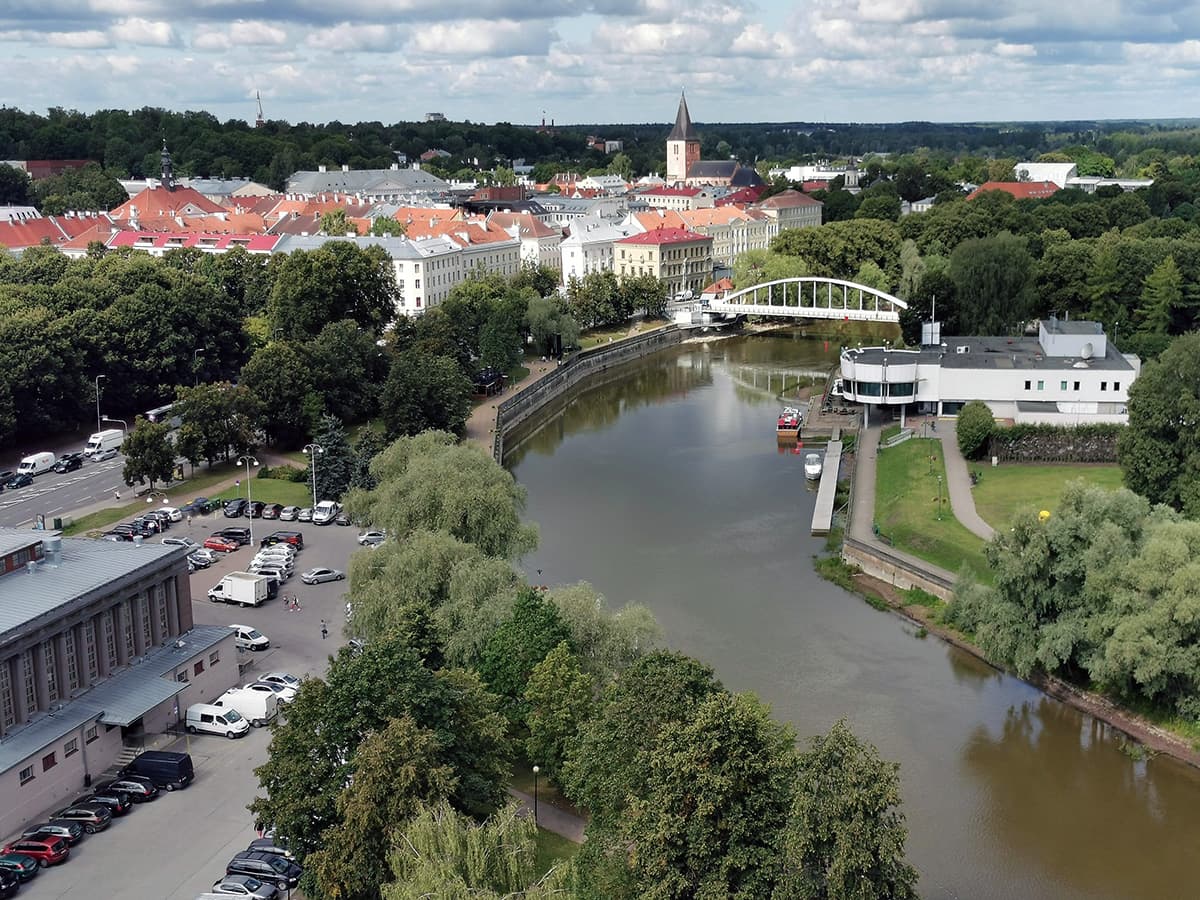 Boreaallane / CC BY-SA 4.0, via Wikimedia Commons
Tour de audio autoguiado de Tartu — ruta GPS a pie, reproducción offline, narración en 32 idiomas.
“Donde el intelecto y la historia fluyen como el Emajõgi.”
No las postales. Las historias que ni los locales conocen — al oído, justo donde ocurrieron.
Un innovador instrumento astronómico ostentó una vez el récord del telescopio refractor más grande del mundo.
Esta iglesia medieval alberga una congregación silenciosa de más de mil figuras únicas.
Debajo de un parque sereno, una antigua prisión recluía a estudiantes por infracciones inusuales.
Descubre todos los secretos de Tartu
Cada dirección, cada revelación al completo — a tu oído, justo donde ocurrió.
Eliges tus paradas. Caminas. La voz te revela lo que los demás ignoran.

Tu tour de audioguía por Tartu te espera — elige tus lugares, tu idioma y empieza al llegar.
ComprarLume incluye una guía de realidad aumentada. Levanta el móvil y su cámara muestra la calle que tienes delante, con una flecha luminosa sobre la imagen real que siempre apunta a tu próxima parada — sin mapas que descifrar, sin giros equivocados. Como todo en Lume, funciona completamente sin conexión.
Tartu, la segunda ciudad más grande de Estonia, es un animado centro donde la tradición académica y un espíritu juvenil convergen. A menudo llamada la "capital intelectual" de Estonia, es el hogar de la distinguida Universidad de Tartu, una de las universidades más antiguas del norte de Europa, establecida en 1632. La energía de la ciudad es palpable, con aproximadamente una quinta parte de sus residentes siendo estudiantes, lo que contribuye a una atmósfera animada y una floreciente cultura de cafés.
Situada a orillas del río Emajõgi, que conecta los dos lagos más grandes de Estonia, Tartu ofrece un escenario pintoresco para la exploración. Sus dimensiones compactas la hacen fácilmente transitable a pie, invitando a los visitantes a descubrir su profunda historia y su atractivo contemporáneo a un ritmo relajado. Desde su histórica Plaza del Ayuntamiento hasta sus distintivos barrios de madera y su creciente escena de arte callejero, Tartu presenta un contraste convincente con la capital más conocida, Tallin, ofreciendo una inmersión más profunda en la identidad y cultura estonias.
En 2024, Tartu fue reconocida como Capital Europea de la Cultura, consolidando aún más su posición como un importante destino cultural. La dedicación de la ciudad a la sostenibilidad también es evidente, con su sistema de transporte público operando con biometano renovable desde 2020.
Los orígenes de Tartu se remontan a un asentamiento permanente en la colina Toomemägi ya en el siglo V. Los antiguos estonios construyeron allí una fortaleza de madera, conocida como Tarbatu. La fecha oficial de fundación de la ciudad se registra en 1030, cuando el príncipe Yaroslav el Sabio de Kiev capturó la fortaleza y la llamó Yuryev. Sin embargo, los estonios recapturaron Tartu en 1061.
A lo largo de los siglos XIII al XVI, Tartu, conocida entonces por variantes de su nombre histórico Dorpat, prosperó como un exitoso miembro de la Liga Hanseática, una influyente alianza comercial. Este período vio la construcción de sustanciales murallas de fortaleza, iglesias y casas de comerciantes, sentando las bases de la estructura urbana de la ciudad. La ubicación estratégica de la ciudad la convirtió en un intermediario clave en las rutas comerciales entre Novgorod, Pskov y Europa Occidental.
La historia de Tartu está marcada por frecuentes cambios de gobierno y devastadores incendios. Fue ocupada por polacos y suecos en varias ocasiones antes de ser anexionada por Rusia en 1704. La Gran Guerra del Norte a principios del siglo XVIII causó una destrucción significativa, y un gran incendio en 1775 destruyó gran parte de la arquitectura medieval en el centro de la ciudad. Esto llevó a un esfuerzo de reconstrucción sustancial en estilos barroco tardío y neoclásico, que define gran parte de la apariencia del Casco Antiguo hoy en día.
Un momento crucial en la historia de Tartu fue la fundación de su universidad. En 1632, el rey Gustavo II Adolfo de Suecia estableció la Academia Gustaviana, que ahora es la Universidad de Tartu. Aunque sus operaciones fueron interrumpidas por guerras y reubicaciones, la universidad fue reabierta en Tartu en 1802 con el permiso del zar ruso Alejandro I. Este restablecimiento solidificó el papel de Tartu como centro intelectual, no solo para el Imperio Ruso, sino más tarde para toda Estonia.
Durante la segunda mitad del siglo XIX, Tartu se convirtió en el corazón de la vida cultural y nacional estonia, desempeñando un papel crucial en el Despertar Nacional Estonio. El primer Festival de la Canción de Estonia se celebró aquí en 1869, seguido por el establecimiento del primer teatro profesional, Vanemuine, en 1870, y la Sociedad de Escritores Estonios en 1872. Estos eventos subrayan el legado perdurable de Tartu como la "cuna de la cultura estonia".
En el siglo XX, Tartu continuó enfrentando desafíos, incluyendo ocupaciones durante la Primera y Segunda Guerra Mundial, que resultaron en un daño significativo a la ciudad. En particular, el histórico Kivisild (Puente de Piedra) fue destruido. A pesar de estos contratiempos, Tartu emergió como una ciudad clave en la restablecida República de Estonia en 1991, continuando su tradición como una potencia académica y cultural. Hoy en día, alberga la Corte Suprema de Estonia y el Ministerio de Educación e Investigación, reforzando su estatus como la capital judicial e intelectual de la nación.
Comience su exploración en la Raekoja Plats (Plaza del Ayuntamiento), el animado corazón de Tartu. Esta plaza trapezoidal, bordeada de edificios de colores pastel, cuenta con el Ayuntamiento del siglo XVIII y la icónica Fuente de los Estudiantes Besándose, un símbolo del espíritu juvenil de la ciudad. Desde aquí, pasee hasta el edificio principal de la Universidad de Tartu, una obra maestra neoclásica con seis columnas blancas, una de las universidades más antiguas del norte de Europa. Incluso puede echar un vistazo a su salón central y su ático.
Ascienda la colina Toomemägi, un parque verde que ofrece un escape tranquilo y vistas de la ciudad. Explore las monumentales ruinas de la Toomkirik (Catedral de la Cúpula), que da nombre a la colina. También en Toomemägi, visite el Antiguo Observatorio de Tartu (Tähetorn), que una vez albergó el telescopio refractor más grande del mundo. Para una inmersión más profunda en el patrimonio estonio, el Museo Nacional de Estonia (ERM), construido sobre una antigua base militar soviética, ofrece extensas exposiciones desde hallazgos arqueológicos hasta la vida estonia contemporánea.
No se pierda la Iglesia de San Juan (Jaani Kirik), una iglesia del siglo XIV celebrada por sus singulares estatuas de terracota. Suba sus 125 escalones para disfrutar de vistas panorámicas de la ciudad. Pasee por los distintivos distritos de madera de Karlova y Supilinn (Ciudad de la Sopa), conocidos por sus casas históricas y su animado arte callejero. Para una dosis de aprendizaje interactivo, el Centro de Ciencias AHHAA ofrece exposiciones atractivas para todas las edades. Finalmente, dé un tranquilo paseo a lo largo del río Emajõgi, donde podrá descubrir arte callejero bajo los puentes y disfrutar del ambiente local.
Tartu ofrece experiencias distintas a lo largo del año, siendo la mejor época para visitarla la que dependa de sus preferencias. Finales de primavera (mayo) y principios de otoño (septiembre) suelen considerarse ideales, ofreciendo temperaturas agradables, multitudes moderadas y precios de alojamiento razonables.
El verano (junio-agosto) es la temporada más popular y animada, con temperaturas cálidas, largas horas de luz y numerosos eventos y festivales al aire libre. Sin embargo, junio y julio también pueden ser los meses más húmedos. El otoño (septiembre-octubre) trae hermosos colores otoñales y un ambiente animado a medida que los estudiantes universitarios regresan.
El invierno (diciembre-marzo) transforma Tartu en un paisaje mágico y nevado, con oportunidades para actividades invernales y una exploración urbana más tranquila, aunque las temperaturas pueden ser muy frías.
La moneda oficial en Tartu, y en toda Estonia, es el Euro (EUR). Aunque las tarjetas de crédito y débito son ampliamente aceptadas, siempre es útil llevar algo de efectivo para compras más pequeñas.
El estonio es el idioma oficial, pero debido a la gran población estudiantil de Tartu y su enfoque internacional, el inglés es comúnmente entendido, particularmente en zonas turísticas, restaurantes y hoteles. El dialecto de Tartu, una variedad regional del estonio meridional, también se habla en la zona.
Moverse por Tartu es conveniente debido a su tamaño compacto. El transporte público de la ciudad consiste únicamente en autobuses, que funcionan con biometano ecológico. Puede comprar una tarjeta de autobús de Tartu o pagar los billetes con tarjeta bancaria o dispositivo inteligente. Para una forma más activa de explorar, Tartu ofrece un sistema de bicicletas compartidas inteligentes con bicicletas de asistencia eléctrica, y también están disponibles los patinetes eléctricos Bolt. Los taxis, incluidas las opciones eléctricas como Elektritakso, se pueden pedir por teléfono o a través de la aplicación Bolt.
Tartu está bien conectada con otras ciudades estonias como Tallin mediante frecuentes servicios de autobús y tren. También hay conexiones de autobús y tren con Riga, Letonia, y vuelos directos entre Tartu y Helsinki, Finlandia.
Tartu en coreano, en chino o en hebreo — y 29 idiomas más, cada parada narrada por una voz nativa. La mayor variedad de idiomas de cualquier audioguía autoguiada.
Disponible en: