The Market House
Kijk goed naar het Market House en je ziet een onverwacht zeedier op de gevel.
Volledig verhaal ontgrendeld in de tour
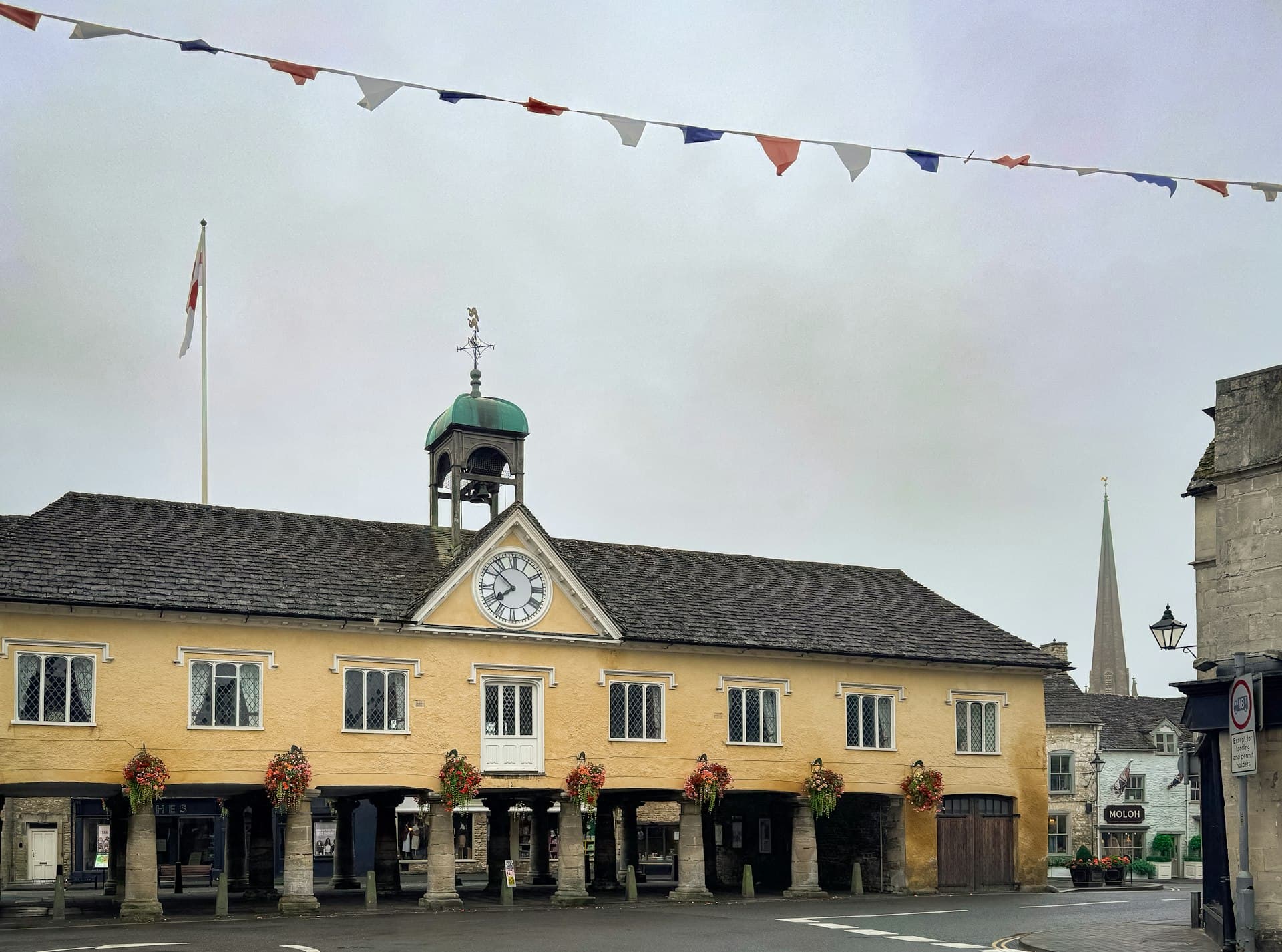 Photo: Humans Made This / Unsplash
Zelfgeleide audiowandeling door Tetbury — GPS-route, offline afspelen, meeslepende vertelling in 32 talen.
“Waar oude wolhandel koninklijke tuinen en een onafhankelijke geest ontmoet.”
Niet de ansichtkaarten. De verhalen die zelfs locals niet kennen — gefluisterd in je oor, precies waar ze gebeurden.
Kijk goed naar het Market House en je ziet een onverwacht zeedier op de gevel.
Stel je een race voor een zeer steile heuvel voor, niet met sportschoenen, maar met zware zakken wol.
Dit schijnbaar rustige marktplein was ooit het toneel van een bruisend, soms aangrijpend, jaarlijks evenement.
Ontdek elk geheim van Tetbury
Elk adres, elke onthulling volledig — in je oor, precies waar het gebeurde.
Jij kiest je stops. Jij wandelt. De stem onthult wat de anderen missen.


Je zelfgeleide audiotour van Tetbury is klaar — kies je bezienswaardigheden, kies je taal en start zodra je aankomt.
KopenLume heeft een ingebouwde augmented-reality-gids. Houd je telefoon omhoog: de camera toont de straat voor je, met een oplichtende pijl over het echte beeld die altijd naar je volgende stop wijst — geen kaart om uit te puzzelen, geen verkeerde afslagen. Zoals alles in Lume werkt het volledig offline.
Tetbury is een historische marktstad in de zuidelijke Cotswolds, gevierd om zijn blijvende architectonische karakter, banden met de Koninklijke Familie en een bloeiende verzameling onafhankelijke winkels. Met oorsprong die meer dan 1.300 jaar teruggaat tot een oud heuvelfort en een Angelsaksisch klooster, werd de welvaart van de stad grotendeels gebouwd op de middeleeuwse wolhandel.
Vandaag de dag behoudt Tetbury een onderscheidende allure, waarbij het zijn diepe erfgoed combineert met een levendige hedendaagse sfeer. De straten zijn bekleed met knappe stenen gebouwen, waarvan vele oorspronkelijk werden gefinancierd door wolhandelaren, wat de stad een tijdloze kwaliteit geeft. Naast zijn visuele aantrekkingskracht is Tetbury nauw verbonden met de Britse Koninklijke Familie, aangezien het de thuisbasis is van Highgrove House and Gardens van Koning Charles III. Deze connectie voegt een unieke laag van prestige en interesse toe, en trekt bezoekers aan die zowel de geschiedenis van de stad als haar hedendaagse aantrekkingskracht willen verkennen.
## Van Oud Fort tot Wolhoofdstad De geregistreerde geschiedenis van Tetbury dateert uit 681 na Christus, toen Koning Ethelred van Mercia land nabij 'Tette's klooster' schonk aan de Malmesbury Abbey. Men denkt dat de stad zich ontwikkelde op de locatie van een oud heuvelfort. De strategische ligging aan een belangrijke oost-west handelsroute droeg bij aan het vroege belang ervan.
Tijdens de Middeleeuwen bloeide Tetbury op als een belangrijke markt voor Cotswoldse wol en garen. Deze welvaart vormde veel van het kenmerkende uiterlijk van de stad, met veel mooie stenen huizen gebouwd door rijke wolhandelaren. Uniek is dat Tetbury nooit een centrum voor kledingproductie werd vanwege een gebrek aan continu stromend water voor molens, wat zijn rol als handelscentrum verder verstevigde.
## Zelfbestuur en de Feoffees Een opmerkelijk aspect van de geschiedenis van Tetbury is de vroege stap naar zelfbestuur. Rond 1200 deed Sir William de Braose, de heer van het landgoed, veel feodale rechten afstand, waardoor Tetbury-handelaren grotendeels zichzelf konden besturen in ruil voor jaarlijkse 'burgages' of huur. Dit stimuleerde handel en groei. Eeuwen later, in 1623, boden de Berkeley's, toen heren van het landgoed, het herenhuis en de stad aan de inwoners van Tetbury aan. Dit leidde tot de oprichting van de Tetbury Feoffees in 1633, een groep lokale bewoners die de verantwoordelijkheid op zich namen voor de toekomst van de stad. De Feoffees, die vandaag de dag nog steeds het Grade I-monumentale Market House bezitten, speelden een cruciale rol in de ontwikkeling van de stad, en gebruikten het Market House zelfs voor administratie, wolverkopen en als tijdelijke opsluiting.
## Koninklijke Connecties en het Moderne Leven De koninklijke connecties van Tetbury begonnen in 1980 toen Koning Charles III (toen Prins Charles) Highgrove House in de buurt kocht en de tuinen transformeerde tot een gerenommeerd biologisch landgoed. Deze link heeft een laag van moderne aantrekkingskracht toegevoegd aan de historische stad. Tegenwoordig staat Tetbury bekend om zijn antiekwinkels, onafhankelijke boetieks en een levendige gemeenschapsgeest die zijn verleden eert door middel van evenementen zoals de jaarlijkse Woolsack Races.
Begin uw verkenning bij het Market House, een opvallend 17e-eeuws gebouw met zuilen dat een centraal punt blijft voor markten en gemeenschapsevenementen. Vanaf hier wandelt u de Chipping Steps af, een middeleeuws geplaveid pad begrensd door pittoreske voormalige wevershuisjes, dat een glimp biedt van het wolhandelsverleden van Tetbury. Boven aan de trappen was The Chipping historisch gezien een bruisende marktplaats en de locatie van unieke aanstellingsbeurzen.
Voor een diepere duik in de lokale geschiedenis bezoekt u het Tetbury Police Museum & Courtroom, gevestigd in het oorspronkelijke Victoriaanse politiebureau, met historische artefacten en een nagebouwde rechtszaal uit de jaren 1940. De indrukwekkende kerktoren van St Mary the Virgin and St Mary Magdalene Church is van verre zichtbaar, en het interieur, daterend uit de late jaren 1770, is de moeite waard om te verkennen.
Net buiten het stadscentrum biedt Highgrove Gardens, de privéwoning van Koning Charles III, rondleidingen door zijn gerenommeerde biologische terreinen van april tot oktober (vooraf reserveren essentieel). Op slechts een klein eindje rijden ligt Westonbirt, The National Arboretum, dat 600 hectare beslaat met meer dan 15.000 bomen en struiken, en in elk seizoen spectaculaire vertoningen biedt. Voor liefhebbers van kostuumdrama's is Chavenage House, een Elizabethaans landhuis, op geselecteerde dagen geopend en was het een filmlocatie voor series als Poldark.
Tetbury verwelkomt bezoekers het hele jaar door, waarbij elk seizoen verschillende attracties biedt. Eind juni tot eind augustus is ideaal voor activiteiten bij warm weer en algemene bezienswaardigheden in de buitenlucht. De lente is perfect voor rondleidingen door Highgrove Garden en vroege bloemen in Westonbirt Arboretum. De zomer biedt mogelijkheden voor ontspannen wandelingen en dineren in de buitenlucht. De herfst is bijzonder spectaculair in Westonbirt, bekend om zijn levendige bladerdek. De winter biedt een rustigere, sfeervolle ervaring met feestelijke markten en gezellige pubs. Jaarlijkse evenementen zoals de Tetbury Woolsack Races (voorjaarsbank holiday) zorgen voor opwinding.
Tetbury ligt in het zuiden van Gloucestershire en is gemakkelijk bereikbaar met de auto via de A433 en A46. Hoewel de stad geen treinstation meer heeft, liggen Kemble en Stroud beide op 20-25 minuten taxirijden, met directe treinverbindingen naar London Paddington. Bussen verbinden Tetbury met Cirencester, Stroud en Malmesbury, hoewel de diensten op zondagen beperkt kunnen zijn.
Parkeren is mogelijk bij West Street Car Park en The Old Station Car Park, beide met betaald parkeren. Het centrum van Tetbury is beloopbaar, met veel onafhankelijke winkels, antiekhandelaren, cafés en restaurants. Voor dineren variëren de opties van traditionele pubs tot moderne cafés, die vaak lokale ingrediënten gebruiken.
Tetbury — Koreaans, Chinees, Hebreeuws en nog 29 talen, elke stop verteld door een moedertaalspreker. Het grootste taalaanbod van alle zelfgeleide audiotours.
Beschikbaar in: