Malakopi Arcade
There's a clock in the city center that has been frozen in time for decades.
Full story unlocks in the tour
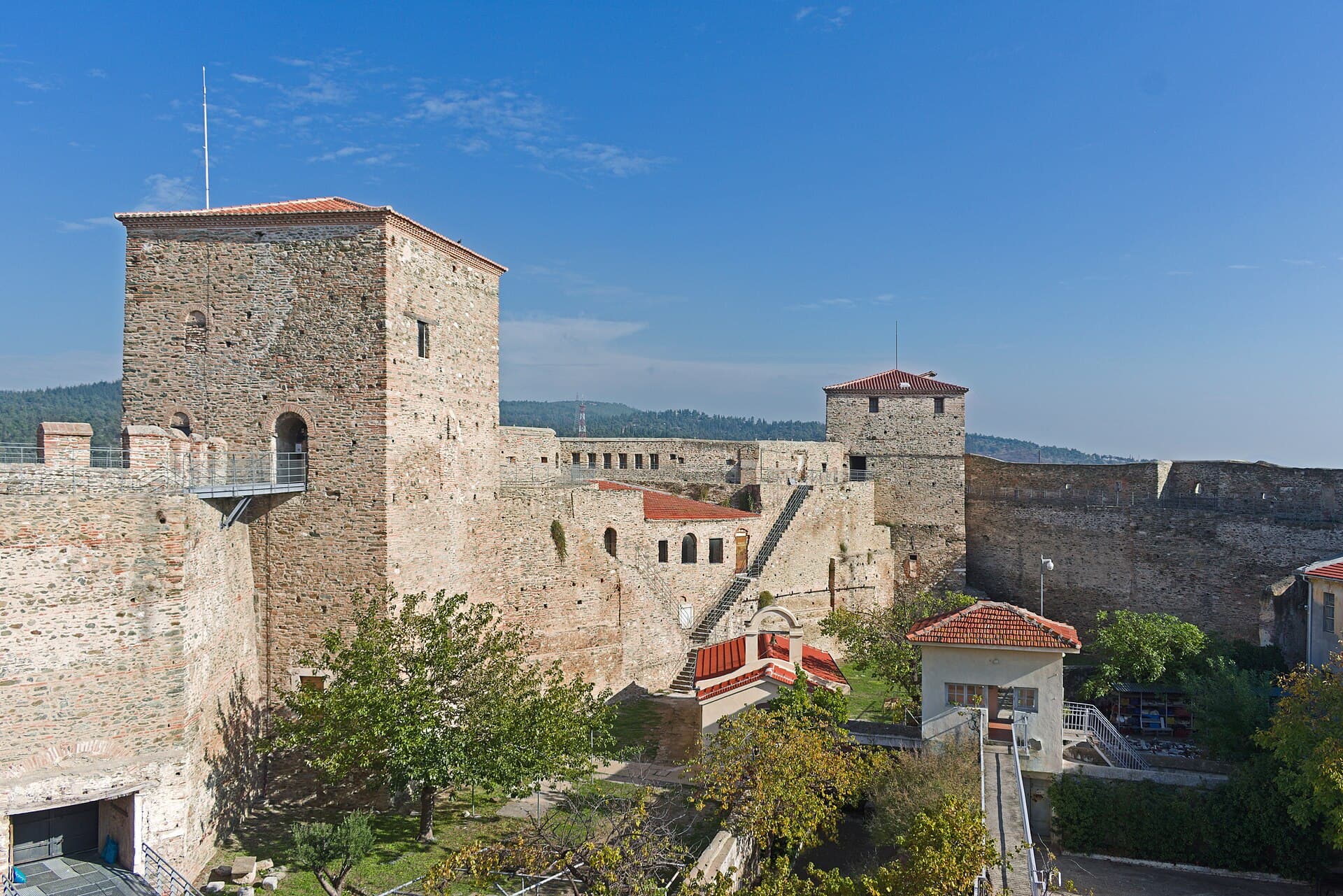 Ymblanter / CC BY-SA 4.0, via Wikimedia Commons
“Thessaloniki: A city of echoes, where ancient stones meet a modern pulse.”
Not the postcards. The stories even locals don't know — whispered in your ear, right where they happened.
There's a clock in the city center that has been frozen in time for decades.
Near the Church of Saint Demetrius, an ancient monument holds a slithery secret.
In Ano Poli, a small alley carries a myth of recurring midnight occurrences.
Discover every secret of Thessalonique
Every address, every reveal in full — in your ear, right where it happened.
You pick your stops. You walk. The voice reveals what the others miss.
No tours available yet. Check back soon — we're preparing them.
Thessaloniki, Greece's second-largest city, offers a captivating blend of ancient history and contemporary energy. Situated on the Thermaic Gulf at the northwest corner of the Aegean Sea, it serves as a major economic, industrial, commercial, and political hub for Greece and southeastern Europe. Often called the 'co-capital' (Symprotévousa) due to its historical significance in the Byzantine Empire alongside Constantinople, Thessaloniki presents a unique character that sets it apart from other Greek destinations.
The city's walkable center makes exploration effortless, with Roman ruins and Byzantine walls standing beside modern cafes and a lively waterfront. Thessaloniki is also recognized as the gastronomic capital of Greece, with a UNESCO-recognized food scene that marries Balkan and Mediterranean flavors. Its cultural life is further enhanced by annual festivals and events, including the Thessaloniki International Fair and the Thessaloniki International Film Festival.
Thessaloniki's story begins in 315 BC when Cassander of Macedon, brother-in-law of Alexander the Great, established the city. He named it after his wife, Thessalonike, whose name means 'victory of the Thessalians,' commemorating her father Philip II's triumph with Thessalian horsemen. The new city rapidly developed, and by the 2nd century BC, its first walls provided fortification.
Under Roman rule, Thessaloniki flourished, becoming the capital of the Roman province of Macedonia in 128 BC. Its strategic location on the Via Egnatia, a vital road connecting Dyrrhachium with Byzantium, transformed it into an important trade hub facilitating commerce between major centers like Rome and Byzantium. The Apostle Paul even addressed two letters to its inhabitants, and its first bishop, Gaius, was one of his companions.
As the Byzantine Empire emerged, Thessaloniki became its second-largest and wealthiest city after Constantinople, maintaining this status until its transfer to Venetian control in 1423. The city's population reached 150,000 in the mid-12th century, exceeding that of London at the time. Despite repeated invasions by Avars and Slavs in the 6th and 7th centuries, Thessaloniki prospered, becoming a significant spiritual and religious center, known for its many Paleochristian and Byzantine monuments, many of which are now UNESCO World Heritage Sites.
The Ottomans conquered Thessaloniki in 1430, initiating nearly five centuries of Turkish rule. During this period, it remained an important seaport and a multi-ethnic metropolis where churches, mosques, and synagogues coexisted. From the 16th to the 20th centuries, Thessaloniki was unique as the only Jewish-majority city in Europe. It was also the birthplace of Mustafa Kemal Atatürk, the founder of modern Turkey.
The city returned to Greek control on November 8, 1912, during the First Balkan War. A devastating fire in 1917 destroyed much of the historic center, leading to a reimagining of the city with wide boulevards and neoclassical architecture under the urban plan of French architect Ernest Hébrard. In the 1920s, the city welcomed refugees from Asia Minor, further shaping its cultural landscape. Despite the tragic extermination of most of its Jewish population during the German occupation in World War II, Thessaloniki was rebuilt and declared the European City of Culture in 1997. Today, it stands as a cultural and economic hub of Northern Greece, with a metropolitan population of over one million inhabitants.
Begin your exploration at Aristotelous Square, a grand seaside plaza designed by French architect Ernest Hébrard, offering views of the Thermaic Gulf and a lively atmosphere with cafes and shops. From there, a short walk leads to the iconic White Tower, a 15th-century Ottoman fortress that now houses a museum detailing the city's history, and provides panoramic city views from its top.
Delve into Thessaloniki's past by visiting the UNESCO-recognized Paleochristian and Byzantine monuments. These include the Church of Saint Demetrius, dedicated to the city's patron saint, and the impressive Rotunda, a massive domed structure with magnificent mosaics. Nearby, you'll find the Arch of Galerius and the remains of the Palace of Galerius, showcasing Roman imperial history.
Ascend to Ano Poli, the Upper Town, the only part of Thessaloniki largely untouched by the 1917 fire. Here, you can wander through charming streets, discover the Heptapyrgion fortress for 360-degree city views, and visit the Vlatadon Monastery. For a taste of local life and flavors, explore the bustling Kapani and Modiano markets. Do not miss the Museum of Byzantine Culture and the Archaeological Museum of Thessaloniki for deeper insights into the city's heritage.
The ideal times to visit Thessaloniki are spring (April to June) and fall (September to November). These seasons offer mild weather, making it comfortable for sightseeing without the peak summer crowds. Average high temperatures in May reach around 25°C (77°F), while September sees highs of about 27°C (81°F). Summers (June to August) are warm and sunny, with temperatures often reaching the upper 80s°F (around 30°C), making it suitable for beach activities in the early morning or late afternoon. Winters (December to February) are mild, with average highs around 10°C (50°F), though rain can be expected.
Thessaloniki Airport 'Makedonia' (SKG) is located about 13-15 km southeast of the city center. You can reach the city by public bus (Route 01X during the day, 01N at night) which takes about 40 minutes and costs a few euros, or by taxi for around €20-€25. The city's public transportation system is primarily bus-based, with a single ticket costing around €1. A recently inaugurated metro system (November 2024) also connects the New Railway Station with Nea Elvetia, with plans for expansion.
The official currency is the Euro (€), and while card payments are widely accepted, it's advisable to carry some cash for smaller purchases and local markets. ATMs are readily available throughout the city. Tipping is not mandatory but appreciated; common practice includes rounding up the bill or leaving 5-10% in restaurants. Greeks typically dine after 8:30 PM, so plan accordingly for a lively evening atmosphere.