Clock Tower Square
Thimphu has a square that looks like it's missing something essential to city life.
Full story unlocks in the tour
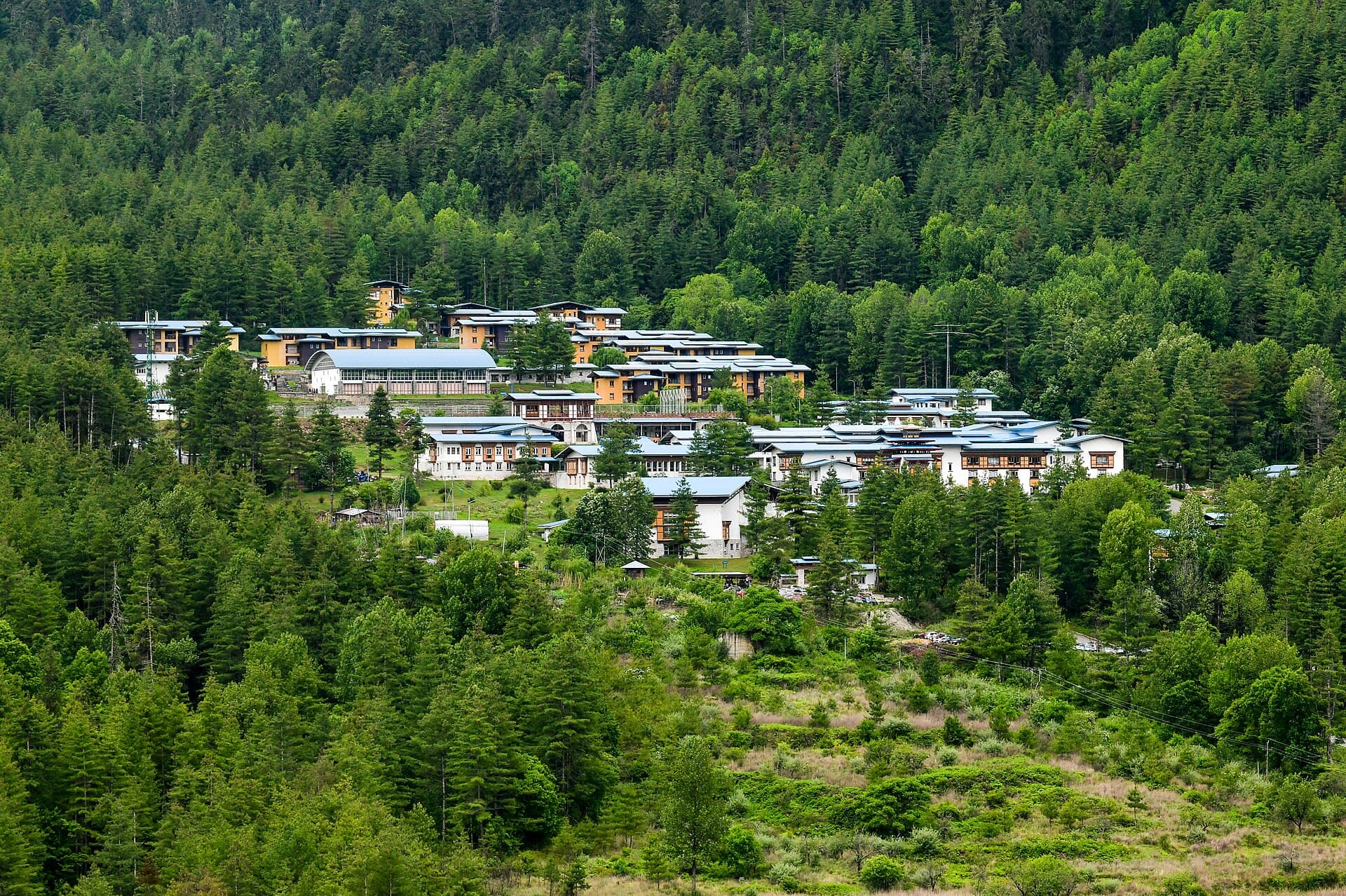 Christopher J. Fynn / cc by-sa 4.0, via Wikimedia Commons
Self-guided audio walking tour of Thimphu — GPS route, offline playback, story-driven narration in 32 languages.
“Where ancient traditions breathe beside a modernizing pulse.”
Not the postcards. The stories even locals don't know — whispered in your ear, right where they happened.
Thimphu has a square that looks like it's missing something essential to city life.
This prominent chorten isn't dedicated to a Buddha, but to a different kind of enlightened being.
Bhutan's national animal looks like a creature from a mythical tale, and its origins are just as fantastical.
Discover every secret of Thimphu
Every address, every reveal in full — in your ear, right where it happened.
You pick your stops. You walk. The voice reveals what the others miss.
Lume has a built-in augmented-reality guide. Hold your phone up and its camera shows the street ahead of you, with a glowing arrow laid over the real view that always points to your next stop — no map to puzzle over, no wrong turns. Like everything in Lume, it works fully offline.
Thimphu, the capital of Bhutan, is an anomaly among global cities. It's a place where the pace of life feels dictated by ancient rhythms rather than the relentless hum of modernity. Situated in a valley of the Himalayas, Thimphu maintains a unique character, largely due to Bhutan's philosophy of Gross National Happiness, which prioritizes well-being over economic growth. Here, traditional Bhutanese architecture, with its intricately painted wooden facades and sloping roofs, dominates the skyline, and the national dress is a common sight.
Unlike many capital cities, Thimphu lacks the chaotic rush and towering skyscrapers. Instead, you'll find a charming blend of monasteries, markets, and government buildings, all adhering to a distinct architectural style. The city is a living museum of Bhutanese culture, offering a profound glimpse into a society that has carefully guarded its traditions while selectively embracing progress. The air is often filled with the scent of juniper incense and the murmur of prayers, creating an atmosphere of tranquility and spiritual depth.
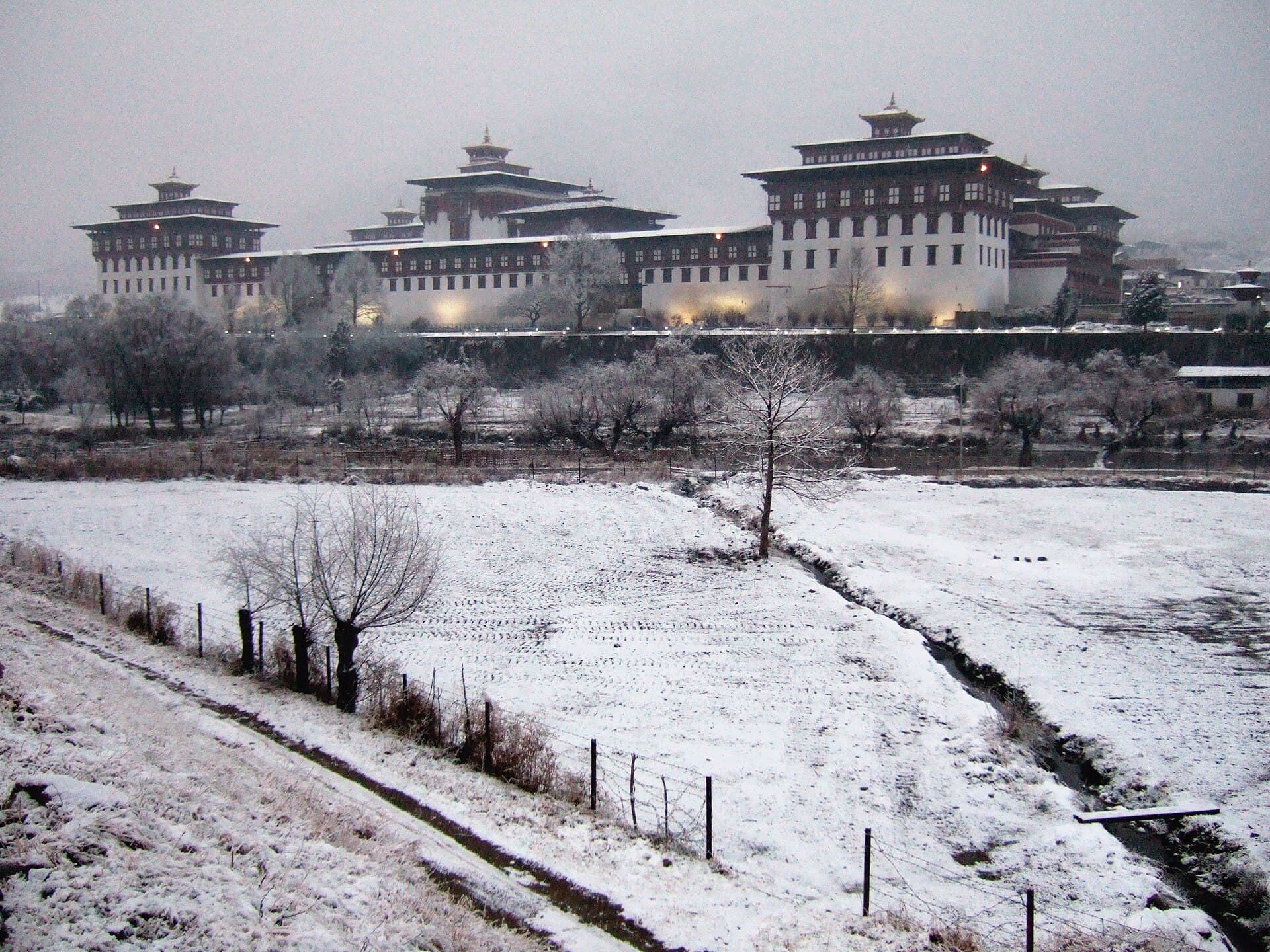
## From Pastoral Valley to Royal Capital Thimphu's origins are rooted in a pastoral valley, far removed from its current status as a national capital. Historically, the area was a scattering of villages and monasteries. The most significant early structure was the Dechenphug Lhakhang, a monastery dating back to the 12th century. However, the true administrative heart of the region began to solidify with the construction of the Tashichho Dzong in the mid-17th century by Zhabdrung Ngawang Namgyal, the unifier of Bhutan. This impressive fortress initially served as a monastic and administrative center for the western region.
For centuries, Bhutan remained largely isolated, and its governance was decentralized. It wasn't until 1955 that Thimphu was officially declared the capital of Bhutan by the Third King, Jigme Dorji Wangchuck. This decision marked a pivotal moment in the nation's history, initiating a period of gradual modernization and development. Infrastructure projects, including roads, schools, and hospitals, began to transform the quiet valley into a functional capital.
In the latter half of the 20th century, Thimphu experienced significant growth as Bhutan opened its doors cautiously to the outside world. The city became the center of political, economic, and religious life. Despite this development, Bhutan has consistently strived to balance progress with the preservation of its unique cultural identity and environment. This commitment is evident in Thimphu's urban planning, which mandates traditional architectural styles and limits high-rise construction, ensuring the city retains its distinctive character amidst the changing times.
Begin your exploration at the Buddha Dordenma, a massive gilded Buddha statue offering panoramic views of the Thimphu Valley. Next, immerse yourself in Bhutanese governance and monastic life at Tashichho Dzong, a grand fortress that houses both the government and the Central Monastic Body. For a deeper understanding of Bhutanese culture, visit the National Memorial Chorten, a revered stupa where locals circumambulate and offer prayers.
Discover the unique national animal at the Motithang Takin Preserve, a fenced area dedicated to the peculiar Takin. Explore the artistic heritage at the National Institute for Zorig Chusum, where students learn Bhutan's 13 traditional arts, and the National Textile Museum, showcasing intricate weaving. For a glimpse into rural life, the Folk Heritage Museum provides an authentic experience in a traditional farmhouse. Do not miss the Weekend Market for local produce, crafts, and traditional remedies. Finally, witness the unique traffic direction at Clock Tower Square, a testament to Thimphu's distinctive approach to urban planning.
The best times to visit Thimphu are during the spring (March to May) and autumn (September to November). Spring offers pleasant weather with blooming rhododendrons, while autumn brings clear skies and comfortable temperatures, ideal for trekking and outdoor activities. These seasons also coincide with many Bhutanese festivals (Tshechus). Winter (December to February) can be cold but offers crisp views, while summer (June to August) is the monsoon season, with frequent rainfall.
Bhutan has a 'High Value, Low Impact' tourism policy, requiring visitors to pay a daily Sustainable Development Fee (SDF). Most tourists must book through a licensed Bhutanese tour operator. The local currency is the Bhutanese Ngultrum (BTN), pegged to the Indian Rupee (INR), which is also widely accepted. ATMs are available, but it's advisable to carry some cash. Drukair and Bhutan Airlines are the only carriers flying into Paro International Airport (PBH), the sole international airport, about an hour's drive from Thimphu. Electricity is 230V with Type D and Type G outlets. Internet and mobile connectivity are generally good in Thimphu. Remember to dress modestly, especially when visiting religious sites, and remove your shoes before entering temples.
Thimphu in Korean, in Chinese or in Hebrew — and 29 more languages, every stop narrated by a native voice. The widest language range of any self-guided audio tour.
Available in: