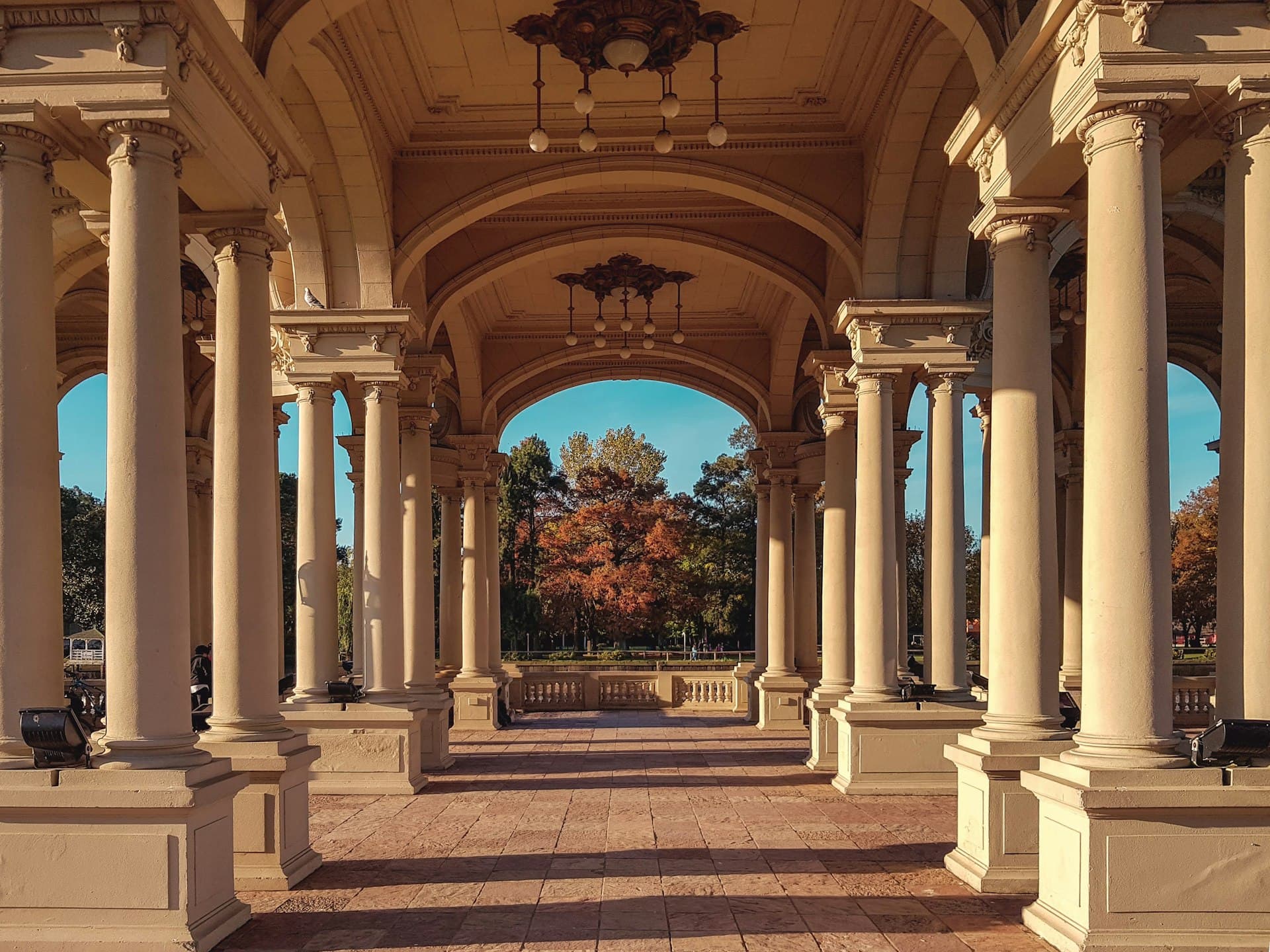
TigrePhoto: Martín Muelas / Unsplash
AR

Tigre

Where the city's pulse softens into a river's rhythm.

The secrets of Tigre

Tigre, as no one tells it.

Not the postcards. The stories even locals don't know — whispered in your ear, right where they happened.

3 secrets below. Many more wait inside the tour.
The name 'Tigre'

Tigre means 'tiger' in Spanish, yet you won't find any large striped cats roaming the delta.

Full story unlocks in the tour
Museo de Arte Tigre

This elegant building, now an art museum, once hosted extravagant parties and high-stakes gambling for Argentina's elite.

Full story unlocks in the tour
The Paraná Delta

The Tigre Delta, unlike most deltas worldwide, doesn't empty into an ocean.

Full story unlocks in the tour
The full tour

Discover every secret of Tigre

Every address, every reveal in full — in your ear, right where it happened.

Get the key to Tigre

You pick your stops. You walk. The voice reveals what the others miss.

Choose your time

How long do you have in Tigre?

No tours available yet. Check back soon — we're preparing them.

About Tigre

The story of Tigre

Just 28 kilometers north of Buenos Aires, Tigre offers a striking contrast to the bustling capital. This city serves as the primary gateway to the Paraná Delta, a vast and dynamic wetland ecosystem. Here, the urban landscape gives way to a labyrinthine network of rivers, streams, and islands, creating a distinctive environment where life revolves around the water.

Visitors can trade cityscapes for serene waterways, exploring the delta's verdant islands and historic rowing clubs. Tigre's unique appeal lies in its blend of natural splendor and a profound cultural heritage shaped by both indigenous communities and European settlers. It's a place where grand Belle Époque architecture stands alongside stilt houses, and the rhythm of river life dictates the pace.

History

From Indigenous Lands to Belle Époque Retreat

The history of Tigre stretches back to pre-European settlement, when the islands of the Paraná Delta were inhabited by indigenous groups, particularly the Guaraníes, who were nomadic hunters and gatherers. The area was initially known as "Pago de las Conchas" (Town of the Shells) during the colonial period, named for the abundant seashell debris in the riverbed. Its importance grew as it became a crucial port for transporting timber and fruit from the delta islands to Buenos Aires.

Major transformation arrived in the late 19th century with the extension of the railway to Tigre in 1865, making it easily accessible from Buenos Aires. This ushered in a "Golden Age" as Tigre evolved into a fashionable weekend retreat for the wealthy elite of Buenos Aires. European-style mansions and grand social clubs, like the Tigre Hotel (opened 1890) and the Tigre Club (opened 1912), were constructed, becoming gathering places for the Belle Époque's high society.

Rowing played a significant role in Tigre's development during this period. The first official regatta in Argentina was held on the Luján River in 1873, an event attended by President Sarmiento. This success led to the establishment of numerous rowing and yacht clubs by diverse immigrant communities, including British, Italian, Swiss, and Scandinavian groups, many of which still stand today as architectural heritage. The Tigre Club building, a symbol of this era, was declared a National Historic Monument in 1979 and, after extensive restoration, reopened as the Museo de Arte Tigre in 2006. In 1952, the district's name was officially changed from Partido de las Conchas to Partido de Tigre.

The Delta's Enduring Importance

The Paraná Delta itself is a vast geological formation, covering approximately 14,000 square kilometers, making it the fifth largest delta on the planet and the third most important in South America. Formed by the sediments carried by the Paraná and Uruguay rivers into the Río de la Plata, it's a unique freshwater delta. This complex water system, with over 350 rivers and streams in the Tigre section, has shaped the landscape, communication, and lifestyle of its inhabitants for centuries. Historically a port for timber, Tigre remains an important timber processing center. Today, the delta is a significant biodiversity hotspot, providing habitat for numerous plant and animal species, including capybaras. The old fruit port, Puerto de Frutos, has also been revitalized, transforming into a bustling craft market while still offering local produce.

What to see

Tigre offers a blend of natural splendor and historical charm, primarily centered around its waterways. A boat tour through the Paraná Delta is essential, allowing you to navigate its intricate network of rivers and streams, past stilted houses and verdant islands. Options range from public lancha colectiva (water bus) rides to private excursions, offering glimpses into island life and opportunities for swimming or walking through floating vegetation.

On land, explore the Paseo Victorica, a scenic riverside promenade lined with historic mansions and rowing clubs. The Museo de Arte Tigre (MAT), housed in the former Tigre Club, is a highlight, showcasing Argentine figurative art within a magnificent Beaux-Arts building. Nearby, the Puerto de Frutos is an active open-air market where you can find everything from local crafts and furniture to honey and fresh fruit.

For family-friendly entertainment, Parque de la Costa offers an amusement park experience. Other points of interest include the Argentine Naval Museum, which houses artifacts from naval history, including the log-book from HMS Beagle, and a unique museum dedicated to mate, Argentina's traditional tea-like drink.

When to visit

The best time to visit Tigre for outdoor activities is from mid-October to mid-April, when the weather is warm and mostly clear. The warm season typically runs from late November to mid-March, with average daily high temperatures above 80°F (27°C); January is the warmest month. For warm-weather activities, mid-December to early March is ideal. The cooler season, from late May to late August, sees average daily high temperatures below 64°F (18°C), with July being the coldest month, averaging 43°F (6°C) to 59°F (15°C). September to November offers sunny days with minimal rainfall, perfect for boat rides and exploring the delta. Tigre experiences a wet climate year-round, with October being the wettest month and July the driest.

Practical

Tigre is easily accessible from Buenos Aires, approximately 28-32 kilometers away. The most popular and economical way to get there is by train from Retiro Station, with services running frequently and taking about an hour. Alternatively, you can take a bus (Line 60 from Constitución) or drive via the Panamericana Highway. For a more scenic route, consider the Tren de la Costa, a tourist-oriented train line.

Once in Tigre, public transportation includes ferries (lanchas colectivas) that function as water buses, connecting the various islands and allowing for exploration of the delta. Taxis and ride-sharing services are also available. While many attractions are within walking distance in the town center, a boat tour is essential for experiencing the delta. Consider purchasing boat tour tickets directly at the pier for potentially better rates. If venturing into the wetlands, be prepared to get wet and consider going barefoot for walks on muddy ground.

Good to know
How far is Tigre from Buenos Aires?
Tigre is located approximately 28 to 32 kilometers (17 to 20 miles) north of Buenos Aires.
What is the best way to get to Tigre from Buenos Aires?
The most common and affordable way is by train from Retiro Station in Buenos Aires, which takes about an hour. Buses and scenic train options like the Tren de la Costa are also available.
What are the main attractions in Tigre?
Key attractions include boat tours of the Paraná Delta, the Museo de Arte Tigre, the Puerto de Frutos market, and the Paseo Victorica promenade.
Is Tigre a good day trip from Buenos Aires?
Yes, Tigre is a popular and highly recommended day trip from Buenos Aires, offering a distinct natural and cultural experience away from the city.
What is the Paraná Delta?
The Paraná Delta is a vast freshwater delta formed by the Paraná and Uruguay rivers, uniquely flowing into the Río de la Plata. It's known for its complex waterways, islands, and rich biodiversity.
What kind of art is displayed at the Museo de Arte Tigre?
The Museo de Arte Tigre houses a permanent collection of Argentine figurative art from the late 19th to mid-20th centuries, with temporary exhibitions often featuring contemporary artists.
Tigre
From€9.00
No booking · activate anytime · 12h to walk it
Get the key to Tigre