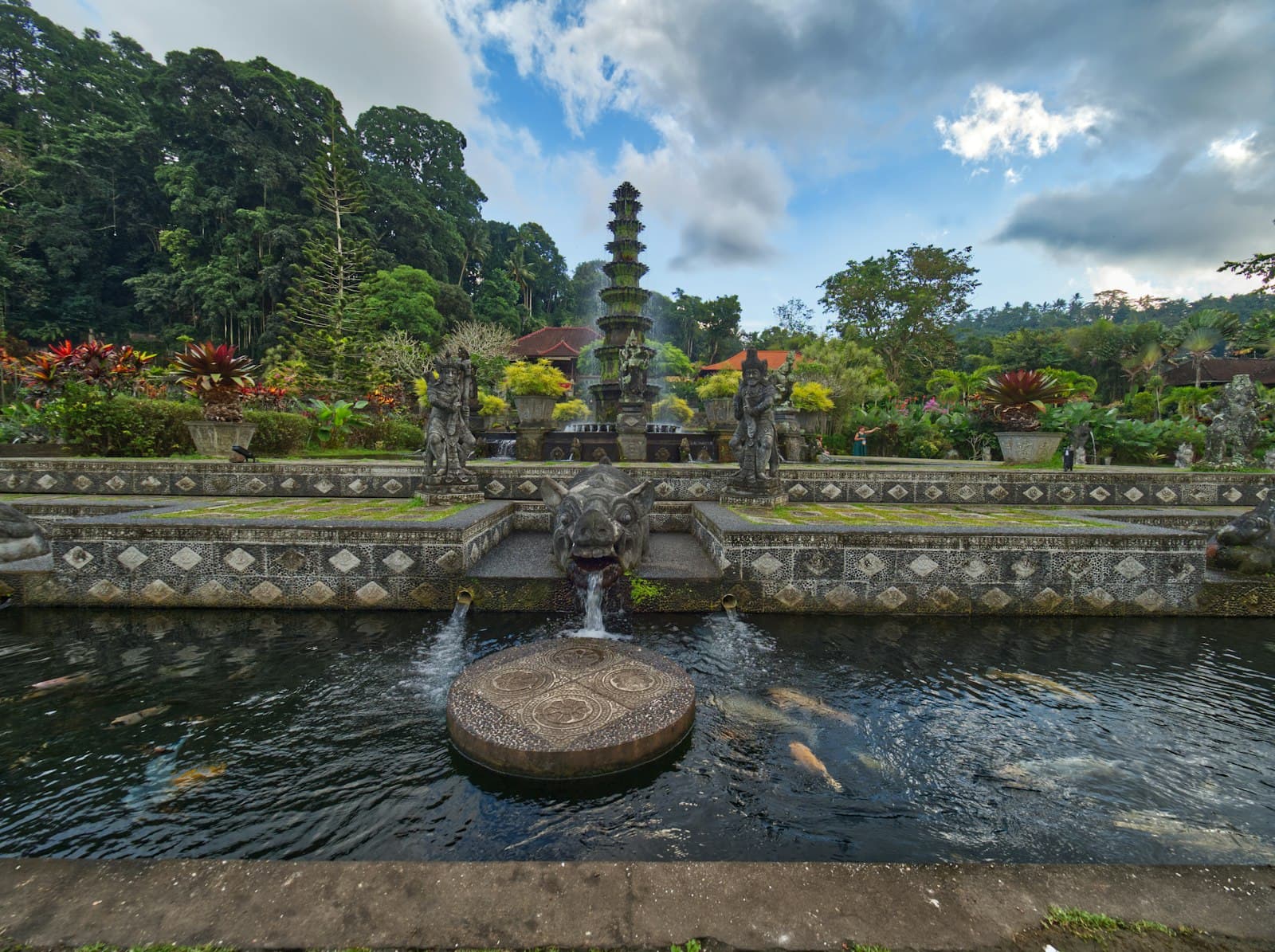
You've seen the photos: visitors 'walking on water' across ornate stepping stones, surrounded by giant koi. But there's a playful secret about those fish.
Bair175 / CC BY-SA 3.0, via Wikimedia CommonsTirta Gangga
Self-guided audio walking tour of Tirta Gangga — GPS route, offline playback, story-driven narration in 32 languages.
“Where royal legacy flows through sacred waters and sculpted gardens.”
Tirta Gangga, as no one tells it.
Not the postcards. The stories even locals don't know — whispered in your ear, right where they happened.
Tirta Gangga means 'water from the Ganges,' a nod to a sacred Indian river. But the water here isn't just symbolic; it holds a deeper, local belief.
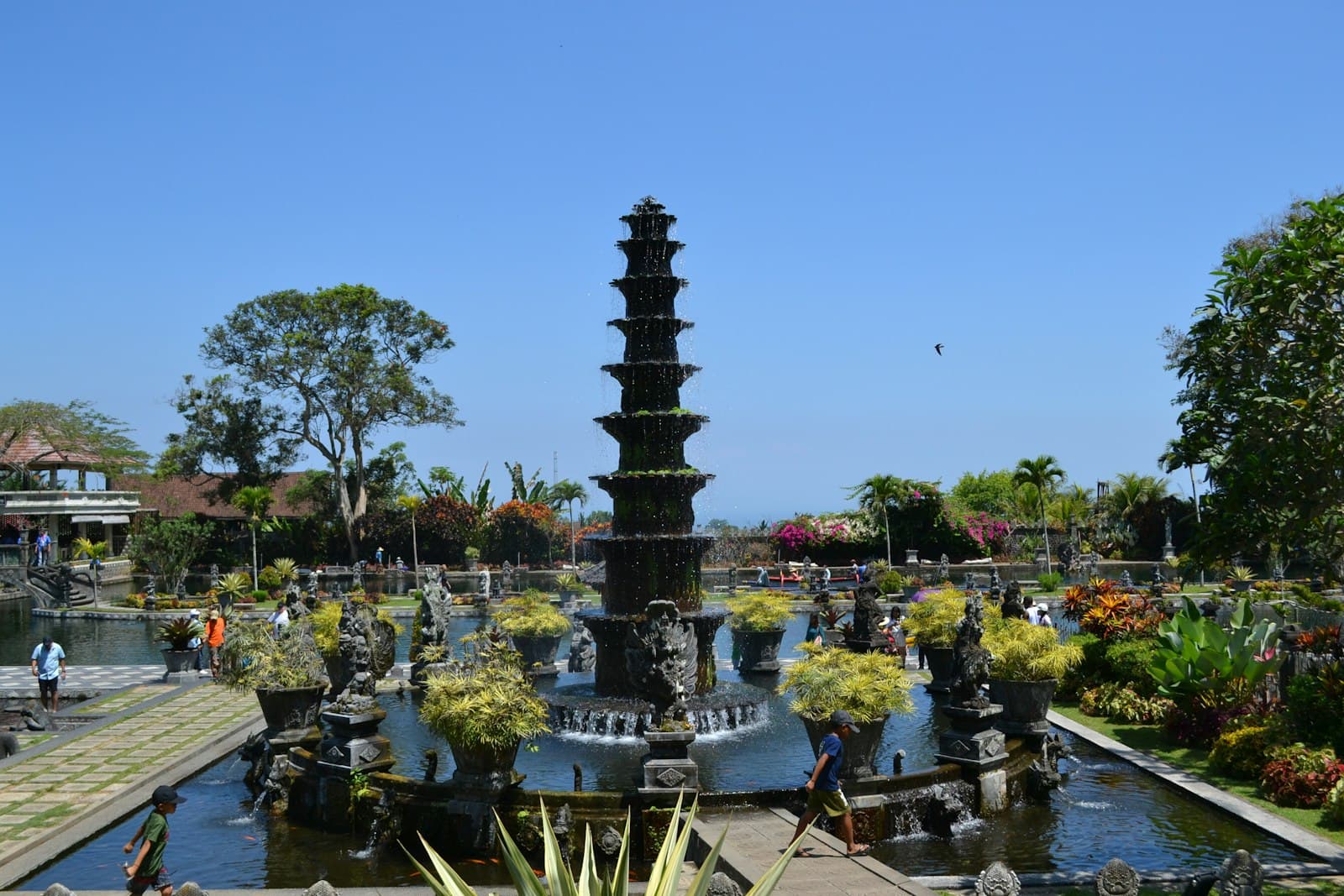
At the heart of Tirta Gangga stands an impressive eleven-tiered fountain. While its beauty is clear, its design holds a subtle, cross-cultural influence.
Discover every secret of Tirta Gangga
Every address, every reveal in full — in your ear, right where it happened.
You pick your stops. You walk. The voice reveals what the others miss.
How long do you have in Tirta Gangga?
Your self-guided audio tour of Tirta Gangga is ready — pick your landmarks, choose your language, and start the moment you arrive.
BuyThe story of Tirta Gangga
In the tranquil landscapes of East Bali, Tirta Gangga is a former royal water palace that captivates with its intricate ponds, fountains, and lush gardens. Its name, meaning 'water from the Ganges,' reflects its profound spiritual significance to the Balinese, who revere the site for its sacred spring water.
More than just a picturesque attraction, Tirta Gangga is a sprawling complex spanning over an acre, designed with a harmonious blend of Balinese and Chinese architectural styles. Visitors can wander across iconic stepping stones that appear to float on koi-filled ponds, admire elaborate stone carvings of gods and mythical creatures, and even take a refreshing dip in the spring-fed swimming pools.
A King's Vision and Resilience
Tirta Gangga was conceived and built in 1946 by Anak Agung Anglurah Ketut Karangasem, the last Raja (King) of Karangasem. The king, a passionate architect himself, personally oversaw and participated in the construction, digging out pools alongside his laborers. He envisioned it as both a royal retreat for his family and a sacred place for worship and meditation, incorporating Balinese Hindu symbolism with his love for water and gardens.
The design of Tirta Gangga is laid out on three distinct levels, symbolizing the Balinese belief in the interconnectedness of the divine, human, and spiritual worlds. The lowest level features ornamental ponds with fountains and lively fish, while the middle level houses a swimming pool with clear, cool water. The highest part of the complex contains a banyan tree and the natural spring that supplies all the pools and irrigates the surrounding rice fields.
Tragically, much of the palace was almost entirely destroyed in 1963 by the catastrophic eruption of Mount Agung, Bali's most sacred volcano. Despite the extensive damage from falling ash and debris, the palace was meticulously rehabilitated and restored, particularly its water gardens, in 1979. Today, Tirta Gangga stands as a testament to cultural resilience and the enduring Balinese reverence for sacred water and their heritage.
Begin your exploration at the main pond, where you can navigate a series of ornate hexagonal stepping stones that appear to float on the water. This is a prime spot for photography, with giant koi fish swimming beneath your feet, often eager for a feed. Look for the towering 10-meter fountain, a central feature that adds to the grandeur of the lower garden.
Ascend to the middle section to discover the spring-fed swimming pools. Here, you can take a refreshing dip in the cool, clear water, just as the royal family once did. Remember to bring your own swimwear and towel. Continue to the higher parts of the complex, where you'll find more tranquil gardens, a banyan tree, and the natural spring that feeds the entire water palace.
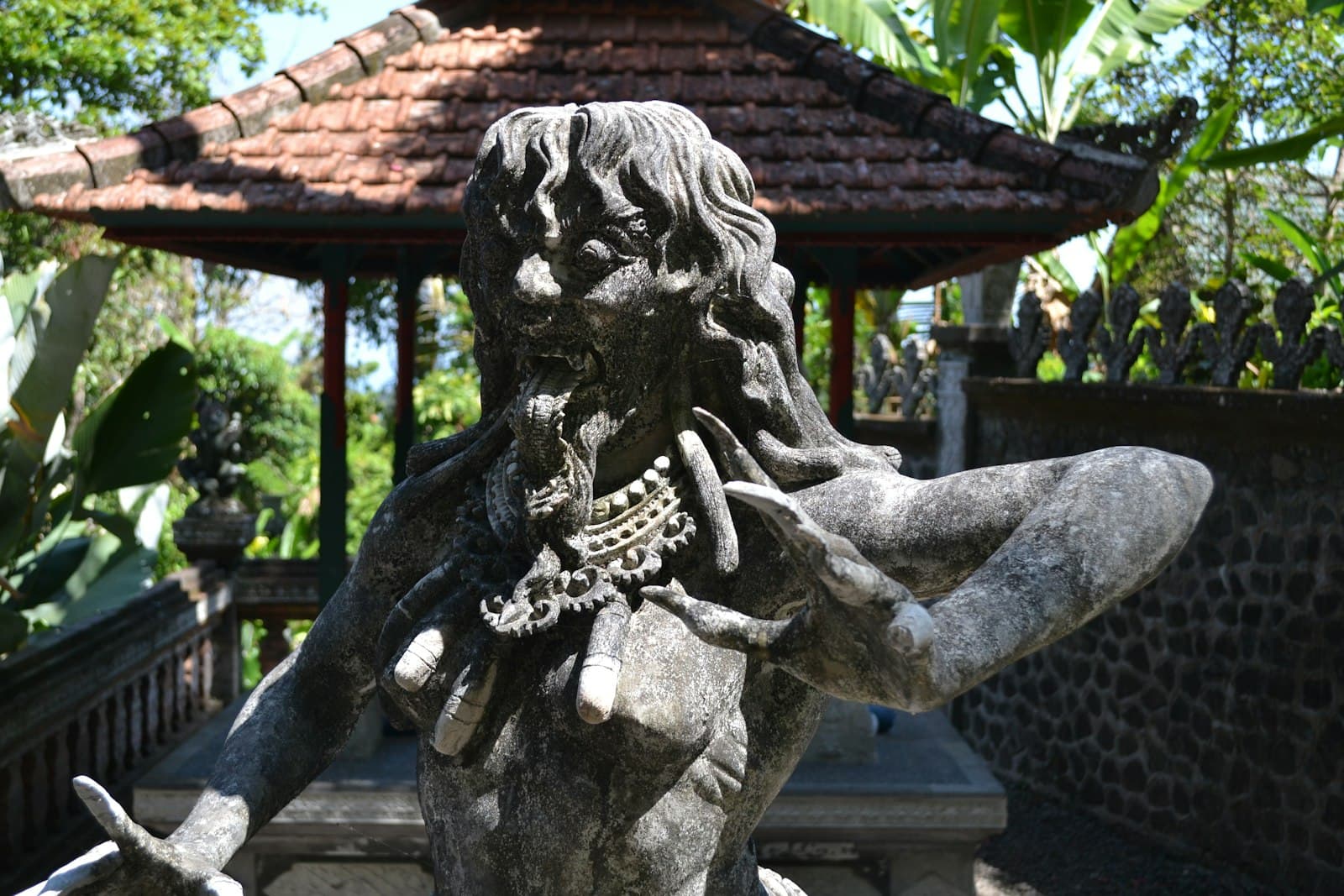
Throughout the complex, admire the intricate stone carvings and statues depicting gods, goddesses, and mythical creatures, all set amidst lush tropical flora. Do not overlook the small museum at the back, which offers insights into the Karangasem Kingdom's history with old photographs and royal memorabilia.
The best time to visit Tirta Gangga is during the dry season, from April to October. To avoid the largest crowds and enjoy cooler temperatures, aim for early mornings, ideally between 6:00 AM and 9:00 AM. The soft morning light is also perfect for photography. Late afternoons, between 4:00 PM and 5:00 PM, can also offer a quieter experience. Weekdays are generally less crowded than weekends.
Tirta Gangga is located in East Bali, in the Karangasem Regency, approximately a 2-hour drive from Ubud and 2.5-3 hours from southern hubs like Seminyak or Canggu. The easiest way to reach it is by hiring a private car and driver, often as part of an East Bali day tour that might include nearby Lempuyang Temple or Taman Ujung Water Palace. Scooter rental is an option for experienced riders, but be prepared for a long journey on winding roads.
The entrance fee for foreign adults is typically around IDR 90,000, with additional fees for swimming (IDR 20,000). Opening hours generally run from 6:00 AM to 7:00 PM daily. While there's no strict dress code like at active temples, modest attire is recommended out of respect. Changing rooms and lockers are available for a small fee if you plan to swim. Local warungs (eateries) and cafes are available near the entrance for refreshments.
- What does 'Tirta Gangga' mean?
- The name 'Tirta Gangga' literally translates to 'Water from the Ganges,' referencing the sacred Ganges River in India and highlighting the holy nature of the water found here.
- Can you swim at Tirta Gangga?
- Yes, visitors can swim in designated spring-fed pools within the complex for an additional fee. It's recommended to bring your own swimwear and towel.
- Is there a dress code for visiting Tirta Gangga?
- Unlike active temples, there isn't a strict dress code at Tirta Gangga, but modest attire that covers shoulders and knees is recommended out of respect for the cultural significance of the site.
- How long should I spend at Tirta Gangga?
- Most visitors spend about 1 to 2 hours exploring the gardens, ponds, and fountains. If you plan to swim, allow for more time.
- Is Tirta Gangga a temple?
- Tirta Gangga is a former royal water palace and garden, not solely a temple. While it holds significant spiritual meaning and is used for purification rituals, it is distinct from an active Hindu temple like Tirta Empul.
- What other attractions are near Tirta Gangga?
- Tirta Gangga is often visited as part of an East Bali tour, with nearby attractions including Lempuyang Temple (Gates of Heaven), Taman Ujung Water Palace, and Virgin Beach.