Rockfort-Tempel
Der Rockfort-Tempel, eine imposante Struktur, ruht auf einem geologischen Wunderwerk. Sein Alter ist nicht nur beeindruckend; es ist fast unvorstellbar.
Die ganze Geschichte wird in der Tour freigeschaltet
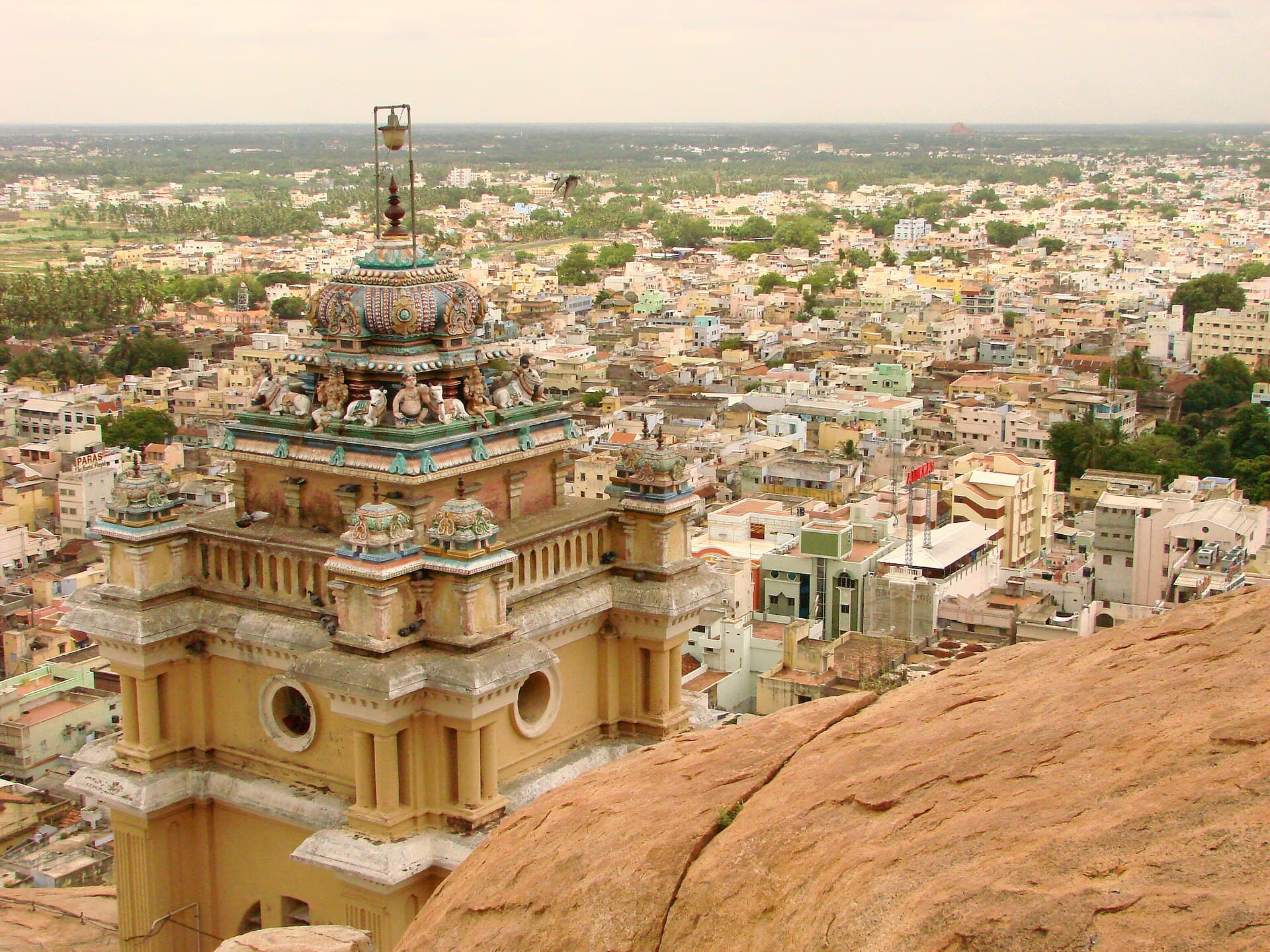 Adam Jones Adam63 / CC BY-SA 3.0, via Wikimedia Commons
Selbstgeführte Audio-Walking-Tour durch Tiruchirappalli — GPS-Route, Offline-Wiedergabe, erzählerische Narration in 32 Sprachen.
“Wo alte Felsen Geschichten bergen, die älter sind als Berge, und Flüsse heiliges Land umarmen.”
Nicht die Postkarten. Die Geschichten, die selbst Einheimische nicht kennen – dir ins Ohr geflüstert, genau dort, wo sie geschahen.
Der Rockfort-Tempel, eine imposante Struktur, ruht auf einem geologischen Wunderwerk. Sein Alter ist nicht nur beeindruckend; es ist fast unvorstellbar.
Dieser monumentale Tempelkomplex ist das spirituelle Zentrum von Tiruchirappalli, doch seine Anwesenheit an diesem speziellen Ort ist auf eine göttliche List zurückzuführen.
Der Jambukeswarar-Tempel, Lord Shiva gewidmet, ist einer von fünf Tempeln, die die Elemente verkörpern. Dieses besondere Heiligtum repräsentiert Wasser, und seine Verbindung zu diesem Element ist bemerkenswert wörtlich.
Entdecke jedes Geheimnis von Tiruchirappalli
Jede Adresse, jede Enthüllung vollständig – in deinem Ohr, genau dort, wo es geschah.
Du wählst deine Stationen. Du gehst. Die Stimme enthüllt, was andere übersehen.


Deine selbstgeführte Audio-Tour durch Tiruchirappalli ist bereit – wähle deine Sehenswürdigkeiten, deine Sprache und starte, sobald du ankommst.
KaufenLume enthält einen integrierten Augmented-Reality-Guide. Halten Sie Ihr Handy hoch: Die Kamera zeigt die Straße vor Ihnen, mit einem leuchtenden Pfeil über dem echten Bild, der immer auf Ihren nächsten Stopp zeigt — keine Karte zum Rätseln, keine falschen Abzweigungen. Wie alles bei Lume funktioniert es komplett offline.
Tiruchirappalli, oft als Trichy bekannt, ist eine Stadt in Tamil Nadu, Indien, wo das Alte und das Zeitgenössische am Ufer des Kaveri-Flusses aufeinandertreffen. Es ist ein Ort, an dem Geschichte nicht nur in Texten chronisiert, sondern in kolossale Felsformationen und prächtige Tempelkomplexe gemeißelt ist. Als viertgrößte urbane Agglomeration in Tamil Nadu fungiert Trichy als bedeutendes kulturelles und geografisches Zentrum, das eine Mischung aus pulsierendem städtischem Leben, Bildungseinrichtungen und tief verwurzelten spirituellen Bräuchen bietet.
Der Horizont der Stadt wird vom ikonischen Rockfort-Tempel definiert, einem Zeugnis jahrhundertelanger architektonischer Entwicklung und einem Bezugspunkt für das Verständnis der dravidischen Gestaltung. Jenseits seiner herausragenden Sehenswürdigkeiten lädt Trichy Besucher ein, eine lebendige Auswahl an lokalen Märkten, vielfältiger Küche und einer einladenden Atmosphäre zu erkunden. Es ist eine Stadt, die eine bereichernde Reise verspricht, egal ob Sie ein Geschichtsinteressierter, ein spiritueller Suchender oder einfach jemand sind, der in den authentischen Geist der tamilischen Kultur eintauchen möchte.
Trichy ist auch für seine Lebensqualität und Sauberkeit in Tamil Nadu sowie als fünft sicherste Stadt für Frauen in Indien bekannt. Seine strategische Lage, fast im geografischen Zentrum von Tamil Nadu, macht es zu einem zugänglichen Knotenpunkt für die Erkundung der weiteren Region.
Die dokumentierte Geschichte von Tiruchirappalli reicht bis ins 3. Jahrhundert v. Chr. zurück, als es als Uraiyur bekannt war und 600 Jahre lang als Hauptstadt der frühen Chola-Dynastie diente. Die Antike der Stadt wird durch Verweise des Historikers Ptolemäus im 2. Jahrhundert n. Chr. weiter hervorgehoben, der sie Orthoura nannte. Eines der frühesten und beständigsten Beispiele seiner Ingenieurskunst ist der Kallanai-Damm, der älteste erhaltene Damm der Welt, der im 2. Jahrhundert n. Chr. von Karikala Chola etwa 18 Kilometer von Uraiyur entfernt über den Kaveri-Fluss gebaut wurde.
Im Laufe der Jahrhunderte wurde Tiruchirappalli zu einem umkämpften Gebiet, das zwischen mächtigen Dynastien wechselte. Der Pallava-König Mahendravarman I. begann im 6. Jahrhundert n. Chr. mit dem Bau von Felsenhöhlentempeln im Rockfort. Nach den Pallavas wurde die Stadt bis zum 13. Jahrhundert von den mittelalterlichen Cholas regiert, danach kam sie unter die Herrschaft der Pandyas. Das 14. Jahrhundert erlebte die Ankunft des Sultanats von Delhi, dessen Armeen die Gegend geplündert haben sollen. Das Vijayanagar-Reich etablierte dann seine Vorherrschaft und spielte eine entscheidende Rolle bei der Wiederbelebung des Hinduismus durch den Wiederaufbau von Tempeln.
Das Madurai-Nayak-Königreich, das nach dem Niedergang des Vijayanagar-Reiches seine Unabhängigkeit geltend machte, sah Tiruchirappalli aufblühen. Es diente im 17. und 18. Jahrhundert für beträchtliche Zeiträume als ihre Hauptstadt, wobei Vishwanatha Nayak die Errichtung des Teppakulam und die Befestigung des Srirangam-Tempels zugeschrieben wird. Das 18. Jahrhundert markierte eine turbulente Ära, da Tiruchirappalli zu einem entscheidenden Schlachtfeld während der Carnatic-Kriege wurde, einem Kampf um die Vorherrschaft zwischen den Briten, Franzosen und lokalen Herrschern.
Mit der Errichtung der britischen Herrschaft im Jahr 1801 wurde Tiruchirappalli in die Madras-Präsidentschaft eingegliedert und entwickelte sich zu einer der wichtigsten Städte Indiens. Sie war im gesamten Britischen Empire für die "Trichinopoly-Zigarre" bekannt und diente 1874 als erster Hauptsitz der South Indian Railway Company. Dieses reiche Mosaik aus Herrschern und Einflüssen hat Tiruchirappalli zu einer Stadt geformt, in der antike Tempelkomplexe neben Bauwerken aus der Kolonialzeit stehen und eine deutliche architektonische Mischung schaffen.
Der Kern des Reizes von Tiruchirappalli liegt in seinen ikonischen Wahrzeichen. Der Rockfort-Tempel ist ein bedeutendes Reiseziel, ein Festungskomplex auf einer alten Felsformation. Der Aufstieg über seine 437 geschnitzten Stufen führt zum Ucchi Pillayar-Tempel, der Lord Ganesha gewidmet ist und einen weiten Blick über die Stadt bietet. Entlang des Aufstiegs finden Sie den Thayumanaswami-Tempel, einen in den Fels gehauenen Schrein für Lord Shiva.
Ein kurzes Stück entfernt, auf einer Insel im Kaveri-Fluss, liegt der Sri Ranganathaswamy-Tempel in Srirangam. Dieser weitläufige Komplex, der Lord Vishnu gewidmet ist, gilt als einer der größten funktionierenden Hindu-Tempel der Welt und ist berühmt für seine dravidische Architektur, seine komplizierten Schnitzereien und seine 21 kunstvollen Turmtore (Gopurams).
Eine weitere wichtige spirituelle Stätte ist der Jambukeswarar-Tempel in Thiruvanaikaval, der Lord Shiva gewidmet ist. Er ist einer der fünf großen Shiva-Tempel, die das Element Wasser repräsentieren. Für einen Einblick in die Vergangenheit der Region ist der Kallanai-Damm, ein 2000 Jahre altes Ingenieurwunder, eine kurze Autofahrt entfernt.
Neben den Haupttempeln sollten Sie das Government Museum in der Nähe des Rani Mangammal Mahal besuchen, das archäologische Funde und lokale Geschichte beherbergt. Für Naturliebhaber bieten die Puliyancholai-Wasserfälle eine erfrischende Flucht mit Wasserfällen und natürlichen Becken.
Die günstigste Zeit für einen Besuch in Tiruchirappalli sind die kühleren Monate von Oktober bis März. Die Temperaturen sind in dieser Zeit angenehm und liegen zwischen 20°C und 30°C, was Erkundungen und Outdoor-Aktivitäten erleichtert. Von Dezember bis Februar ist das Wetter besonders kühl und angenehm, mit Temperaturen zwischen 19°C und 22°C. Diese Jahreszeit fällt auch mit lebhaften Festivals wie Pongal im Januar zusammen und bietet ein tieferes kulturelles Eintauchen. Sommer (März bis Mai) sind heiß und feucht, mit Temperaturen von bis zu 41°C, was Erkundungen weniger angenehm macht. Die Monsunzeit (Juni bis September) bringt mäßige bis starke Regenfälle mit sich, die Outdoor-Pläne stören können, aber eine Atempause von der Hitze und eine üppige Landschaft bieten.
Tiruchirappalli ist im Allgemeinen eine sichere Stadt für Reisende, aber es ist immer ratsam, die üblichen Vorsichtsmaßnahmen zu beachten, wie z. B. Wertsachen zu sichern und in belebten Gegenden wie Märkten und Bussen auf Ihre Umgebung zu achten. Beim Besuch von Tempeln kleiden Sie sich respektvoll und stellen Sie sicher, dass Schultern und Knie bedeckt sind; Männer sollten keine Tanktops tragen. Denken Sie daran, Schuhe und Hüte auszuziehen, bevor Sie Tempel und einige Häuser betreten. Es ist auch höflich, um Erlaubnis zu bitten, bevor Sie Einzelpersonen fotografieren, insbesondere während religiöser Rituale, und sich der Fotobeschränkungen innerhalb bestimmter Tempelheiligtümer bewusst zu sein.
Die lokale Währung ist die Indische Rupie (INR). Während größere Hotels und Restaurants Karten akzeptieren, ist Bargeld für kleinere Händler, Streetfood und Tempelopfer unerlässlich, also führen Sie kleinere Stückelungen mit sich. Geldautomaten sind leicht verfügbar. Für die Fortbewegung stehen registrierte Taxis und App-basierte Fahrdienste zur Verfügung. Bei der Nutzung von Auto-Rikschas ist es ratsam, sich vorher auf den Fahrpreis zu einigen oder sicherzustellen, dass der Zähler verwendet wird. Leichte Baumwollkleidung wird aufgrund des tropischen Klimas empfohlen. Wenn Sie den Rockfort-Tempel besteigen möchten, tun Sie dies früh am Morgen oder spät am Abend, da die Steinstufen tagsüber extrem warm werden können.
Tiruchirappalli — Koreanisch, Chinesisch, Hebräisch und 29 weitere Sprachen, jede Station von einer muttersprachlichen Stimme erzählt. Die größte Sprachauswahl aller selbstgeführten Audiotouren.
Verfügbar auf: