Tofino's Name
The town carries a name that honors a cartographer who never set foot on its shores.
Full story unlocks in the tour
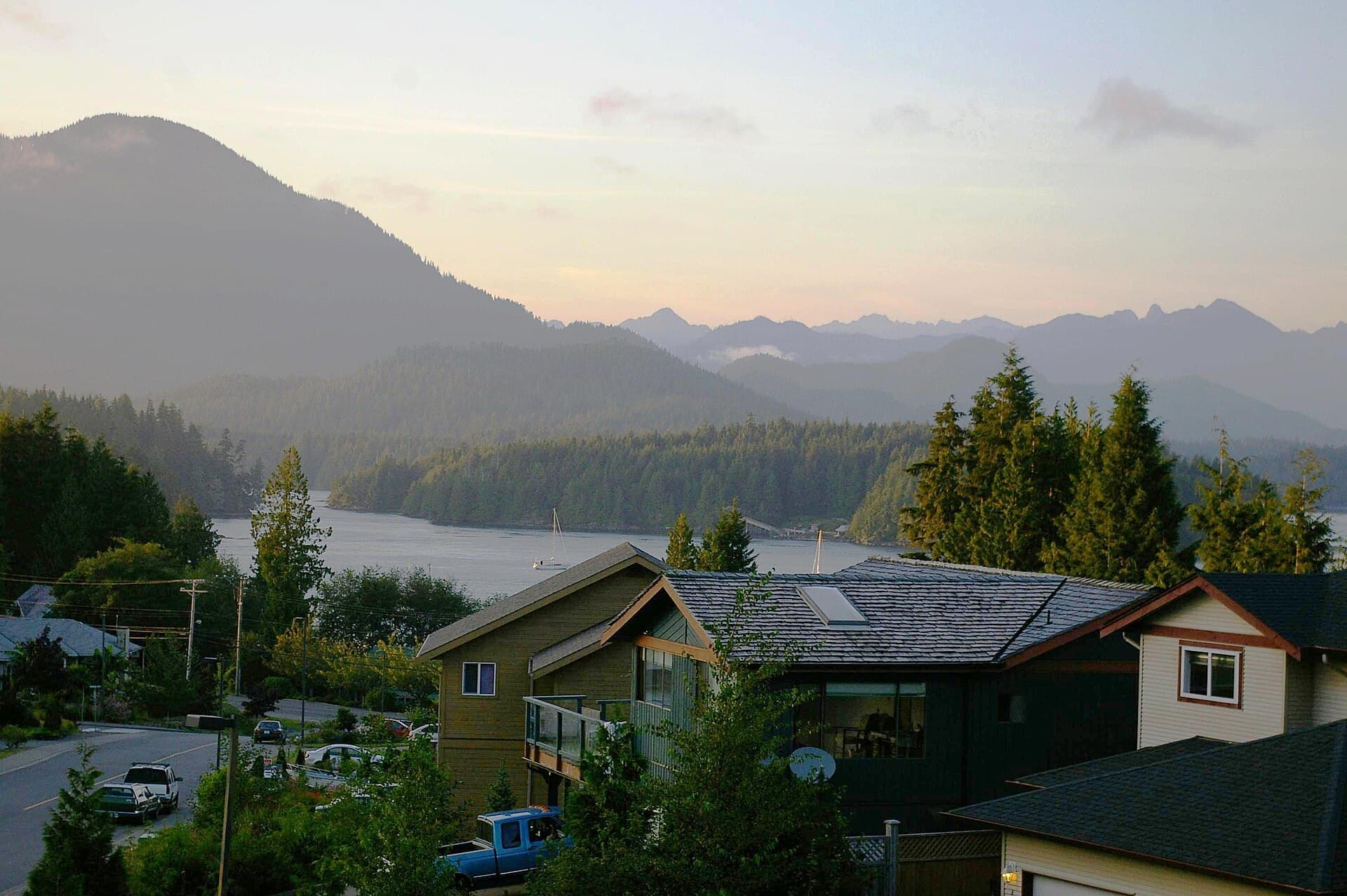 Olivier Lévy / CC BY-SA 3.0, via Wikimedia Commons
Self-guided audio walking tour of Tofino — GPS route, offline playback, story-driven narration in 32 languages.
“Where ancient rainforests meet the wild Pacific, Tofino calls with untamed beauty.”
Not the postcards. The stories even locals don't know — whispered in your ear, right where they happened.
The town carries a name that honors a cartographer who never set foot on its shores.
For over three decades, a unique 'ecovillage' with anarchist principles flourished near Tofino, offering free accommodation.
The origins of Tofino's 'Surf City' reputation can be traced back to a renegade competition with no permits and plenty of party spirit.
Discover every secret of Tofino
Every address, every reveal in full — in your ear, right where it happened.
You pick your stops. You walk. The voice reveals what the others miss.


Your self-guided audio tour of Tofino is ready — pick your landmarks, choose your language, and start the moment you arrive.
BuyLume has a built-in augmented-reality guide. Hold your phone up and its camera shows the street ahead of you, with a glowing arrow laid over the real view that always points to your next stop — no map to puzzle over, no wrong turns. Like everything in Lume, it works fully offline.
Tofino, a district municipality of approximately 2,516 residents on the west coast of Vancouver Island, British Columbia, offers a captivating blend of rugged natural beauty and laid-back coastal culture. Situated at the tip of the Esowista Peninsula, at the southern edge of Clayoquot Sound, it is located within the traditional territory of the Tla-o-qui-aht First Nations. The region is celebrated for its expansive sandy beaches, ancient temperate rainforests, and diverse wildlife, drawing surfers, hikers, nature enthusiasts, bird watchers, campers, whale watchers, and fishermen alike.
Often called the 'Surf Capital of Canada,' Tofino's summer population swells significantly, drawing visitors eager to experience its unique outdoor activities and spirited community. Beyond its surf breaks, Tofino is a gateway to the Clayoquot Sound UNESCO Biosphere Reserve, an internationally recognized area encompassing vast terrestrial and marine environments. This designation underscores the region's commitment to balancing human well-being with ecosystem health, a philosophy deeply rooted in the practices of the Tla-o-qui-aht First Nations, who have inhabited this land for thousands of years.
## Early Inhabitants and Naming For at least 5,000 years, the Tla-o-qui-aht First Nations, part of the larger Nuu-chah-nulth peoples, have lived in the Clayoquot Sound region, moving throughout their territory to harvest resources from the land and sea. Historically, the area now known as Tofino was a strategic lookout point for the Tla-o-qui-aht village of Opitsaht, located across the sound on Meares Island. European explorers, including Spanish Captain Juan Josef Pérez Hernández in 1774 and British Captain James Cook in 1778, were among the first to arrive in the area. The name 'Tofino' itself originated in 1792 when Spanish naval commanders Dionisio Alcalá Galiano and Cayetano Valdés named a nearby inlet 'Tofiño Inlet' in honor of Galiano's cartography teacher, Vincente Tofiño de San Miguel. The settlement was initially called Clayoquot townsite, but to avoid confusion with the village of Clayoquot on Stubbs Island, locals adopted the name Tofino, which became official with the opening of the Tofino Post Office in 1909.
## Development and Growth By the early 1900s, Tofino had established its first store, a one-room schoolhouse, a wharf, and a lifeboat station. In 1932, Tofino was incorporated as a municipality. For the first half of the 20th century, Tofino remained relatively isolated, accessible primarily by boat, plane, or on foot, and was even dubbed 'Tough City' due to its challenging winter seasons. This began to change dramatically with the construction of a logging road to Port Alberni in 1959. Initially gated for industrial use, the road was fully opened to the public in the 1960s and paved by 1972, significantly improving access to the coast.
## Tourism and Surfing Boom The establishment of Pacific Rim National Park Reserve in 1970 was a pivotal moment, drawing visitors directly to the area and exposing them to Tofino's natural beauty. Tourism slowly began to grow, with the Princess Maquinna steamship bringing visitors as early as 1913, and local leaders actively promoting tourism by 1947. Surfing, however, truly transformed Tofino's identity. Pioneers like Ralph Devries, who moved to Tofino in the 1960s, and Jim Sadler, who taught himself to surf on a homemade board, were instrumental in the sport's early days. The first surf shop, Live to Surf, opened in 1984, and by 2010, Outside Magazine named Tofino the 'Best Surf Town in North America.' Today, more than 40% of visitors come to surf, and tourism accounts for roughly two-thirds of the local workforce, with Tofino receiving Resort Municipality status in 2008 to further support its growing visitor economy.
Tofino offers a wealth of experiences centered around its dramatic coastal environment. Explore the expansive sandy stretches of Long Beach, Chesterman Beach, and Cox Bay Beach, each offering unique opportunities for strolling, surfing, or simply soaking in the ocean views. Cox Bay, in particular, is a popular surfing spot known for its powerful waves. For those seeking a quieter experience, Mackenzie Beach (also known as Tinwis) provides a sheltered area ideal for discovering rockpools.
Immerse yourself in the ancient temperate rainforests by hiking trails within the Pacific Rim National Park Reserve. The Rainforest Trail, with its boardwalk loops, offers an accessible way to experience this lush ecosystem. Beyond the beaches and forests, consider a whale watching tour between March and October to spot grey whales, humpback whales, and even transient orcas. Bear watching tours are also available from April to October, timed with low tide to observe black bears foraging along the shoreline. For sweeping vistas, head to Radar Hill, offering elevated views of the open Pacific, a great spot for shore-based whale watching.
Tofino is a year-round destination, each season offering a distinct experience. For warm beach days, surfing, and outdoor activities, the best weather is typically from June, July, and September, though August can sometimes bring more coastal fog. This is also the busiest and most expensive season. The shoulder seasons of May-June and September offer fewer crowds and good weather. For those drawn to the raw power of the Pacific, storm watching season runs from November through March, with powerful storms creating dramatic coastal scenery. Expect significant rainfall during these months, with November being the wettest. Whale watching is possible from February through November, with peak grey whale migration in March-April and humpback sightings increasing from May to September.
Tofino, with a population of around 2,516, experiences a significant increase in visitors during peak seasons. The town is located at the western terminus of Highway 4. Tofino-Long Beach Airport (YAZ), located 6 nautical miles southeast of town within Pacific Rim National Park Reserve, offers scheduled and charter flights from Vancouver and other Vancouver Island cities. Coastal fog is common in summer mornings, which can affect air travel. While there are no direct transit links from the airport, taxis and ridesharing are available. It is recommended to book accommodations and tours in advance, especially during the busy summer months. Pack layers and waterproof gear, as the weather can change quickly, even in summer.
Tofino in Korean, in Chinese or in Hebrew — and 29 more languages, every stop narrated by a native voice. The widest language range of any self-guided audio tour.
Available in: