Grote Markt
The main square of Tongeren features a prominent statue that may challenge your understanding of Roman history in Belgium.
Full story unlocks in the tour
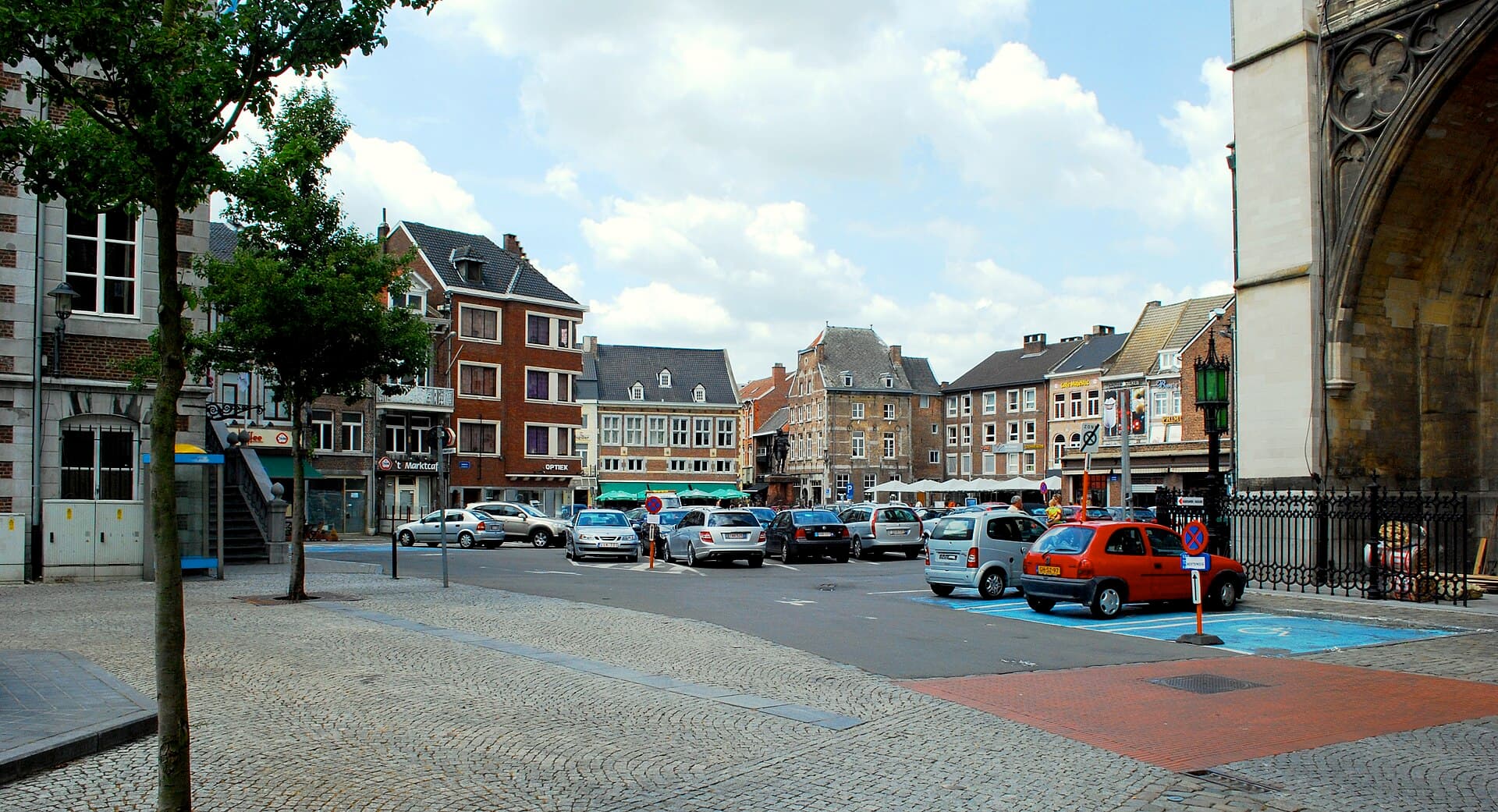 original: Jeanhousen derivative work: P199 / CC BY-SA 3.0, via Wikimedia Commons
“Wander through two millennia of narratives in Belgium's most ancient city.”
Not the postcards. The stories even locals don't know — whispered in your ear, right where they happened.
The main square of Tongeren features a prominent statue that may challenge your understanding of Roman history in Belgium.
Among the ancient artifacts in this acclaimed museum, a mysterious object from Roman times has puzzled experts for decades.
Beneath the commanding Gothic architecture of Tongeren's basilica lies a revelation that redefines the timeline of Christianity in Northern Europe.
Discover every secret of Tongres
Every address, every reveal in full — in your ear, right where it happened.
You pick your stops. You walk. The voice reveals what the others miss.
No tours available yet. Check back soon — we're preparing them.
Tongeren, Belgium's most ancient city, invites you to step directly into a narrative spanning over two millennia. As the sole Roman administrative capital within modern Belgium's borders, its origins as Aduatuca Tungrorum in the 1st century BC are still etched into its ancient city walls and archaeological sites. This Limburg city offers a compact, walkable center where Roman foundations meet medieval allure and contemporary life.
Beyond its Roman heritage, Tongeren holds a significant place in early Christian history and later flourished as a medieval trade hub. Today, it is a destination that gracefully blends its storied past with modern attractions, from acclaimed museums to one of Europe's largest antique markets.
## From Roman Stronghold to Medieval Center Tongeren's story begins in the 1st century BC as Aduatuca Tungrorum, a Roman military encampment established after Julius Caesar's campaigns. It rapidly evolved into a crucial administrative and military center, serving as the capital of the Roman province of Germania Inferior. The city was strategically positioned on a vital Roman road connecting Cologne and Bavay, and traces of its 2nd-century AD Roman wall are still visible today.
The area was initially inhabited by Belgic tribes, notably the Eburones, whose chieftain Ambiorix led a significant revolt against Julius Caesar in 54 BC. Though the Eburones were ultimately defeated, Ambiorix remains a celebrated local figure. Following a destructive fire during the Batavian siege in 70 AD, the city was meticulously rebuilt.
After the decline of Roman rule, Tongeren endured invasions by Germanic tribes but emerged as an important early Christian center. Tradition holds that its first church was founded in the 4th century, with archaeological discoveries beneath the Basilica of Our Lady confirming a church existed as early as the 5th century, established by Saint Servatius. This makes Tongeren a significant site for the origins of Christianity in Northern Europe. The city prospered as a medieval trade hub, encircled by a new defensive wall in the 13th century. The construction of the Gothic-style Basilica of Our Lady also began in the 13th century, solidifying Tongeren's religious importance. Despite facing destruction by the Normans in 881 and a major fire in 1677 by Louis XIV's troops, Tongeren continuously rebuilt, preserving its singular heritage. After Belgian independence in 1830, it became an important legal and educational center for the region.
Begin your exploration at the Gallo-Roman Museum, an acclaimed institution showcasing Tongeren's extensive Roman and prehistoric past with a vast collection of artifacts and interactive displays. From there, visit the Basilica of Our Lady, a Gothic masterpiece with a 64-meter belfry, both designated UNESCO World Heritage Sites. Explore the Teseum, the basilica's treasury, which houses a comprehensive collection of church art, including objects from the Merovingian period. Do not overlook the picturesque Beguinage, founded in 1257 and also a UNESCO World Heritage site, with its narrow passages and historic homes.
Walk along the Roman and medieval city walls, visible in various parts of the city, offering a tangible link to different historical periods. The Moerenpoort, the sole remaining medieval city gate, provides expansive views of Tongeren from its rooftop. In the Grote Markt, admire the statue of Ambiorix, the defiant Gallic chieftain. If your visit falls on a Sunday, immerse yourself in the lively atmosphere of the Tongeren Flea Market, the largest in the Benelux, with over 350 stalls. For art enthusiasts, the 'Reading Between the Lines' (See-Through Church), a unique steel plate art installation, is a short journey away in the Haspengau hills.
The most agreeable time to visit Tongeren is during the late spring (May) and early autumn (September) when the weather is gentle, and crowds are fewer. Temperatures are comfortable, ranging from 19°C to 24°C, making it ideal for exploring the city's outdoor historical sites. Summer (June to August) offers warmer temperatures, around 24°C in July, but also sees peak tourist numbers. While winter is colder and wetter, it provides a calmer experience with fewer visitors, and the city still retains its character.
Tongeren is easily accessible, located just over an hour's drive from Brussels. Paid parking is available near the Julianus shopping center, with free options further out, such as at city park De Motten. The city is also reachable by public transport, with the train station a short walk from the historic center. Within the city, the historic core is compact and best explored on foot. Tongeren Tourism offers several 'Milestone Routes' that guide visitors through the city's landmarks. Alternatively, a 45-minute Ambiorix tourist train provides a relaxed tour of key attractions. While a day trip is certainly possible, there is enough to experience to warrant a weekend stay.