Turm der Dompfarrkirche
Der hoch aufragende Stadtturm auf dem Hauptplatz von Trient birgt eine überraschende Vergangenheit, die weit von seiner aktuellen prächtigen Fassade entfernt ist.
Die ganze Geschichte wird in der Tour freigeschaltet
 BelPatty86 / CC BY-SA 4.0, via Wikimedia Commons
Selbstgeführte Audio-Walking-Tour durch Trient — GPS-Route, Offline-Wiedergabe, erzählerische Narration in 32 Sprachen.
“Wo alpine Pracht auf Renaissance-Fresken und lebendige Geschichte trifft.”
Nicht die Postkarten. Die Geschichten, die selbst Einheimische nicht kennen – dir ins Ohr geflüstert, genau dort, wo sie geschahen.
Der hoch aufragende Stadtturm auf dem Hauptplatz von Trient birgt eine überraschende Vergangenheit, die weit von seiner aktuellen prächtigen Fassade entfernt ist.
In der historischen Kirche Santa Maria Maggiore soll ein bestimmter Beichtstuhl eine verschlüsselte Botschaft tragen, die eine bedeutende historische Verachtung widerspiegelt.
Unter dem geschäftigen Treiben des einstigen Gemüsemarktes von Trient spricht eine Legende von einem barbarischen Schatz, der noch darauf wartet, ausgegraben zu werden.
Entdecke jedes Geheimnis von Trient
Jede Adresse, jede Enthüllung vollständig – in deinem Ohr, genau dort, wo es geschah.
Du wählst deine Stationen. Du gehst. Die Stimme enthüllt, was andere übersehen.


Deine selbstgeführte Audio-Tour durch Trient ist bereit – wähle deine Sehenswürdigkeiten, deine Sprache und starte, sobald du ankommst.
KaufenLume enthält einen integrierten Augmented-Reality-Guide. Halten Sie Ihr Handy hoch: Die Kamera zeigt die Straße vor Ihnen, mit einem leuchtenden Pfeil über dem echten Bild, der immer auf Ihren nächsten Stopp zeigt — keine Karte zum Rätseln, keine falschen Abzweigungen. Wie alles bei Lume funktioniert es komplett offline.
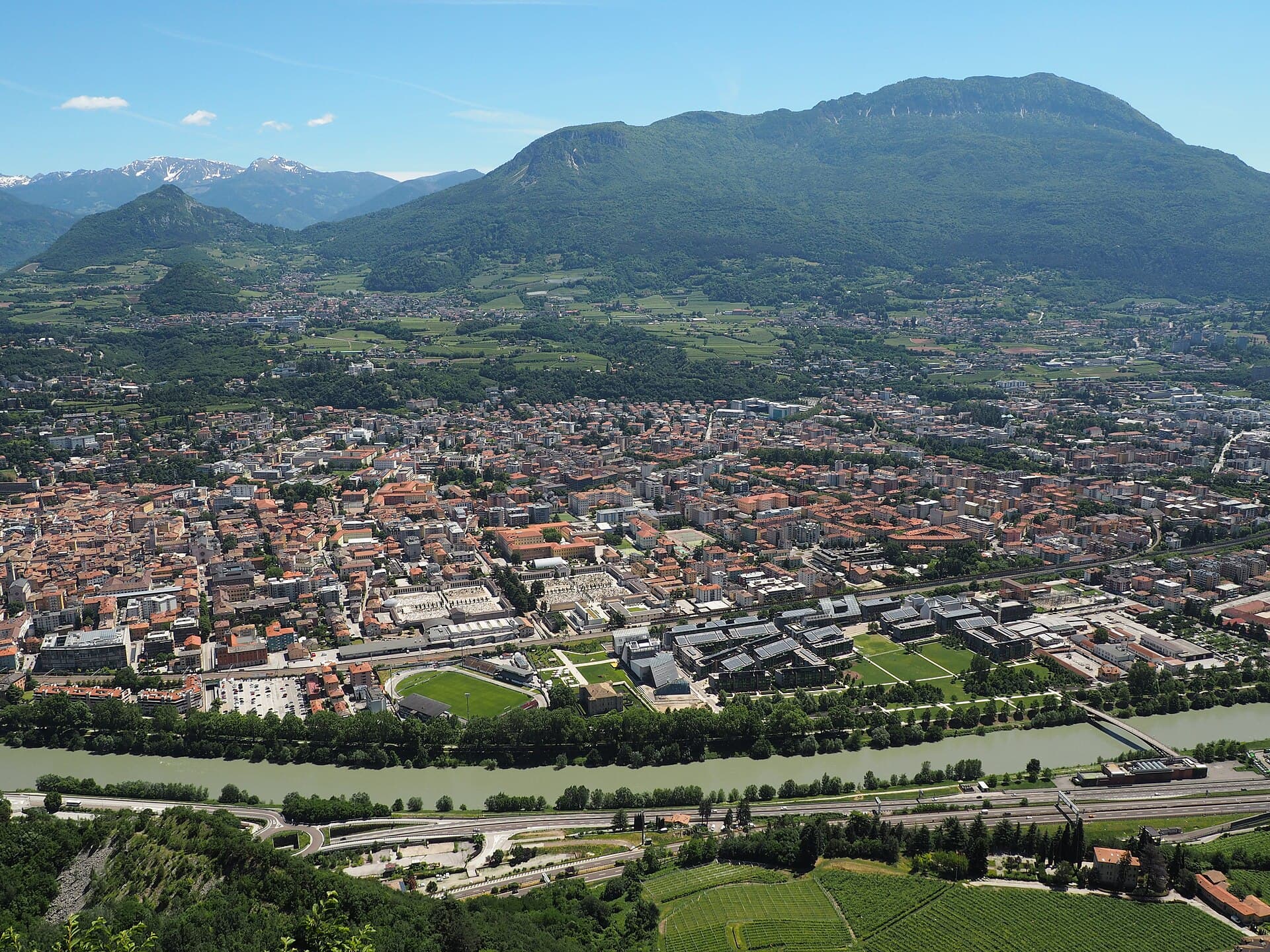
Im Etschtal, am Fuße der Brenta-Dolomiten gelegen, bietet Trient eine fesselnde Mischung aus italienischer Eleganz und alpinem Charme. Diese norditalienische Stadt, Hauptstadt der autonomen Provinz Trentino, bietet ein einzigartiges kulturelles Gefüge, das aus jahrhundertelangen vielfältigen Einflüssen gewebt ist. Oft als 'Die bemalte Stadt' bezeichnet, ist das historische Zentrum von Trient mit exquisiten Renaissance-Fresken auf seinen Gebäuden geschmückt und lädt Besucher ein, durch seine fußgängerfreundlichen Straßen zu schlendern.
Über seine künstlerische Anziehungskraft hinaus ist Trient ein Tor zu Abenteuern in der freien Natur, mit endlosen Möglichkeiten zum Wandern, Radfahren und Skifahren in den umliegenden Bergen. Die Stadt selbst ist ein Zeugnis hoher Lebensqualität und bietet moderne Annehmlichkeiten neben ihrem gut erhaltenen historischen Kern. Von antiken römischen Wurzeln bis zu seiner entscheidenden Rolle in der Religionsgeschichte bietet Trient eine fesselnde Erzählung, die darauf wartet, enthüllt zu werden.
## Vom römischen Außenposten zum Fürstbistum Trients Ursprünge reichen bis in die Römerzeit zurück, als es als Tridentum bekannt war. Es diente als strategische römische Kolonie und Militärbasis entlang der Via Claudia Augusta, einer wichtigen Straße, die zu den Pässen Reschen und Brenner führte. Nach dem Fall des Römischen Reiches wurde Trient nacheinander von Ostgoten, Langobarden und Franken beherrscht und wurde schließlich Teil des Heiligen Römischen Reiches.
Im Jahr 1027 gründete Kaiser Konrad II. das Fürstbistum Trient und verlieh den Bischöfen sowohl weltliche als auch religiöse Autorität. Dieses mächtige kirchliche Fürstentum bestand über sieben Jahrhunderte und prägte einen Großteil des mittelalterlichen Charakters der Stadt. Während dieser Zeit blühte die Stadt auf, und viele ihrer bedeutenden Bauwerke, darunter Teile des Castello del Buonconsiglio, wurden errichtet.
## Das Konzil von Trient und die Habsburger Herrschaft Das 16. Jahrhundert markierte mit der Einberufung des Konzils von Trient zwischen 1545 und 1563 einen entscheidenden Moment in der Geschichte Tients. Dieses Ökumenische Konzil war die formelle Antwort der katholischen Kirche auf die protestantische Reformation und spielte eine entscheidende Rolle in der Gegenreformation. Das Konzil gab wichtige Erklärungen zu Lehre, Schrift, Sakramenten und Heiligenverehrung ab, und sein Einfluss führte zur Standardisierung der römischen Liturgie, bekannt als Tridentinische Messe.
Nach den Napoleonischen Kriegen wurde Trient 1814 vom Habsburgerreich annektiert und blieb bis 1918 unter österreichischer Herrschaft. Trotz der Zugehörigkeit zum Kaisertum Österreich war die Bevölkerung Tients überwiegend italienischsprachig, und die Stadt wurde zu einem Brennpunkt der italienischen irredentistischen Bewegung, die sich für die Vereinigung mit Italien einsetzte. Nach dem Ersten Weltkrieg im Jahr 1919 wurde die Stadt schließlich Teil Italiens.
## Modernes Trient Heute gilt Trient als eine der wohlhabendsten und erfolgreichsten Städte Italiens, bekannt für ihre hohe Lebensqualität. Sie ist ein bedeutendes Bildungs-, Wissenschafts-, Finanz- und Politikzentrum in der Region Trentino-Südtirol. Die einzigartige geografische Lage der Stadt fördert weiterhin eine Mischung aus italienischer und mitteleuropäischer Kultur, die sich in ihrer Architektur, Küche und zweisprachigen Beschilderung widerspiegelt.
Beginnen Sie Ihre Erkundung auf der Piazza Duomo, dem Hauptplatz der Stadt, der vom romanischen Dom von Trient dominiert wird. Bewundern Sie den kunstvollen Neptunbrunnen in seiner Mitte und die mit Fresken verzierten Renaissancegebäude, die den Platz säumen. Das angrenzende Diözesanmuseum im Palazzo Pretorio bietet Einblicke in die Geschichte des Doms und das Konzil von Trient.
Ein kurzer Spaziergang vom Platz führt zum Castello del Buonconsiglio, Tients beeindruckendster historischer Stätte. Diese mittelalterliche Burg, einst Residenz der Fürstbischöfe, beherbergt heute mehrere Museumssammlungen. Verpassen Sie nicht die exquisiten Fresken aus dem 15. Jahrhundert im Torre Aquila (Adlerturm), die das tägliche Leben im Laufe der Jahreszeiten darstellen. Aufgrund der begrenzten Besucherzahlen wird für den Torre Aquila eine Vorabbuchung empfohlen.
Für einen weiten Blick über die Stadt und das Etschtal nehmen Sie die Seilbahn nach Sardagna. Die kurze Fahrt bietet unvergessliche Ausblicke, besonders bei Sonnenuntergang. Eine weitere bemerkenswerte Attraktion ist das MUSE - Wissenschaftsmuseum, entworfen von Renzo Piano, mit interaktiven Ausstellungen zur Naturgeschichte Tients und der Dolomiten. Für eine andere historische Perspektive beherbergen die Gallerie di Piedicastello, die sich in alten Autobahntunneln befinden, Ausstellungen zur Geschichte Tients.
Trient ist ein ganzjähriges Reiseziel, jede Jahreszeit bietet unterschiedliche Erlebnisse. Das späte Frühjahr bis Frühsommer (Mitte April bis Mitte Juni) ist besonders empfehlenswert, wenn die Gärten der Stadt in voller Blüte stehen und das Wetter angenehm warm ist. September ist ebenfalls ein guter Monat mit milden Temperaturen und den Farben des Herbstes. Die Sommer können heiß sein, mit Temperaturen, die im Juli und August oft 30°C (86°F) überschreiten, obwohl die Abende im Allgemeinen kühl sind. Der Winter bringt kaltes, trockenes Wetter und die Möglichkeit von Schnee, ideal für diejenigen, die in den nahegelegenen Dolomiten Skifahren oder die Weihnachtsmärkte der Stadt besuchen möchten.
Trient ist mit dem Auto leicht erreichbar und liegt nahe der A22-Autostrada, die durch das Etschtal von Verona nach Österreich führt. Beachten Sie jedoch, dass Autos im historischen Stadtzentrum, wo sich viele Unterkünfte befinden, eingeschränkt sind. Die Stadt ist auch gut mit dem Zug verbunden, mit regelmäßigen Verbindungen von Verona und täglichen Zügen von München und Innsbruck. Fahrkarten für Regionalzüge sollten vor dem Einsteigen auf dem Bahnsteig entwertet werden.
Erwägen Sie den Kauf einer Trentino Guest Card, wenn Sie mehrere Attraktionen besuchen oder öffentliche Verkehrsmittel nutzen möchten, da diese kostenlosen Zugang zu vielen Museen und Schlössern sowie kostenlose öffentliche Verkehrsmittel bietet. Die Karte wird oft von teilnehmenden Unterkünften für Aufenthalte von zwei Nächten oder mehr kostenlos zur Verfügung gestellt. Während viele Einheimische Italienisch sprechen, wird in der Region Trentino-Südtirol auch Deutsch weit verbreitet gesprochen, und Speisekarten in Restaurants sind oft zweisprachig.
Trient — Koreanisch, Chinesisch, Hebräisch und 29 weitere Sprachen, jede Station von einer muttersprachlichen Stimme erzählt. Die größte Sprachauswahl aller selbstgeführten Audiotouren.
Verfügbar auf: