Fontana delle Tette
A fountain in Treviso once offered a spirited pour, far more lively than mere water.
Full story unlocks in the tour
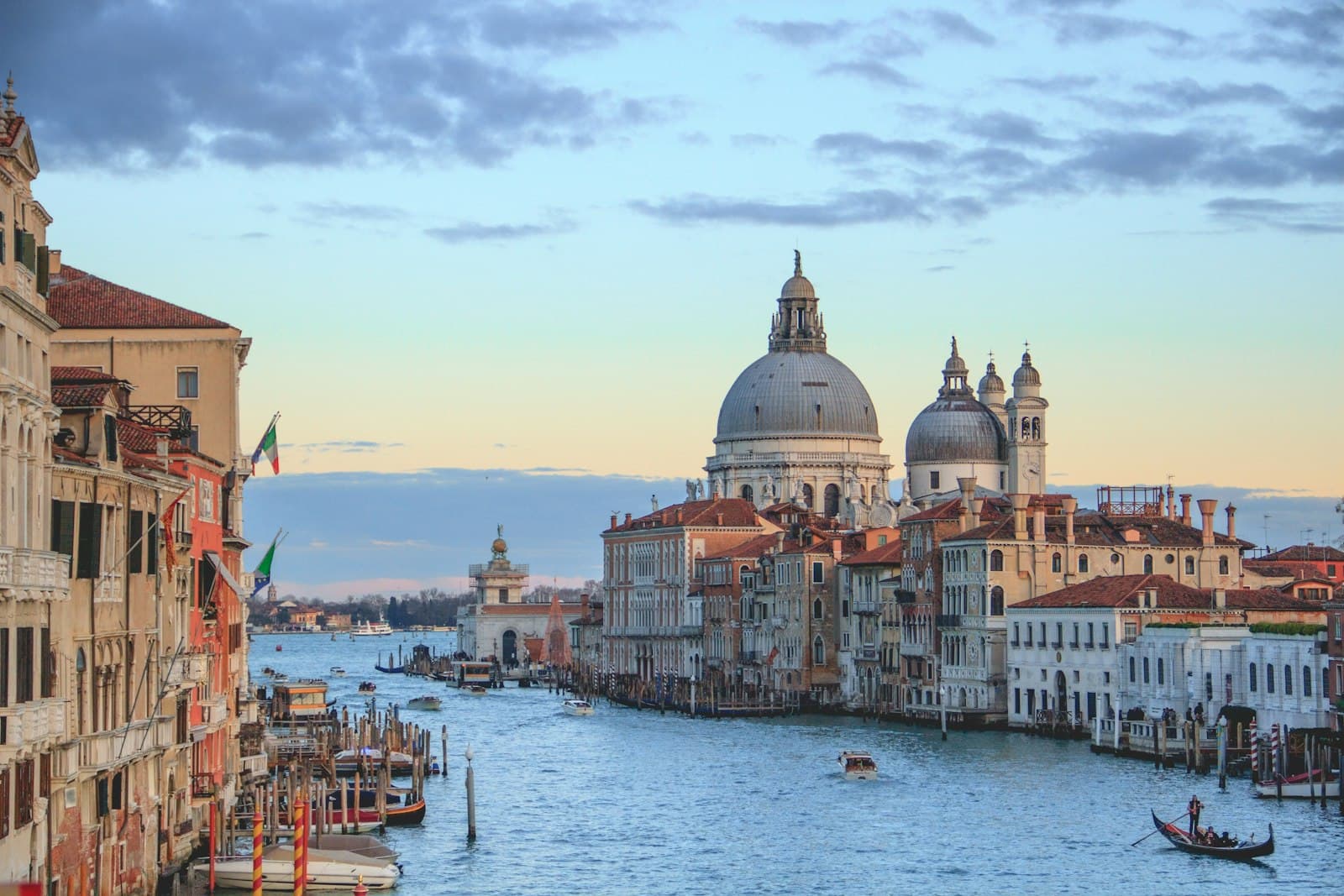 Photo: Henrique Ferreira / Unsplash
Self-guided audio walking tour of Treviso — GPS route, offline playback, story-driven narration in 32 languages.
“Waterways wind through Treviso, carrying echoes of ages past and the quiet beauty of Venetian frescoes.”
Not the postcards. The stories even locals don't know — whispered in your ear, right where they happened.
A fountain in Treviso once offered a spirited pour, far more lively than mere water.
This island, at Treviso's core, began its life not as a fish market, but as a solution to an unexpected civic concern.
Just beyond Treviso, an old watermill recounts a narrative of industry, endurance, and a hint of sorrow.
Discover every secret of Treviso
Every address, every reveal in full — in your ear, right where it happened.
You pick your stops. You walk. The voice reveals what the others miss.


Your self-guided audio tour of Treviso is ready — pick your landmarks, choose your language, and start the moment you arrive.
BuyLume has a built-in augmented-reality guide. Hold your phone up and its camera shows the street ahead of you, with a glowing arrow laid over the real view that always points to your next stop — no map to puzzle over, no wrong turns. Like everything in Lume, it works fully offline.
Treviso, a city of canals and ancient walls, offers a serene counterpoint to the grander Venetian cities. Its waterways, fed by the Sile and Cagnan rivers, meander through the urban fabric, reflecting pastel-colored facades and verdant banks. Here, the pace slows, inviting contemplation of its medieval architecture and Renaissance frescoes.
The city's character is defined by its intimate scale and the constant presence of water. Bridges arch gracefully over canals, leading to quiet piazzas where daily life unfolds with an unhurried rhythm. The sounds of flowing water and distant church bells create an atmosphere of peaceful discovery, revealing layers of history at every turn.
## From Roman Foundations to Medieval Power Treviso's origins stretch back to Roman times, when it was known as Tarvisium. Its strategic position at the confluence of rivers made it an important center, and remnants of its Roman past can still be discerned in its urban layout. Following the fall of the Roman Empire, Treviso endured periods of Lombard and Frankish rule, gradually developing into a significant medieval commune.
During the Middle Ages, Treviso flourished as an independent city-state. Its formidable walls, many sections of which still stand, protected a thriving mercantile and cultural hub. The city's wealth grew through trade, particularly in wool and textiles, and its intellectual life blossomed, attracting poets and scholars. This era saw the construction of many of the city's iconic buildings, including its Duomo and the Loggia dei Cavalieri.
## Venetian Influence and Modern Eras In the 14th century, Treviso came under the dominion of the Venetian Republic. This integration brought a period of relative stability and further economic prosperity, though it also meant the city's destiny was tied to that of Venice. Venetian architectural styles began to blend with the existing medieval structures, adding a distinctive elegance to the city's appearance. The canals, already important for defense and transport, became even more integral to its character.
The decline of the Venetian Republic in the late 18th century ushered in a period of upheaval for Treviso, with various foreign powers vying for control. The 19th and early 20th centuries saw the city grapple with modernization and the challenges of two World Wars. Treviso suffered significant damage during World War I, being close to the front lines, and again during World War II, when Allied bombings caused widespread destruction. Despite these trials, the city meticulously rebuilt itself, preserving its historical essence while adapting to contemporary life. Today, Treviso stands as a testament to resilience, a city that respects its profound past while embracing the present.
Wander through the Piazza dei Signori, the city's main square, framed by elegant palaces like the Palazzo dei Trecento and the Palazzo del Podestà. Admire the Duomo di San Pietro, a cathedral whose crypt holds ancient relics and whose interior features works by Titian. Explore the Museo di Santa Caterina, housed in a former convent, showcasing art from the Roman era to the Renaissance, including frescoes by Tommaso da Modena.
Stroll along the Pescheria, the fish market island, where vendors display their catches amidst the flowing canals. Discover the Fontana delle Tette, a unique fountain with a curious history. Walk atop the ancient city walls, offering perspectives over the urban landscape and the surrounding countryside. Lose yourself in the quiet side streets, where water mills still turn and small bridges lead to unexpected courtyards.
Spring (April-May) and early autumn (September-October) offer the most pleasant weather for exploring Treviso. The temperatures are mild, ideal for walking, and the city's gardens and waterways are particularly appealing. Summer can be warm and humid, while winter brings cooler temperatures and a quieter atmosphere.
Treviso is easily accessible by train from Venice, with frequent connections. The city center is compact and best explored on foot, allowing for discovery of its intricate network of canals and narrow lanes. Consider a 'Treviso Card' for discounts on museums and public transport if planning extensive sightseeing. Local buses connect the train station to various parts of the city. Dining options range from traditional trattorias serving regional Venetian cuisine to modern cafes.
Treviso in Korean, in Chinese or in Hebrew — and 29 more languages, every stop narrated by a native voice. The widest language range of any self-guided audio tour.
Available in: