Romanischer Kreuzgang der Kathedrale von Tudela
Die geschnitzten Kapitelle im Kreuzgang der Kathedrale von Tudela zeigen mehr als nur biblische Szenen.
Die ganze Geschichte wird in der Tour freigeschaltet
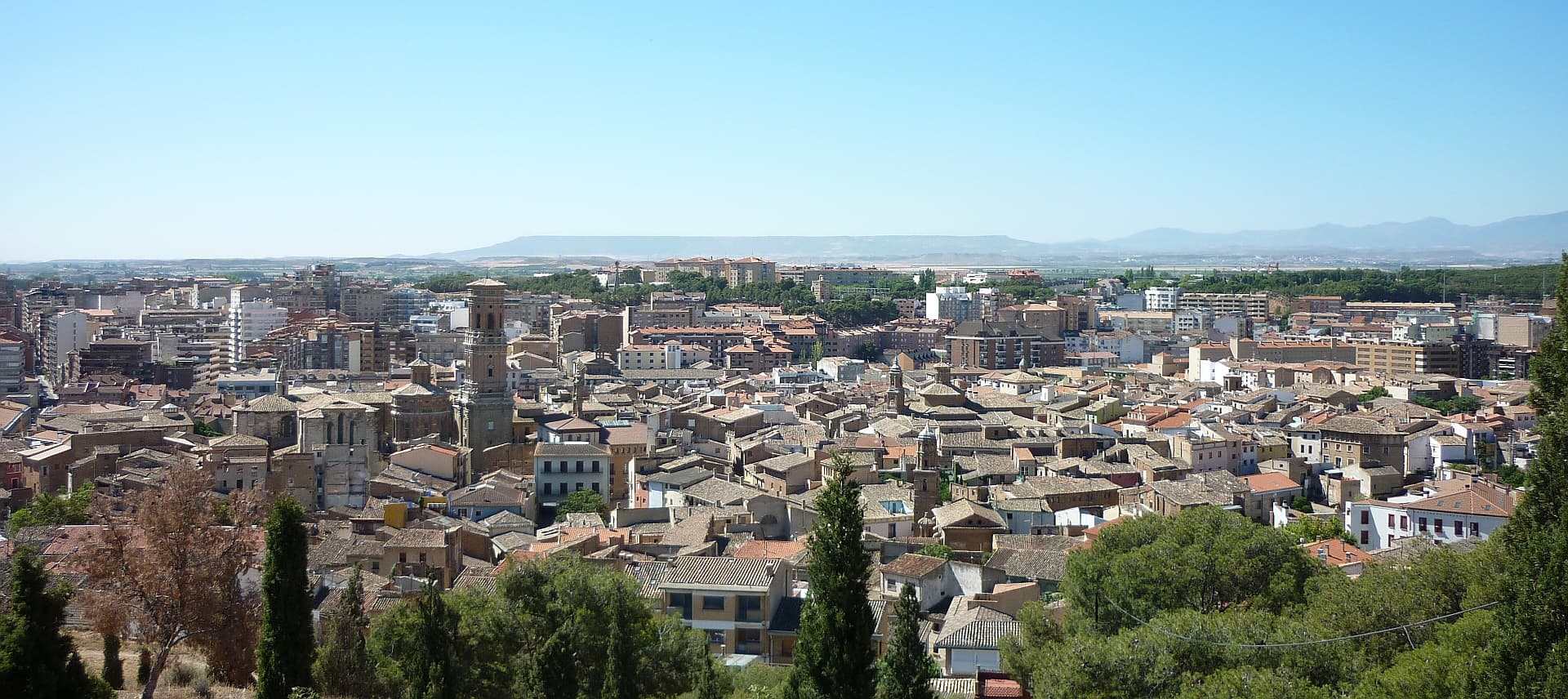 Albert Torelló / CC BY-SA 2.0, via Wikimedia Commons
Selbstgeführte Audio-Walking-Tour durch Tudela — GPS-Route, Offline-Wiedergabe, erzählerische Narration in 32 Sprachen.
“Wo alte Kulturen zusammenlaufen und der Reichtum des Ebro gedeiht.”
Nicht die Postkarten. Die Geschichten, die selbst Einheimische nicht kennen – dir ins Ohr geflüstert, genau dort, wo sie geschahen.
Die geschnitzten Kapitelle im Kreuzgang der Kathedrale von Tudela zeigen mehr als nur biblische Szenen.
Während des Santa Ana-Festes findet auf dem Hauptplatz der Stadt ein einzigartiger Tanz statt, der sich der typischen Choreografie entzieht.
Diese mittelalterliche Brücke, ein Symbol Tuedlas, hatte einst eine noch größere strategische Bedeutung, als ihre 17 Bögen vermuten lassen.
Entdecke jedes Geheimnis von Tudela
Jede Adresse, jede Enthüllung vollständig – in deinem Ohr, genau dort, wo es geschah.
Du wählst deine Stationen. Du gehst. Die Stimme enthüllt, was andere übersehen.

Deine selbstgeführte Audio-Tour durch Tudela ist bereit – wähle deine Sehenswürdigkeiten, deine Sprache und starte, sobald du ankommst.
KaufenLume enthält einen integrierten Augmented-Reality-Guide. Halten Sie Ihr Handy hoch: Die Kamera zeigt die Straße vor Ihnen, mit einem leuchtenden Pfeil über dem echten Bild, der immer auf Ihren nächsten Stopp zeigt — keine Karte zum Rätseln, keine falschen Abzweigungen. Wie alles bei Lume funktioniert es komplett offline.
Tudela, die zweitgrößte Stadt Navarras, bietet ein ganz anderes Erlebnis als ihre nördlichen, bergigeren Gegenstücke. Die Stadt liegt im Ebro-Tal, und ihre Landschaft wandelt sich von trockenen Ebenen zu üppigen Gemüsegärten – ein Kontrast, der ihren Charakter und ihre Küche prägt. Tudela, bekannt als die 'Gemüsehauptstadt', liefert aus seinen fruchtbaren Böden hochgeschätzte Produkte wie Artischocken und Spargel, die auf lokalen Festen gefeiert werden.
Mit rund 37.000 Einwohnern hat Tudela eine intime Atmosphäre bewahrt und lädt Besucher ein, ihr historisches Zentrum zu erkunden, wo die Vermächtnisse muslimischer, jüdischer und christlicher Kulturen sichtbar miteinander verwoben sind. Die verwinkelten Gassen, alten Mauern und beeindruckenden Monumente der Stadt erzählen eine Geschichte von Jahrhunderten des Zusammenlebens und kulturellen Austauschs. Von ihrer mittelalterlichen Brücke über den Fluss Ebro bis hin zu ihrer gotischen Kathedrale bietet Tudela eine reiche Vielfalt an Geschichte und authentischem spanischem Charakter.
Über seine architektonischen Schätze hinaus ist Tudela ein Ort, um die lokale Lebensart zu genießen, sei es durch seine renommierte Gastronomie oder seine lebendigen Traditionen. Die Stadt dient als Tor zur Erkundung der gesamten Region Ribera Navarra, einschließlich der halbwüstenartigen Landschaft von Bardenas Reales.
Die offizielle Geschichte Tuedlas als Stadt begann im Jahr 802 n. Chr. Sie wurde von Amrus ibn Yusuf im Auftrag des Emirs von Córdoba, Al-Hakam I., als befestigter Militärposten gegründet. Archäologische Funde deuten jedoch darauf hin, dass bereits früher römische Siedlungen in der Gegend existierten. Vier Jahrhunderte lang war Tudela ein bemerkenswertes Beispiel für friedliches Zusammenleben, in dem Muslime, Juden und Mozaraber (iberische Christen unter muslimischer Herrschaft) nebeneinander lebten und zu einer reichen kulturellen und wirtschaftlichen Synthese beitrugen. Dieses einzigartige Umfeld förderte Fortschritte in Handwerk und Wissenschaft und war die Geburtsstätte bemerkenswerter Persönlichkeiten wie des mittelalterlichen Reisenden Benjamin von Tudela.
Im 9. Jahrhundert gewann Tudela als Hauptstadt der Banu Qasi-Dynastie, eines unabhängigen muslimischen Staates, der als Puffer zwischen dem Emirat von Córdoba und den nördlichen christlichen Königreichen diente, an politischer Bedeutung. Diese Periode, oft als Goldenes Zeitalter bezeichnet, sah die Stadt zeitweise ihre eigene Währung prägen. Im Jahr 1119 eroberten christliche Truppen unter König Alfons I. dem Kämpfer die Stadt zurück, was einen bedeutenden Wandel in ihrer Verwaltung markierte. Tudela wurde dann in das Königreich Pamplona und später in das Königreich Navarra eingegliedert. Die Könige von Navarra, insbesondere Sancho VI. der Weise, bevorzugten Tudela als Winterresidenz, und hier wurde der spätere König Sancho VII. der Starke geboren.
Der Bau der majestätischen Kathedrale Santa María begann um 1180 auf den Fundamenten der Hauptmoschee, was den Übergang der Epochen symbolisiert. König Karl III. der Edle verlieh Tudela 1390 offiziell den Stadtstatus und erkannte seine wachsende Bedeutung an. Die Ära der „drei Kulturen“ begann jedoch mit der Vertreibung der jüdischen Gemeinde aus Navarra im Jahr 1498 zu schwinden, gefolgt von der Vertreibung der Muslime und Mauren in den Jahren 1516 bzw. 1610. Im Jahr 1808 spielte Tudela eine strategische Rolle im Peninsular-Krieg, wobei Napoleons Sieg in der Schlacht von Tudela auf dem Arc de Triomphe in Paris geehrt wird. Die Ankunft der Eisenbahn im Jahr 1861, gepaart mit einer landwirtschaftlichen Revolution, leitete eine neue Expansionsphase ein und festigte Tuedlas Ruf für seine florierende Gartenbauindustrie.
Beginnen Sie Ihre Erkundung auf der Plaza de los Fueros, dem Hauptplatz der Stadt. Ursprünglich eine Stierkampfarena, beherbergt sie heute einen zentralen Musikpavillon und ist von Gebäuden mit den Wappen der Dörfer der Ribera umgeben. Von hier aus ist die Kathedrale Santa María nur einen kurzen Spaziergang entfernt. Diese gotische Kathedrale, seit 1884 ein Nationaldenkmal, zeigt eine Mischung aus romanischen und gotischen Stilen, insbesondere in ihren drei beeindruckenden Portalen, vor allem der Portada del Juicio (Portal des Jüngsten Gerichts). Verpassen Sie nicht ihren romanischen Kreuzgang und die barocke Kapelle Santa Ana.
Schlendern Sie durch die engen, verwinkelten Gassen des Judería Nueva Viertels (Neues Judenviertel) rund um die Calle San Miguel, die noch immer das multikulturelle Erbe der Stadt widerspiegeln. Überqueren Sie die Ebro-Brücke, ein mittelalterliches Wunderwerk der Ingenieurskunst mit 17 Bögen, das einen weiten Blick auf die Stadt bietet. Für eine höhere Perspektive gehen Sie zum Cerro de Santa Bárbara, wo eine Statue des Heiligen Herzens Jesu auf dem ehemaligen Standort einer arabischen Alcazaba und einer christlichen Burg steht und einen atemberaubenden Blick auf Tudela und die Ebro-Gemüsegärten bietet.
Weitere bemerkenswerte Sehenswürdigkeiten sind der Palast des Marquis von San Adrián, der als feinster Renaissancepalast Navarras gilt, und der Palast des Marquis von Huarte, bekannt für seine prunkvoll verzierte Fassade. Der Monreal-Turm, ein Wachturm aus dem 9. Jahrhundert, beherbergt heute die erste Camera Obscura Navarras und ein Interpretationszentrum über die koexistierenden Kulturen der Stadt.
Die beste Zeit für einen Besuch in Tudela mit angenehmem Wetter und Outdoor-Aktivitäten ist im Frühling (April bis Mai) und Herbst (September bis Oktober). In diesen Monaten sind die Temperaturen mild, liegen zwischen 13°C und 20°C, und es gibt mäßnige Niederschläge. Sommer (Juli und August) sind warm und trocken, mit durchschnittlichen Höchstwerten um 31°C, ideal für diejenigen, die warmes Wetter mögen, obwohl die täglichen Temperaturschwankungen erheblich sein können. Die Winter sind kühl, aber generell mild, mit durchschnittlichen Tagestemperaturen von 10-11°C im Dezember und Januar.
Tudela lässt sich gut zu Fuß erkunden, insbesondere die historische Altstadt. Für Ausflüge außerhalb des Stadtzentrums, z. B. zum Naturpark Bardenas Reales, sollten Sie öffentliche Verkehrsmittel oder ein privates Fahrzeug in Betracht ziehen. Die Stadt ist gut mit dem Zug und Bus verbunden, die Bahnhöfe befinden sich günstig im Zentrum. Renfe betreibt nationale Zugverbindungen, und Conda, S.A. ist eine wichtige Busgesellschaft für Strecken wie Pamplona-Tudela.
Beim Essen sollten Sie bedenken, dass in Spanien die Essenszeiten später sind: Mittagessen ist typischerweise von 13 bis 16 Uhr und Abendessen von 20 bis 23 Uhr. Tudela ist berühmt für seine Gastronomie, insbesondere für sein frisches Gemüse. Achten Sie auf lokale Spezialitäten wie Artischocken, Spargel und die Menestra, einen Gemüseeintopf. Viele Restaurants in der Stadt bieten hochwertige Küche an.
Tudela — Koreanisch, Chinesisch, Hebräisch und 29 weitere Sprachen, jede Station von einer muttersprachlichen Stimme erzählt. Die größte Sprachauswahl aller selbstgeführten Audiotouren.
Verfügbar auf: