Vieille rue de Tunxi
Observez attentivement les pavés sous vos pieds. Ils racontent une histoire non seulement de siècles de pas, mais aussi de la puissance brute de la nature.
L'histoire complète se débloque dans le tour
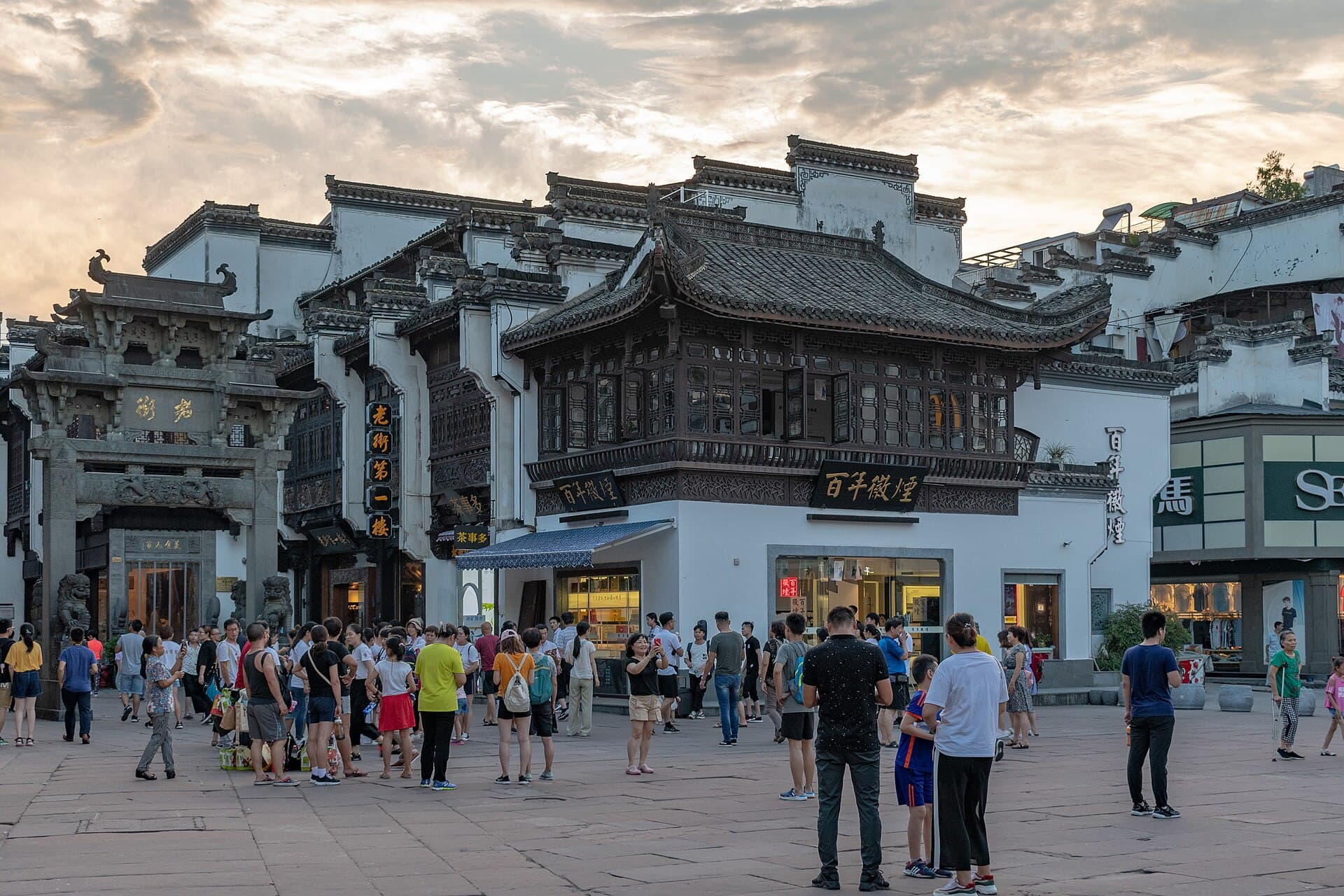 xiquinhosilva / CC BY 2.0, via Wikimedia Commons
Visite audio autoguidée de Tunxi — parcours GPS à pied, lecture hors ligne, narration en 32 langues.
“Là où les traditions ancestrales coulent comme la rivière Xin'an.”
Pas les cartes postales. Les histoires que même les habitants ignorent — soufflées à l'oreille, là où elles se sont passées.
Observez attentivement les pavés sous vos pieds. Ils racontent une histoire non seulement de siècles de pas, mais aussi de la puissance brute de la nature.
Au-delà des célèbres bâtons d'encre, une collection secrète révèle l'héritage artistique de la fabrique.
Beaucoup de boutiques bordant la vieille rue de Tunxi semblent modestes de l'extérieur, mais leur véritable profondeur offrait un avantage stratégique aux marchands d'autrefois.
Découvrez tous les secrets de Tunxi
Chaque adresse, chaque révélation en entier — dans ton oreille, là où elle s'est passée.
Tu choisis tes lieux. Tu marches. La voix te révèle ce que les autres ignorent.
Votre visite audioguidée de Tunxi vous attend — choisissez vos lieux, votre langue, et lancez-vous dès votre arrivée.
AcheterLume intègre un guide en réalité augmentée. Levez votre téléphone : sa caméra montre la rue devant vous, avec une flèche lumineuse posée sur l'image réelle qui pointe toujours vers votre prochain arrêt — aucune carte à déchiffrer, aucun mauvais virage. Comme tout dans Lume, ça fonctionne entièrement hors-ligne.
Tunxi, aujourd'hui le centre urbain de la ville de Huangshan dans la province d'Anhui, est souvent perçue comme une étape vers les majestueuses Montagnes Jaunes. Cette ville historique, située au confluent des rivières Hengjiang, Shuaishui et Xin'an, offre un voyage captivant au cœur de la culture et de l'architecture chinoises traditionnelles. Sa vieille rue bien préservée, avec ses bâtiments distinctifs de style Hui, sert de musée vivant, invitant les visiteurs à flâner à travers des siècles d'histoire marchande et de vie locale.
Au-delà de son rôle de porte d'entrée, Tunxi est une destination à part entière, mêlant le confort urbain au charme des traditions ancestrales. La profondeur culturelle de la ville est évidente dans ses salles ancestrales, sa calligraphie, ainsi que sa cuisine locale d'Anhui et sa culture du thé. De l'exploration des usines d'encre historiques à la dégustation de délices régionaux, Tunxi offre une occasion unique de découvrir une tranche de la Chine authentique avant ou après s'être aventuré dans les merveilles naturelles environnantes.
## La Genèse d'une Ancienne Artère L'histoire de Tunxi remonte à plus de 2 200 ans, avec une préfecture établie pendant les dynasties Qin et Han. Le nom "Tunxi" lui-même proviendrait de la période des Trois Royaumes, lorsqu'un général, Mao Gan, y cantonna son armée.
Le développement de la vieille rue de Tunxi a commencé pendant la dynastie Song (960-1279). Lorsque l'empereur Huizong déplaça sa capitale à Lin'an (aujourd'hui Hangzhou), des architectes et des ouvriers de la région de Huizhou furent enrôlés pour la construction. À leur retour, ils reproduisirent les styles architecturaux qu'ils avaient vus, jetant les bases de l'esthétique distinctive de Tunxi. À la fin des dynasties Yuan et au début des Ming, des marchands de Huizhou, tels que Cheng Weizong, commencèrent à ouvrir des boutiques, transformant la zone en un centre commercial animé.
## Une Puissance Commerciale Au début de la dynastie Ming (1368-1644), un marchand local investit davantage dans la construction de 47 magasins, attirant encore plus de commerçants et consolidant le rôle de Tunxi en tant que centre de distribution régional. Sous la dynastie Qing (1644-1911), la vieille rue de Tunxi était devenue la principale porte d'entrée et de sortie des marchandises de la province d'Anhui. Son emplacement stratégique et son commerce florissant ont conduit un professeur américain à la décrire comme une "Ancienne Rome Orientale". La disposition de la rue, souvent décrite comme une "forme d'arête de poisson", avec une extrémité ouest plus étroite et une extrémité est plus large, optimisait davantage son flux commercial.
## Un Héritage Durable Aujourd'hui, la vieille rue de Tunxi est reconnue comme l'une des rues commerciales les mieux préservées de Chine, présentant des styles architecturaux des dynasties Song du Sud, Ming et Qing. Elle reste un témoignage de la culture marchande de Huizhou, de nombreux magasins conservant leur disposition traditionnelle d'une devanture à l'avant et de quartiers d'habitation ou d'ateliers à l'arrière. L'authenticité historique de la rue en a même fait un cadre populaire pour des films et des séries télévisées, consolidant ainsi sa place de repère culturel précieux.
L'attraction principale de Tunxi est sans aucun doute la vieille rue de Tunxi (屯溪老街), une artère piétonne s'étendant sur plus d'un kilomètre, bordée de bâtiments bien conservés des époques Ming et Qing. Ici, vous pouvez vous immerger dans l'architecture traditionnelle de style Hui, caractérisée par des murs blancs, des tuiles grises et des sculptures sur bois complexes. Flânez dans les boutiques vendant les "Quatre Trésors du Lettré" (pinceaux, bâtons d'encre, pierres à encre et papier), des thés locaux comme le Huangshan Maofeng, ainsi que diverses curiosités et antiquités.
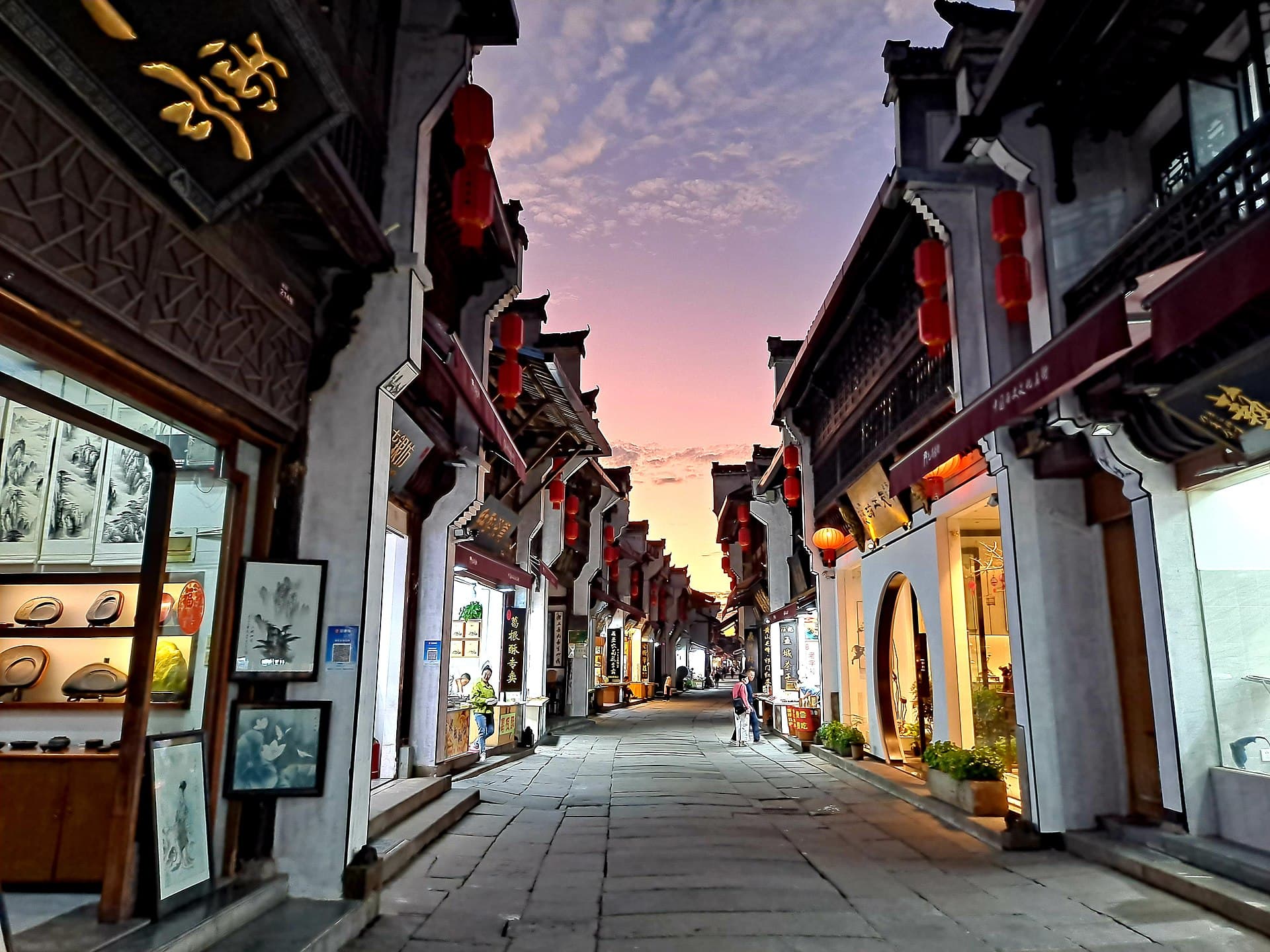
Ne manquez pas la fabrique d'encre Hu Kaiwen (胡开文墨厂), où vous pourrez assister à la production traditionnelle de bâtons d'encre, un artisanat datant de la dynastie Qing. Pour une immersion plus profonde dans l'histoire et l'art locaux, visitez le musée de Tunxi ou le musée privé Wancuilou sur la vieille rue, qui abrite une collection d'artefacts des dynasties Ming et Qing, de calligraphies, de peintures et de porcelaines. À l'extrémité ouest de la vieille rue, l'ancien pont Zhenhai, construit pendant la dynastie Ming, offre une vue pittoresque. Le soir, la rue se transforme alors que des lanternes rouges illuminent les bâtiments traditionnels, créant une atmosphère festive. Bien que la vieille rue de Tunxi soit l'attraction principale, la ville sert également de base pratique pour explorer les montagnes de Huangshan (Montagnes Jaunes) voisines, un site du patrimoine mondial de l'UNESCO réputé pour ses pics de granit spectaculaires et sa mer de nuages.
Les périodes les plus agréables pour visiter Tunxi sont le printemps (mars à mai) et l'automne (septembre à novembre). Pendant ces saisons, le temps est agréable et le paysage est particulièrement beau, avec des fleurs en éclosion au printemps et un feuillage doré en automne. Le printemps, surtout après une bruine, offre la meilleure chance d'observer la célèbre "mer de nuages" à Huangshan. L'automne offre également un ciel clair et une atmosphère paisible. L'été (juin à août) peut être chaud et pluvieux, et la ville, en particulier la vieille rue de Tunxi, a tendance à être plus fréquentée par les touristes nationaux. Il est conseillé d'éviter les principales fêtes chinoises comme la Fête Nationale (1er-7 octobre) et la Fête du Travail (1er-3 mai) pour éviter les grandes foules.
Tunxi est le siège administratif de la ville de Huangshan et sert de plaque tournante centrale des transports. L'aéroport international de Huangshan Tunxi (TXN) est situé à environ 5,5 kilomètres du centre-ville de Tunxi, offrant des vols intérieurs vers les grandes villes chinoises. Les trains à grande vitesse offrent des liaisons efficaces vers des villes comme Hangzhou et Shanghai. La gare de Huangshan est située dans le district de Tunxi, et des navettes vers le site panoramique des montagnes de Huangshan partent fréquemment de la gare routière de la ville.
Se déplacer à Tunxi est simple. La vieille rue de Tunxi est piétonne, ce qui la rend idéale pour la marche. Les taxis et les services de covoiturage sont facilement disponibles et généralement abordables pour les plus longues distances en ville. Les bus publics sont une option, bien que la signalisation en anglais puisse être limitée. Pour ceux qui se rendent aux montagnes de Huangshan, les bus de la gare routière de la ville à Tangkou (la base de la montagne) prennent environ 1h30. De nombreux hôtels peuvent vous aider à organiser des chauffeurs privés pour les excursions. Bien qu'il y ait quelques panneaux en anglais, il peut être utile d'avoir l'adresse de votre hôtel écrite en caractères chinois pour les chauffeurs de taxi.
Tunxi en coréen, en chinois ou en hébreu — et dans 29 autres langues, chaque étape narrée par une voix native. La plus large gamme de langues de tous les audioguides autoguidés.
Disponible en :