Система Карез
Турфан — одно из самых жарких мест на Земле, но это процветающий сельскохозяйственный оазис. Как люди могли что-то здесь выращивать до появления современных технологий?
Полная история открывается в туре
 Colegota / CC BY-SA 2.5 es, via Wikimedia Commons
Самостоятельная аудиопрогулка по Турфан — GPS-маршрут, офлайн-воспроизведение, увлекательное повествование на 32 языках.
“Где древняя изобретательность встречается с огненным ландшафтом.”
Не открытки. Истории, которые не знают даже местные жители — шепотом в вашем ухе, прямо там, где они произошли.
Турфан — одно из самых жарких мест на Земле, но это процветающий сельскохозяйственный оазис. Как люди могли что-то здесь выращивать до появления современных технологий?
Представьте себе город, построенный не из кирпичей, сложенных вверх, а высеченный вниз в самой земле. Как такой город можно было защитить?
Эти горы кажутся красными и мерцающими, как будто в огне, под интенсивным солнцем — явление, вдохновившее классический китайский роман. Какова реальная история их огненного вида?
Откройте для себя каждый секрет Турфан
Каждый адрес, каждое полное раскрытие — в вашем ухе, прямо там, где это произошло.
Вы выбираете остановки. Вы гуляете. Голос раскрывает то, что упускают другие.


Ваш самостоятельный аудиотур по Турфан готов — выберите свои достопримечательности, выберите свой язык и начните в момент прибытия.
КупитьВ Lume встроен гид дополненной реальности. Поднимите телефон: камера показывает улицу перед вами, а поверх реального изображения светится стрелка, всегда указывающая на вашу следующую остановку — не нужно разбираться с картой и сворачивать не туда. Как и всё в Lume, это работает полностью офлайн.
Турфан, древний оазисный город в китайском регионе Синьцзян, — это место захватывающих контрастов. Расположенный в одной из самых низких и жарких впадин на Земле, он бросает вызов своему засушливому окружению пышными виноградниками и глубоким культурным наследием. Известный как «Страна огня и ветра» из-за своего экстремального континентального пустынного климата, Турфан давно является важной остановкой на историческом Шелковом пути.
Эта преимущественно уйгурская область, где также проживают ханьцы, хуэйцы и другие этнические группы, предлагает уникальный взгляд на культуру, сформированную веками торговли и адаптации. От своих гениальных древних ирригационных систем до хорошо сохранившихся руин, Турфан приглашает к исследованию прошлого, где цивилизации процветали, несмотря на суровые природные условия.
Стратегическое расположение Турфана во впадине Турфан, котловине, окруженной горами и являющейся одной из самых низких точек на Земле, сделало его важнейшим оазисом на Шелковом пути на протяжении более 2000 лет. Еще во времена династии Хань (206 г. до н.э. — 220 г. н.э.) Турфан был политическим, культурным и экономическим центром, столицей древнего царства Чэши. Город Цзяохе, построенный около двух тысячелетий назад, был столицей царства Внешний Чэши, а позже перешел под власть династии Хань.
На протяжении своей долгой истории Турфан был спорной территорией, контролируемой последовательными волнами кочевников, китайцев, тибетцев, уйгуров и монголов. В VI веке он входил в состав царства Гаочан, которое позже было завоевано династией Тан (618–906 гг. н.э.). Затем Турфан стал пограничным городом Китая, жизненно важной остановкой для купцов, монахов и путешественников, направлявшихся на запад. Регион также был населен людьми, говорящими на индоевропейских токерийских языках, по крайней мере, до VIII века н.э.
В IX веке уйгуры, предки современных уйгуров, поселились в Турфанском регионе, основав государство Уйгурский Идикут со столицей в Гаочане. Первоначально манихеи, уйгуры позже приняли буддизм, финансируя строительство пещерных храмов, таких как пещеры Безеклики. Уникальное положение города на перекрестке различных культур означало, что здесь сходились торговцы, монахи и министры из Китая, Индии, Персии и Средиземноморья, оставляя после себя богатое наследие историй и легенд. Хорошо сохранившиеся руины и культурные артефакты, найденные в Турфане, более 80% реликвий Шелкового пути из Музея истории Синьцзяна происходят из этого региона, свидетельствуют о его глубоком историческом значении.
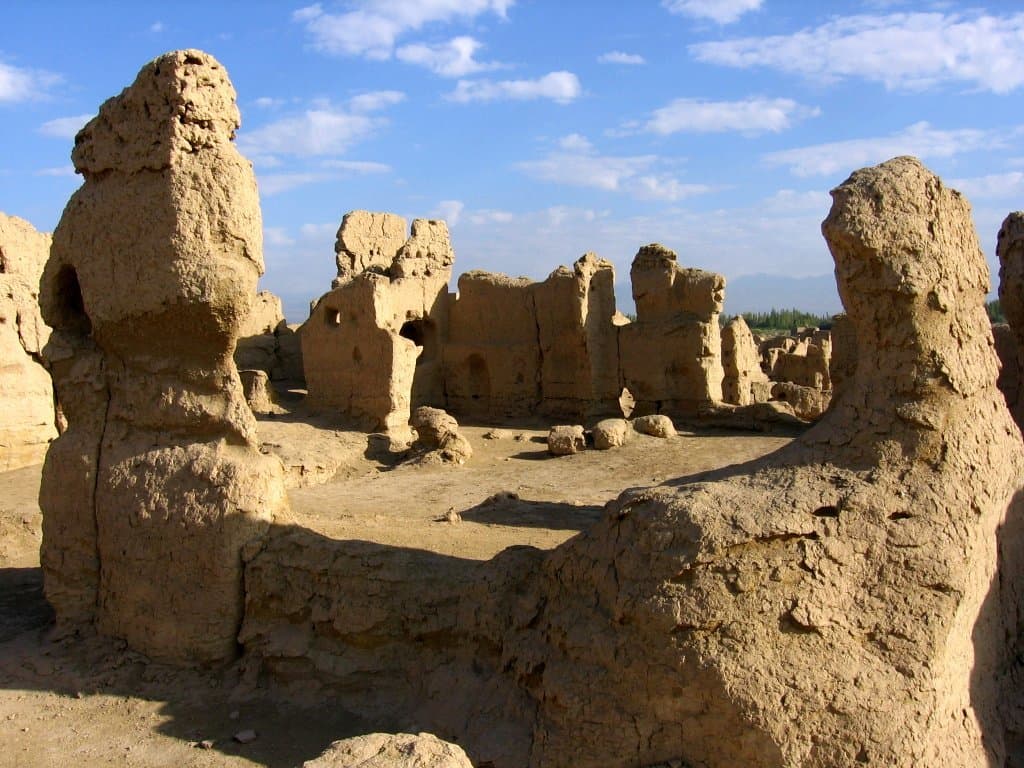
Пейзаж Турфана усеян историческими и природными чудесами. Руины Цзяохе, известные на местном уровне как Яргхул, являются изюминкой — удивительно хорошо сохранившийся древний город, высеченный прямо из лёссового плато, предлагающий уникальный архитектурный опыт. Неподалеку Музей системы Карез дает представление о гениальной подземной ирригационной сети, которая поддерживает сельское хозяйство региона, свидетельство древнего инженерного искусства.
Минарет Эмин, также известный как Сугун Та, является самым высоким минаретом в Китае, элегантным сооружением XVIII века из обожженного на солнце кирпича, украшенным замысловатыми геометрическими узорами, отражающими смесь китайского и исламского архитектурных стилей. Горящие горы, горный хребет бесплодных, эродированных красных песчаниковых холмов, создают драматический фон, кажущийся светящимся под интенсивным солнцем — зрелище, вдохновившее истории в классическом романе «Путешествие на Запад». Чтобы ощутить местную жизнь, деревня Туюгоу, расположенная в долине в Горящих горах, предлагает взглянуть на традиционную уйгурскую культуру. И, конечно же, Долина винограда демонстрирует знаменитые виноградники региона, где вы можете попробовать свежие фрукты и увидеть традиционные дома для сушки винограда.
Лучшее время для посещения Турфана — весна (апрель-июнь) и осень (конец августа-октябрь). Температура приятная и комфортная для осмотра достопримечательностей, с ясным небом. Весной виноградники начинают зеленеть, а осень — сезон сбора винограда, предлагающий оживленную атмосферу и свежие фрукты. Лето (июль и август) чрезвычайно жаркое, температура часто превышает 40°C, что затрудняет осмотр достопримечательностей в середине дня. Зимы холодные и сухие.
До Турфана можно добраться на скоростном поезде, станция Турфан Северный находится примерно в 15 километрах от центра города. Регулярные автобусы (около 11 юаней) и такси (около 30 юаней) соединяют станцию с городом. Также доступны междугородние автобусы из таких городов, как Урумчи, до которого около 2 часов езды. В самом Турфане такси удобны и недороги, обычно стоят около 5 юаней за поездки в черте города. Также доступны общественные автобусы восьми маршрутов. Для осмотра достопримечательностей за пределами города наем такси на день (около 300-400 юаней) является практичным вариантом, особенно если вы не говорите по-китайски. Помните, что из-за интенсивного солнца и жары необходимо брать с собой достаточно воды, солнцезащитный крем, головной убор и солнцезащитные очки.
Турфан: корейский, китайский, иврит и ещё 29 языков — каждую остановку озвучивает носитель языка. Самый широкий выбор языков среди аудиоэкскурсий без гида.
Доступные языки: