Udon Thani Provinciaal Museum
Voordat het een museum was, had dit gebouw een andere soort macht en vormde het de toekomst van de jeugd van een natie.
Volledig verhaal ontgrendeld in de tour
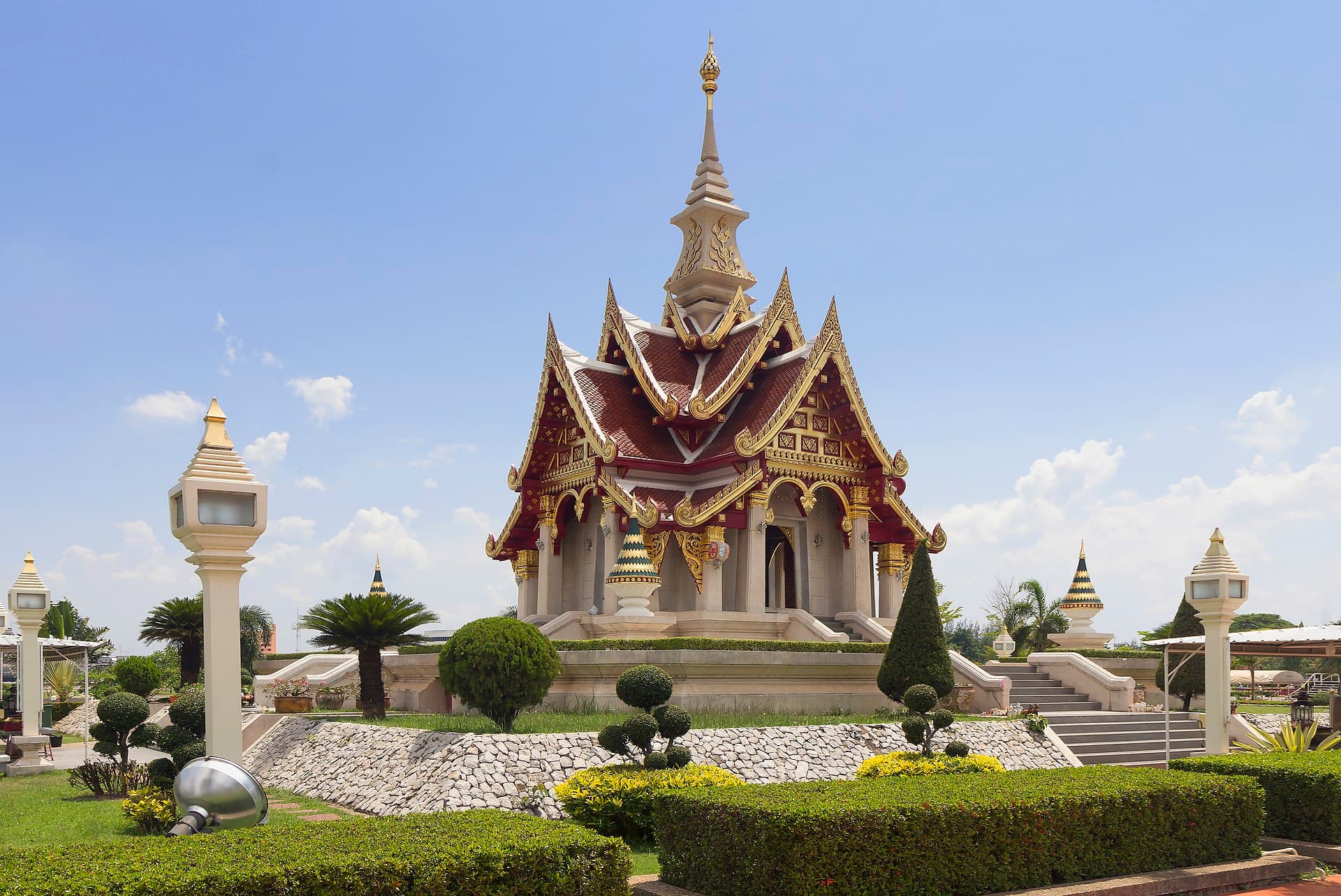 Stefan Fussan / CC BY-SA 3.0, via Wikimedia Commons
Zelfgeleide audiowandeling door Udon Thani — GPS-route, offline afspelen, meeslepende vertelling in 32 talen.
“Voorbij de lotuszee ontvouwt een stad haar stille revoluties.”
Niet de ansichtkaarten. De verhalen die zelfs locals niet kennen — gefluisterd in je oor, precies waar ze gebeurden.
Voordat het een museum was, had dit gebouw een andere soort macht en vormde het de toekomst van de jeugd van een natie.
De iconische gele eendenboten van Nong Prajak Park zijn niet alleen voor de lol; ze zijn een moderne echo van een veel ouder, natuurlijk fenomeen dat deze plek ooit definieerde.
De eigenaardige rotsformaties in Phu Phra Bat zijn niet alleen geologische wonderen; sommige dragen sporen die suggereren dat ze een zeer menselijke, en zeer oude, poging tot communicatie met het goddelijke zijn.
Ontdek elk geheim van Udon Thani
Elk adres, elke onthulling volledig — in je oor, precies waar het gebeurde.
Jij kiest je stops. Jij wandelt. De stem onthult wat de anderen missen.


Je zelfgeleide audiotour van Udon Thani is klaar — kies je bezienswaardigheden, kies je taal en start zodra je aankomt.
KopenLume heeft een ingebouwde augmented-reality-gids. Houd je telefoon omhoog: de camera toont de straat voor je, met een oplichtende pijl over het echte beeld die altijd naar je volgende stop wijst — geen kaart om uit te puzzelen, geen verkeerde afslagen. Zoals alles in Lume werkt het volledig offline.
Udon Thani, een belangrijke stad in de Isaan-regio van Thailand, biedt een fusie van historische diepgang en hedendaags leven. Het fungeert als een toegangspoort tot oude archeologische vindplaatsen en een centrum voor regionale handel en cultuur. Het rustige ritme van de stad verbergt zijn strategische belang, vooral tijdens de Vietnamoorlog toen het een aanzienlijke Amerikaanse luchtmachtbasis huisvestte. Tegenwoordig staat Udon Thani bekend om zijn uitgestrekte, met lotus gevulde meren, levendige markten en een culinair landschap dat de onderscheidende smaken van de Noordoost-Thaise keuken benadrukt.
De stedelijke structuur wordt bepaald door brede lanen en een mix van traditionele Thaise architectuur naast moderne ontwikkelingen. Reizigers kunnen door serene tempels dwalen, prehistorische wonderen ontdekken en de warmte van de Isaan-gastvrijheid ervaren. De stad biedt een comfortabel startpunt voor het verkennen van de bredere provincie, die opmerkelijke historische en natuurlijke attracties omvat.
Het verhaal van Udon Thani strekt zich duizenden jaren terug, getuige de archeologische vindplaats Ban Chiang, een UNESCO-werelderfgoedlocatie in de provincie. Ban Chiang onthult sporen van een geavanceerde bronstijd beschaving die vele andere bekende culturen voorafgaat, met ingewikkeld aardewerk en metaalwerk die dateren van 3.600 v.Chr. Dit oude verleden suggereert een lange, continue menselijke aanwezigheid en culturele evolutie in de regio.
In recentere eeuwen maakte het gebied dat nu Udon Thani is deel uit van verschillende Lao koninkrijken voordat het in de late 19e eeuw werd opgenomen in Siam. De stad zelf werd formeel opgericht in 1893 door Prins Prachaksinlapakhom, beschouwd als de stichter van Udon Thani. Hij speelde een cruciale rol bij het consolideren van de Siamese controle over de noordoostelijke gebieden.
Een cruciale periode in de geschiedenis van Udon Thani was de Vietnamoorlog. Van 1964 tot 1976 was de stad de thuisbasis van de Royal Thai Air Force Base Udon Thani, die ook diende als een belangrijke Amerikaanse luchtmachtbasis. Deze aanwezigheid bracht aanzienlijke economische en sociale verschuivingen teweeg in de stad, introduceerde westerse invloeden en versnelde de ontwikkeling ervan. De basis speelde een cruciale rol in luchtoperaties tijdens het conflict, waardoor Udon Thani een strategische locatie in Zuidoost-Azië werd.
Na de oorlog transformeerde Udon Thani tot een regionaal centrum voor handel, landbouw en onderwijs. De erfenis van zijn diverse verleden is zichtbaar in zijn architectuur, zijn multiculturele bevolking en zijn voortdurende ontwikkeling als een belangrijk stedelijk centrum in de Isaan-regio van Thailand. De stad blijft evolueren, waarbij de diepe historische wortels worden gebalanceerd met moderne ambities.
Begin uw verkenning in Nong Prajak Park, een groot stadspark rond een rustig meer, bekend om zijn grote gele eend-sculpturen en waterfietsen. Het is een populaire plek voor de lokale bevolking om te sporten en te ontspannen. Voor een dieper begrip van het verleden van de regio biedt het Udon Thani Provinciaal Museum tentoonstellingen over de geschiedenis, archeologie en lokale cultuur van de stad, gehuisvest in een prachtig bewaard gebleven voormalige meisjesschool.
Net buiten de stad presenteert het Phu Phra Bat Historisch Park een uniek landschap van ongewone rotsformaties en oude rotstekeningen, die een glimp bieden van prehistorische spirituele praktijken. Verder weg is de Ban Chiang Archeologische Vindplaats, een UNESCO-werelderfgoedlocatie, essentieel voor het begrijpen van de Bronstijd in Zuidoost-Azië, met oude aardewerken en artefacten.
Voor een spirituele ervaring bezoekt u Wat Pa Phu Kon, een opvallende tempel met een opmerkelijk blauw dak en een liggende Boeddha, gelegen te midden van weelderige heuvels. In het stadscentrum is Wat Phothisomphon een vereerde koninklijke tempel met gracieuze architectuur en een rustige sfeer. Mis de levendige UD Town avondmarkt niet voor een avond vol streetfood, livemuziek en winkelen.
De meest gunstige tijd om Udon Thani te bezoeken is tijdens het koele en droge seizoen, dat loopt van november tot februari. Gedurende deze maanden zijn de temperaturen gematigder, meestal variërend van 20°C tot 30°C, wat comfortabel is voor sightseeing en buitenactiviteiten. De luchtvochtigheid is ook lager. Het hete seizoen, van maart tot mei, kan temperaturen boven de 35°C zien stijgen, terwijl het regenseizoen van juni tot oktober zware regenval en hogere luchtvochtigheid brengt.
Udon Thani International Airport (UTH) biedt binnenlandse vluchten van en naar Bangkok en andere grote Thaise steden. Vanaf de luchthaven zijn taxi's en gedeelde minivans gemakkelijk beschikbaar om het stadscentrum te bereiken. Binnen Udon Thani zijn songthaews (gedeelde pick-up trucks), tuk-tuks en motorfietstaxi's gebruikelijke vervoermiddelen. Ritdeel-apps zoals Grab zijn ook operationeel. Engels wordt buiten de belangrijkste toeristische gebieden niet veel gesproken, dus het kan handig zijn om een vertaal-app of basis-Thaise zinnen bij de hand te hebben. Geldautomaten zijn breed beschikbaar en creditcards worden geaccepteerd bij grotere etablissementen, hoewel contant geld de voorkeur heeft voor markten en kleinere verkopers.
Udon Thani — Koreaans, Chinees, Hebreeuws en nog 29 talen, elke stop verteld door een moedertaalspreker. Het grootste taalaanbod van alle zelfgeleide audiotours.
Beschikbaar in: