Sri-Krishna-Tempel
Die Statue des Herrn Krishna blickt hier in eine ungewöhnliche Richtung, ein Zeugnis des unerschütterlichen Glaubens eines Gläubigen.
Die ganze Geschichte wird in der Tour freigeschaltet
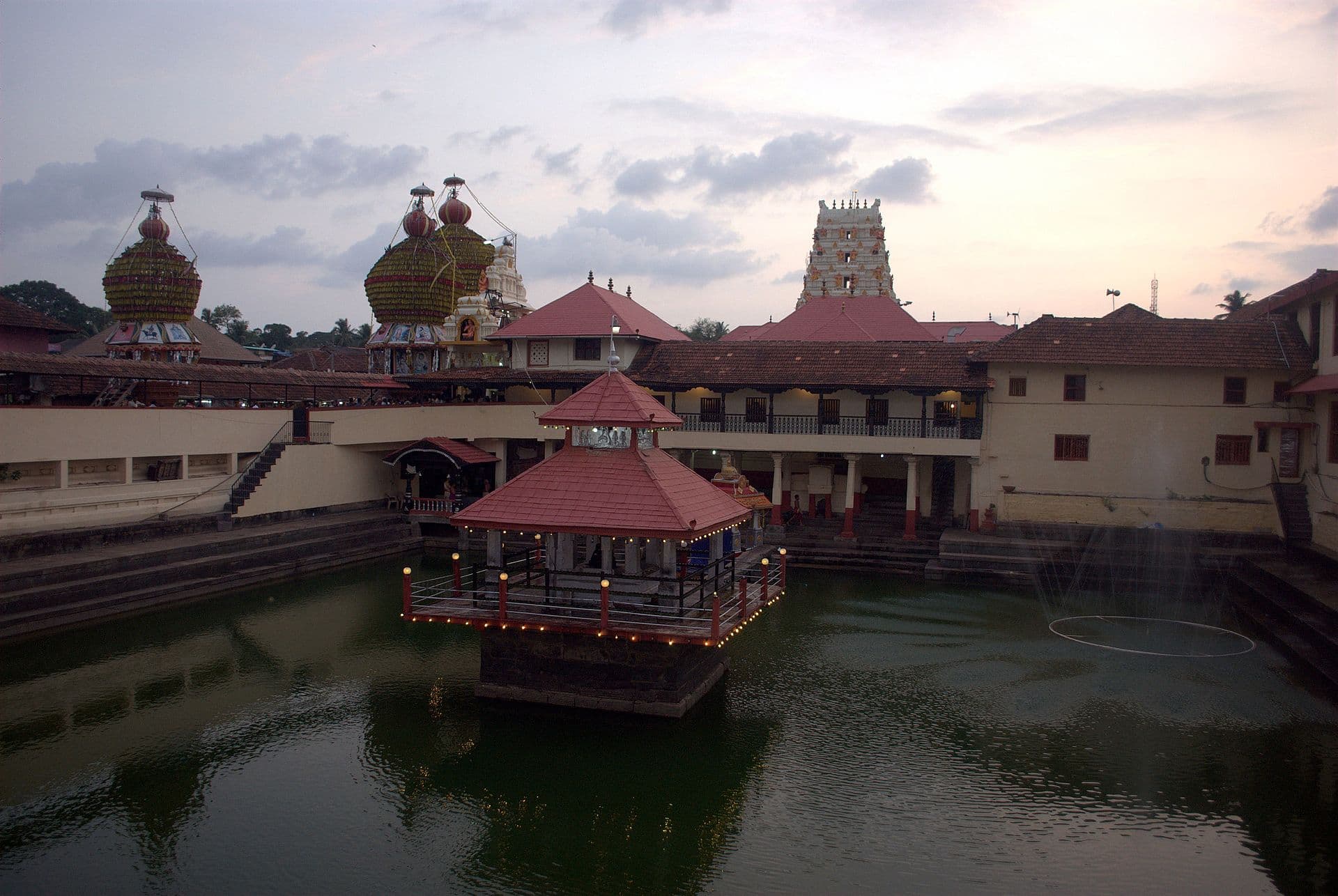 (WT-en) Ravikiran Rao / CC BY-SA 4.0, via Wikimedia Commons
Selbstgeführte Audio-Walking-Tour durch Udupi — GPS-Route, Offline-Wiedergabe, erzählerische Narration in 32 Sprachen.
“Wo alte Traditionen auf den Rhythmus des Arabischen Meeres treffen.”
Nicht die Postkarten. Die Geschichten, die selbst Einheimische nicht kennen – dir ins Ohr geflüstert, genau dort, wo sie geschahen.
Die Statue des Herrn Krishna blickt hier in eine ungewöhnliche Richtung, ein Zeugnis des unerschütterlichen Glaubens eines Gläubigen.
Die weltberühmte Udupi-Küche, berühmt für ihre vegetarischen Gerichte, hat einen unerwarteten Ursprung, der eng mit den täglichen Ritualen des Tempels verbunden ist.
Eine besondere Auberginensorte, die nur in der Region Mattu bei Udupi vorkommt, hat einen besonderen, fast heiligen Platz in den lokalen kulinarischen und religiösen Traditionen.
Entdecke jedes Geheimnis von Udupi
Jede Adresse, jede Enthüllung vollständig – in deinem Ohr, genau dort, wo es geschah.
Du wählst deine Stationen. Du gehst. Die Stimme enthüllt, was andere übersehen.


Deine selbstgeführte Audio-Tour durch Udupi ist bereit – wähle deine Sehenswürdigkeiten, deine Sprache und starte, sobald du ankommst.
KaufenLume enthält einen integrierten Augmented-Reality-Guide. Halten Sie Ihr Handy hoch: Die Kamera zeigt die Straße vor Ihnen, mit einem leuchtenden Pfeil über dem echten Bild, der immer auf Ihren nächsten Stopp zeigt — keine Karte zum Rätseln, keine falschen Abzweigungen. Wie alles bei Lume funktioniert es komplett offline.
Udupi, eine Küstenstadt in Karnataka, Indien, bietet eine harmonische Mischung aus spirituellem Erbe, ruhigen Stränden und einer unverwechselbaren kulinarischen Identität. Entlang der Arabischen See gelegen und von den Westghats begrenzt, wird Udupi aufgrund seiner zahlreichen alten Tempel, insbesondere des verehrten Sri-Krishna-Tempels, oft als „Tempelstadt“ bezeichnet. Jenseits seines spirituellen Kerns bietet die Küste von Udupi unberührte Strände, ruhige Flussmündungen und einzigartige geologische Formationen, die eine vielfältige Palette von Erlebnissen für Besucher bieten.
Weltweit bekannt als Geburtsort der Udupi-Küche, präsentiert die Stadt ein tief verwurzeltes kulturelles Erlebnis, das von Hingabe, Disziplin und Einfachheit geprägt ist. Ob Sie spirituelle Ruhe, Küstenentspannung oder authentische kulinarische Erlebnisse suchen, Udupi zeigt die Seele des Küsten-Karnatakas in ihrer raffiniertesten und einladendsten Form.
Die Geschichte von Udupi ist tief mit alten Legenden und spirituellen Entwicklungen verwoben. Der Name der Stadt selbst leitet sich vermutlich von den Sanskrit-Wörtern „Udu“ (Stern) und „Pa“ (Herr) ab, was sich auf eine Legende bezieht, in der der Mondgott (Chandra) hier Buße bei Lord Shiva leistete, um von einem Fluch befreit zu werden. Der Ort, an dem Shiva erschien, ist heute der Sri-Chandramouleeshwara-Tempel, eines der alten Heiligtümer von Udupi.
Udupi wurde im 13. Jahrhundert mit der Ankunft des Vaishnava-Heiligen Madhvacharya (1238–1317 n. Chr.) zu einem bedeutenden spirituellen Zentrum. Er gründete den Sri-Krishna-Tempel, der das Herz des spirituellen Lebens von Udupi bildet, und errichtete acht Mathas (Klöster), um die Dvaita-Vedanta-Philosophie zu verbreiten. Dies führte zu einer lebendigen Tempelkultur und einer bedeutenden Abwanderung von Brahmanen in die Region.
Ein bestimmendes Merkmal der spirituellen Verwaltung von Udupi ist das Paryaya-System, eine zeremonielle Übergabe der Tempelverwaltung unter den acht von Madhvacharya gegründeten Mathas, die alle zwei Jahre stattfindet. Dieses große Fest ist von Prozessionen, Ritualen und Kulturprogrammen geprägt und zieht Hunderttausende von Pilgern an. Schon vor dem Krishna-Tempel galt Udupi als heiliger Ort, Heimat der alten Sri-Anantheshwara- und Sri-Chandramauleshwara-Tempel, die bis ins 8. Jahrhundert zurückreichen.
Über seine religiöse Bedeutung hinaus hat sich Udupi zu einem administrativen und wirtschaftlichen Zentrum entwickelt. Es ist der Verwaltungssitz des Distrikts Udupi und eine der am schnellsten wachsenden Städte Karnatakas. Die Wirtschaft der Stadt umfasste traditionell Landwirtschaft und Fischerei, und sie ist auch die Geburtsstätte der Syndicate Bank und der Corporation Bank. Heute verbindet Udupi weiterhin seine tief verwurzelten Traditionen mit modernen Entwicklungen und bietet ein reiches kulturelles Mosaik.
Beginnen Sie Ihre Erkundung im Sri-Krishna-Tempel, dem spirituellen Herzen von Udupi, wo Gläubige die Gottheit durch das einzigartige Navagraha Kitiki, ein Silberfenster, betrachten. Besuchen Sie in der Nähe die alten Tempel Anantheshwara-Tempel und Chandramauleshwara-Tempel, die dem Krishna-Tempel vorausgehen. Für einen Einblick in das traditionelle Leben Karnatakas ist das Hasta Shilpa Heritage Village ein Freilichtmuseum, das restaurierte Häuser und Artefakte zeigt.
Die Küste von Udupi bietet mehrere landschaftlich reizvolle Ausflüge. Der Malpe Beach ist ein lebhafter Ort mit goldenem Sand, Wassersportarten wie Parasailing und Jetski sowie Bootsfahrten zu nahegelegenen Inseln. Von Malpe aus können Sie mit der Fähre zu den St. Mary's Islands fahren, einem geologischen Wunderwerk, das für seine charakteristischen sechseckigen Basaltformationen bekannt ist. Der Kaup Beach verfügt über einen historischen Leuchtturm, der einen Panoramablick auf die Arabische See bietet, besonders faszinierend bei Sonnenuntergang. Für ein ruhigeres Erlebnis sollten Sie den Padubidri Beach, einen Blue Flag zertifizierten Strand, oder den Kodi Bengre Beach (Delta Point) in Betracht ziehen, wo der Fluss Suvarna auf die Arabische See trifft. Sie können auch das Corporation Bank Heritage Museum in der Nähe des Krishna Mutt erkunden, das eine Sammlung von Münzen aus der Zeit 400 v. Chr. beherbergt.
Die beste Zeit für einen Besuch in Udupi ist während der Wintermonate von Oktober bis März. In dieser Zeit ist das Wetter angenehm und komfortabel, mit Temperaturen zwischen 20 und 32 Grad Celsius, ideal für Besichtigungen, Tempelbesuche und Strandaktivitäten. Dies fällt auch mit mehreren Festivals zusammen, die einen Einblick in die reichen Traditionen der Region bieten. Die Monsunzeit von Juni bis September bringt starke Regenfälle mit sich und verwandelt die Landschaft in üppiges Grün, was für Naturliebhaber attraktiv sein kann, obwohl einige Outdoor-Aktivitäten und Bootsfahrten eingeschränkt sein können. Die Sommer von März bis Mai können heiß und feucht sein, mit Temperaturen von bis zu 38-40 °C.
Udupi ist gut über Luft, Schiene und Straße erreichbar. Der nächstgelegene Flughafen ist der Mangaluru International Airport (IXE), etwa 57-60 km entfernt. Der Bahnhof Udupi liegt an der Konkan-Bahnlinie und verbindet ihn mit größeren Städten. Der National Highway 66 bietet eine gute Straßenanbindung mit regelmäßigen Bus- und Taxidiensten.
Beim Besuch von Tempeln wird bescheidene Kleidung empfohlen, die Schultern und Knie bedeckt. Leitungswasser wird für Touristen nicht empfohlen; greifen Sie zu Flaschen- oder abgekochtem Wasser. Nehmen Sie grundlegende Medikamente, Mückenschutzmittel und Sonnenschutzmittel mit. Udupi ist im Allgemeinen sicher für Reisende, aber es ist immer ratsam, normale Vorsichtsmaßnahmen zu treffen, insbesondere in überfüllten Gegenden oder an abgelegenen Stränden bei Nacht. Die lokalen Straßen können eng sein, fahren Sie also vorsichtig. Für die Fortbewegung stehen Auto-Rikschas und lokale Busse zur Verfügung. Fahrradverleih ist ebenfalls eine Option zur Erkundung.
Udupi — Koreanisch, Chinesisch, Hebräisch und 29 weitere Sprachen, jede Station von einer muttersprachlichen Stimme erzählt. Die größte Sprachauswahl aller selbstgeführten Audiotouren.
Verfügbar auf: