Kremlin d'Ouglitch
Le Kremlin d'Ouglitch recèle un passage secret, non pas pour s'échapper, mais pour quelque chose de bien plus intriguant.
L'histoire complète se débloque dans le tour
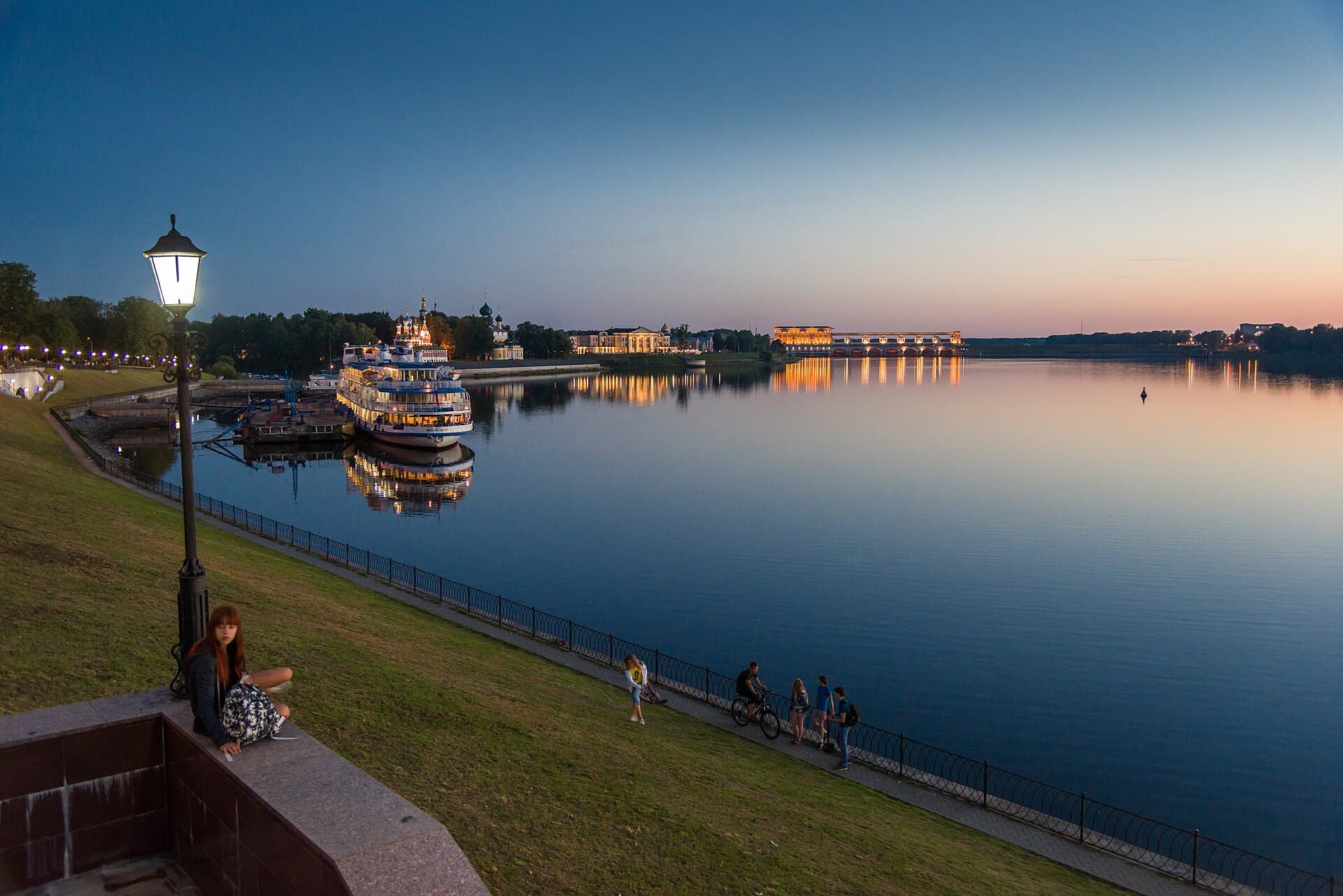 Sergey Pesterev / CC BY-SA 4.0, via Wikimedia Commons
Visite audio autoguidée de Ouglitch — parcours GPS à pied, lecture hors ligne, narration en 32 langues.
“Là où la Volga s'incline, l'histoire bascule.”
Pas les cartes postales. Les histoires que même les habitants ignorent — soufflées à l'oreille, là où elles se sont passées.
Le Kremlin d'Ouglitch recèle un passage secret, non pas pour s'échapper, mais pour quelque chose de bien plus intriguant.
La vibrante église rouge et bleue sur la Volga porte une punition silencieuse, vieille de plusieurs siècles.
Ouglitch est connue pour bien plus que son histoire dramatique ; c'est aussi un centre scientifique pour un produit laitier très apprécié.
Découvrez tous les secrets de Ouglitch
Chaque adresse, chaque révélation en entier — dans ton oreille, là où elle s'est passée.
Tu choisis tes lieux. Tu marches. La voix te révèle ce que les autres ignorent.


Votre visite audioguidée de Ouglitch vous attend — choisissez vos lieux, votre langue, et lancez-vous dès votre arrivée.
AcheterLume intègre un guide en réalité augmentée. Levez votre téléphone : sa caméra montre la rue devant vous, avec une flèche lumineuse posée sur l'image réelle qui pointe toujours vers votre prochain arrêt — aucune carte à déchiffrer, aucun mauvais virage. Comme tout dans Lume, ça fonctionne entièrement hors-ligne.
Ouglitch, ville située le long de la Volga, offre un mélange de profondeur historique et de charme provincial, une destination importante au sein de l'Anneau d'Or de Russie. Fondée en 937 après J.-C., elle précède Moscou elle-même. Le nom de la ville proviendrait du virage prononcé, ou « ugol » (coin), que la Volga fait à cet endroit. Les voyageurs arrivent souvent par croisière fluviale, accueillis par une ligne d'horizon d'anciennes églises et monastères.
L'atmosphère sereine d'Ouglitch dément un passé rempli d'événements dramatiques qui ont façonné l'histoire russe. Le paysage architectural de la ville, avec des bâtiments de la fin du XVIIIe et du début du XIXe siècle, ainsi que des constructions de l'ère soviétique comme le complexe hydroélectrique d'Ouglitch, coexistent harmonieusement. Attirant plus de 300 000 visiteurs par an, Ouglitch offre un aperçu de la vie traditionnelle russe, avec ses demeures marchandes, ses maisons ornées d'architraves sculptées et un rythme tranquille et contemplatif.
Ouglitch est apparue pour la première fois dans les chroniques en 1148 sous le nom d'Ugliche Pole, bien que les légendes locales suggèrent sa fondation par Yan Pleskovich, un parent de la princesse Olga, en 937 après J.-C. À partir de 1218, Ouglitch fut la capitale d'un petit principat indépendant, une période d'expansion et de prospérité. Cependant, sa position stratégique la rendit également vulnérable, entraînant des pillages et des incendies répétés par les Mongols-Tatars, les Lituaniens et le Grand Prince de Tver.
Le XVe siècle marqua un « Âge d'Or » pour Ouglitch, particulièrement sous le règne du prince Andrey Bolshoy (Andrey le Grand) de 1462 à 1491. Pendant cette période, la ville connut une expansion significative et la construction de ses premiers bâtiments en pierre, y compris une cathédrale et le palais en briques rouges du prince, achevé en 1481. Ouglitch avait même sa propre monnaie, évoluant en un centre politique, économique et culturel important.
L'événement le plus crucial de l'histoire d'Ouglitch eut lieu le 15 mai 1591. Le tsarévitch Dimitri, fils de 8 ans d'Ivan le Terrible et dernier descendant de la dynastie des Riourikides, fut retrouvé mort la gorge tranchée dans le jardin du palais. Alors que certains récits suggèrent une blessure accidentelle auto-infligée lors d'une crise d'épilepsie, sa mère était convaincue qu'il s'agissait d'un meurtre. Cette mort mystérieuse déclencha des troubles civils à Ouglitch, conduisant à l'exécution de 200 citoyens et aux vœux forcés de la mère de Dimitri.
La mort de Dimitri précipita le « Temps des Troubles », une période de crise dynastique et politique, de guerres civiles et d'interventions étrangères qui dura jusqu'à l'accession de la dynastie Romanov en 1613. Les tsars Romanov canonisèrent plus tard Dimitri comme saint martyr et désignèrent Ouglitch comme lieu de pèlerinage. L'Église Saint-Dimitri-sur-le-Sang, construite en 1692, est un vibrant mémorial de cet événement tragique.
Au XXe siècle, Ouglitch vit la construction du barrage d'Ouglitch et d'une centrale hydroélectrique sous le règne de Staline, ce qui, tout en fournissant de l'énergie, entraîna également l'inondation de certaines zones. Malgré ces développements industriels, Ouglitch a largement conservé son caractère historique et continue d'attirer des visiteurs grâce à son patrimoine durable.
Commencez votre exploration au Kremlin d'Ouglitch, le cœur historique de la ville, situé sur un promontoire élevé surplombant la Volga. Bien que les fortifications en bois d'origine aient disparu, le site abrite plusieurs structures importantes. Les Chambres des Princes d'Apannage d'Ouglitch, datant du XVe siècle, sont l'un des rares palais médiévaux russes subsistants et fonctionnent aujourd'hui comme un musée.
La vive Église Saint-Dimitri-sur-le-Sang, construite en 1692, est une structure de couleur saumon avec des dômes en oignon bleus et dorés, marquant l'endroit où le tsarévitch Dimitri est mort. À l'intérieur, vous pouvez voir une peinture murale représentant la mort du prince et des reliques comme la civière et la lanterne en mica utilisées lors du transfert de son corps à Moscou. À proximité, la Cathédrale de la Transfiguration, construite en 1713 dans le style baroque Narychkine, est remarquable pour son acoustique et ses vastes fresques.
Parmi les autres sites religieux, on trouve le Monastère de la Résurrection, un impressionnant ensemble de murs blanchis à la chaux et de coupoles aux tuiles dorées, et le Monastère Alexeievsky, abritant l'Église de l'Assomption. Pour une perspective différente, visitez le Musée Central de l'Histoire de l'Hydroélectricité de Russie, situé dans l'un des bâtiments de la centrale hydroélectrique d'Ouglitch, détaillant le développement de l'hydroélectricité en Russie.
Ouglitch connaît un climat continental humide avec des saisons distinctes. Les étés (juin à août) sont agréablement chauds, avec des températures moyennes autour de 16-18°C et des maximales diurnes atteignant 21-23°C, ce qui la rend propice à l'exploration en extérieur. Juillet est le mois le plus chaud, avec une moyenne de 18,3°C, mais connaît également le plus de précipitations. Les hivers sont longs et froids, janvier étant le mois le plus froid, avec une moyenne de -7,1°C. Le printemps et l'automne offrent des périodes de transition pittoresques.
Ouglitch est située à environ 240 km au nord de Moscou. Bien que des bus quotidiens soient disponibles depuis Moscou, le trajet peut durer plus de cinq heures, et le réseau ferroviaire est considéré comme obsolète. Le moyen le plus populaire et souvent recommandé pour se rendre à Ouglitch est une croisière sur la Volga, car c'est une escale fréquente sur les itinéraires entre Moscou et Saint-Pétersbourg.
Une fois à Ouglitch, le centre-ville historique est accessible à pied, ce qui permet d'explorer facilement ses attractions. Bien que de nombreuses personnes en Russie parlent anglais, connaître quelques phrases de base en russe peut être utile. Ouglitch est réputée pour ses produits locaux comme le fromage, le poisson fumé et séché, et les montres. La monnaie locale est le rouble russe (RUB).
Ouglitch en coréen, en chinois ou en hébreu — et dans 29 autres langues, chaque étape narrée par une voix native. La plus large gamme de langues de tous les audioguides autoguidés.
Disponible en :