Studiolo del Palacio Ducal
El duque Federico da Montefeltro, un renombrado mercenario y erudito, mantenía un estudio privado lleno de ilusiones visuales.
La historia completa se desbloquea en el tour
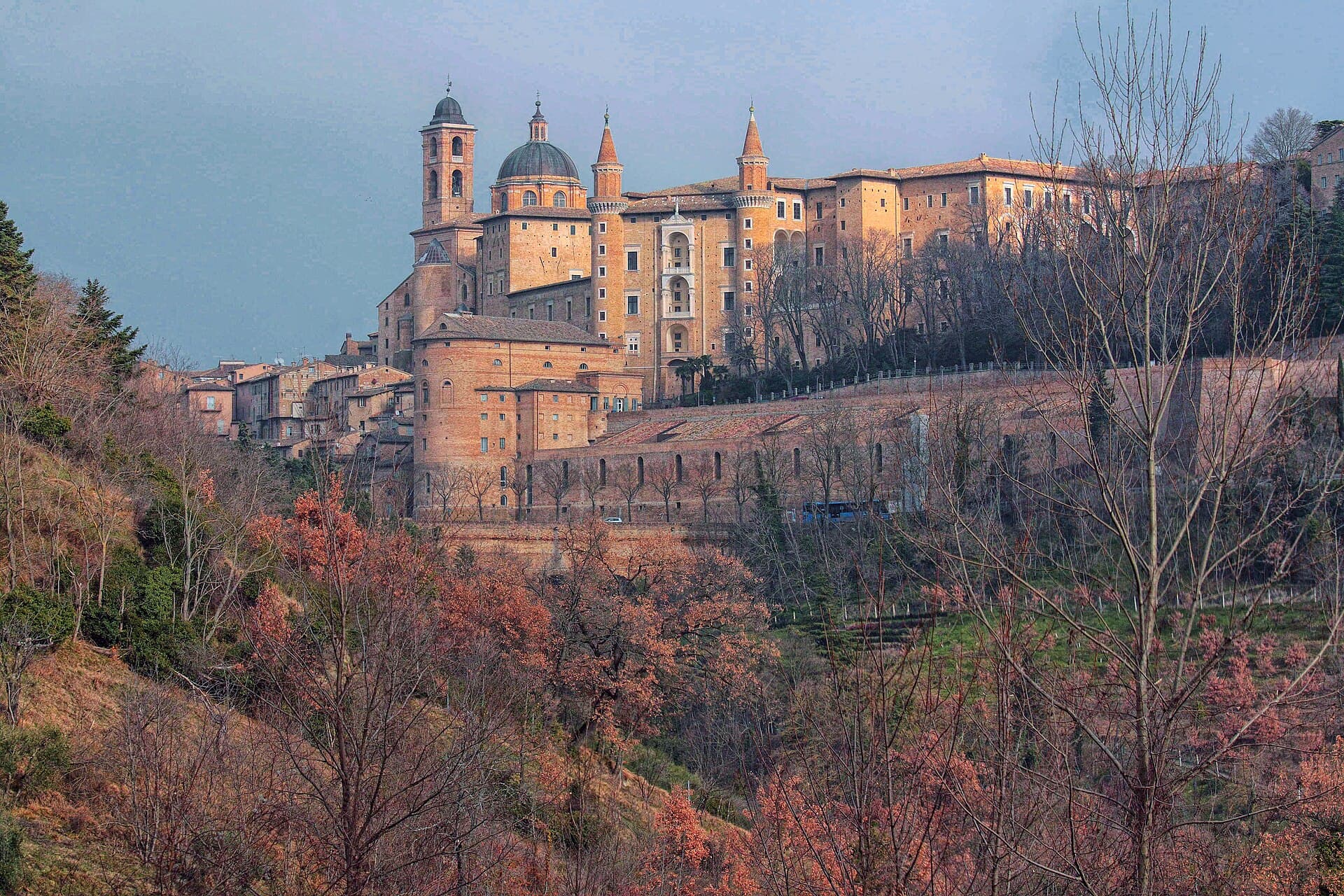 Francesco Maria Garbugli / CC BY-SA 3.0, via Wikimedia Commons
Tour de audio autoguiado de Urbino — ruta GPS a pie, reproducción offline, narración en 32 idiomas.
“Urbino: Donde los ideales del Renacimiento respiran en piedra y silencio.”
No las postales. Las historias que ni los locales conocen — al oído, justo donde ocurrieron.
El duque Federico da Montefeltro, un renombrado mercenario y erudito, mantenía un estudio privado lleno de ilusiones visuales.
Bajo los grandes salones del Palacio Ducal yace un mundo de sorprendente ingenio.
Más allá de las principales atracciones, una pequeña capilla alberga un belén que resulta inesperadamente teatral.
Descubre todos los secretos de Urbino
Cada dirección, cada revelación al completo — a tu oído, justo donde ocurrió.
Eliges tus paradas. Caminas. La voz te revela lo que los demás ignoran.


Tu tour de audioguía por Urbino te espera — elige tus lugares, tu idioma y empieza al llegar.
ComprarLume incluye una guía de realidad aumentada. Levanta el móvil y su cámara muestra la calle que tienes delante, con una flecha luminosa sobre la imagen real que siempre apunta a tu próxima parada — sin mapas que descifrar, sin giros equivocados. Como todo en Lume, funciona completamente sin conexión.
Urbino, una ciudad amurallada en la región italiana de Las Marcas, asciende desde las colinas entre los valles de Metauro y Foglia, un testimonio de la brillantez renacentista. Su centro histórico, declarado Patrimonio de la Humanidad por la UNESCO desde 1998, conserva un complejo urbano excepcional que influyó profundamente en la cultura europea. Caminando por sus estrechas calles empedradas y empinadas, uno se encuentra con edificios de arenisca y una larga muralla de ladrillo, evocando el siglo XV, cuando floreció como centro de arte y aprendizaje.
A menudo descrita como una 'ciudad con forma de palacio', la armonía arquitectónica de Urbino es evidente. A pesar de su aspecto tranquilo, la ciudad es animada, en gran parte debido a la Universidad de Urbino, cuya población estudiantil casi duplica a los habitantes de la ciudad durante el año académico. Esta mezcla de patrimonio antiguo y vida académica moderna crea una atmósfera única, distinta de las ciudades más grandes y concurridas de Italia.
Los orígenes de Urbino se remontan a la época romana, cuando era conocida como Urbinum Metaurense, o 'Ciudad junto al río Metauro'. Su ubicación estratégica llevó a su fortificación con robustas murallas, estableciéndola como una importante fortaleza durante las Guerras Góticas del siglo VI. Alrededor de principios del siglo XIII, la ciudad quedó bajo el dominio de la familia Montefeltro.
El verdadero cenit de la influencia de Urbino llegó en el siglo XV, bajo el mecenazgo de Federico da Montefeltro. Comandante militar y diplomático exitoso, Federico utilizó su riqueza para transformar Urbino en un centro líder de aprendizaje y cultura humanista. Atrajo a destacados artistas y eruditos, incluidos Piero della Francesca, Luciano Laurana, Leon Battista Alberti y Giovanni Santi (padre de Rafael), convirtiendo a Urbino en una magnífica corte principesca. Fue durante este período cuando Urbino adquirió la excelencia monumental y artística que extendió su influencia por toda Europa.
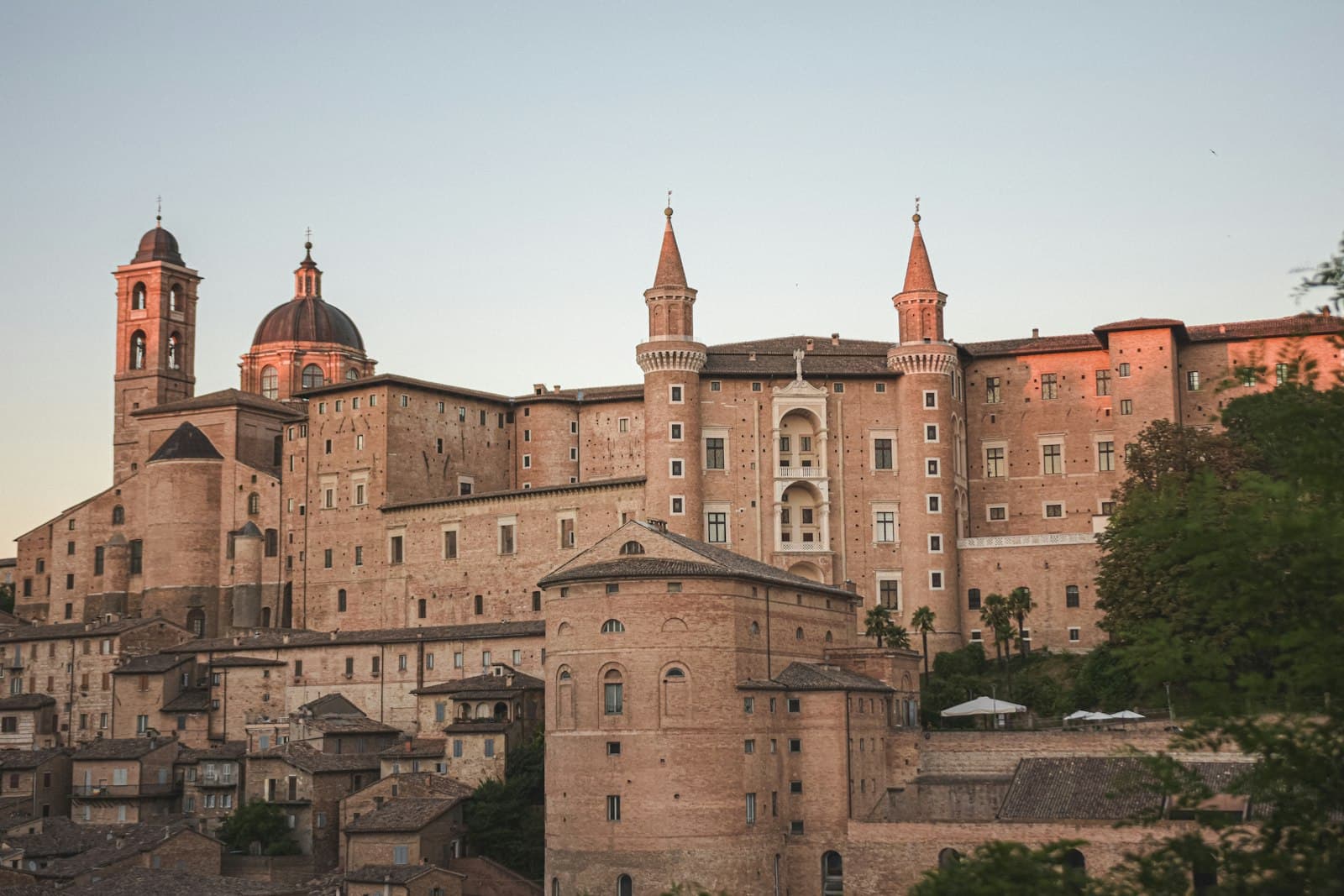
Federico inició una importante reestructuración urbana, con el objetivo de crear una ciudad más moderna, eficiente y hermosa. El resultado más icónico de su visión es el Palacio Ducal, una obra maestra de la arquitectura renacentista que fue concebida como una residencia y corte ideal, más que como una simple fortaleza. Arquitectos como Luciano Laurana y Francesco di Giorgio Martini contribuyeron a su diseño, combinando elementos de fortificación medieval con la armonía renacentista. La construcción del palacio comenzó en 1454 y continuó después de la muerte de Federico en 1482, con adiciones en el siglo XVI.
Después de 1626, la prominencia de Urbino disminuyó y se transformó en una ciudad más pequeña, en la ladera de una colina. Sin embargo, su último florecimiento artístico y cultural significativo ocurrió después de 1701, cuando el Papa Clemente XI financió renovaciones en numerosos palacios, iglesias y monasterios. Hoy en día, el centro histórico de Urbino permanece notablemente conservado, ofreciendo una conexión tangible con su gloria renacentista.
El núcleo del encanto de Urbino reside en su compacto centro histórico, fácilmente explorable a pie. El majestuoso Palacio Ducal (Palazzo Ducale) es el punto focal de la ciudad, albergando la Galería Nacional de Las Marcas (Galleria Nazionale delle Marche). Aquí, podrá admirar obras maestras de artistas renacentistas como Piero della Francesca, Rafael y Tiziano. No se pierda el Studiolo privado del Duque, una pequeña sala adornada con extraordinarias incrustaciones de madera en trampantojo.
Adyacente al palacio se encuentra el Duomo de Urbino, dedicado a Santa María Asunta. Reconstruido después de un terremoto en 1789, presenta una fachada neoclásica. Un corto paseo desde la Catedral lleva al Oratorio de San Juan Bautista, que contiene un animado ciclo de frescos del siglo XV de los hermanos Salimbeni. Cerca, el Oratorio de San Giuseppe ofrece un singular belén de toba y piedra pómez de Federico Brandani.
La casa natal de Rafael, Casa Natale di Raffaello, es ahora un museo que exhibe las primeras obras del artista y de su padre, Giovanni Santi. Para disfrutar de amplias vistas de Urbino y la campiña circundante de Las Marcas, ascienda a la Fortaleza de Albornoz (Fortezza Albornoz). La plaza principal, Piazza della Repubblica, sirve como punto de encuentro central, ideal para observar la vida local.
Las épocas ideales para visitar Urbino son de mediados de mayo a mediados de junio y durante todo septiembre y octubre. Durante estas temporadas intermedias, el clima es agradable con temperaturas cálidas (18-27°C) y cielos despejados, y las multitudes son más manejables. Julio y agosto también son adecuados, aunque las temperaturas pueden ser más altas, a veces alcanzando los 30-31°C. Estos meses albergan eventos como el Festival Internacional de Música de Urbino y la Festa del Duca, una recreación renacentista, lo que hace que la ciudad sea animada pero requiere reservar alojamiento con antelación. El invierno, de diciembre a febrero, puede traer nevadas ocasionales, transformando la cima de la colina en un paisaje pintoresco. El período universitario se extiende de octubre a junio, lo que garantiza un ambiente local animado fuera de los meses de verano.
Urbino es principalmente una ciudad peatonal, con su centro histórico designado como Zona a Traffico Limitato (ZTL), lo que significa que los automóviles están restringidos sin un permiso local. Si llega en coche, hay aparcamiento disponible en un garaje subterráneo en Piazza Mercatale, debajo del casco antiguo. Un ascensor proporciona fácil acceso desde allí hasta Corso Garibaldi, a pocos pasos de Piazza della Repubblica. Alternativamente, una empinada caminata por Via Mazzini también conduce al centro.
El transporte público conecta Urbino con otras ciudades. Los autobuses circulan cada hora entre Urbino y Pesaro, que se encuentra en una línea de tren principal. Desde las principales ciudades italianas como Venecia, Florencia o Roma, puede tomar un tren a Pesaro y luego un autobús a Urbino. La ciudad es pequeña, y la mayoría de las atracciones dentro del centro amurallado se encuentran a 20 minutos a pie. Urbino es generalmente menos costosa que destinos italianos más famosos como Florencia o Roma, con precios de comida competitivos debido a la población universitaria.
Urbino en coreano, en chino o en hebreo — y 29 idiomas más, cada parada narrada por una voz nativa. La mayor variedad de idiomas de cualquier audioguía autoguiada.
Disponible en: