Palacio de los Vivero
Em 1469, um casamento aqui mudou o curso da história espanhola, mas foi envolto em segredo.
História completa desbloqueada no tour
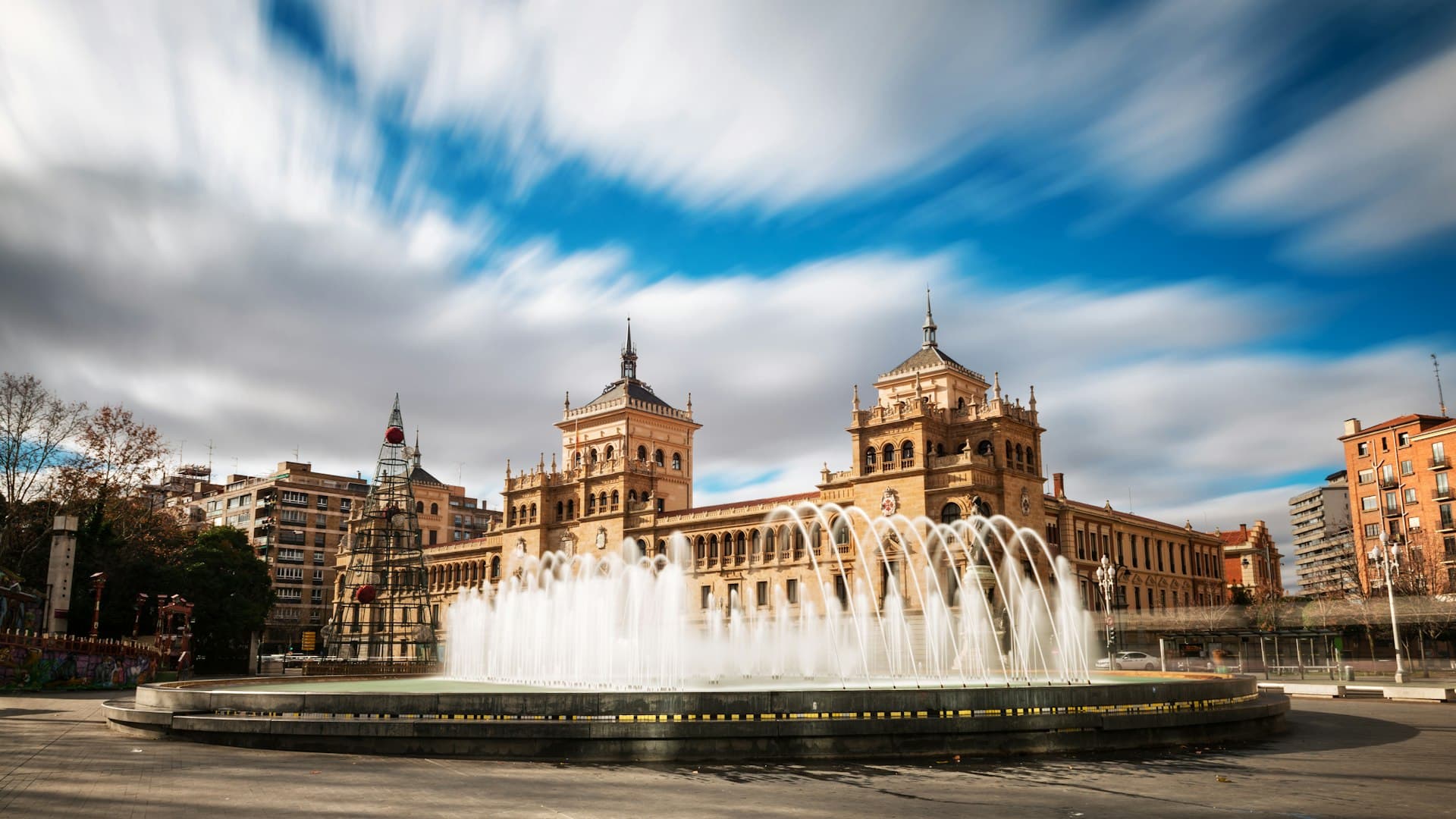 Photo: Andres Garcia / Unsplash
Tour de áudio autoguiado por Valladolid — rota GPS a pé, reprodução offline, narração envolvente em 32 idiomas.
“Onde a história real, gigantes literários e uma catedral inacabada contam uma história que só os curiosos encontram.”
Não os postais. As histórias que nem os locais conhecem — sussurradas ao seu ouvido, exatamente onde aconteceram.
Em 1469, um casamento aqui mudou o curso da história espanhola, mas foi envolto em segredo.
A praça principal de Valladolid guarda um segredo silencioso sobre um explorador de renome mundial.
Um rio flui por Valladolid, mas você não verá muito dele.
Descubra cada segredo de Valladolid
Cada endereço, cada revelação na íntegra — no seu ouvido, exatamente onde aconteceu.
Você escolhe as suas paragens. Você caminha. A voz revela o que os outros perdem.


O seu tour áudio autoguiado de Valladolid está pronto — escolha os seus pontos de interesse, selecione o seu idioma e comece no momento em que chegar.
ComprarA Lume inclui um guia de realidade aumentada. Levante o telemóvel: a câmara mostra a rua à sua frente, com uma seta luminosa sobreposta à imagem real que aponta sempre para a sua próxima paragem — sem mapa para decifrar, sem voltas erradas. Como tudo na Lume, funciona totalmente offline.
Valladolid, no coração de Castela e Leão, oferece uma mistura compacta de história, arte e vida cotidiana espanhola. É uma cidade que não revela imediatamente todos os seus encantos; em vez disso, sua beleza se desdobra a pé, através de praças inesperadas e fachadas renascentistas. Esta cidade histórica, outrora sede real e brevemente capital da Espanha, apresenta uma atmosfera digna em vez de uma fortemente voltada para o turismo, convidando a um ritmo mais lento de descoberta.
Ao caminhar pela cidade velha, você encontrará uma Plaza Mayor bem preservada, considerada uma das primeiras praças regulares da Europa e um modelo para outras na Espanha e nas Américas. O profundo passado da cidade é evidente em sua arquitetura monumental, de igrejas grandiosas a palácios imponentes, e sua vibrante cena cultural é aprimorada por uma grande população estudantil e eventos anuais como o Festival Internacional de Cinema de Valladolid (Seminci). Valladolid também mantém uma conexão significativa com figuras literárias como Miguel de Cervantes, que viveu aqui enquanto escrevia parte de Dom Quixote.
Além de suas camadas históricas e culturais, Valladolid é cercada por renomadas regiões vinícolas, tornando-a um destino para os interessados em gastronomia e vinhos locais, particularmente da Ribera del Duero. A mistura da cidade de museus acessíveis, culinária autêntica e um ritmo relaxado oferece uma experiência genuína e profundamente enraizada na herança castelhana.
## Das Origens Mouros à Sede Real A história registrada de Valladolid começa com uma menção em uma carta de 1074 de Afonso VI ao Conde Pedro Ansúrez, concedendo-lhe o senhorio sobre a área. Sob Ansúrez, Valladolid cresceu significativamente. O nome da cidade, possivelmente derivado do árabe 'Belad Ulid', sugere habitação anterior pelos Vaccaei na antiguidade. Em 1084, um projeto para a fundação do assentamento estava em andamento, com Ansúrez construindo um palácio e a igreja La Antigua, e sua esposa Eylo Alfónsez fundando hospitais e outras igrejas.
## A Era de Ouro e Conexões Reais A importância de Valladolid aumentou constantemente ao longo do período medieval. A partir do século XIII, serviu frequentemente como residência da corte real de Castela. Os séculos XV e XVI marcaram sua era de ouro, atingindo o ápice com o casamento secreto de Isabel de Castela e Fernando de Aragão em 1469, um evento crucial que levou à unificação da Espanha. A cidade floresceu como um centro de cultura e governança, estabelecendo uma das universidades mais antigas da Espanha em 1241. Filipe II, que governaria um império, nasceu aqui em 1527.
## Breve Status de Capital e Declínio Subsequente Valladolid deteve brevemente o prestigioso título de capital do Império Espanhol duas vezes: primeiro de 1492 a 1561, e novamente de 1601 a 1606 sob Filipe III. Este status atraiu aristocratas, funcionários e artistas, incluindo Miguel de Cervantes, que viveu em Valladolid entre 1603 e 1606 e recebeu permissão para publicar a primeira parte de Dom Quixote aqui em 1605. No entanto, um incêndio catastrófico em 1561 destruiu uma parte significativa da cidade, e em 1606, Filipe III mudou a capital de volta para Madri. Essa mudança desencadeou um período de declínio para Valladolid, embora tenha mantido sua universidade e papel regional.
## Era Moderna e Renascimento Industrial A cidade sofreu severamente durante as Guerras Napoleônicas (1808–1814), com muitos edifícios históricos destruídos. No entanto, o século XIX trouxe um surgimento gradual do declínio com a industrialização, e a chegada das ferrovias auxiliou ainda mais sua recuperação. A partir da década de 1950, Valladolid tornou-se um importante centro industrial, especialmente para a indústria automobilística, atraindo imigrantes e expandindo-se pelo Rio Pisuerga. Hoje, Valladolid combina sua profunda história com uma vibrante cena universitária e um foco crescente no turismo enogastronômico.
Comece sua exploração na Plaza Mayor, uma praça retangular grandiosa que serviu de modelo para outras na Espanha. A partir daqui, caminhe até a Iglesia de San Pablo, conhecida por sua impressionante fachada gótica isabelina, um retábulo de pedra detalhado. Adjacente a ela, o Palacio de Pimentel é notável como o local de nascimento do Rei Filipe II.
Não deixe de visitar o Museu Nacional de Escultura, abrigado no Colegio de San Gregorio do século XV, que contém uma extensa coleção de esculturas em madeira policromada. A Catedral de Valladolid, um projeto renascentista inacabado projetado por Juan de Herrera, é um testemunho de ambiciosos planos arquitetônicos. Perto dali, o Palacio de Santa Cruz do século XV é reconhecido como um dos primeiros edifícios renascentistas da Espanha.
Para um interlúdio literário, visite a Casa de Cervantes, a casa onde Miguel de Cervantes viveu e trabalhou em Dom Quixote. Para uma escapada verde, o Campo Grande Park oferece caminhos sinuosos, fontes e pavões que andam livremente. O Pasaje Gutiérrez, uma galeria comercial coberta do século XIX, oferece um vislumbre da arquitetura da Belle Époque.
Considere uma visita ao Museo Patio Herreriano, localizado dentro de um antigo mosteiro do século XII, que abriga uma coleção de arte espanhola contemporânea. Para algo verdadeiramente incomum, o Ossuário de Wamba, a uma curta distância de carro da cidade, contém milhares de crânios de monges.
Valladolid experimenta um clima mediterrâneo continental, com invernos frios e verões quentes. Os momentos ideais para visitar são a primavera (abril a junho) e o outono (setembro a outubro), quando as temperaturas são agradáveis para passeios turísticos, geralmente variando de 15°C a 20°C. Essas estações intermediárias também têm menos multidões e preços potencialmente mais baixos. Julho e agosto trazem o clima mais seco e quente, frequentemente excedendo 30°C, o que pode ser intenso para a exploração diurna. No entanto, as noites permanecem relativamente frescas. O inverno (novembro a março) é mais frio, com geadas ocasionais e neve leve, oferecendo uma experiência local mais tranquila e autêntica para aqueles que não se importam com o frio.
Valladolid é bem conectada e facilmente acessível. Fica a aproximadamente 200 km a noroeste de Madri, acessível por trem de alta velocidade RENFE em menos de uma hora. O Aeroporto de Valladolid-Villanubla (VLL) oferece voos de e para Barcelona, Málaga e as Ilhas Canárias. Dirigir de Madri leva cerca de 2 horas e 15 minutos. O centro da cidade é compacto e muito caminhável, tornando fácil explorá-lo a pé. O transporte público é confiável.
Muitos museus e lojas locais observam o horário tradicional da siesta espanhola, portanto, é aconselhável verificar os horários de funcionamento com antecedência. Para informações aos visitantes, o posto de turismo está localizado dentro do Pabellón de Cristal na Calle Acera de Recolectos. O custo de vida em Valladolid é geralmente mais acessível do que em cidades espanholas maiores como Madri ou Barcelona, oferecendo um bom equilíbrio entre renda e despesas.
Valladolid — coreano, chinês, hebraico e mais 29 idiomas, cada parada narrada por uma voz nativa. A maior variedade de idiomas entre os passeios de áudio autoguiados.
Disponível em: