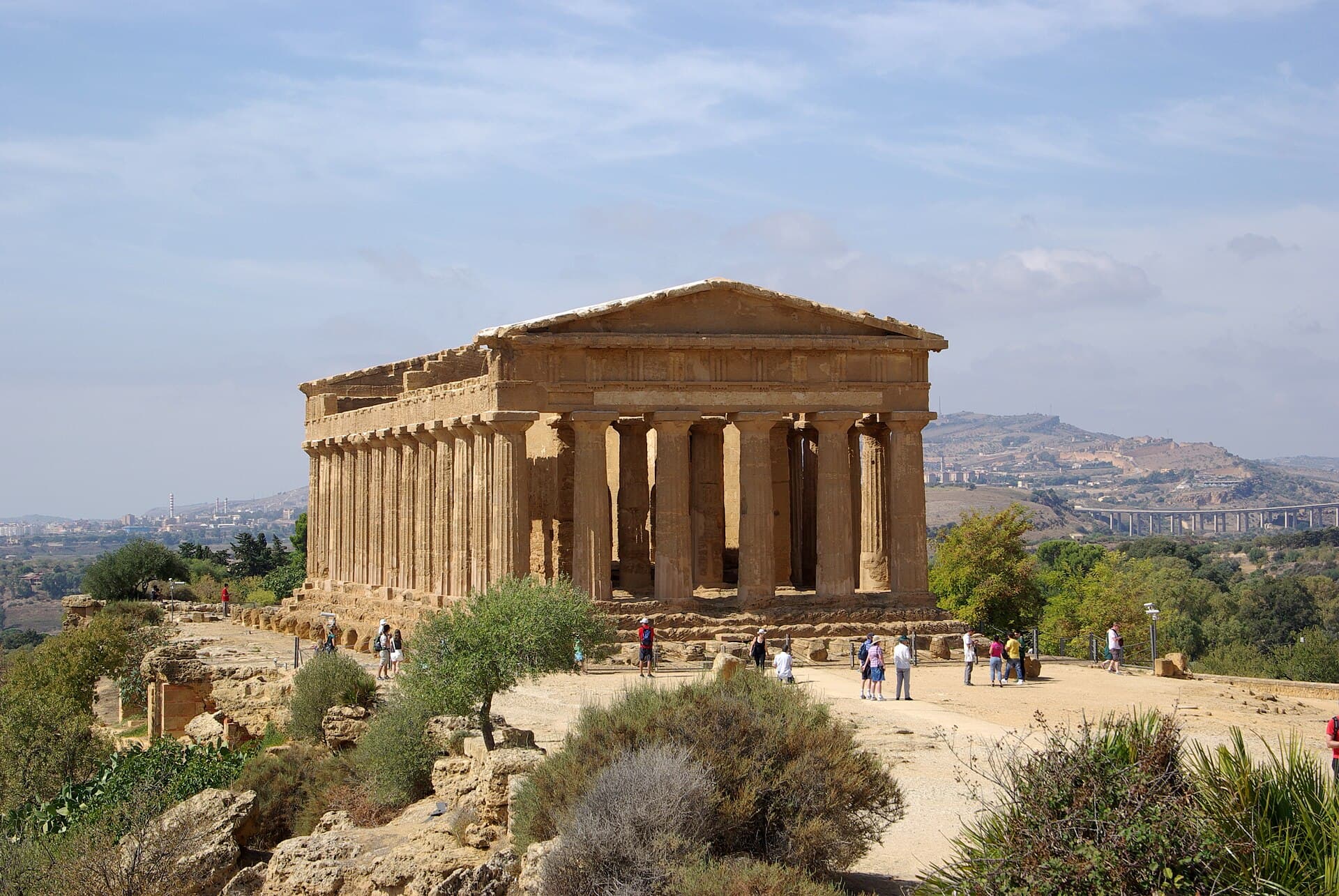
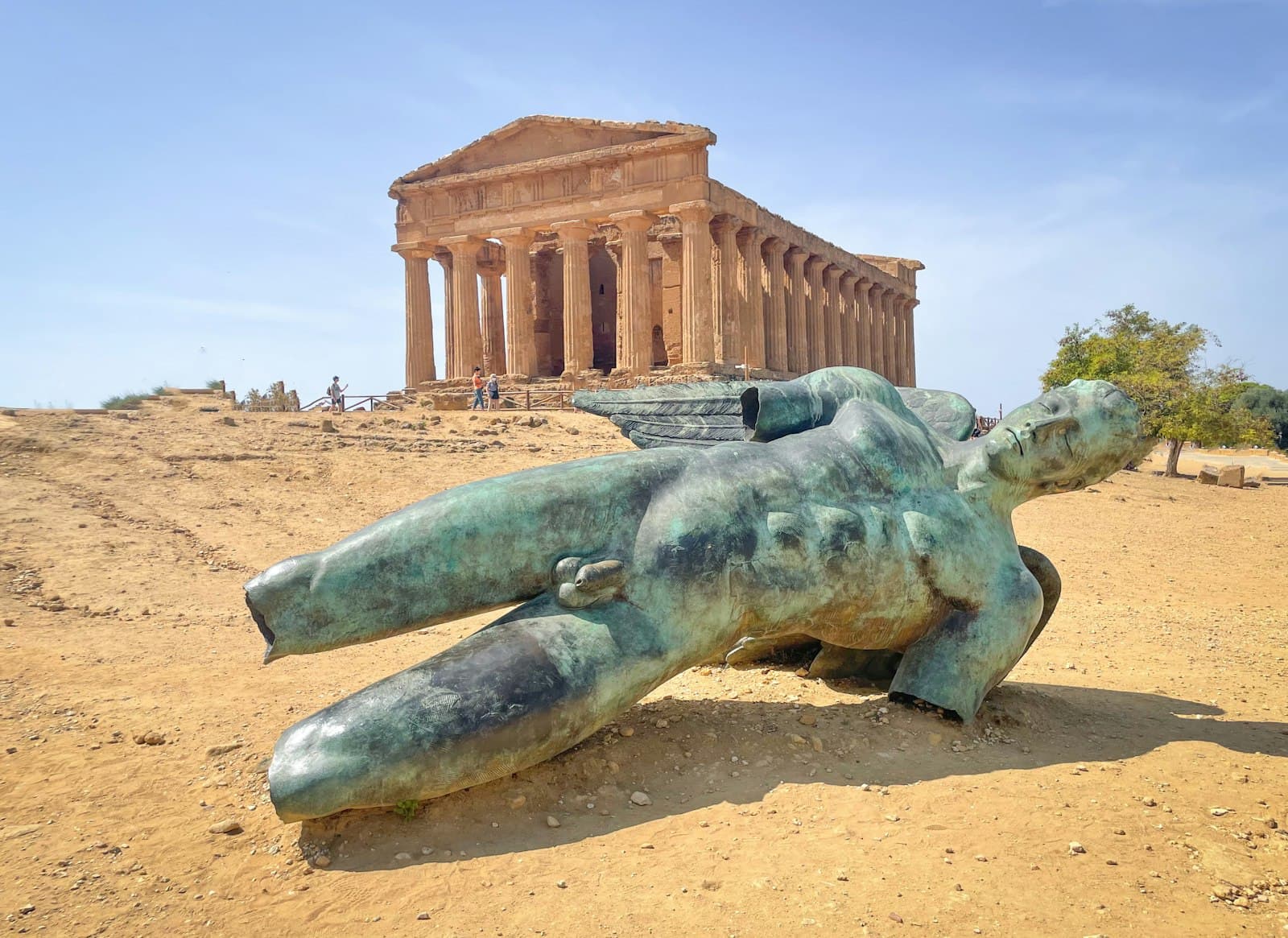
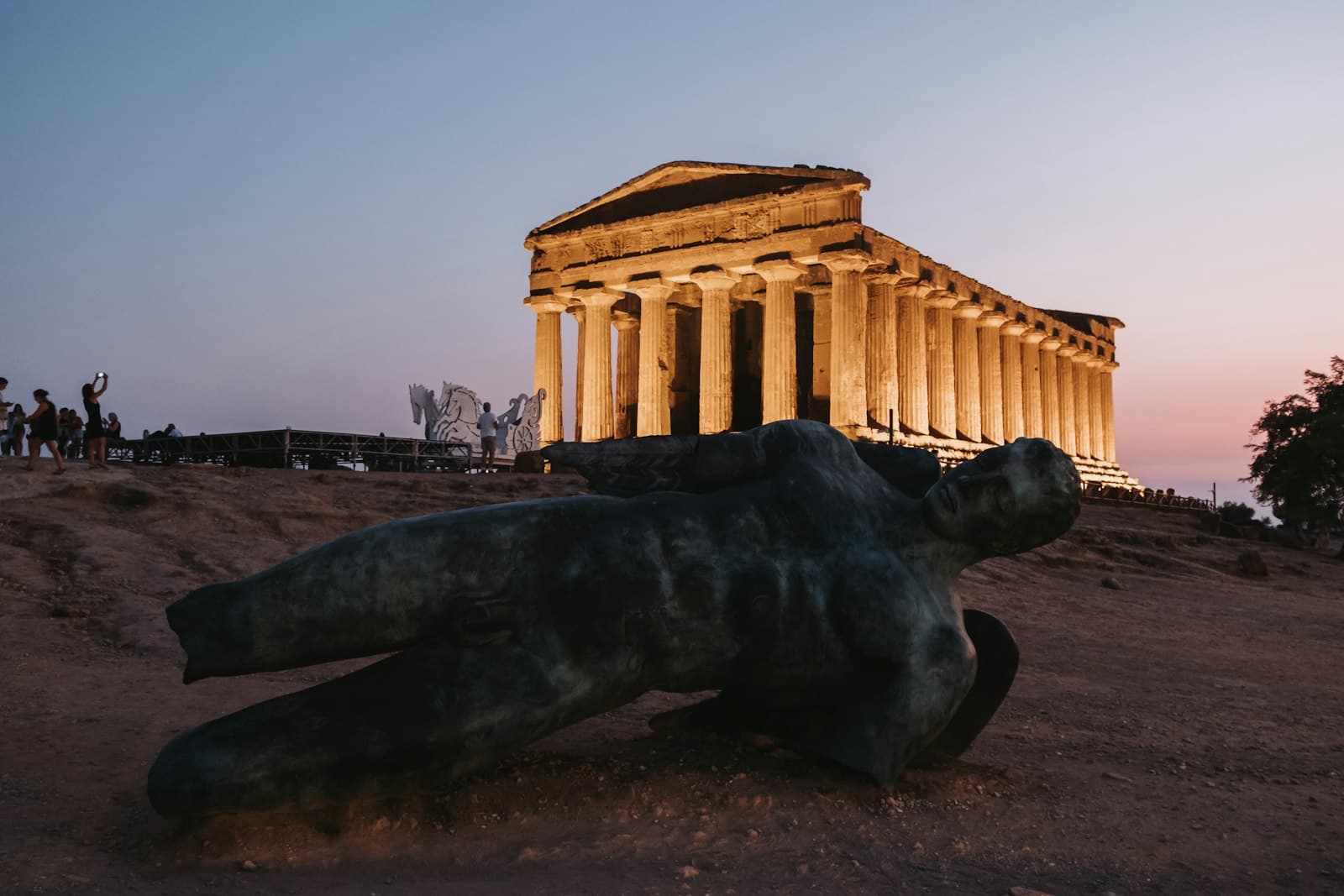
The Temple of Concordia stands as one of the best-preserved Greek temples in the world, a testament to ancient architectural prowess. But its survival owes itself to a surprising transformation centuries after its construction.
Berthold Werner / CC BY-SA 3.0, via Wikimedia CommonsValley of the Temples
Self-guided audio walking tour of Valley of the Temples — GPS route, offline playback, story-driven narration in 32 languages.
“Where ancient gods still hold court under the Sicilian sun.”
Valley of the Temples, as no one tells it.
Not the postcards. The stories even locals don't know — whispered in your ear, right where they happened.
Once envisioned to be among the largest temples in the Greek world, the Temple of Olympian Zeus is now largely in ruins. Yet, its remnants reveal an unusual architectural feature that set it apart.
Within the archaeological park lies a lush garden, a verdant oasis that seems to defy the dry Sicilian landscape. This garden, however, has a history far more ancient and practical than its present beauty suggests.
Discover every secret of Valley of the Temples
Every address, every reveal in full — in your ear, right where it happened.
You pick your stops. You walk. The voice reveals what the others miss.


How long do you have in Valley of the Temples?
Your self-guided audio tour of Valley of the Temples is ready — pick your landmarks, choose your language, and start the moment you arrive.
BuyThe story of Valley of the Temples
The Valley of the Temples, or Valle dei Templi, in Agrigento, Sicily, is an archaeological park that transports visitors to the heart of ancient Magna Graecia. This UNESCO World Heritage Site, spanning approximately 1,300 hectares, is recognized for its remarkably preserved Doric temples, considered among the finest examples of ancient Greek architecture outside of Greece itself.
Despite its designation, the temples are not actually situated in a valley, but rather along a ridge just outside the modern city of Agrigento, offering expansive views of the surrounding landscape and the distant Mediterranean Sea. The site provides a profound glimpse into the cultural and religious life of Akragas, a powerful Greek colony founded in the 6th century BC that flourished as one of the most sophisticated centers in Sicily.
From Akragas to Agrigento: A Legacy of Power and Piety
The origins of the Valley of the Temples trace back to the 6th century BC, when settlers from Gela established the colony of Akragas. The city rapidly grew in prominence, becoming one of the most influential Greek centers in Sicily during the 5th century BC. This period, often referred to as its golden age, saw the construction of the magnificent Doric temples that define the site today.
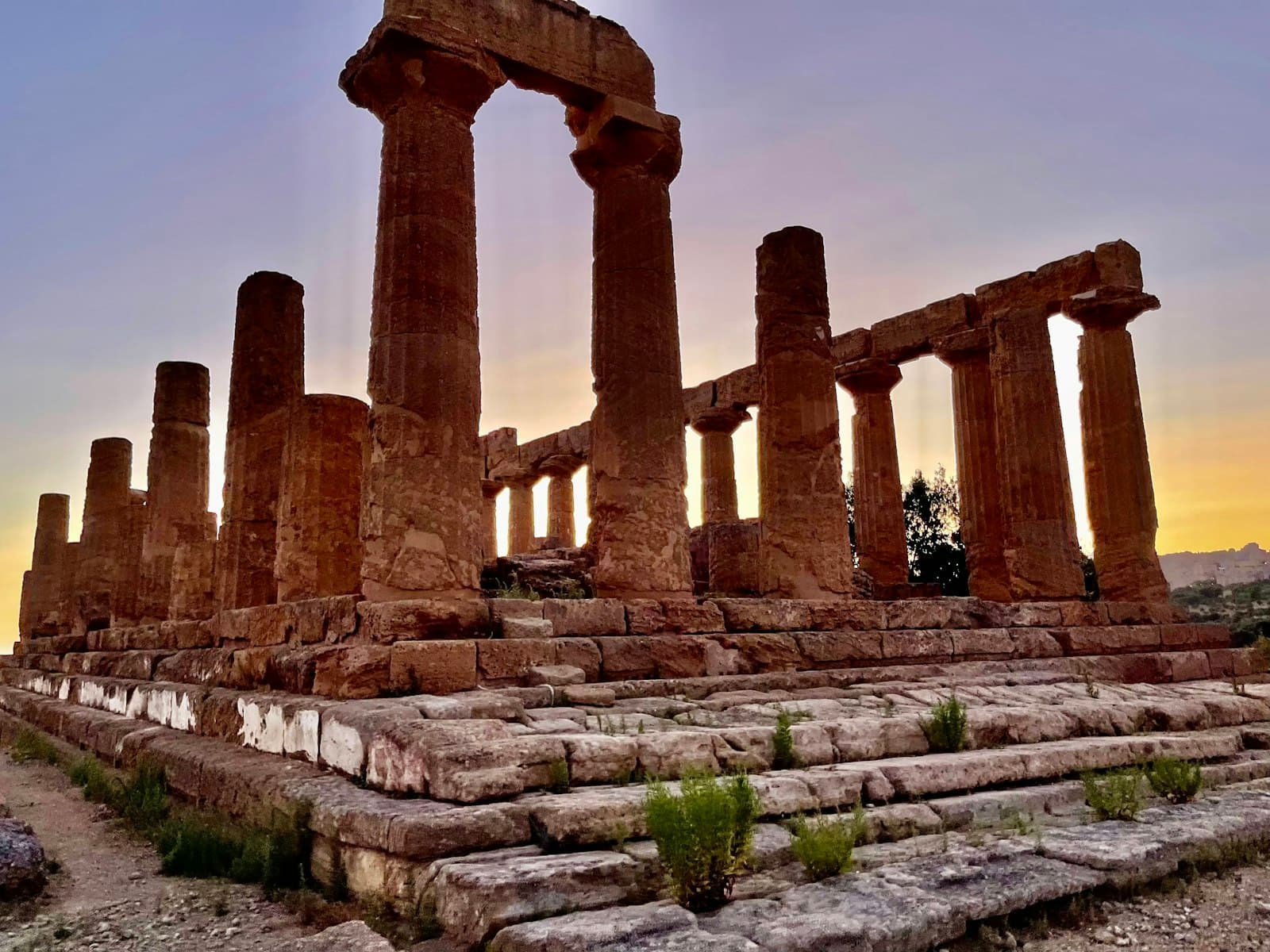
In 406 BC, Akragas fell to the Carthaginians, a devastating event that left visible fire marks on some temple columns, such as those of the Temple of Juno. The city would not fully regain its former glory until the Roman occupation. During the medieval period, several temples were repurposed, a transformation that, in some instances, contributed significantly to their survival. For example, the Temple of Concordia was converted into a Christian basilica in the 6th century AD, a decision that protected it from demolition.
Much of the excavation and restoration work seen today is attributed to archaeologist Domenico Antonio Lo Faso Pietrasanta, the Duke of Serradifalco, in the early 19th century. The site's immense cultural significance was recognized globally when UNESCO declared it a World Heritage Site in 1997, and further with the Declaration of Outstanding Universal Value (OUV) in 2015. Ongoing preservation efforts continue to protect this extraordinary legacy, allowing visitors to wander through a landscape that has witnessed over two millennia of history.
The Valley of the Temples offers a sprawling archaeological experience, best explored through its various walking itineraries. The park is divided into Eastern and Western zones, connected by pathways.
Among the most prominent structures is the Temple of Concordia, widely regarded as one of the best-preserved Greek temples in the world. Its exceptional condition is partly due to its conversion into a Christian church in the 6th century AD. Nearby, the Temple of Juno (Hera), constructed around 460 BC, stands at one of the highest points, bearing traces of the Carthaginian attack. In front of it, the remains of an ancient sacrificial area are still visible.
The Temple of Heracles (Hercules), dating back to the 6th century BC, is one of the oldest temples at the site, with eight Doric columns remaining. Further along, the Temple of Olympian Zeus was once among the largest temples in the Greek world, though today it lies mostly in ruins, offering a powerful impression of its former scale through its scattered components, including large human-shaped supports known as Telamons. The Temple of Castor and Pollux, though only partially reconstructed, has become a modern symbol for Agrigento.
Beyond the temples, explore the Garden of Kolymbetra, a lush oasis with ancient citrus and olive trees, once a Greek fishpond. The Pietro Griffo Regional Archaeological Museum, built over a former Cistercian monastery, houses a significant collection of votive offerings and Greek ceramics, offering further insight into daily life and religious practices of ancient Akragas. Additionally, the Ekklesiasterion, a semicircular rock-cut space, marks the site where the popular assembly once gathered.
The ideal times to visit the Valley of the Temples are during the spring (March to May) and autumn (September to November). During these shoulder seasons, temperatures are mild, and the crowds are generally smaller than in the peak summer months. Spring offers the added beauty of blossoming almond trees and wildflowers. If visiting in summer, plan for early morning or late afternoon to avoid the intense heat and harsh midday sun, which also provides the best light for photography.
The Valley of the Temples is open daily from 8:30 AM to 7:00 PM, with longer hours during the summer season, sometimes extending until 10:00 PM or 11:00 PM for special night walks. The last entry is typically one hour before closing. A full-price ticket costs around €15, with reduced rates for EU citizens aged 18-25 (€9) and free entry for those under 18. Combined tickets are available if you wish to include the Archaeological Museum or the Kolymbetra Garden. Booking tickets online, especially during peak season, is recommended to avoid queues.
The park is best explored on foot, and comfortable walking shoes are essential due to the uneven terrain and the extensive grounds. There is little shade, so bring a hat, sunglasses, and plenty of water. An electric shuttle service operates between the east and west entrances for a fee of €3 each way. Toilets are available at the entrance and near the cafe in the middle of the complex.
- What is the best way to get to the Valley of the Temples from Agrigento?
- From the city of Agrigento, you can take the Number 1 or 2/ bus line, which drops you off directly at the park entrances. Taxis are also an option.
- How much time should I allocate for a visit?
- A visit to the main temples typically takes between 2 to 4 hours. If you plan to explore the Temples of Asclepius and Demeter, or the museum and garden, allow an additional 1 to 2 hours.
- Is the Valley of the Temples accessible for visitors with mobility issues?
- Yes, the Valley of the Temples offers free electric wheelchair rentals for visitors with mobility challenges, though reservations are required one day in advance. There is also a tourist train shuttle service available for a fee.
- Can I buy food and drinks inside the park?
- Yes, there is a cafe with a terrace and a coffee shop within the complex where you can purchase drinks and snacks. However, it's advisable to bring your own water, especially during hot weather.
- Are tripods allowed for photography?
- No, tripods are generally not permitted inside the Valley of the Temples.
- What is the significance of the name 'Valley of the Temples'?
- The term 'Valley' is a misnomer; the site is actually situated on a ridge. The name is a traditional designation for this collection of ancient Greek temples.