Barok Theater Kasteel Valtice
Het weelderige barokke theater in Kasteel Valtice bood ooit prinselijke amusement, maar de ingewikkelde machinerie ervan had een verrassend praktisch geheim.
Volledig verhaal ontgrendeld in de tour
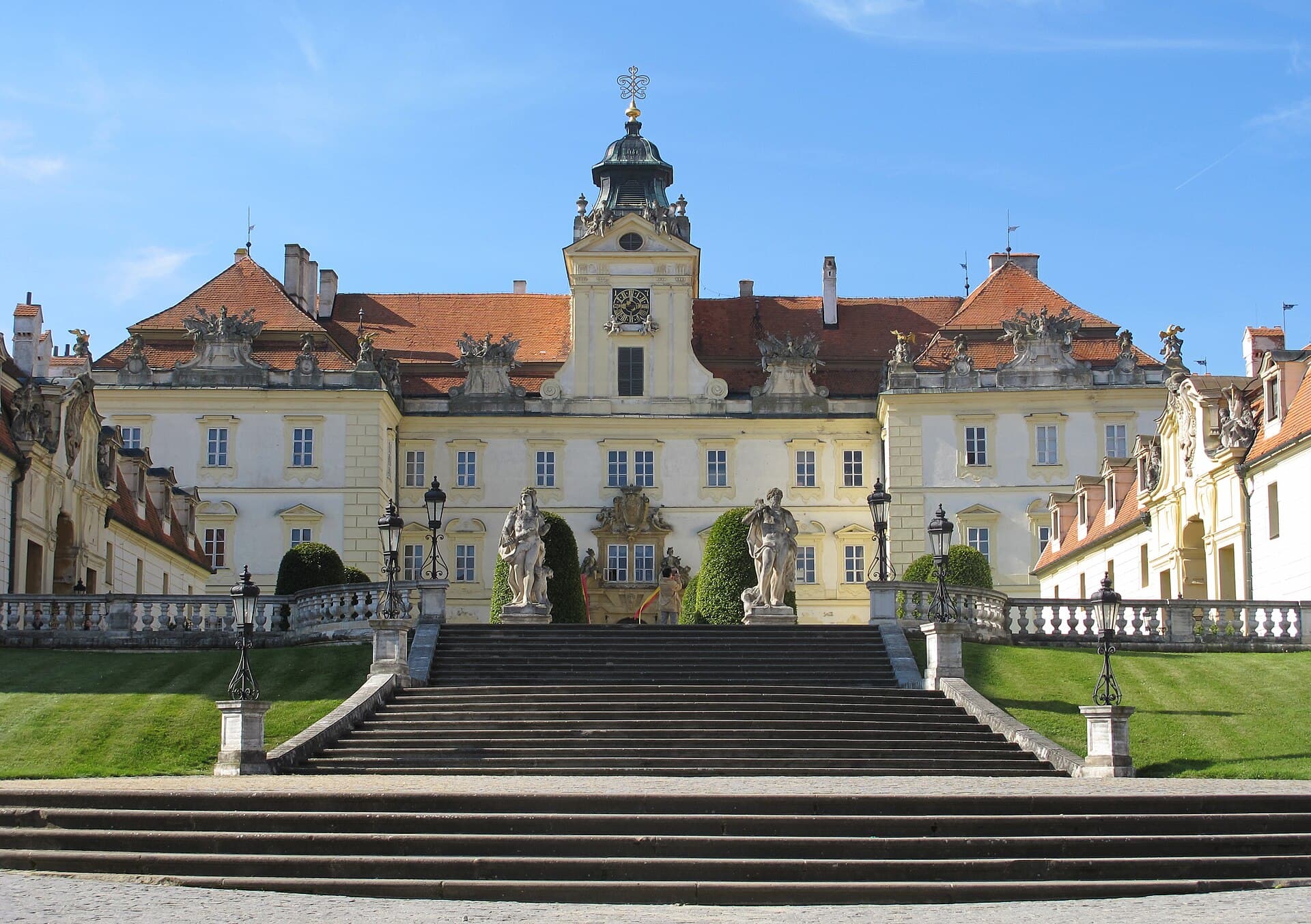 Huhulenik / CC BY 3.0, via Wikimedia Commons
Zelfgeleide audiowandeling door Valtice — GPS-route, offline afspelen, meeslepende vertelling in 32 talen.
“Waar barokke grandeur de oudste wijnkelders ontmoet.”
Niet de ansichtkaarten. De verhalen die zelfs locals niet kennen — gefluisterd in je oor, precies waar ze gebeurden.
Het weelderige barokke theater in Kasteel Valtice bood ooit prinselijke amusement, maar de ingewikkelde machinerie ervan had een verrassend praktisch geheim.
Onder de stad Valtice ligt een uitgestrekt netwerk van kelders, waarvan sommige dateren uit de 13e eeuw. Deze ruimtes dienden niet alleen voor de opslag van wijn; ze speelden een rol in het voortbestaan van de stad.
Valtice, nu een rustige wijnstad, markeerde ooit een zwaar bewaakte grens, een duidelijke herinnering aan een verdeeld Europa.
Ontdek elk geheim van Valtice
Elk adres, elke onthulling volledig — in je oor, precies waar het gebeurde.
Jij kiest je stops. Jij wandelt. De stem onthult wat de anderen missen.


Lume heeft een ingebouwde augmented-reality-gids. Houd je telefoon omhoog: de camera toont de straat voor je, met een oplichtende pijl over het echte beeld die altijd naar je volgende stop wijst — geen kaart om uit te puzzelen, geen verkeerde afslagen. Zoals alles in Lume werkt het volledig offline.
Valtice, een stad in de Zuid-Moravische regio van Tsjechië, is een plek waar geschiedenis, wijnbouw en architectonische pracht samenkomen. Valtice, bekend als de 'Moravische hoofdstad van de wijn', is omgeven door wijngaarden in het warmste gebied van Tsjechië, waardoor het een ideale bestemming is voor wijnliefhebbers. Het historische centrum van de stad is een beschermd stadsgezicht en vormt een belangrijk onderdeel van het Cultuurlandschap Lednice-Valtice, een UNESCO Werelderfgoed.
Dit cultuurlandschap, dat ongeveer 283 vierkante kilometer beslaat, is een van Europa's meest uitgestrekte door de mens gemaakte landschappen, eeuwenlang zorgvuldig gecreëerd door de familie Liechtenstein. Valtice biedt een mix van barokke grandeur, zichtbaar in het magnifieke kasteel, en een ontspannen plattelandsritme dat uitnodigt tot verkenning te voet of per fiets. Van ondergrondse wijnkelders tot statige zalen, Valtice biedt een boeiende reis door het diepe erfgoed van de regio.
De oorsprong van Valtice gaat terug tot de 11e eeuw, toen er op deze locatie een fortificatie stond, destijds bekend als Ospel of Feldsberg. De eerste schriftelijke vermelding van het dorp dateert uit 1192. In de loop der tijd transformeerde het van een strategische buitenpost tot een adellijke residentie.
De connectie van de familie Liechtenstein met Valtice begon tussen 1387 en 1395, toen zij geleidelijk het gehele landgoed verwierf. Van 1391 tot 1945 bleef Valtice in hun bezit. In de jaren 1660 maakte de Liechtenstein-clan Valtice tot hun hoofdresidentie, wat leidde tot aanzienlijke bouwactiviteiten die het oorspronkelijke kasteel transformeerden tot het barokke kasteel dat vandaag de dag te zien is.
Beroemde Europese bouwmeesters droegen bij aan het ontwerp van het kasteel, dat zijn huidige barokke uiterlijk kreeg door kostbare reconstructies in de 17e en 18e eeuw. De kasteelkapel, voltooid in 1729, is een opmerkelijk voorbeeld van barokke architectuur in Centraal-Europa. Het kasteeltheater werd toegevoegd aan het einde van de 18e eeuw.
De geopolitieke status van Valtice veranderde aanzienlijk na de Eerste Wereldoorlog. Historisch deel van Neder-Oostenrijk, werd het geannexeerd door het nieuw opgerichte Tsjecho-Slowakije onder het Verdrag van Saint-Germain-en-Laye van 1919, dat op 9 augustus 1920 van kracht werd. De stad werd in 1938 bezet door Nazi-Duitsland en opgenomen in de Reichsgau Niederdonau. Na de Tweede Wereldoorlog werd het kasteel geplunderd en de resterende Duitse bevolking verdreven. Het kasteel werd vervolgens geconfisqueerd door de Tsjecho-Slowaakse regering, wat eeuwenlang toezicht door Liechtenstein beëindigde.
In 1996 werd Kasteel Valtice, als integraal onderdeel van het Cultuurlandschap Lednice-Valtice, ingeschreven op de UNESCO Werelderfgoedlijst, ter erkenning van de unieke mix van barokke, neoklassieke en neogotische architectuur, en de geschiedenis als een ontworpen cultuurlandschap.
Het middelpunt van Valtice is het magnifieke Kasteel Valtice, een barok architectonisch meesterwerk dat diende als de belangrijkste residentie van de familie Liechtenstein. Bezoekers kunnen de weelderige interieurs verkennen, versierd met barokke en rococomeubels, plafondschilderingen met mythologische motieven en de rijkelijk versierde Kapel van de Heilige Drie-eenheid. Rondleidingen, zoals de Grand Representation tour of de Princely Apartment tour, bieden inzicht in de geschiedenis van het kasteel en het leven van de voormalige bewoners.
Onder het kasteel en door de hele stad ligt een netwerk van historische wijnkelders, waarvan sommige dateren uit de 13e eeuw. De Wijn Salon van de Tsjechische Republiek, gelegen in de kelder van het kasteel, biedt een permanente proeverij van de beste Moravische en Boheemse wijnen. Je kunt ook de Valtice Underground verkennen, een labyrint van onderling verbonden kelders.
Buiten het kasteel strekt het Cultuurlandschap Lednice-Valtice zich uit met diverse architectonische curiositeiten en natuurlijke schoonheid. Verken de Chateau Herb Garden, met meer dan 300 soorten kruiden. Het Barokke Kasteeltheater, met zijn gerestaureerde machines, biedt een kijkje in historische voorstellingen. Andere opmerkelijke bouwwerken in het landschap zijn de neoklassieke Colonnade op Reistna en de Tempel van Diana (Rendez-vous). Voor een diepere duik in de recente geschiedenis biedt het Museum van het IJzeren Gordijn een kijkje in de bewaking van de Tsjecho-Slowaakse grens tijdens de Koude Oorlog.
Valtice kan het best bezocht worden tijdens de warmere maanden, van mei tot september, wanneer het weer aangenaam is met gemiddelde temperaturen tussen 22°C en 28°C. Deze periode is ideaal voor sightseeing en het verkennen van de buitenattracties van het Cultuurlandschap Lednice-Valtice. Het kasteel heeft over het algemeen uitgebreidere openingstijden in juli en augustus, vaak dagelijks geopend. Lente en herfst bieden ook aangenaam weer met minder drukte, hoewel het kasteel in deze schouderseizoenen op een beperkter schema werkt. De wijngaarden zijn groen in de zomer en het gebied organiseert diverse seizoensmarkten en wijnbeurzen.
Valtice ligt in Zuid-Moravië, dicht bij de Oostenrijkse grens, ongeveer 50 kilometer ten zuiden van Brno. Je kunt Valtice met de auto bereiken via de I/40 of met de trein op de spoorlijn Břeclav–Znojmo, met haltes op de stations Valtice of Valtice město. Treinen vanuit Břeclav, dat verbindingen heeft met Brno, Wenen en Bratislava, rijden minstens één keer per uur. Een lokale bus, nummer 555, verbindt Valtice met Lednice, hoewel de frequentie varieert, dus het is raadzaam om het schema van tevoren te controleren.
Betaalde parkeergelegenheid is beschikbaar op Náměstí Svobody, Sklepní Street en Pod zámkem Street, waarbij de laatste geschikt is voor bussen. Huisdieren aan de lijn zijn toegestaan in de omgeving van het kasteel, maar niet tijdens rondleidingen of in tentoonstellingen. Fietsen zijn verboden in het centrale deel van het paleis, maar er is een fietsenstalling beschikbaar tegen een kleine vergoeding. Rolstoeltoegankelijkheid is voorzien voor de begane grond van het kasteel, inclusief het informatiecentrum, de winkel, de binnenplaats, het café, de wijnwinkel, toiletten, theater, winterrijhal en terrassen. De belangrijkste rondleiding op de eerste verdieping en tentoonstellingen op de tweede verdieping zijn niet rolstoeltoegankelijk.
Valtice — Koreaans, Chinees, Hebreeuws en nog 29 talen, elke stop verteld door een moedertaalspreker. Het grootste taalaanbod van alle zelfgeleide audiotours.
Beschikbaar in: