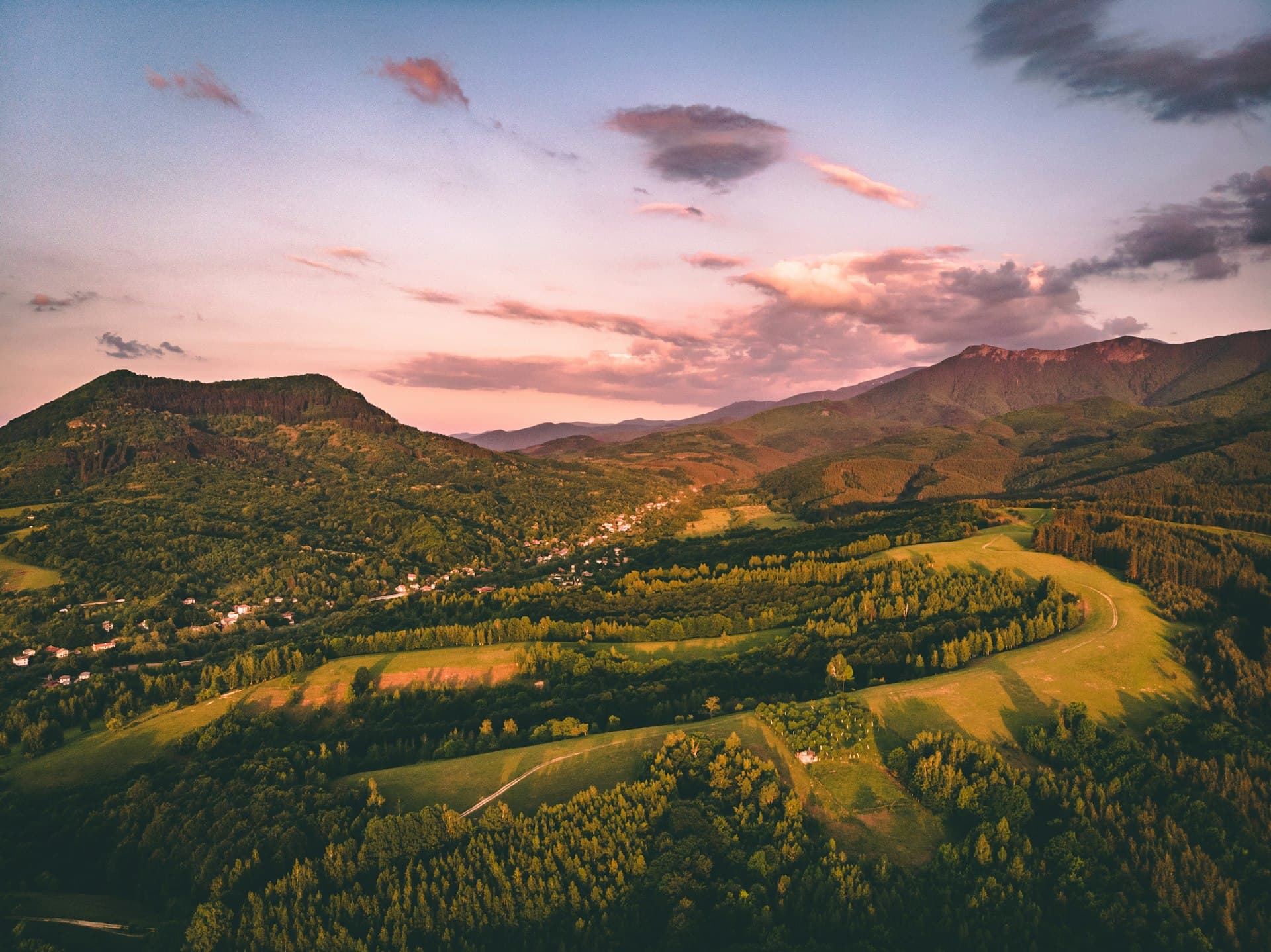
Veliko TărnovoPhoto: Hristo Sahatchiev / Unsplash
BG

Veliko Tărnovo

Where medieval grandeur meets a river's embrace.

The secrets of Veliko Tărnovo

Veliko Tărnovo, as no one tells it.

Not the postcards. The stories even locals don't know — whispered in your ear, right where they happened.

3 secrets below. Many more wait inside the tour.
Patriarchal Cathedral of the Holy Ascension, Tsarevets Fortress

The frescoes inside the Patriarchal Cathedral at Tsarevets Fortress are unlike any other Orthodox church you'll encounter.

Full story unlocks in the tour
Gurko Street

Along Gurko Street, some houses appear to defy gravity, leaning out precariously over the Yantra River.

Full story unlocks in the tour
Prohodna Cave (near Veliko Tarnovo)

A short journey from Veliko Tarnovo leads to a cave with two massive openings that locals call 'The Eyes of God.'

Full story unlocks in the tour
The full tour

Discover every secret of Veliko Tărnovo

Every address, every reveal in full — in your ear, right where it happened.

Get the key to Veliko Tărnovo

You pick your stops. You walk. The voice reveals what the others miss.

Choose your time

How long do you have in Veliko Tărnovo?

No tours available yet. Check back soon — we're preparing them.

About Veliko Tărnovo

The story of Veliko Tărnovo

Veliko Tarnovo, often called the 'City of the Tsars,' is a historic city in north-central Bulgaria, dramatically situated on the meandering Yantra River. Its old town spreads across three prominent hills—Tsarevets, Trapezitsa, and Sveta Gora—each rising amidst the river's curves. This ancient capital of the Second Bulgarian Empire (1185-1393) offers a picturesque backdrop of terraced houses with red roofs and winding streets, evoking a sense of its former grandeur.

Beyond its striking medieval fortifications, Veliko Tarnovo is a lively university town with a population of around 70,000 residents. It serves as an important administrative, economic, educational, and cultural hub for Northern Bulgaria. The city's deep past is intertwined with a lively present, offering a blend of historical sites, artisan workshops, and a burgeoning cultural scene with various festivals and events throughout the year.

History

From Ancient Settlements to Imperial Capital

The history of Veliko Tarnovo stretches back over five millennia, with the earliest traces of human presence dating to the 3rd millennium BC on Trapezitsa Hill. The Romans established the Moesia Province in the 1st century AD, recognizing the region's strategic importance for transportation. By early Byzantine times, the city had become a fortified settlement with significant agricultural and cultural standing.

The true ascent of Veliko Tarnovo began in 1185, when the brothers Asen and Petar led an uprising that ended Byzantine rule and declared the city the capital of the restored Second Bulgarian Empire. For over two centuries, until 1393, Veliko Tarnovo—then known as Tarnovgrad—was the strongest Bulgarian fortification and the most prosperous city, serving as the primary political, economic, cultural, and religious center of the empire. Its influence in Southeastern Europe was so profound that in the 14th century, as the Byzantine Empire waned, Tarnovo even laid claim to being the 'Third Rome.'

The city was a cosmopolitan hub, with Armenian, Jewish, and Roman Catholic quarters alongside the dominant Bulgarian population, fostering a rich exchange of merchants and envoys. This period saw the flourishing of the Tarnovo Artistic School in architecture, painting, and literature. However, this golden age came to an end in 1393 when Ottoman forces besieged and eventually conquered the Tsarevets Fortress, leading to the fall of the Bulgarian Empire.

During the five centuries of Ottoman rule, Veliko Tarnovo remained a resilient center of Bulgarian spirit, tradition, and culture, playing a crucial role in the Bulgarian National Revival. Arts and crafts thrived, trade flourished, and a strong sense of national self-awareness grew, fueling the desire for independence. The city was liberated by Russian troops on July 7, 1877. In 1879, the first National Assembly convened in Veliko Tarnovo to ratify Bulgaria's first constitution, the Tarnovo Constitution, which laid the groundwork for the new Bulgarian state. In recognition of its past significance, the city, originally known as Tarnovo, was officially renamed Veliko Tarnovo (Great Tarnovo) in 1965.

What to see

The undisputed highlight of Veliko Tarnovo is the Tsarevets Fortress, a medieval stronghold that served as the primary fortress and royal palace of the Second Bulgarian Empire. Explore its extensive grounds, walk along the fortress walls, and discover the ruins of the tsar's palace, numerous churches, and residential buildings. At its highest point, visit the Patriarchal Cathedral of the Holy Ascension, notable for its distinctive 1980s murals depicting Bulgarian history.

Descend into the Old Town for a wander along its charming, winding streets. Gurko Street is particularly picturesque, lined with traditional 19th-century Bulgarian Revival houses that appear to lean over the Yantra River. The Samovodska Charshia Market, the historic craftsmen's quarter, offers a glimpse into traditional Bulgarian crafts, with artisans demonstrating pottery, woodcarving, and weaving.

Across the Yantra River, the Monument to the Assen Dynasty (Asen's Monument) is a striking brutalist-style sculpture commemorating the founders of the Second Bulgarian Empire. It offers another excellent vantage point for panoramic city views. For additional historical insights, visit the Trapezitsa Fortress, the second most important fortress during the Second Bulgarian Empire, with its archaeological museum and restored ramparts.

When to visit

Veliko Tarnovo is a year-round destination, with each season offering a different appeal. For warm and sunny weather, the best time to visit is from May to September, with July being the hottest month. During these months, temperatures are pleasant for exploring the outdoor attractions. Autumn, particularly November, can also be a beautiful time to visit, with comfortable temperatures and bright fall foliage, and fewer crowds. Winters are cold and snowy, with January being the coldest month.

Practical

Veliko Tarnovo is easily navigable on foot, especially the Old Town and major attractions like Tsarevets Fortress, though be prepared for steep, cobbled streets. Public buses are available for longer distances, with tickets costing less than 1 EUR. Taxis are also an option, starting around 1-2 EUR, with an additional charge per kilometer. Car rentals are affordable, but navigating the city by car can be complicated due to frequent traffic reorganizations.

Getting to Veliko Tarnovo from Sofia is straightforward by bus, taking approximately 3 hours. Buses depart regularly from Sofia Central Bus Station. Train travel is slower but offers scenic views, with journeys from Sofia taking 4.5 to 6 hours. The closest airport is Gorna Oryahovitsa, about 10 km away. Consider taking a free walking tour upon arrival to get acquainted with the city and its history.

Good to know
What is Veliko Tarnovo known for?
Veliko Tarnovo is famously known as the historical capital of the Second Bulgarian Empire (1185-1393) and is often called the 'City of the Tsars.' It is recognized for its unique architecture, medieval fortresses like Tsarevets, and its dramatic setting on the Yantra River.
Is Veliko Tarnovo walkable?
Yes, Veliko Tarnovo is generally walkable, especially the Old Town and its main attractions. However, be prepared for steep, winding streets due to the city's hilly terrain.
How much time should I spend in Veliko Tarnovo?
One full day is enough to explore the main medieval strongholds, traditional craft shops, and Ottoman-era traditions. For a more relaxed visit or to include nearby excursions, two to three days would be ideal.
What is the 'Sound and Light Show' at Tsarevets Fortress?
The Sound and Light Show is a dramatic spectacle that illuminates the Tsarevets Fortress with kaleidoscopic lights and a soundtrack, narrating key moments of Bulgaria's history. It's often free on public holidays and can be watched from the square.
Are there good places to eat in Veliko Tarnovo?
Yes, Veliko Tarnovo offers many good restaurants serving local Bulgarian food, with many located along the main street. Shtastliveca is a highly recommended restaurant known for its delicious food and spectacular views.
What traditional crafts can I find in Veliko Tarnovo?
Veliko Tarnovo is a center for traditional crafts, particularly in the Samovodska Charshia market. Here, you can find pottery, woodcarvings, textiles, and filigree jewelry, often made by artisans demonstrating their trades.
Veliko Tărnovo
From€9.00
No booking · activate anytime · 12h to walk it
Get the key to Veliko Tărnovo