Horloge de la place du marché de Ventspils
L'horloge de la place du marché de Ventspils indique une heure légèrement différente du reste de la Lettonie.
L'histoire complète se débloque dans le tour
 Edgars Šulcs / CC BY-SA 4.0, via Wikimedia Commons
Visite audio autoguidée de Ventspils — parcours GPS à pied, lecture hors ligne, narration en 32 langues.
“Là où la mer Baltique rencontre la Venta, Ventspils déploie son rythme singulier.”
Pas les cartes postales. Les histoires que même les habitants ignorent — soufflées à l'oreille, là où elles se sont passées.
L'horloge de la place du marché de Ventspils indique une heure légèrement différente du reste de la Lettonie.
Des sculptures de vaches colorées parsèment le paysage de Ventspils, chacune étant une œuvre d'art singulière.
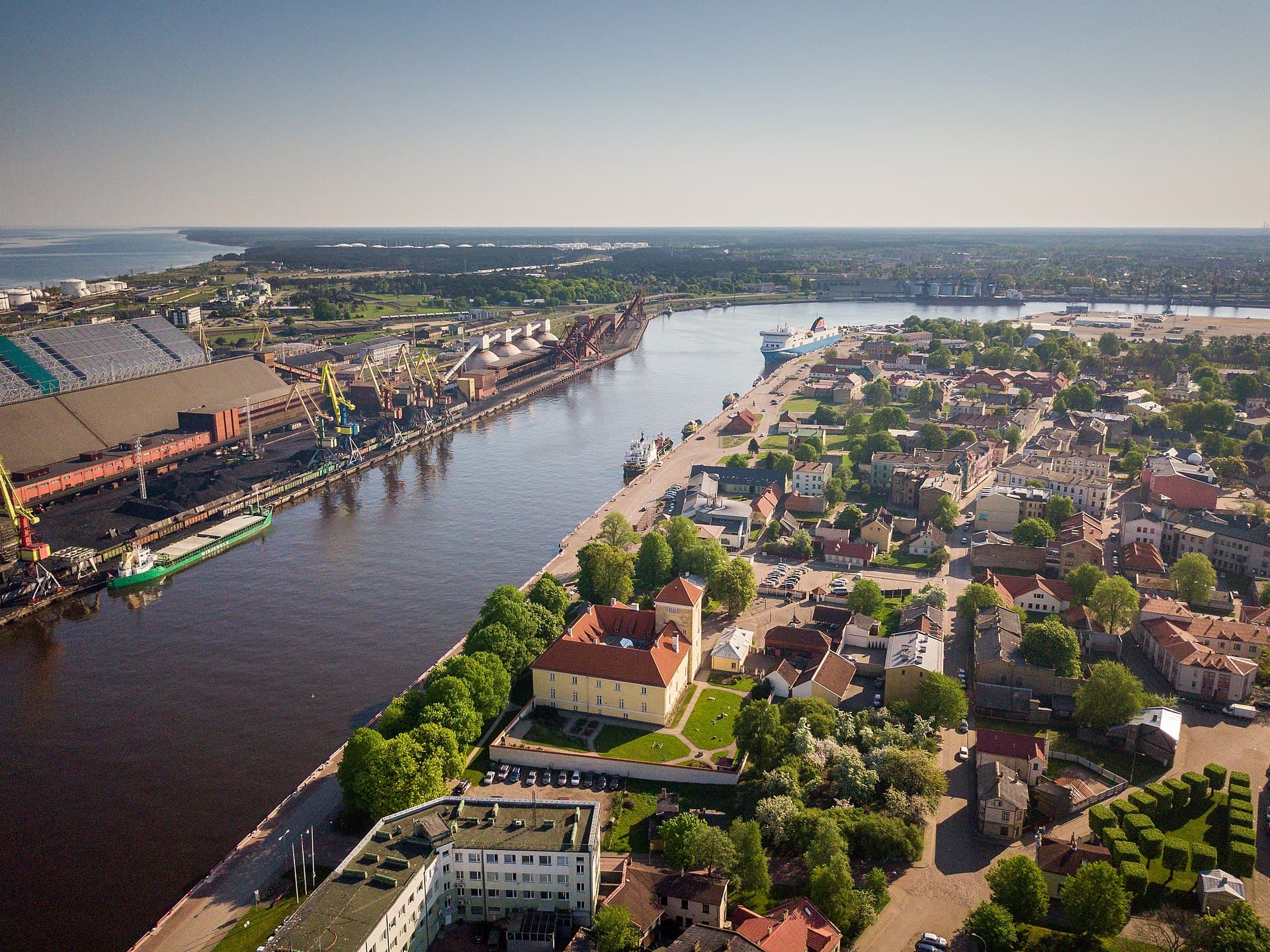
Ce château médiéval a servi à de nombreuses fins au cours de ses 700 ans d'histoire, y compris un rôle inattendu au 19e siècle.
Découvrez tous les secrets de Ventspils
Chaque adresse, chaque révélation en entier — dans ton oreille, là où elle s'est passée.
Tu choisis tes lieux. Tu marches. La voix te révèle ce que les autres ignorent.
Votre visite audioguidée de Ventspils vous attend — choisissez vos lieux, votre langue, et lancez-vous dès votre arrivée.
AcheterLume intègre un guide en réalité augmentée. Levez votre téléphone : sa caméra montre la rue devant vous, avec une flèche lumineuse posée sur l'image réelle qui pointe toujours vers votre prochain arrêt — aucune carte à déchiffrer, aucun mauvais virage. Comme tout dans Lume, ça fonctionne entièrement hors-ligne.
Ventspils, une importante ville portuaire sur la côte nord-ouest de la Lettonie, se situe à l'embouchure de la rivière Venta où elle converge avec la mer Baltique. Le nom de la ville, signifiant « château sur la Venta », fait directement référence à la forteresse de l'Ordre Livonien qui a marqué ses origines. Aujourd'hui, Ventspils présente un mélange intrigant de son identité de port industriel et de station balnéaire accueillante, où l'odeur de diesel des cargos peut se mêler à l'arôme frais des algues.
Connue pour ses parcs méticuleusement entretenus, ses magnifiques parterres de fleurs et ses sculptures de vaches distinctives, Ventspils a cultivé une atmosphère singulière. C'est une ville qui a embrassé le tourisme de manière créative, introduisant même sa propre monnaie non monétaire, le « Venti », qui offre des privilèges dans les attractions locales. De sa plage Pavillon Bleu à son centre scientifique interactif, Ventspils offre des expériences variées pour les visiteurs de tous âges.
Malgré sa population relativement modeste, Ventspils a joué un rôle démesuré dans le commerce maritime régional pendant des siècles, maintenant un port en eau profonde, libre de glace, qui reste l'un des plus fréquentés de la mer Baltique. Cette position stratégique a façonné son passé et continue de définir son présent, en faisant un pôle de transport essentiel reliant l'Union européenne à l'Asie centrale.
L'histoire de Ventspils remonte au 13e siècle, avec la construction d'un château par l'Ordre Livonien vers 1290, considérée comme l'année de fondation de la ville. Affranchie en 1314, Ventspils est rapidement devenue une ville marchande vitale au sein de la Ligue Hanséatique. Durant cette période, elle était connue sous son nom allemand, Windau.
La ville a connu sa première expansion économique significative au 17e siècle, sous le règne du duc Jacob Kettler de Courlande (1642-1682). Ventspils a servi de port principal du duché et de centre majeur de construction navale. Les chantiers navals de Ventspils ont construit de nombreux navires marchands et de guerre, certains étant même vendus à l'Europe occidentale. Notamment, c'est de Ventspils que la flotte du duc s'est lancée dans des entreprises coloniales vers la Gambie et Tobago.
La prospérité de Ventspils a été gravement interrompue par la guerre polono-suédoise et la Grande Guerre du Nord, au cours desquelles une grande partie de la ville et de son château ont été détruites. Une peste dévastatrice en 1711 a anéanti la plupart des habitants restants, paralysant la vie dans la ville. En 1795, le duché de Courlande a été incorporé à l'Empire russe. Pendant une période, l'importance du port a diminué.
Cependant, le milieu du 19e siècle a vu une reprise de l'activité portuaire et de la construction navale. Le port a été modernisé dans les années 1890 et a été relié à Moscou par chemin de fer, transformant Ventspils en l'un des ports les plus rentables de la Russie impériale, principalement pour l'exportation de produits agricoles. Cela a entraîné une augmentation significative de la population, passant de 7 000 habitants en 1897 à 29 000 en 1913.
Le 20e siècle a apporté de nouveaux bouleversements. Pendant la Première Guerre mondiale, plusieurs navires marchands ont été coulés à l'entrée du port. Ventspils a connu l'occupation soviétique en 1940, suivie par l'occupation allemande de 1941 à 1944. Après la Seconde Guerre mondiale, sous le régime soviétique, un oléoduc a été construit, faisant de Ventspils le premier port de l'URSS pour l'exportation de pétrole brut. La population de la ville a considérablement augmenté pendant cette période, de nombreux Russes s'y étant installés.
Après l'indépendance retrouvée de la Lettonie en 1990, Ventspils s'est engagée sur la voie d'un développement réussi. Le port est devenu l'un des plus importants de la mer Baltique, subissant d'ambitieux efforts de modernisation à la fin des années 1990. Aujourd'hui, Ventspils est reconnue pour son mélange de force industrielle et son dévouement au tourisme, avec des investissements significatifs dans les attractions et les infrastructures.
Commencez votre exploration au Château de l'Ordre Livonien, le plus ancien bâtiment conservé de la ville, datant du 13e siècle. Il abrite aujourd'hui le Musée de Ventspils, proposant une exposition numérique sur l'histoire du château, de la ville et du port. Flânez le long de la Promenade de la rue Ostas, qui offre des vues sur la rivière Venta, la porte maritime et une impressionnante collection de bouées. Vous pourriez apercevoir le « Phare de l'Amour », une œuvre d'art environnemental unique.
Pour des divertissements en famille, le Parc Aventure de Ventspils propose des activités comme des parcours de cordes, des trampolines et même une colline artificielle pour skier en hiver. Le Parc Aquatique de Ventspils offre des toboggans, des piscines et un complexe SPA. Ne manquez pas le Musée en plein air du bord de mer, où vous pourrez monter à bord du train à voie étroite, Mazbānītis. Le Centre de science et d'innovation VIZIUM propose des expositions interactives pour tous les âges.
Découvrez le côté artistique de la ville en vous lançant dans une chasse aux vaches, à la recherche des 24 sculptures de vaches colorées créées lors de la « Ventspils Cow Parade ». Détendez-vous sur la Plage de Ventspils, une étendue de sable certifiée Pavillon Bleu, idéale pour la baignade, les bains de soleil ou la planche à voile pendant les mois plus chauds. Envisagez une promenade en bateau d'excursion « Hercogs Jēkabs » pour une perspective différente de l'embouchure de la rivière, de la promenade et du château.
La meilleure période pour visiter Ventspils pour les activités par temps chaud est de début juillet à fin août. Pendant ces mois, la température diurne moyenne est supérieure à 17 °C (62 °F), juillet étant le mois le plus chaud, avec une moyenne de 20 °C (68 °F). La mer est également la plus propice à la baignade pendant cette période. Juin et août offrent également de nombreux festivals et événements culturels, notamment le Festival de la ville de Ventspils et le Festival maritime. Mai et septembre offrent une expérience plus calme avec un temps doux, idéal pour explorer les sites historiques et profiter de moins de monde. Même pendant les mois plus froids, le port et le château offrent une atmosphère baltique dramatique.
Ventspils est très agréable à explorer à pied, la plupart des lieux centraux étant accessibles en 15 à 20 minutes de marche. Pour les distances plus longues ou pour explorer les banlieues, la compagnie de bus locale 'Ventspils Reiss' exploite un réseau de bus et de minibus modernes. Les arrêts de bus affichent généralement des cartes et des horaires. Un ticket de bus simple coûte environ 0,80 EUR, les tarifs des minibus étant légèrement plus élevés. Les bus circulent d'environ 5h30 à 22h30. Ventspils offre également un vaste réseau de pistes cyclables, couvrant 60 à 70 kilomètres, ce qui en fait une ville propice au vélo.
La monnaie officielle à Ventspils, et dans toute la Lettonie, est l'Euro (EUR). Bien que la ville possède sa propre monnaie locale, le 'Venti', il s'agit d'un moyen de paiement non monétaire qui offre des privilèges et des réductions dans certaines attractions et ne remplace pas l'Euro. Vous pouvez gagner des Venti via le site web VisitVentspils et les échanger contre de vrais Venti dans des lieux comme l'Hôtel du Centre Olympique « Ventspils ».
Ventspils est bien desservie par bus vers les grandes villes lettones comme Riga, Liepāja et Kuldīga. Des services de ferry réguliers opèrent également entre Ventspils et Nynäshamn, en Suède. L'aéroport international de Ventspils dessert principalement l'aviation générale et n'a pas de vols commerciaux.
Ventspils en coréen, en chinois ou en hébreu — et dans 29 autres langues, chaque étape narrée par une voix native. La plus large gamme de langues de tous les audioguides autoguidés.
Disponible en :