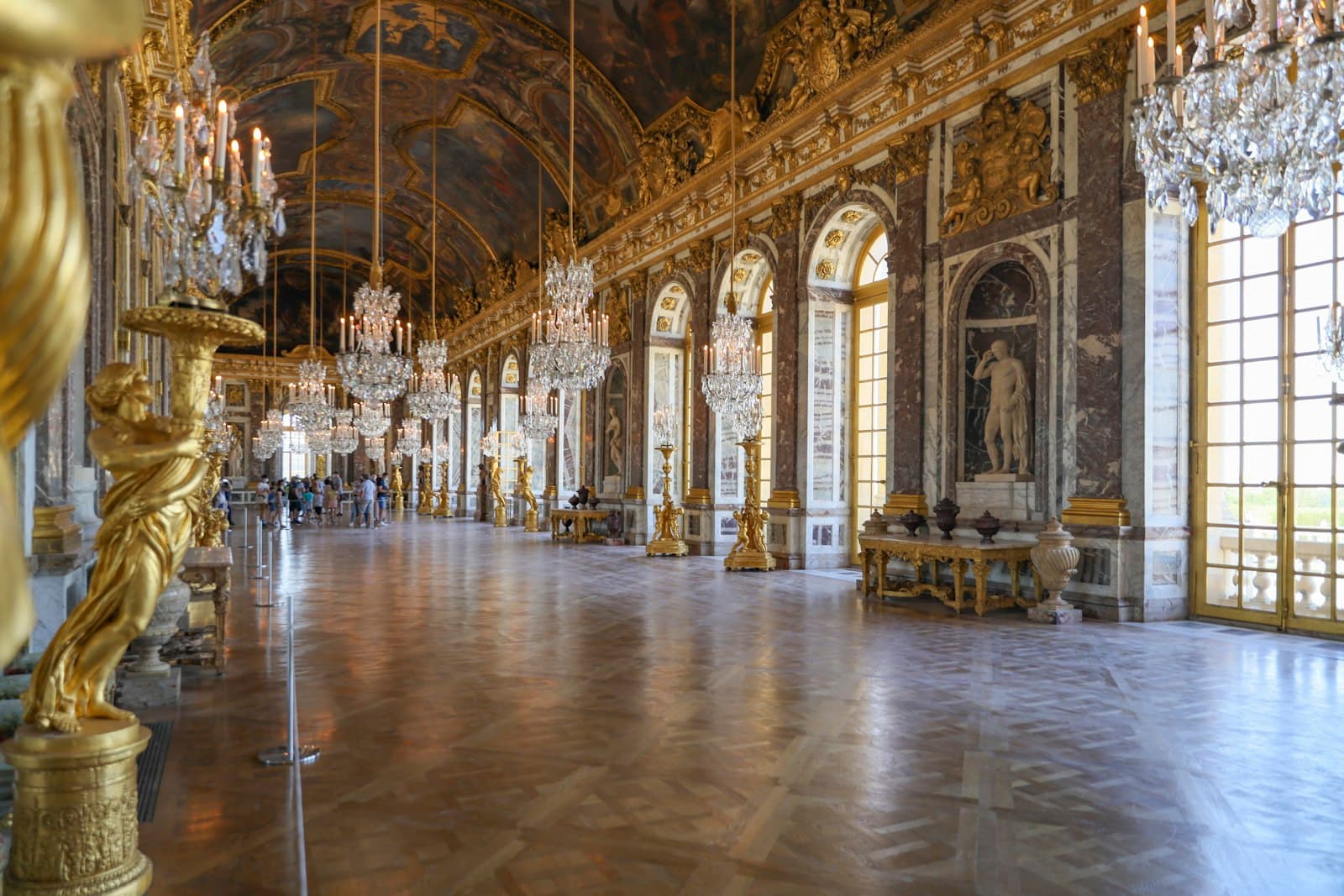
Beyond its dazzling reflections, this iconic hall holds a deliberately orchestrated historical echo.
Monsieur W / CC BY-SA 3.0, via Wikimedia CommonsVersailles
“Where grandeur whispers secrets of empires and revolutions.”
Versailles, as no one tells it.
Not the postcards. The stories even locals don't know — whispered in your ear, right where they happened.
The Queen's rustic retreat wasn't just a pastoral fantasy; it was a stage for a deliberate, yet ultimately misconstrued, performance.
This monumental greenhouse wasn't merely for plants; it was a living, breathing display of absolute power.
Discover every secret of Versailles
Every address, every reveal in full — in your ear, right where it happened.
You pick your stops. You walk. The voice reveals what the others miss.
How long do you have in Versailles?
No tours available yet. Check back soon — we're preparing them.
The story of Versailles
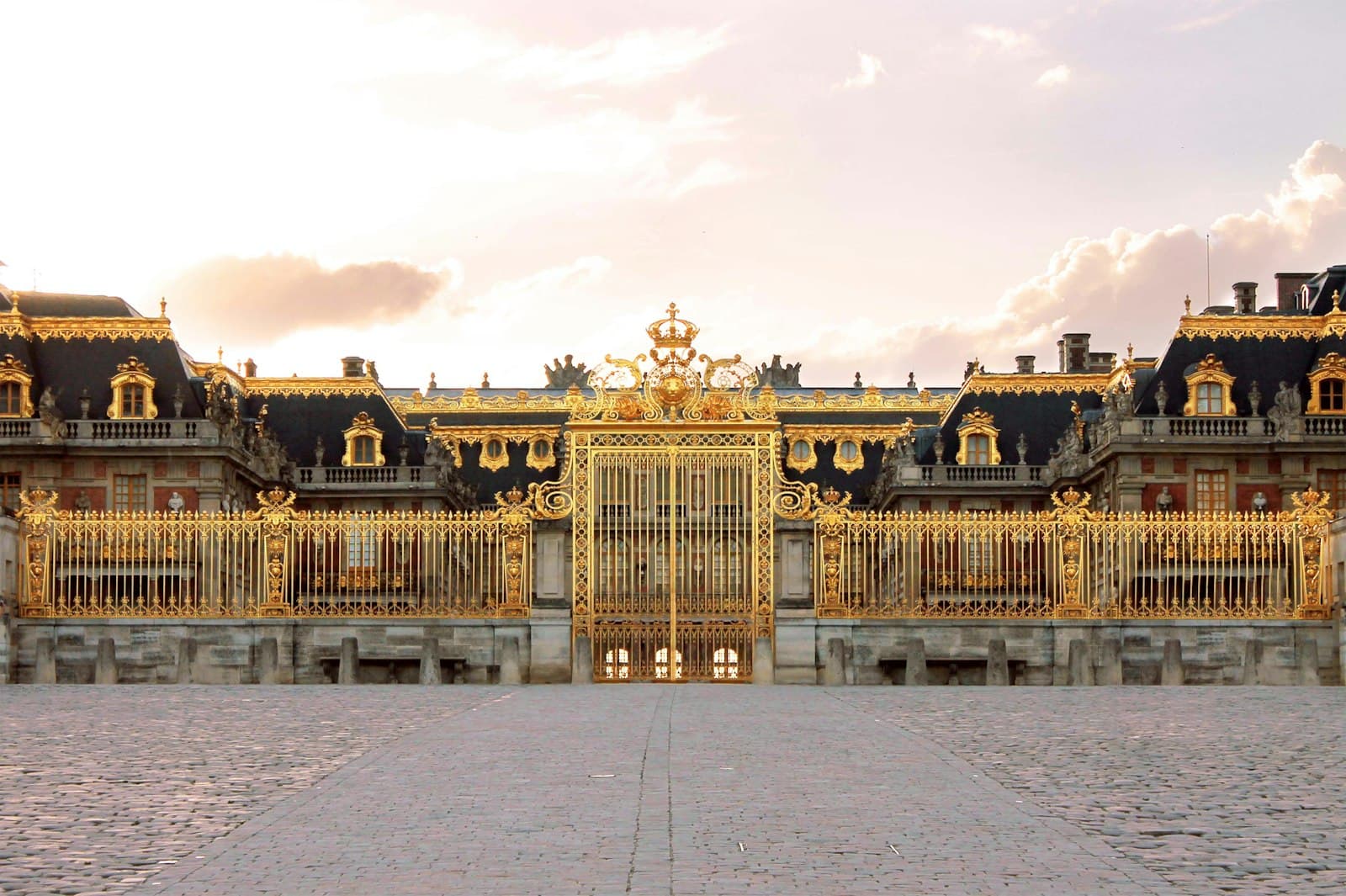
Versailles, a city just southwest of Paris, is synonymous with the opulent palace that served as the principal residence for French kings Louis XIV, XV, and XVI. What began as a modest hunting lodge for Louis XIII in 1623, was transformed by his son, Louis XIV, into an extravagant complex between 1661 and 1710, becoming a grand stage for European absolutism and the seat of French government from 1682 until the French Revolution in 1789.
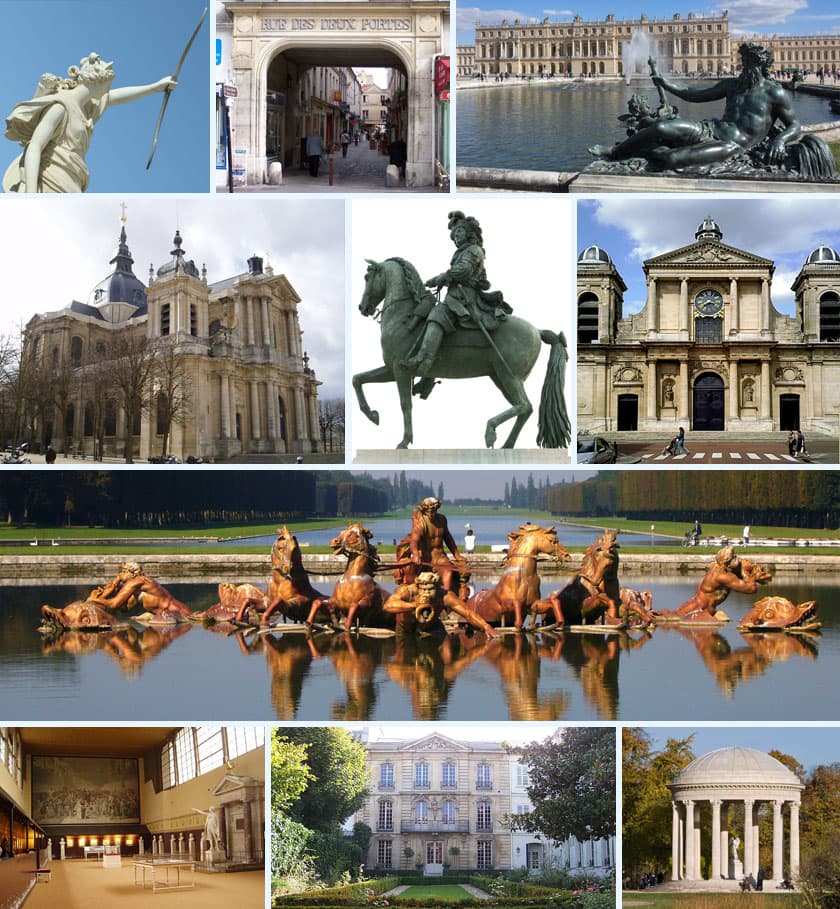
Today, the Palace of Versailles is a UNESCO World Heritage site, drawing millions of visitors annually to explore its gilded halls, expansive gardens, and the intimate estates of the Trianons. Beyond the immediate splendor of the palace, the city of Versailles itself offers a window into French history and culture, with inviting neighborhoods, historic markets, and architectural marvels that reflect its royal past.
From Hunting Lodge to Royal Seat
The story of Versailles begins modestly in 1623 with Louis XIII's brick-and-stone hunting lodge. He later rebuilt and expanded it between 1631 and 1634, laying the foundation for the palace seen today. However, it was his son, Louis XIV, often called the Sun King, who truly envisioned Versailles as a symbol of his power and authority. In 1661, shortly after the death of his chief minister, Cardinal Mazarin, Louis XIV began major works to transform his father's château into a lavish palace, a project that continued until his death in 1715.
Louis XIV's motivations for this monumental undertaking were multifaceted. After the civil unrest of the Fronde, he sought to consolidate royal power and diminish the influence of the French nobility. By moving the court and government to Versailles in 1682, he required the aristocracy to reside there, keeping them under his direct control and away from the intrigues of Paris. The palace became a stage for elaborate court rituals and grand entertainment, displaying France's wealth and artistic prowess.
Key architectural and landscape designers, including Louis Le Vau, André Le Nôtre, and Charles Le Brun, were instrumental in shaping Versailles. Le Nôtre, in particular, spent forty years designing the intricate gardens, which feature 372 statues, 55 water features, and 600 fountains. Notable additions during Louis XIV's reign included the forecourt in 1662, the "Le Vau Envelope" (an expansion around the original château) between 1668-1670, and the iconic Hall of Mirrors, constructed from 1678.
Post-Revolution and Modern Era
The French Revolution in 1789 saw the royal family depart Versailles for Paris, and the palace never again served as a royal residence. While Napoleon chose to reside at the more modest Trianon estate, it was Louis-Philippe, "King of the French," who truly brought Versailles back to life in the 1830s, transforming it into a Museum of French History. The palace continued to host significant historical events, including the declaration of the German Empire in 1871 and, most famously, the signing of the Treaty of Versailles in the Hall of Mirrors on June 28, 1919, which officially ended World War I.
In the 20th century, the palace has undergone extensive restoration, often aided by international donations, such as those from the Rockefellers for Marie Antoinette's Hamlet. Today, Versailles remains not only a testament to French royal history but also a dynamic cultural center, hosting contemporary art exhibitions in its historic grounds.
The Palace of Versailles offers a vast array of sights, from the grandeur of its main château to the intimate retreats within its expansive parklands. Begin with the State Apartments, including the King's and Queen's Apartments, and the iconic Hall of Mirrors, famous for its 357 mirrors and historical significance.
Beyond the main palace, dedicate ample time to the Gardens of Versailles, a masterpiece of French formal garden design by André Le Nôtre. Stroll along the Grand Canal, admire the numerous sculptures, and experience the Musical Fountains Shows or Musical Gardens (seasonal, check schedule).
Explore the Trianon Estate, a more personal domain within the park. This includes the Grand Trianon, a refined marble palace built for Louis XIV, and the Petit Trianon, a gift from Louis XVI to Marie Antoinette. Adjacent to the Petit Trianon is Marie Antoinette's Hamlet (Hameau de la Reine), a picturesque rustic village with cottages and a working farm, offering a glimpse into the Queen's idealized country life.
Consider visiting the Coach Gallery in the Great Stables, which houses a collection of historic carriages. For those interested in the town itself, the Notre-Dame district offers historic streets and a lively market, while the Saint-Louis district features beautiful architecture and the impressive Cathedral of Saint-Louis.
The best times to visit Versailles are during the shoulder seasons: mid-April to early June and September to mid-October. The weather is pleasant, and while there are still crowds, they are generally more manageable than in peak summer. Aim for a weekday, specifically Wednesday or Thursday, to avoid the heaviest crowds that gather on Tuesdays (after Monday closures) and weekends.
Arriving right at opening (9 AM for the Palace, 8 AM for the gardens) or after 3 PM can help you avoid large tour groups. If your priority is fewer crowds and serene galleries, consider visiting between November and March. While the gardens are subdued and fountains are off, you'll experience a quieter palace.
Versailles is easily accessible from Paris via the RER C commuter rail line, with the journey taking approximately 40 minutes to the Versailles Château Rive Gauche station, a 10-minute walk from the palace entrance.
Pre-booking timed-entry tickets online is highly recommended to avoid long queues, especially during high season. The Palace is closed on Mondays, as are the Trianon Estate and the Coach Gallery. The gardens and park, however, are open daily. Access to the gardens is free except on days with Musical Fountains Shows or Musical Gardens. Free entry to the entire estate is available on the first Sunday of each month from November to March, and for EU residents under 26, visitors under 18, and those with disabilities.
Plan for a full day to explore the Palace, gardens, and the Trianon Estate. Dining options are available on-site, but bringing a picnic to enjoy in the park is also an option.
- Is the Palace of Versailles wheelchair accessible?
- The Palace of Versailles has implemented accessibility measures for visitors with disabilities. However, it's advisable to check the official website or contact them directly for specific details regarding wheelchair access to different areas, as some parts, like upper floors, may have limitations.
- Can I bring my dog to Versailles?
- Dogs are not permitted inside the Palace or the formal gardens. However, you can access the larger Park area with a dog on a leash, entering through specific gates like the Grille de la Reine or Grille des Matelots.
- Are there restaurants at the Palace of Versailles?
- Yes, there are dining options within the Palace and on the estate, ranging from casual cafes to more upscale restaurants. However, they can be expensive and experience long lines, so some visitors opt to bring their own food or dine in the town of Versailles.
- How much time should I allocate for a visit to Versailles?
- To fully experience the Palace, gardens, and the Trianon Estate, it is recommended to allocate a full day. Many visitors spend between 6 to 8 hours exploring the various attractions.
- Is there a direct metro line from Paris to Versailles?
- No, there is no direct Paris Métro connection to Versailles. The most convenient way to reach Versailles from Paris is by taking the RER C commuter rail line to Versailles Château Rive Gauche.
- Can I visit the gardens for free?
- Yes, access to the gardens is generally free, except on days when special events like the Musical Fountains Shows or Musical Gardens are taking place. The entire park is always free to enter.