Teatro Olímpico
El escenario del Teatro Olímpico alberga una ilusión permanente que ha cautivado al público durante siglos.
La historia completa se desbloquea en el tour
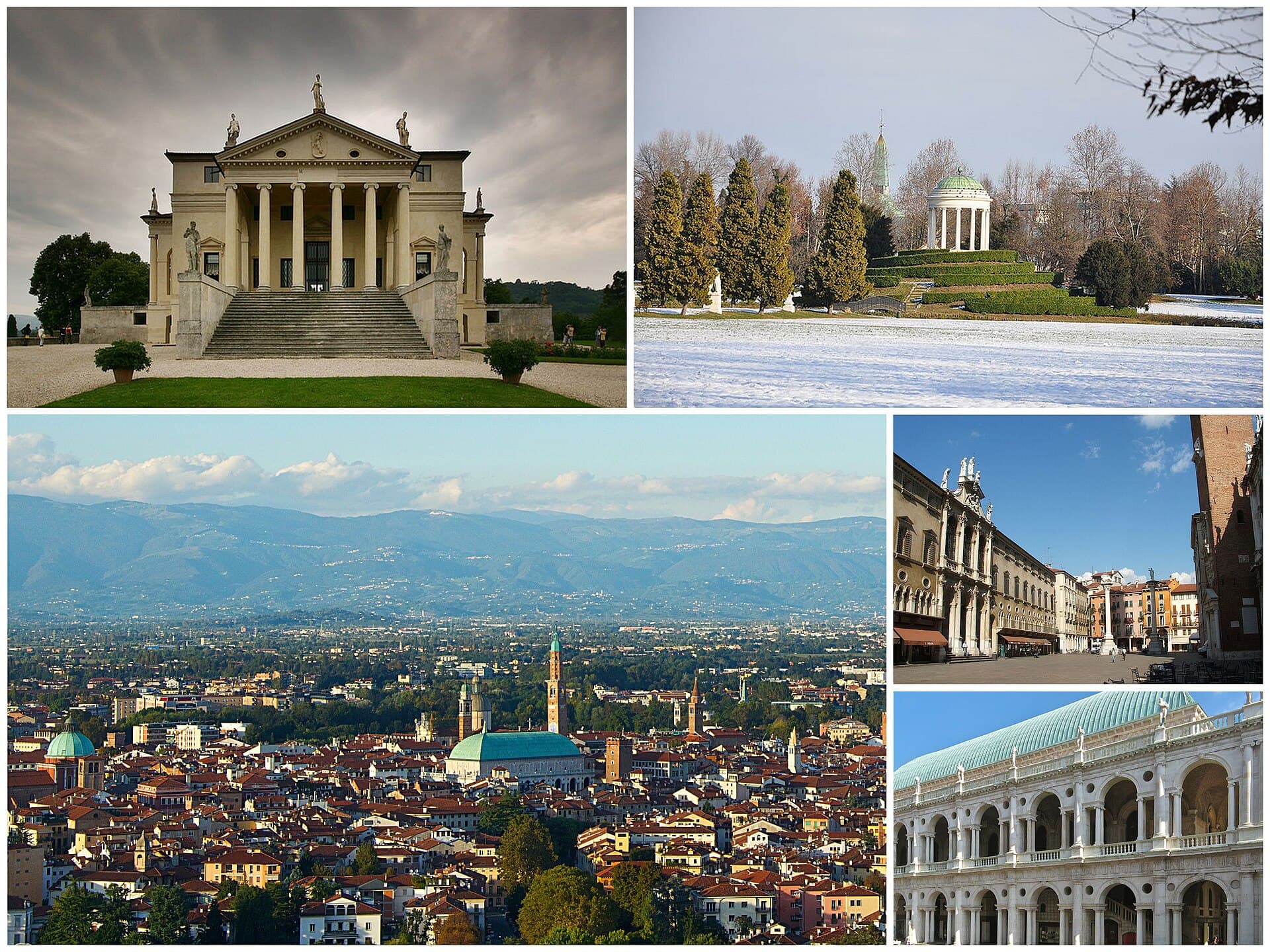 collection by DanieleDF1995 (talk) / CC BY-SA 3.0, via Wikimedia Commons
Tour de audio autoguiado de Vicenza — ruta GPS a pie, reproducción offline, narración en 32 idiomas.
“Donde los ecos de la antigua Roma se encuentran con la brillantez del Renacimiento.”
No las postales. Las historias que ni los locales conocen — al oído, justo donde ocurrieron.
El escenario del Teatro Olímpico alberga una ilusión permanente que ha cautivado al público durante siglos.
Este gran palacio urbano de Palladio fue diseñado con una característica sorprendente para lidiar con su ubicación original.
Más allá de sus icónicas cuatro fachadas idénticas, esta villa guarda un sutil secreto sobre su orientación.
Descubre todos los secretos de Vicenza
Cada dirección, cada revelación al completo — a tu oído, justo donde ocurrió.
Eliges tus paradas. Caminas. La voz te revela lo que los demás ignoran.
Tu tour de audioguía por Vicenza te espera — elige tus lugares, tu idioma y empieza al llegar.
ComprarLume incluye una guía de realidad aumentada. Levanta el móvil y su cámara muestra la calle que tienes delante, con una flecha luminosa sobre la imagen real que siempre apunta a tu próxima parada — sin mapas que descifrar, sin giros equivocados. Como todo en Lume, funciona completamente sin conexión.
Vicenza, una ciudad en la región del Véneto en Italia, se erige como un testimonio del genio perdurable de Andrea Palladio, el arquitecto renacentista del siglo XVI cuya obra influyó profundamente en la arquitectura occidental. La ciudad, junto con las villas palladianas del Véneto, ha sido reconocida como Patrimonio de la Humanidad por la UNESCO desde 1994.
Más allá de sus maravillas arquitectónicas, Vicenza es un centro dinámico y cosmopolita con un pasado significativo y una cultura vibrante. Es una de las ciudades más ricas de Italia y un importante centro industrial, particularmente reconocida por su producción de oro y joyas, así como textiles y acero. Vicenza ofrece una cautivadora mezcla de grandeza histórica y vida contemporánea, lo que la convierte en un destino gratificante para aquellos que buscan explorar Italia más allá de sus lugares turísticos más concurridos.
Los orígenes de Vicenza se remontan al siglo II o I a.C. cuando fue asentada por los vénetos y más tarde se le concedió la ciudadanía romana en el 49 a.C., pasando a ser conocida como Vicetia. El antiguo plan urbano romano todavía es discernible en la ciudad moderna, con Corso Palladio marcando el decumanus maximus y Contra Porti como el cardo maximus. Aunque poco queda de la ciudad romana, tres puentes sobre los ríos Bacchiglione y Retrone son de origen romano.
Durante el declive del Imperio Romano de Occidente, Vicenza sufrió invasiones de los hérulos, vándalos, visigodos y hunos, antes de recuperarse bajo el dominio ostrogodo y luego bizantino. Se convirtió en una importante ciudad lombarda y más tarde en un centro franco, con monasterios benedictinos establecidos en la zona desde el siglo VI. En 899, los invasores magiares destruyeron Vicenza, lo que llevó a la construcción de murallas. La ciudad desarrolló su organización comunal en 1001 y desempeñó un papel activo en la Liga Lombarda contra el emperador Federico I Barbarroja en el siglo XII.
La historia de Vicenza está entrelazada con la de sus poderosos vecinos. Estuvo bajo el dominio de la familia Scaligeri de Verona desde 1311, luego de los Visconti de Milán en 1387, antes de caer bajo el dominio de la República de Venecia en 1404. Bajo el dominio veneciano, la ciudad prosperó, beneficiándose de su ubicación en una importante ruta de comunicación. El siglo XIV también vio el nacimiento del Gremio de Orfebres de la ciudad, estableciendo a Vicenza como un importante centro para la producción de joyas, un legado que continúa hoy.
El siglo XVI marcó una era fundamental con la llegada de Andrea Palladio, cuya visión arquitectónica moldeó profundamente Vicenza. Sus diseños, inspirados en la arquitectura clásica griega y romana, transformaron la ciudad con numerosos palacios y edificios públicos. La influencia de Palladio fue tan significativa que el centro de la ciudad, con sus 23 monumentos palladianos, y las villas circundantes fueron designadas colectivamente Patrimonio de la Humanidad por la UNESCO en 1994. Vicenza siguió siendo parte de la República de Venecia hasta su caída a finales del siglo XVIII.
En los siglos XIX y XX, Vicenza enfrentó nuevos desafíos. Pasó a formar parte del Imperio Austríaco después de 1814 y luego fue anexada al Reino de Italia después de la Tercera Guerra de Independencia Italiana. La ciudad sufrió grandes daños por los bombardeos aliados durante la Segunda Guerra Mundial, perdiendo muchos monumentos y más de 2.000 vidas civiles. A pesar de esta devastación, Vicenza experimentó un crecimiento económico significativo en la década de 1960, lo que la llevó a su estado actual como un próspero centro industrial.
El centro histórico de Vicenza es un museo al aire libre transitable de arquitectura palladiana. Comience en la Piazza dei Signori, la plaza principal de la ciudad y antiguo foro romano, dominada por la Basílica Palladiana. Esta obra maestra renacentista, la primera comisión importante de Palladio, no es una iglesia sino un gran edificio cívico que alguna vez sirvió como lugar de reunión pública y mercado. Suba a su terraza en la azotea para disfrutar de amplias vistas de la ciudad.
Adyacente a la Basílica se encuentra la Torre Bissara del siglo XIII, uno de los campanarios más altos de Italia. También en la Piazza dei Signori se encuentra la Loggia del Capitanio, otro diseño palladiano.
Un corto paseo desde la plaza conduce al Teatro Olímpico, la obra final de Palladio y el teatro cubierto más antiguo del mundo que aún se conserva. Su escenografía permanente, diseñada por Vincenzo Scamozzi, crea una notable ilusión de profundidad.
Cerca, el Palazzo Chiericati, también de Palladio, alberga la Galería de Arte Cívica con colecciones que abarcan desde el siglo XV hasta el XVIII. Su fachada única, con una doble logia, combina el palacio urbano con la villa suburbana.
Más allá del centro de la ciudad, la Villa Almerico Capra, conocida como La Rotonda, es una villa palladiana por excelencia. Este icónico edificio, inspirado en el Panteón, presenta cuatro fachadas idénticas y un salón circular central coronado por una cúpula.
Para una escapada verde, visite el Parco Querini, un tranquilo parque ajardinado del siglo XIX, o el Giardino Salvi, que presenta la Loggia Valmarana.
Las épocas más agradables para visitar Vicenza son la primavera (abril a mayo) y el otoño (septiembre a octubre). Durante estos meses, el clima es templado y confortable, ideal para caminar y explorar la arquitectura de la ciudad. Las multitudes también son más manejables en comparación con la temporada alta de verano. Septiembre, en particular, ofrece temperaturas agradables y la hermosa luz otoñal preferida por los fotógrafos.
El verano (junio a agosto) puede ser cálido y húmedo, con temperaturas que a veces superan los 30-35°C (86-95°F), y ocasionales tormentas por la tarde. Aunque sigue siendo una época popular, especialmente para eventos como Vicenzaoro, espere mayores multitudes y precios más altos. El invierno (diciembre a febrero) es frío, húmedo y a menudo gris, con temperaturas que rondan el punto de congelación.
Vicenza es fácilmente accesible en tren, situada en la línea ferroviaria principal Milán-Venecia. El aeropuerto Marco Polo de Venecia (VCE) es el aeropuerto más conveniente para los viajeros internacionales. El centro histórico es compacto y en gran parte peatonal, con la mayoría de los principales lugares de interés a 20 minutos a pie. Considere comprar un boleto combinado para atracciones como el Teatro Olímpico y el Palazzo Chiericati. La oficina de información turística en Piazza dei Signori ofrece mapas y consejos.
Si planea visitar un martes o jueves, explore el mercado local en Piazza dei Signori. Muchas tiendas y restaurantes pueden cerrar durante una o dos horas para el almuerzo, y algunos restaurantes cierran los lunes, así que planifique las comidas en consecuencia. Para explorar las villas palladianas fuera de la ciudad, tener un coche es lo más fácil, aunque algunas se pueden alcanzar en transporte público, como el autobús número 8 a La Rotonda.
Vicenza en coreano, en chino o en hebreo — y 29 idiomas más, cada parada narrada por una voz nativa. La mayor variedad de idiomas de cualquier audioguía autoguiada.
Disponible en: