Hôtel Fairmont Empress
Le grand hôtel Fairmont Empress, symbole de Victoria, cache un secret sous son élégante façade.
L'histoire complète se débloque dans le tour
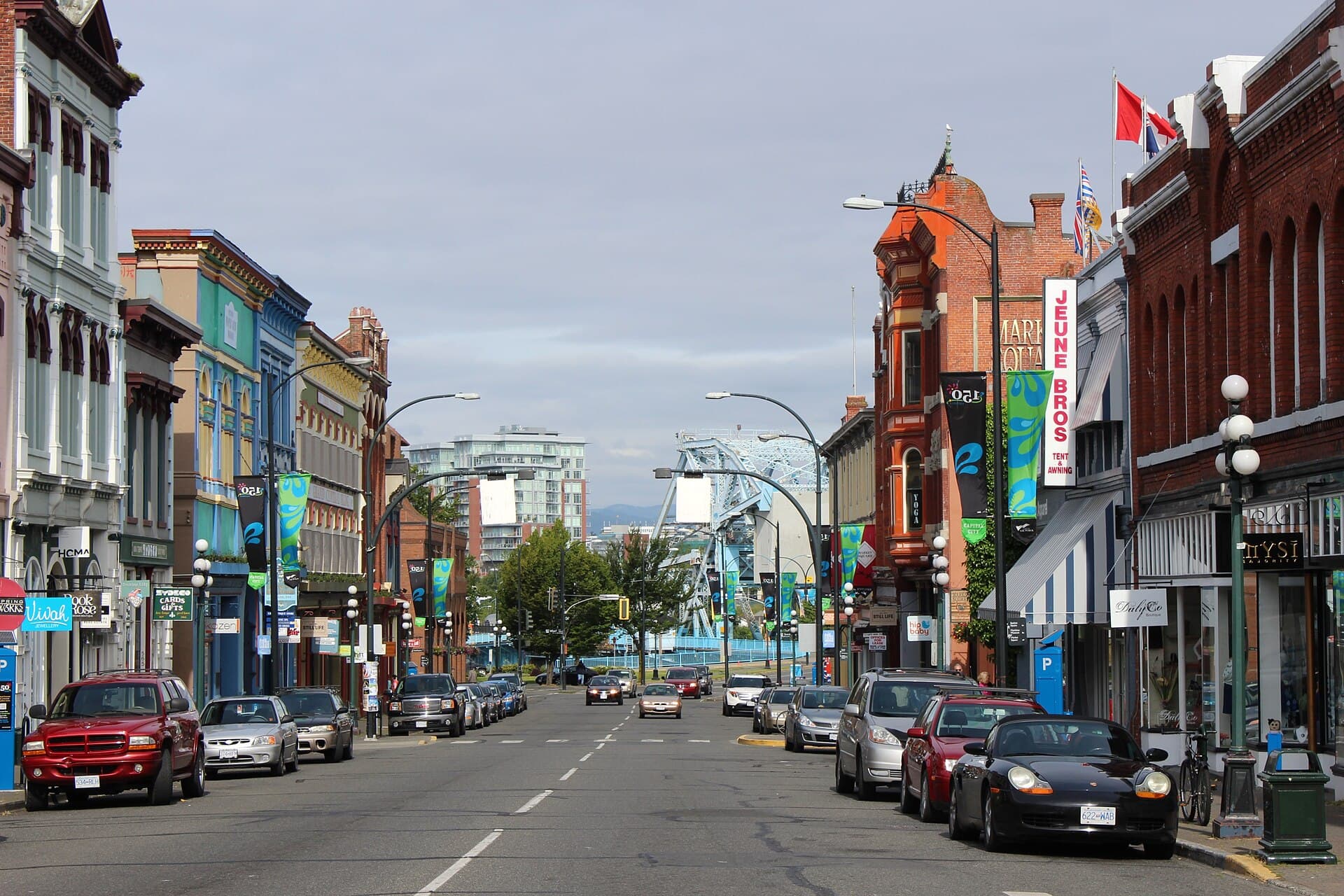 MARELBU / CC BY 3.0, via Wikimedia Commons
Visite audio autoguidée de Victoria — parcours GPS à pied, lecture hors ligne, narration en 32 langues.
“Là où l'élégance victorienne rencontre la nature sauvage du Pacifique Nord-Ouest.”
Pas les cartes postales. Les histoires que même les habitants ignorent — soufflées à l'oreille, là où elles se sont passées.
Le grand hôtel Fairmont Empress, symbole de Victoria, cache un secret sous son élégante façade.
Cette ruelle notoirement étroite du plus ancien Chinatown du Canada a un passé bien plus vaste que ses dimensions physiques.
Parmi les impressionnants totems du parc Thunderbird, une sculpture recèle un secret subtil, presque invisible.
Découvrez tous les secrets de Victoria
Chaque adresse, chaque révélation en entier — dans ton oreille, là où elle s'est passée.
Tu choisis tes lieux. Tu marches. La voix te révèle ce que les autres ignorent.


Votre visite audioguidée de Victoria vous attend — choisissez vos lieux, votre langue, et lancez-vous dès votre arrivée.
AcheterLume intègre un guide en réalité augmentée. Levez votre téléphone : sa caméra montre la rue devant vous, avec une flèche lumineuse posée sur l'image réelle qui pointe toujours vers votre prochain arrêt — aucune carte à déchiffrer, aucun mauvais virage. Comme tout dans Lume, ça fonctionne entièrement hors-ligne.
Victoria, la capitale de la Colombie-Britannique, est située à l'extrémité sud de l'île de Vancouver, une ville où le passé s'entremêle gracieusement avec le présent. Connue pour son climat doux et sa verdure abondante, elle a gagné le surnom de « Ville-jardin ». Cette ville piétonne offre un mélange distinctif d'héritage colonial britannique, évident dans son architecture et ses traditions, aux côtés des influences profondément enracinées de ses Premières Nations et de ses communautés asiatiques.
Au-delà de son pittoresque port intérieur, Victoria offre un éventail diversifié d'expériences, de l'exploration de sites historiques et de jardins animés aux aventures en plein air comme l'observation des baleines. Environ 3,5 millions de visiteurs passent au moins une nuit à Victoria chaque année, avec 800 000 supplémentaires arrivant par des navires de croisière. Que vous recherchiez une immersion culturelle, une splendeur naturelle ou un goût d'histoire, Victoria est une destination captivante.
## Des terres autochtones aux avant-postes coloniaux Bien avant la colonisation européenne, la région de Victoria était le foyer des peuples des Premières Nations Salish de la côte, y compris les Lekwungen, qui connaissaient la terre sous le nom de « Camosun », signifiant « ruée d'eau ». Leurs communautés ont prospéré pendant des milliers d'années, avec de grandes populations présentes lorsque les explorateurs européens comme Juan Pérez et James Cook ont visité pour la première fois la côte nord-ouest à la fin du XVIIIe siècle.
La colonisation britannique a officiellement commencé en 1843 lorsque James Douglas a établi un poste de traite pour la Compagnie de la Baie d'Hudson, initialement nommé Fort Camosun, puis Fort Albert, et enfin Fort Victoria, en l'honneur de la reine Victoria. La préoccupation de la monarchie britannique concernant la frontière américano-canadienne a conduit l'île de Vancouver à devenir une colonie de la Couronne britannique en 1849, avec Fort Victoria désignée comme sa capitale.
## La ruée vers l'or et la croissance rapide La découverte d'or sur le fleuve Fraser inférieur en 1858 a transformé Victoria de manière spectaculaire. Ce qui était une petite ville de quelques centaines de colons a rapidement gonflé à plus de 5 000 personnes en quelques jours alors que les mineurs affluaient à travers Victoria, le seul port océanique et centre d'équipement pour les champs aurifères. Cet afflux de personnes et de capitaux a stimulé un développement important, conduisant à l'incorporation de Victoria en tant que ville en 1862, ce qui en fait l'une des plus anciennes villes du Pacifique Nord-Ouest. La ruée vers l'or a également amené un grand nombre d'immigrants chinois, établissant ce qui est devenu la plus grande communauté chinoise au Canada dans les années 1800 et le deuxième plus ancien Chinatown d'Amérique du Nord après San Francisco.
## Capitale et au-delà En 1865, la Royal Navy a établi son quartier général du Pacifique à Esquimalt, juste à l'ouest de Victoria, contribuant davantage à la croissance de la région. Lorsque l'île de Vancouver s'est unie politiquement au continent en 1866, Victoria est devenue, de manière controversée, la capitale de la nouvelle colonie unie, une décision impopulaire sur le continent. Victoria a conservé son statut de capitale provinciale lorsque la Colombie-Britannique a rejoint la Confédération canadienne en 1871.
Cependant, la proéminence de Victoria en tant que centre commercial de la province s'est déplacée vers Vancouver après l'achèvement du chemin de fer Canadien Pacifique en 1886, car le terminus du chemin de fer se trouvait sur le continent. Dans la seconde moitié du XIXe siècle, le port de Victoria est également devenu un important importateur d'opium de Hong Kong, le distribuant dans toute l'Amérique du Nord. Malgré cela, Victoria a continué à cultiver son caractère unique, avec la construction de monuments emblématiques comme les édifices du Parlement (achevés en 1897) et l'hôtel Fairmont Empress (ouvert en 1908), qui restent au cœur de l'identité de la ville aujourd'hui. La ville est également devenue un centre pour le tourisme, l'éducation et un secteur technologique florissant, souvent appelé « Tectoria ».
Victoria offre une multitude de sites, dont beaucoup sont concentrés autour de son pittoresque port intérieur. Les édifices du Parlement de la Colombie-Britannique, une structure emblématique des années 1890, proposent des visites guidées gratuites de ses intérieurs marbrés pendant la journée. De l'autre côté de la rue, l'hôtel Fairmont Empress, un lieu historique national, est réputé pour son thé de l'après-midi, une expérience typiquement victorienne. À proximité, le Royal BC Museum explore l'histoire naturelle et humaine de la province, avec des expositions allant des mammouths laineux grandeur nature aux vastes présentations du patrimoine des Premières Nations. Jouxtant le musée se trouve le parc Thunderbird, avec ses impressionnants totems.
Promenez-vous dans le plus ancien Chinatown du Canada, distingué par sa Porte de l'Harmonie et ses boutiques animées sur Fisgard Street. Ne manquez pas Fan Tan Alley, réputée l'une des rues les plus étroites du monde, remplie de boutiques originales. Pour une perspective différente, Fisherman's Wharf offre des maisons flottantes colorées et des opportunités de visites d'observation des baleines. Au-delà du centre-ville, les Butchart Gardens, un chef-d'œuvre floral de 22 hectares, attirent plus d'un million de visiteurs par an avec ses jardins thématiques qui changent au fil des saisons. Pour un aperçu de l'opulence de l'époque victorienne, explorez le château de Craigdarroch, un manoir connu pour ses vitraux et ses boiseries complexes.
La période idéale pour visiter Victoria s'étend de juin à août, lorsque le temps est le plus chaud, avec des maximales moyennes d'environ 19,6 °C (67,3 °F), et que la ville est animée par des festivals et des activités de plein air. C'est la haute saison touristique, offrant des marchés et des événements animés.
Pour ceux qui recherchent un temps plus doux et moins de foules, les saisons intermédiaires du printemps (mars à mai) et de l'automne (septembre à novembre) sont d'excellents choix. Le printemps apporte des fleurs épanouies dans toute la « Ville-jardin », tandis que l'automne offre des températures agréables et des couleurs automnales, parfaites pour explorer la scène culinaire ou faire de la randonnée. L'hiver, de décembre à février, est plus frais et plus pluvieux, mais offre une expérience plus calme et des possibilités de sports d'hiver à proximité.
Monnaie : La monnaie officielle est le dollar canadien (CAD). Les principales cartes de crédit et de débit sont largement acceptées. Des services de change sont disponibles à l'aéroport international de Victoria et à divers endroits du centre-ville, bien qu'il soit souvent conseillé de changer de l'argent dans les banques ou les établissements de change dédiés pour de meilleurs taux.
Taxes : Attendez-vous à une taxe de 12 % sur la plupart des biens et services, comprenant une taxe de vente provinciale (PST) de 7 % et une taxe sur les produits et services (TPS) de 5 %. Les chambres d'hôtel sont soumises à une PST de 8 %, une TPS de 5 % et une taxe municipale et régionale (MRDT) de 3 %, certains hôtels ajoutant des frais de marketing de destination (DMF) supplémentaires de 1 %.
Se déplacer : Victoria est une ville très propice à la marche et au vélo, en particulier le centre-ville, avec de nombreuses attractions à proximité. BC Transit exploite un système de bus complet dans le Grand Victoria, reliant le centre-ville à divers quartiers, terminaux de ferry et l'aéroport. Des taxis et des services de covoiturage comme Uber sont également disponibles. Pour explorer le port intérieur, les Victoria Harbour Ferries offrent un charmant service de bateau-taxi.
Sécurité : Victoria est généralement considérée comme une ville sûre. Le service de police de Victoria et l'Agence de gestion des urgences de Victoria travaillent activement pour assurer la sécurité publique. Cependant, comme dans toute zone urbaine, il est toujours sage de suivre les procédures de sécurité générales, telles que la sécurisation des effets personnels et la vigilance, en particulier la nuit.
Victoria en coréen, en chinois ou en hébreu — et dans 29 autres langues, chaque étape narrée par une voix native. La plus large gamme de langues de tous les audioguides autoguidés.
Disponible en :