The well-trod stone thoroughfare of Vigan, Calle Crisologo, carries a wartime secret that spared it from ruin.
Allan Jay Quesada / CC BY-SA 4.0, via Wikimedia CommonsVigan
“Ancient roads unfold stories, where every edifice holds a memory.”
Vigan, as no one tells it.
Not the postcards. The stories even locals don't know — whispered in your ear, right where they happened.
Beyond its grand facade and historical artifacts, the Syquia Mansion contains architectural 'peepholes' that reveal a discreet practice from a past era.
This expansive wildlife sanctuary, owned by a prominent politician, maintains a unique connection to a rare, nocturnal creature from the Philippine Cordillera region.
Discover every secret of Vigan
Every address, every reveal in full — in your ear, right where it happened.
You pick your stops. You walk. The voice reveals what the others miss.
How long do you have in Vigan?
No tours available yet. Check back soon — we're preparing them.
The story of Vigan
Vigan, a UNESCO World Heritage Site on the western coast of Luzon, Philippines, offers a journey through time. It is celebrated as one of Asia's best-preserved Spanish colonial towns, its stone pathways and architecture reflecting a distinct fusion of Filipino, Chinese, and Spanish influences. The city's allure rests in its capacity to transport visitors to an earlier era, where horse-drawn carriages (kalesas) still traverse old roads and ancestral homes stand as living museums.
Beyond its picturesque avenues, Vigan functions as a lively cultural center, offering a window into centuries of heritage. From its pre-colonial origins as a bustling trading post to its transformation under Spanish rule, the city's narrative is deeply embedded in its structures and daily rhythms. With a population of approximately 54,000 residents, Vigan retains a small-town atmosphere despite its global recognition, inviting travelers to explore its array of traditions, cuisine, and warm hospitality.
From Ancient Trade to Colonial Grandeur
Before the arrival of the Spanish, Vigan was a flourishing coastal trading post where local inhabitants exchanged goods with Chinese merchants. This early commercial activity established the foundation for its diverse cultural influences. In 1572, Spanish conquistador Juan de Salcedo established a settlement here, initially naming it Villa Fernandina in honor of King Philip II's son. Vigan's modern name is thought to derive from "Bigaa," a giant taro plant once plentiful along the riverbanks.
Under Spanish rule, Vigan experienced a significant transformation, becoming an important center for trade and commerce. The city's strategic location along trade routes facilitated the exchange of goods like sugar, tobacco, and rice. Chinese traders played a crucial role in its economic landscape, introducing new products and ideas and contributing to the city's multicultural heritage. The Spanish also introduced Catholicism, which profoundly shaped the community's identity, leading to the construction of impressive Baroque-style churches and convents.
Vigan's architectural heritage stands as a testament to this blend of influences, displaying a distinct style known as "Earthquake Baroque." This design incorporated local climatic conditions and Chinese construction traditions, creating resilient and unique structures. Unlike many other Philippine cities, Vigan miraculously survived World War II, preserving its ancestral houses and singular urban plan. This exceptional preservation led to its inscription as a UNESCO World Heritage Site in 1999, recognizing it as the best-preserved example of a Spanish colonial town in Asia. In 2015, Vigan was also named one of the New7Wonders Cities.
Begin your exploration with a walk along Calle Crisologo, the core of Vigan's heritage. This pedestrian-only street is lined with centuries-old Spanish colonial houses, many of which have been converted into shops, restaurants, museums, and inns. Experience the atmosphere by taking a ride in a traditional horse-drawn carriage, a kalesa.
Visit the Syquia Mansion, a grand bahay na bato that served as the ancestral home of former Philippine President Elpidio Quirino's wife, Alicia Syquia. It now functions as a museum, displaying antique furniture, artworks, and family memorabilia. Another significant historical site is the Crisologo Museum, housed in the ancestral home of the prominent Crisologo family, showcasing artifacts related to their political contributions.
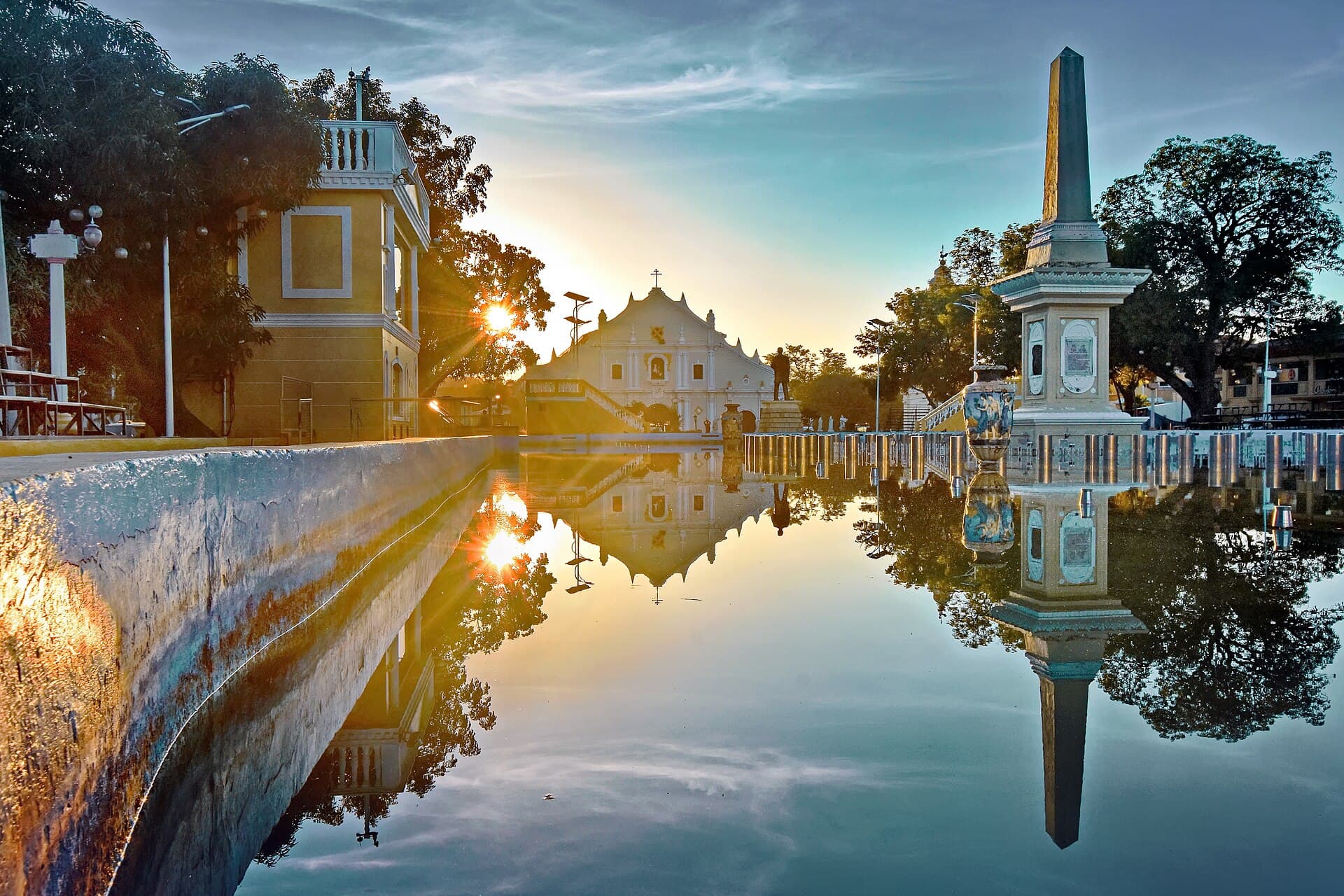
Do not miss the Bantay Bell Tower, a historic watchtower built in 1591, offering expansive views of Vigan and the surrounding area. Adjacent to it stands the St. Paul Metropolitan Cathedral, a prominent landmark featuring distinct Baroque architectural style. For a unique experience, head to Baluarte Resort and Mini Zoo, a wildlife sanctuary owned by politician Chavit Singson, featuring a diverse collection of animals and interactive exhibits. Finally, observe traditional pottery making at a Pagburnayan Jar Factory, where you can see the craft passed down through generations.
The ideal time to visit Vigan is during the dry season, which runs from November to May. Specifically, December to February offers cooler temperatures, making it suitable for walking tours and outdoor activities. If you are interested in local festivities, plan your trip between November and May to coincide with events like the Vigan Town Fiesta, Longganisa Festival, or Viva Vigan Festival. Avoid the wet season from May to October, as rainfall increases significantly, especially in July and August.
Reaching Vigan is typically done by bus from Manila, a journey that can take 8 to 9 hours. Overnight buses are recommended to conserve time and energy. Once in Vigan, the finest way to explore the heritage district is on foot. Alternatively, traditional horse-drawn carriages called kalesas are readily available for a unique and leisurely tour, usually costing around PHP 250 per hour. Tricycles are also a common and affordable mode of transport for short rides within the city center.
Pack light, breathable clothing, preferably cotton or linen, as the weather is typically hot and humid. Comfortable footwear is essential for walking on stone pathways. Bring sunscreen, a hat, and insect repellent. It is advisable to carry small bills for purchases and transport, as bargaining is common in local markets. While locals generally converse in Ilocano, English and Tagalog are also widely spoken.
- What is Vigan most known for?
- Vigan is most known for its exceptionally well-preserved Spanish colonial architecture, particularly along Calle Crisologo, which has earned it recognition as a UNESCO World Heritage Site.
- Is Vigan a walkable city?
- Yes, Vigan's historic center, especially Calle Crisologo, is closed to motorized vehicles, making it very walkable. Walking is the best way to experience its charm, and *kalesas* (horse-drawn carriages) offer a traditional alternative.
- What local delicacies should I try in Vigan?
- When in Vigan, be sure to try the famous Vigan *empanada*, a savory fried pastry, and *bagnet*, a crispy fried pork dish.
- How long should I stay in Vigan?
- A stay of two to three days is generally recommended to fully appreciate Vigan's major attractions without rushing.
- Is it safe to visit Vigan?
- Vigan is generally considered very safe for tourists. It is always wise to keep valuables secure, especially in crowded areas, and avoid walking alone in isolated areas late at night.
- Can I interact with animals at Baluarte Resort and Mini Zoo?
- Yes, Baluarte Resort and Mini Zoo offers opportunities for animal interaction, including feeding certain animals like deer, monkeys, swans, flamingos, and ostriches, and even taking photos with parrots and snakes.