The city you see today isn't where Villarrica first stood. Its initial location was abandoned and rebuilt multiple times due to a force of nature that shaped its very existence.
Chile hoy / CC BY-SA 3.0, via Wikimedia CommonsVillarrica
“Where the earth breathes fire, and ancient spirits linger by the lake's edge.”
Villarrica, as no one tells it.
Not the postcards. The stories even locals don't know — whispered in your ear, right where they happened.
Gazing into the crater of Villarrica Volcano offers a rare glimpse into a geological marvel, one that few active volcanoes around the world share.
While you might expect common souvenirs, the markets here hold a culinary secret, a local pastry that tells a story of both Chilean and German influence.
Discover every secret of Villarrica
Every address, every reveal in full — in your ear, right where it happened.
You pick your stops. You walk. The voice reveals what the others miss.
How long do you have in Villarrica?
No tours available yet. Check back soon — we're preparing them.
The story of Villarrica
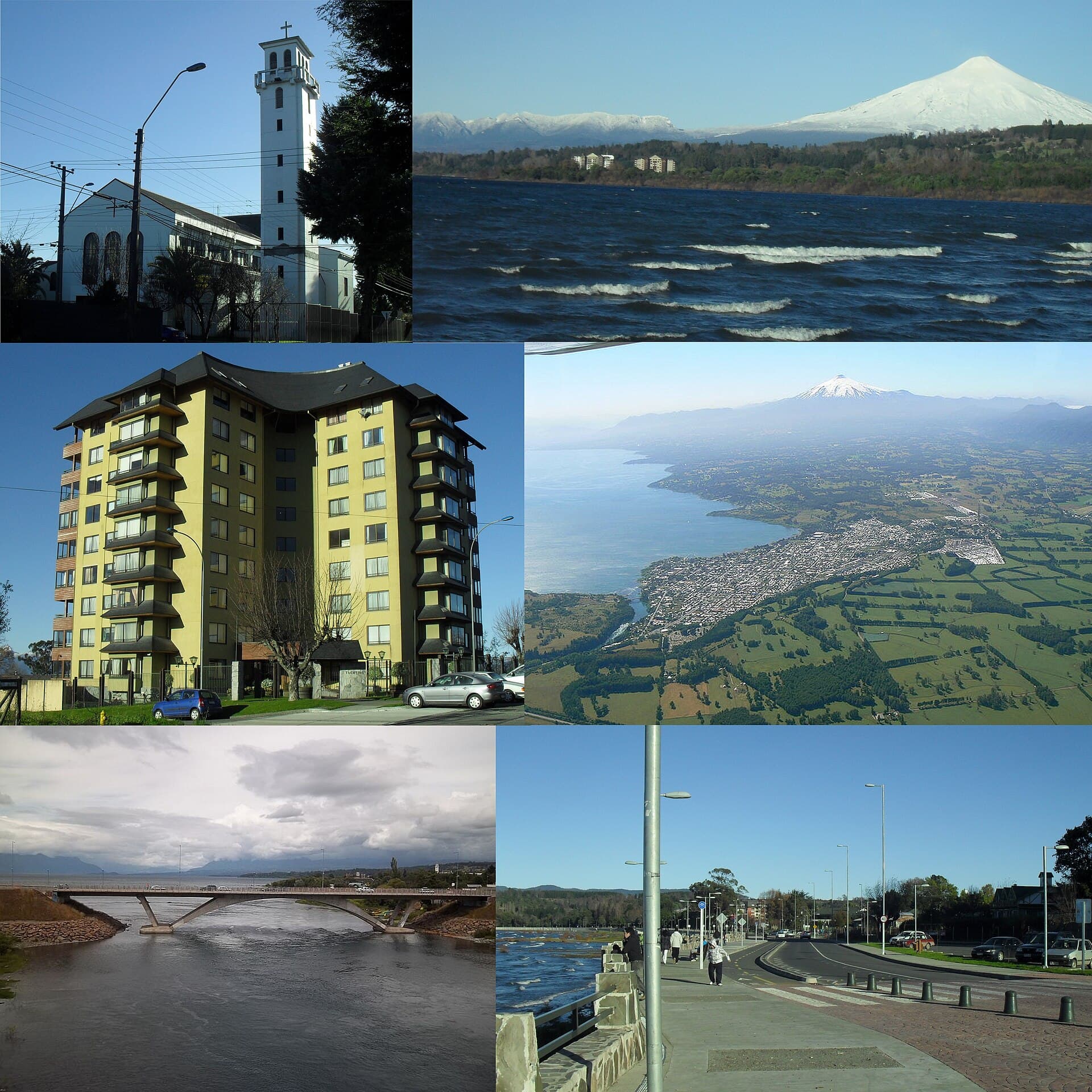
Villarrica, a city in southern Chile's Araucanía Region, rests on the western shore of Lake Villarrica, shadowed by the active Villarrica Volcano. This area is a natural haven, defined by dense forests, clear rivers, and mountain peaks. The city, with a population of about 55,000, maintains the feel of a welcoming town, distinct from larger urban centers.
This city serves as a central point for outdoor activities, offering opportunities for everything from relaxing in thermal springs to skiing and white-water rafting. Villarrica is also an operational center for tourists traveling between Pucón and Lican Ray, providing year-round services and infrastructure. Its landscape, dominated by the snow-capped volcano and the lake, draws those seeking water sports, expansive views, and a connection with nature.
A City Reborn from Ash and Conflict
Villarrica, originally named Santa María Magdalena de la Villa Rica, was founded in 1552 by Spanish conquistador Jerónimo de Alderete under orders from Governor Pedro de Valdivia. The name, meaning 'Rich Town,' was chosen due to the Spanish belief in abundant gold and silver deposits in the surrounding mountains and riverbeds. This hope for mineral wealth, along with its strategic location as a link between central Chile and Andean mountain passes, drove its early settlement.
However, Villarrica's early history was marked by intense conflict with the indigenous Mapuche people. The city was abandoned in 1554 following the Battle of Tucapel and the death of Pedro de Valdivia. It was refounded five years later by García Hurtado de Mendoza. The city endured, even surviving a major earthquake in 1575. Yet, the ongoing Arauco War led to its complete destruction and abandonment by the Spanish in 1602 after a three-year siege, with the territory remaining under Mapuche control for nearly three centuries.
The modern history of Villarrica began with its official 'second founding' on December 31, 1882, on the site of the ancient ruins. This re-establishment was part of an agreement between the Chilean government and the Mapuche, though discontent among the Mapuche over unfulfilled promises led to further uprisings and the construction of a fort nearby, which eventually became the city of Pucón. Following its refounding, the Chilean government encouraged settlement by inviting European immigrants, particularly Swiss, German, and Austrian families, in the latter half of the 19th century. The railway reached Villarrica in 1933, significantly boosting trade and tourism, with the first hotels opening in 1923.
The active Villarrica Volcano has also played a significant role in the city's history, with notable eruptions in 1948, 1964, and 1971 causing damage and shaping the landscape. Despite these challenges, Villarrica has consistently demonstrated resilience, rebuilding and recovering each time, earning it the nickname 'A Phoenix City.'
Villarrica offers a blend of natural splendor and cultural experiences. The most prominent feature is the Villarrica Volcano, an active stratovolcano that can be observed from almost anywhere in the city. Guided ascents are popular during summer months, offering expansive views of the surrounding Chilean Lake District. The Villarrica National Park, located 36 km away, protects the volcano's natural beauty and offers trails through forests of araucarias and lengas.
The city is situated on the shores of Lake Villarrica, which becomes a center for water sports, beach activities, and sunset photography during the summer. You can find a waterside boardwalk, the Costanera, with a black-sanded beach. Nearby, other lakes like Calafquén, Caburgua, Huilipilún, and Colico also provide opportunities for water activities. The area is also known for its numerous thermal springs, with temperatures ranging from 43°C to 90°C, including popular options like Coñaripe, San Luis, Huife, Palguín, and Liquiñe. For cultural insights, explore the Villarrica Museum and the Artisan Fairs for local crafts. Walking along the old bridge across the Toltén River offers views of both the town and the volcano.
The best time to visit Villarrica for warm-weather activities is during the Southern Hemisphere's summer, from late December to late February. During this period, daytime temperatures are comfortable, averaging 22–23°C, and precipitation is minimal. This is ideal for lake activities, hiking, and volcano ascents. While summer is peak season, spring (September to November) offers mild weather and blooming landscapes, suitable for hiking. Winter (June to August) brings cooler temperatures, around 6–7°C, and heavy rainfall, with up to 21 rainy days per month. However, winter is excellent for visiting nearby ski centers and enjoying the thermal springs.
Villarrica is best reached by flying into La Araucanía International Airport (ZCO) in Temuco, approximately 54 km away, followed by a taxi or transfer. Alternatively, some travelers use Pucón Airport (ZPC), about 25 km southeast. Buses are a common mode of transport, with several companies serving Villarrica from Santiago and other cities. Within the city, walking is easy, but a car is recommended for exploring surrounding attractions. Rental cars and private transfers should be booked in advance, especially during peak season. Chilean pesos are needed for local markets and small cafes, though larger establishments accept cards. The local dialing code is 45. Always monitor volcanic alert levels from SERNAGEOMIN if planning a volcano climb.
- What is the Villarrica Volcano known for?
- Villarrica Volcano is one of Chile's most active volcanoes and is notable for having an active lava lake within its crater.
- Is Villarrica a good destination for families?
- Yes, Villarrica offers a variety of family-friendly activities, including lake recreation, gentle hikes in Villarrica National Park, and relaxing in thermal springs.
- What kind of food can I expect in Villarrica?
- You can find traditional Chilean dishes and local seafood. Due to German influence, you'll also find *kuchen* (fruit-filled cakes) and various empanadas.
- Are there any cultural events in Villarrica?
- The Villarrica Cultural Center often hosts various programs, including concerts. The region also celebrates indigenous Mapuche traditions.
- What should I pack for a trip to Villarrica?
- Pack layers, as temperatures can vary significantly. In summer, bring light clothing and a jacket for cool evenings. In winter, warm, waterproof clothing is essential. Don't forget a swimsuit for the thermal springs and sturdy hiking boots.
- Is it safe to visit Villarrica with an active volcano nearby?
- Villarrica Volcano is closely monitored by volcanologists who issue alerts. It is essential to stay informed about the volcanic alert status and follow instructions from local authorities and guides.