Formosa Straße
Gehen Sie die Formosa Straße entlang und Sie könnten direkt über ein Fenster in Viseus römische Vergangenheit treten.
Die ganze Geschichte wird in der Tour freigeschaltet
 nborges from Portugal / CC BY 2.0, via Wikimedia Commons
Selbstgeführte Audio-Walking-Tour durch Viseu — GPS-Route, Offline-Wiedergabe, erzählerische Narration in 32 Sprachen.
“Wo alte Geschichten auf modernes Leben treffen und Dão-Wein frei fließt.”
Nicht die Postkarten. Die Geschichten, die selbst Einheimische nicht kennen – dir ins Ohr geflüstert, genau dort, wo sie geschahen.
Gehen Sie die Formosa Straße entlang und Sie könnten direkt über ein Fenster in Viseus römische Vergangenheit treten.
Viseu, eine Binnenstadt, hält einen überraschenden Rekord für Eis.
Jede antike Stadt hat ihre Legenden, und Viseu hat sogar eine Süßspeise, die nach seinem mythischen Krieger benannt ist.
Entdecke jedes Geheimnis von Viseu
Jede Adresse, jede Enthüllung vollständig – in deinem Ohr, genau dort, wo es geschah.
Du wählst deine Stationen. Du gehst. Die Stimme enthüllt, was andere übersehen.
![Viseu — boats docked near seaside promenade]](/_next/image?url=https%3A%2F%2Fxkitrzghrapdsyyvojzr.supabase.co%2Fstorage%2Fv1%2Fobject%2Fpublic%2Flume-images%2Fcities%2Fviseu-gallery-1.jpg&w=1920&q=75)


Deine selbstgeführte Audio-Tour durch Viseu ist bereit – wähle deine Sehenswürdigkeiten, deine Sprache und starte, sobald du ankommst.
KaufenLume enthält einen integrierten Augmented-Reality-Guide. Halten Sie Ihr Handy hoch: Die Kamera zeigt die Straße vor Ihnen, mit einem leuchtenden Pfeil über dem echten Bild, der immer auf Ihren nächsten Stopp zeigt — keine Karte zum Rätseln, keine falschen Abzweigungen. Wie alles bei Lume funktioniert es komplett offline.
Viseu, eine Stadt in Zentralportugal, bietet eine Mischung aus historischer Tiefe und zeitgenössischem Komfort. Sie liegt auf einem Hochplateau, umgeben von den Gebirgssystemen von Leonil, Montemuro, Lapa, Arado, Serra da Estrela, Lousã und Caramulo. Viseu wird häufig als eine der lebenswertesten Städte Portugals anerkannt und bewahrt eine authentische Atmosphäre, die sich von den belebteren Küstenorten unterscheidet.
Die Stadt dient als regionales Wirtschafts- und Kulturzentrum, bekannt für ihre robuste Weinindustrie in der Region Dão und ihre bedeutende Sammlung religiöser Kunst. Viseu hat sich in den letzten 80 Jahren aufgrund seiner öffentlichen Grünflächen, darunter der Fontelo Park und die Cava de Viriato, den Titel 'Gartenstadt' verdient. Ihr historischer Kern mit seinen verwinkelten Gassen und traditioneller Architektur lädt zur Erkundung ein, während moderne Annehmlichkeiten und ein entspanntes Tempo die neueren Stadtteile prägen.
Die Ursprünge von Viseu reichen bis in die vorrömische Zeit zurück, als sie von keltischen und lusitanischen Stämmen besiedelt wurde. Die Römer erkannten ihre strategische Lage, an der viele Straßen zusammenliefen, und gründeten hier eine Stadt namens Vissaium. Der legendäre lusitanische Krieger Viriatus, der sich der römischen Expansion widersetzte, soll in der Nähe gelebt haben, und die antike Erdfestung Cava de Viriato wird mit ihm in Verbindung gebracht.
Mitte des 6. Jahrhunderts wurde Viseu zu einer bedeutenden suebischen Gemeinschaft und einem Bistum, was ihr während der westgotischen Periode administrative und spirituelle Bedeutung verlieh. Die Stadt wurde schließlich 1058 von König Ferdinand I. von León und Kastilien zurückerobert und kehrte unter christliche Herrschaft zurück. Im Jahr 1123 verlieh Teresa von León Viseu eine Charta, die die Rechte und Pflichten seiner Bewohner festlegte. Viseu gilt auch als einer der möglichen Geburtsorte von Afonso Henriques, dem ersten König von Portugal.
Im Mittelalter basierte die Wirtschaft von Viseu auf Landwirtschaft und Handwerk, wobei der Weinbau den Grundstein für die renommierte Weinregion Dão legte. König Johann I. gründete 1392 die jährliche Feira de São Mateus, eine Messe, die seit über 600 Jahren stattfindet und die Rolle Viseus als wichtiges Handelszentrum festigte. Verteidigungsanlagen, darunter die Mauern von Afonso V., wurden gebaut und 1472 fertiggestellt, wobei Fragmente wie die Porta do Soar noch heute sichtbar sind.
Das 15. und 16. Jahrhundert markierten eine bedeutende künstlerische Periode für Viseu, insbesondere mit der Geburt von Vasco Fernandes, bekannt als Grão Vasco, einem bedeutenden portugiesischen Renaissancemaler. Seine Meisterwerke sind zentral für das Nationalmuseum Grão Vasco. Im 19. Jahrhundert verlagerte der Bau eines neuen Rathauses am Rossio-Platz den Fokus der Stadt weg von ihrem mittelalterlichen Kern. Heute verbindet Viseu sein erhaltenes Altstadtviertel mit einem modernen Zentrum, das von Grünflächen und breiten Alleen geprägt ist und seit den 1920er und 30er Jahren seinen Ruf als 'Gartenstadt' pflegt.
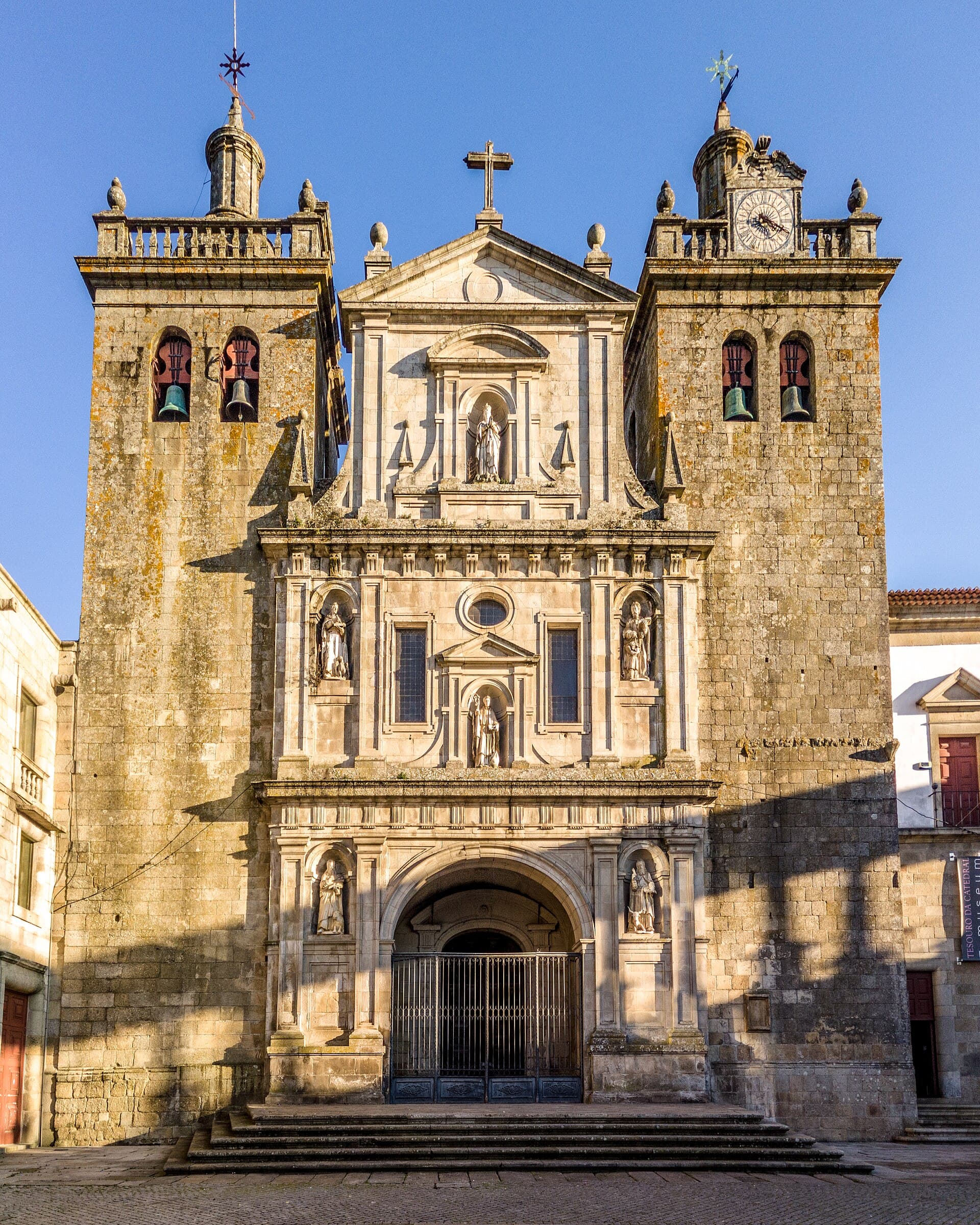
Beginnen Sie Ihre Erkundung an der Kathedrale von Viseu, einem Nationaldenkmal mit Ursprüngen im 10. Jahrhundert, das im Laufe jahrhundertelanger Renovierungen verschiedene architektonische Stile aufweist. Neben der Kathedrale befindet sich das Nationalmuseum Grão Vasco, das bedeutende religiöse Kunstwerke beherbergt, darunter Werke des Malers Vasco Fernandes aus dem 16. Jahrhundert. Die Igreja da Misericórdia mit ihren Rokoko- und neoklassizistischen Elementen befindet sich ebenfalls am Kathedralenplatz.
Schlendern Sie durch das historische Zentrum, ein Labyrinth aus engen, verwinkelten Gassen, gesäumt von Renaissance- und Barockgebäuden. Entdecken Sie den Praça Dom Duarte, einen lebhaften Platz mit Cafés und historischen Gebäuden, gekrönt von einer Bronzestatue von König Duarte. Verpassen Sie nicht die Rua Direita, die seit römischer Zeit die Haupthandelsader der Stadt ist und heute traditionelle Geschäfte und Restaurants beherbergt.
Für einen Einblick in die römische Geschichte suchen Sie die Glasplatte in der Formosa Straße auf, die einen erhaltenen Abschnitt einer römischen Mauer aus dem 3. Jahrhundert zeigt. Erkunden Sie Überreste der mittelalterlichen Stadtmauern an der Porta do Soar und der Porta dos Cavaleiros. Außerhalb des historischen Kerns genießen Sie die Ruhe des Fontelo Parks, eines ehemaligen Erholungsguts für Bischöfe, das heute eine öffentliche Grünfläche ist. Für ein einzigartiges Erlebnis sollten Sie eine Radtour auf der Ecopista do Dão in Betracht ziehen, einem malerischen Grünweg auf einer ehemaligen Eisenbahnstrecke.
Die ideale Reisezeit für Viseu ist das Frühjahr (April bis Juni) und der Herbst (September bis Oktober). Diese Jahreszeiten bieten warme Tage, kühle Nächte und weniger Andrang. Der Frühling bringt üppig grüne Hügel und Weinbergsblicke, während der Frühherbst mit der Weinlese zusammenfällt und die frischesten lokalen Weine bietet. Sommer (Juli und August) sind warm und trocken, mit durchschnittlichen Höchsttemperaturen um 28°C, obwohl die Temperaturen auf über 30°C steigen können. Winter (Dezember bis Februar) sind mild mit durchschnittlichen Höchsttemperaturen um 11-12°C, aber die Nächte können kühl sein und gelegentlich unter den Gefrierpunkt fallen. Der Dezember bietet auch einen bemerkenswerten Weihnachtsmarkt.
Viseu ist eine sehr gut zu Fuß erkundbare Stadt, insbesondere ihr kompakter historischer Kern. Seien Sie auf verwinkelte und unebene Straßen sowie einige steile Anstiege vorbereitet, besonders rund um die Kathedrale, daher sind bequeme Wanderschuhe empfehlenswert. Für die Bewältigung von Steigungen verbindet die kostenlose Standseilbahn von Viseu (Funicular de Viseu) die Unterstadt mit dem historischen Viertel. Lokale MUV-Busse bieten mit 29 Linien eine umfassende Abdeckung, und Fahrdienst-Apps wie Bolt sind ebenfalls verfügbar.
Viseu hat keinen Bahnhof, ist aber gut an Busverbindungen von größeren Städten wie Lissabon, Porto und Coimbra angebunden. Die Fahrt von Lissabon dauert etwa 3-3,5 Stunden und von Porto etwa 1,5-2 Stunden. Ein Mietwagen wird empfohlen, wenn Sie die umliegende Weinregion Dão oder die Serra da Estrela-Berge erkunden möchten. Die lokale Währung ist der Euro (€), und obwohl Karten weitgehend akzeptiert werden, ist es ratsam, etwas Bargeld für kleinere Geschäfte mitzuführen. Viseu wird durchweg als eine der sichersten Städte Portugals eingestuft, was sie zu einem angenehmen Reiseziel für alle Reisenden macht.
Viseu — Koreanisch, Chinesisch, Hebräisch und 29 weitere Sprachen, jede Station von einer muttersprachlichen Stimme erzählt. Die größte Sprachauswahl aller selbstgeführten Audiotouren.
Verfügbar auf: