The term 'conclave'—the secret meeting of cardinals to elect a new Pope—has its origins in Viterbo, born from an act of desperation by exasperated citizens.
Claudio Caravano / CC BY-SA 4.0, via Wikimedia CommonsViterbo
“Where Popes sought refuge and time stands still within ancient walls.”
Viterbo, as no one tells it.
Not the postcards. The stories even locals don't know — whispered in your ear, right where they happened.
Beneath Viterbo's medieval streets lies a network of tunnels, far more extensive and mysterious than commonly known.
Viterbo's renowned thermal waters are not only ancient but also have a legendary origin tied to a mythical hero.
Discover every secret of Viterbo
Every address, every reveal in full — in your ear, right where it happened.
You pick your stops. You walk. The voice reveals what the others miss.
How long do you have in Viterbo?
No tours available yet. Check back soon — we're preparing them.
The story of Viterbo
Viterbo, often called the "City of Popes," offers a journey into a remarkably preserved medieval past, a mere 80 kilometers north of Rome. Enclosed by formidable 11th- to 13th-century walls, its historic center is a labyrinth of stone alleys, ancient towers, and monumental fountains that evoke a timeless character. Beyond its well-preserved architecture, Viterbo is celebrated for its natural hot springs, a tradition dating back to Etruscan and Roman times, providing both luxurious spa experiences and accessible natural pools.
This city in the Lazio region, the capital of the Tuscia area, presents a distinctive blend of history, culture, and relaxation. It's a place where you can wander through authentic medieval districts like San Pellegrino, explore significant papal history at the Palazzo dei Papi, and unwind in mineral-rich thermal waters. Viterbo provides an authentic Italian experience, often less crowded than more famous destinations, appealing to those seeking a slower pace and genuine local character.
From Etruscan Roots to Papal Grandeur
Viterbo's origins stretch back to the Etruscan civilization, though the exact date of its founding remains unknown. The Romans later took control around 310 BC, recognizing the strategic importance of the area, particularly its thermal springs. In 773 AD, the Lombard King Desiderius fortified the settlement, then known as Castrum Viterbii, in an unsuccessful bid to conquer Rome. As the Popes shifted their allegiance to the Franks, Viterbo became part of the Papal States, though its status was frequently contested by emperors for centuries.
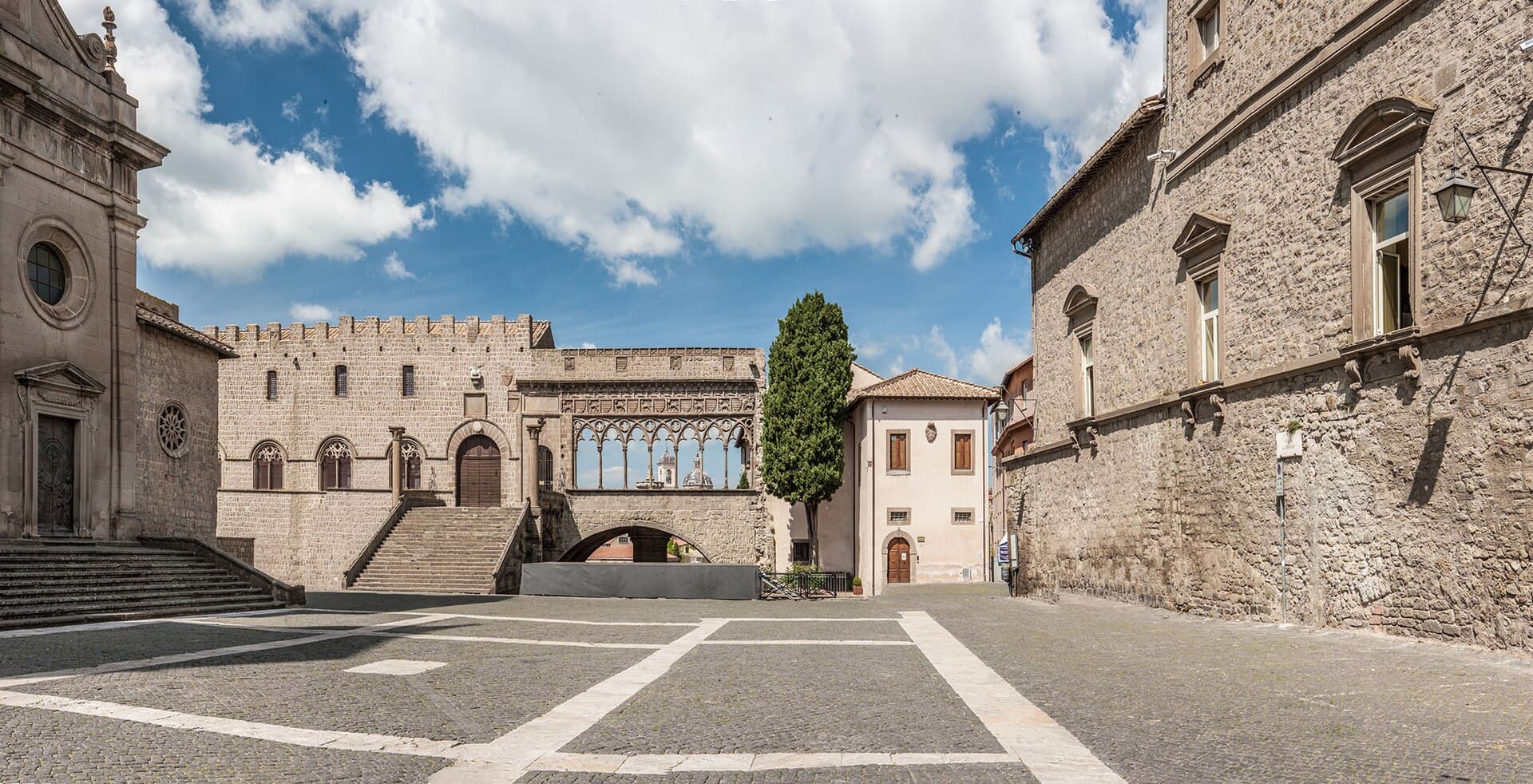
By the 11th century, Viterbo began to gain prominence, first as part of the Papal State and then, in 1095, as a free comune (municipality). Its strategic location along the Via Francigena, a significant pilgrimage route to Rome, further fueled its development, leading to the construction of hospitals, churches, hostels, and early city walls. During the 12th and 13th centuries, Viterbo became a favored papal residence, offering refuge from political unrest in Rome. Popes such as Alexander IV, Urban IV, Clement IV, and Nicholas III resided here, transforming Viterbo into a significant center of Christendom. The Palazzo dei Papi, or Papal Palace, was significantly enlarged between 1255 and 1266 to accommodate the papal court, and its elegant loggia was added in 1267. This period saw Viterbo rivaling Rome as a papal seat, hosting five papal elections and seven popes, and becoming known as the "City of the Popes."
However, Viterbo's importance as a papal residence waned after the papacy moved to Avignon in 1309. The city was later disputed between powerful local families, eventually returning to firm papal control by 1396. In 1927, Viterbo was made a provincial capital. During World War II, the city suffered heavy bombing, with approximately 70% of its structures destroyed or severely damaged, including cultural heritage sites. Despite this devastation, Viterbo was one of the first Italian cities to undergo successful postwar reconstruction, restoring much of its medieval character. Today, its well-preserved medieval quarter, enclosed by walls built from local volcanic stone, stands as a testament to its enduring history.
Viterbo's historic core, encircled by medieval walls, invites exploration. Begin at the Palazzo dei Papi (Papal Palace), a 13th-century Gothic masterpiece and the former papal residence, notable for its elegant loggia and the Sala del Conclave, where popes were once elected. Adjacent to the palace is the Viterbo Cathedral (Duomo di San Lorenzo), a 12th-century Romanesque structure with a striking black and white striped bell tower and a Renaissance facade.
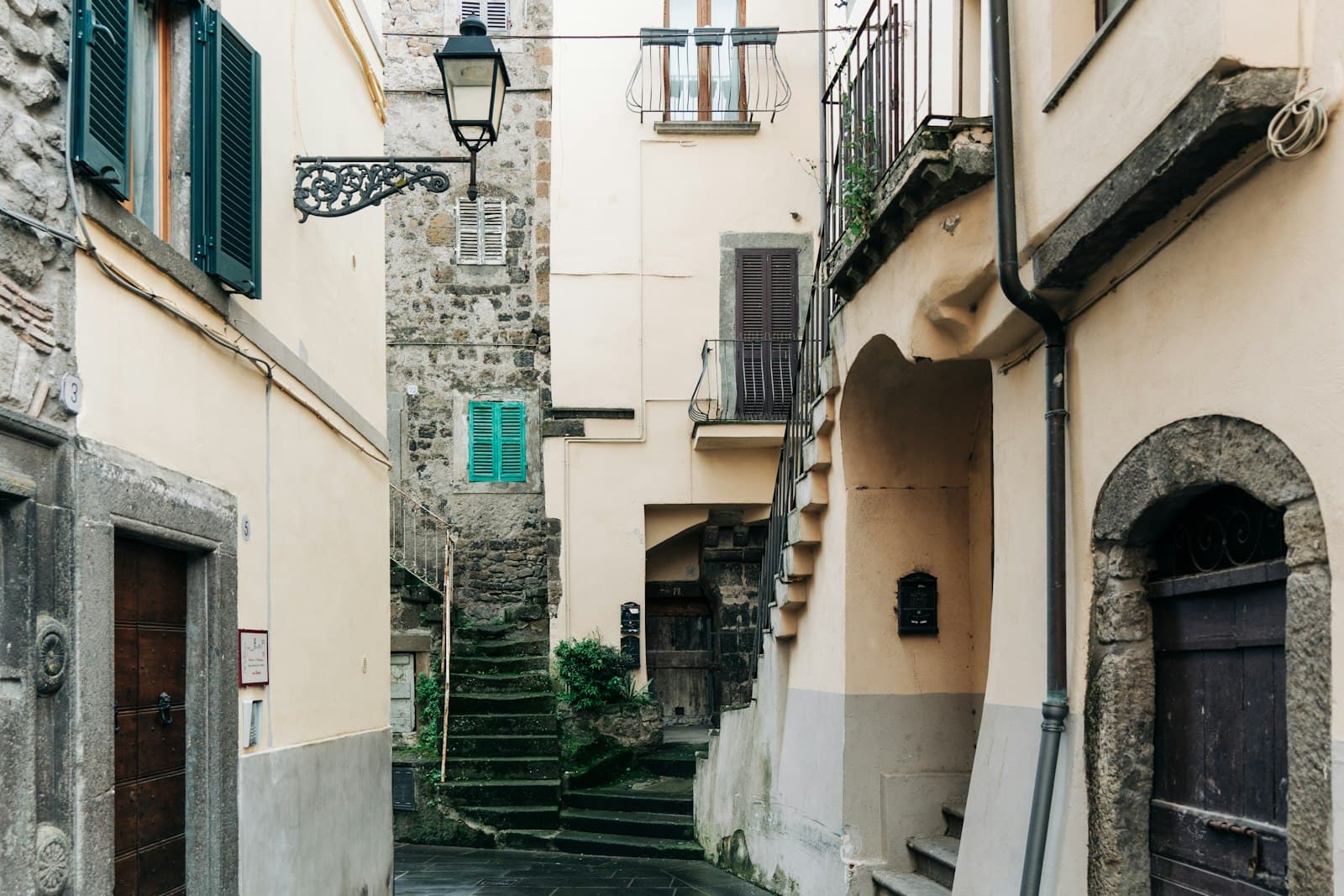
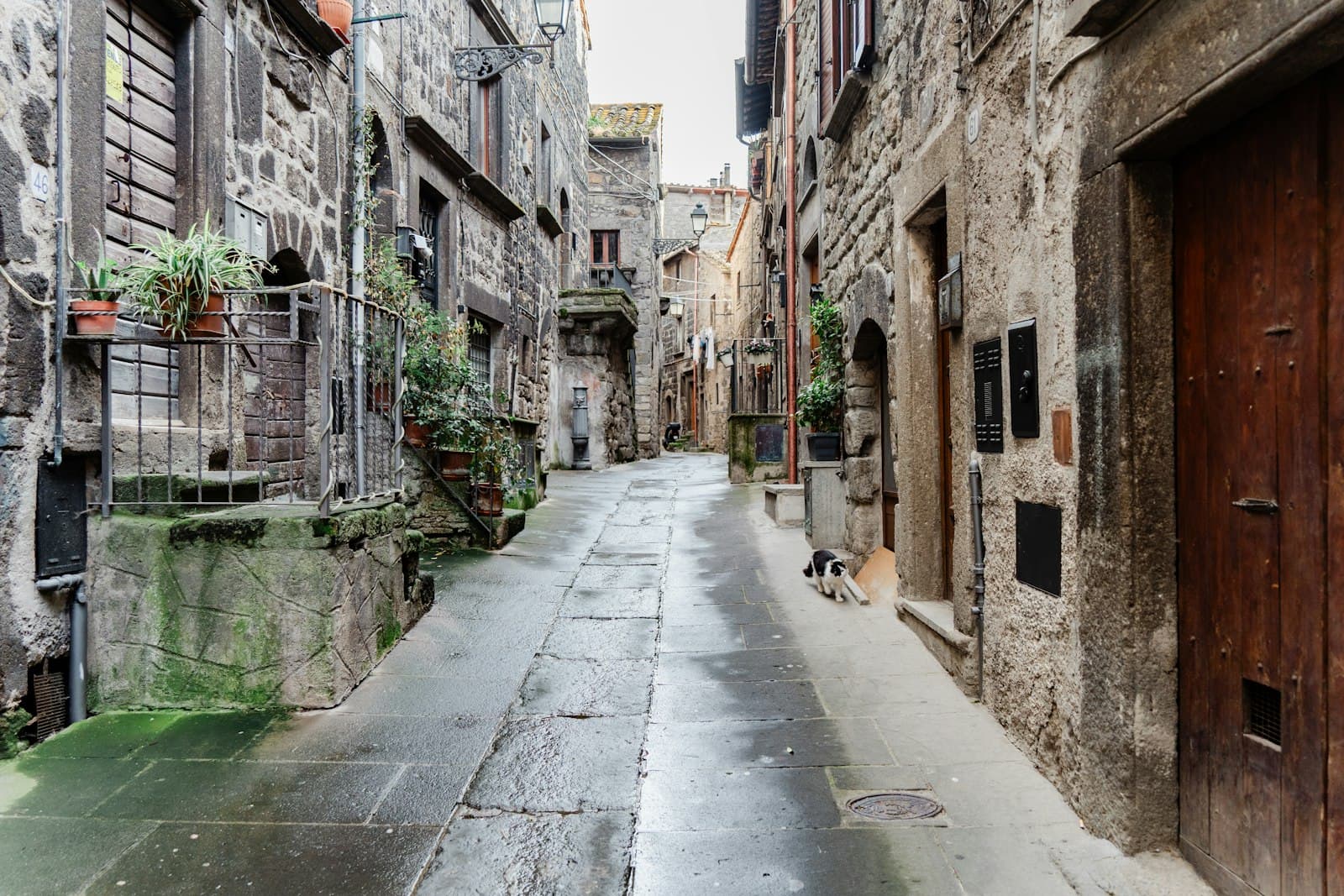
Wander through the San Pellegrino district, considered one of Italy's best-preserved medieval quarters. Its narrow alleys, external staircases known as 'profferli,' and archways offer a genuine step back in time. Explore Piazza del Plebiscito, the civic heart of Viterbo, flanked by the Palazzo dei Priori with its frescoed rooms. Do not overlook the city's numerous monumental fountains, such as the Fontana Grande, which once provided refreshment to pilgrims.
For a unique perspective, take a guided tour of Viterbo Underground, a network of Etruscan and medieval tunnels beneath the city. Outside the walls, the Terme dei Papi offers a luxurious spa experience with its mineral-rich thermal waters, while free thermal springs like Bullicame provide a more natural bathing option.
The best times to visit Viterbo are during spring (mid-April to mid-June) and autumn (September to early October). During these seasons, the weather is mild and pleasant, ideal for walking and exploring the city's historic sites. Summer, from June to August, can be hot and sunny, with temperatures sometimes reaching 37-38°C (99-100°F). While winter is possible, expect shorter daylight hours and occasional rain. Autumn also brings local culinary delights like seasonal chestnut dishes and opportunities for truffle hunting.
Viterbo is easily accessible from Rome by regional train, with journeys typically lasting 1.5 to 2 hours. Driving offers more flexibility for exploring the surrounding Tuscia region, and organized tours from Rome are also available for a stress-free experience. The historic center of Viterbo is largely walkable, with many attractions concentrated within the medieval walls. While Italian is the primary language, some locals in tourist areas may speak English. Viterbo offers a range of accommodation, including hotels, bed and breakfasts, and agriturismos. Be sure to sample local dishes like acquacotta (a vegetable soup) and pappardelle al cinghiale (pasta with wild boar sauce), and try tozzetti almond biscuits. For a unique cultural experience, plan your visit around September 3rd for the annual Macchina di Santa Rosa festival.
- What is Viterbo famous for?
- Viterbo is known for its exceptionally preserved medieval center, its significant papal history (earning it the nickname "City of Popes"), and its natural thermal springs.
- How far is Viterbo from Rome?
- Viterbo is approximately 80 kilometers (50 miles) north of Rome, easily reachable by train, car, or organized tour in about 1 to 2 hours.
- Can you visit the Papal Palace in Viterbo?
- Yes, the Palazzo dei Papi (Papal Palace) is a major attraction in Viterbo, open to visitors who can explore its grand halls, historic architecture, and the Sala del Conclave.
- Are there thermal baths in Viterbo?
- Yes, Viterbo is known for its thermal waters, offering both luxurious spa facilities like Terme dei Papi and free natural hot springs such as Bullicame.
- What is the San Pellegrino district?
- The San Pellegrino district is Viterbo's authentic medieval quarter, renowned for its remarkably preserved architecture, including narrow alleys, stone houses, and distinctive external staircases called 'profferli.'
- Is Viterbo a walkable city?
- Yes, Viterbo's historic center is very walkable, allowing visitors to explore its medieval streets, piazzas, and landmarks on foot.