The Seven Pillars of Wisdom
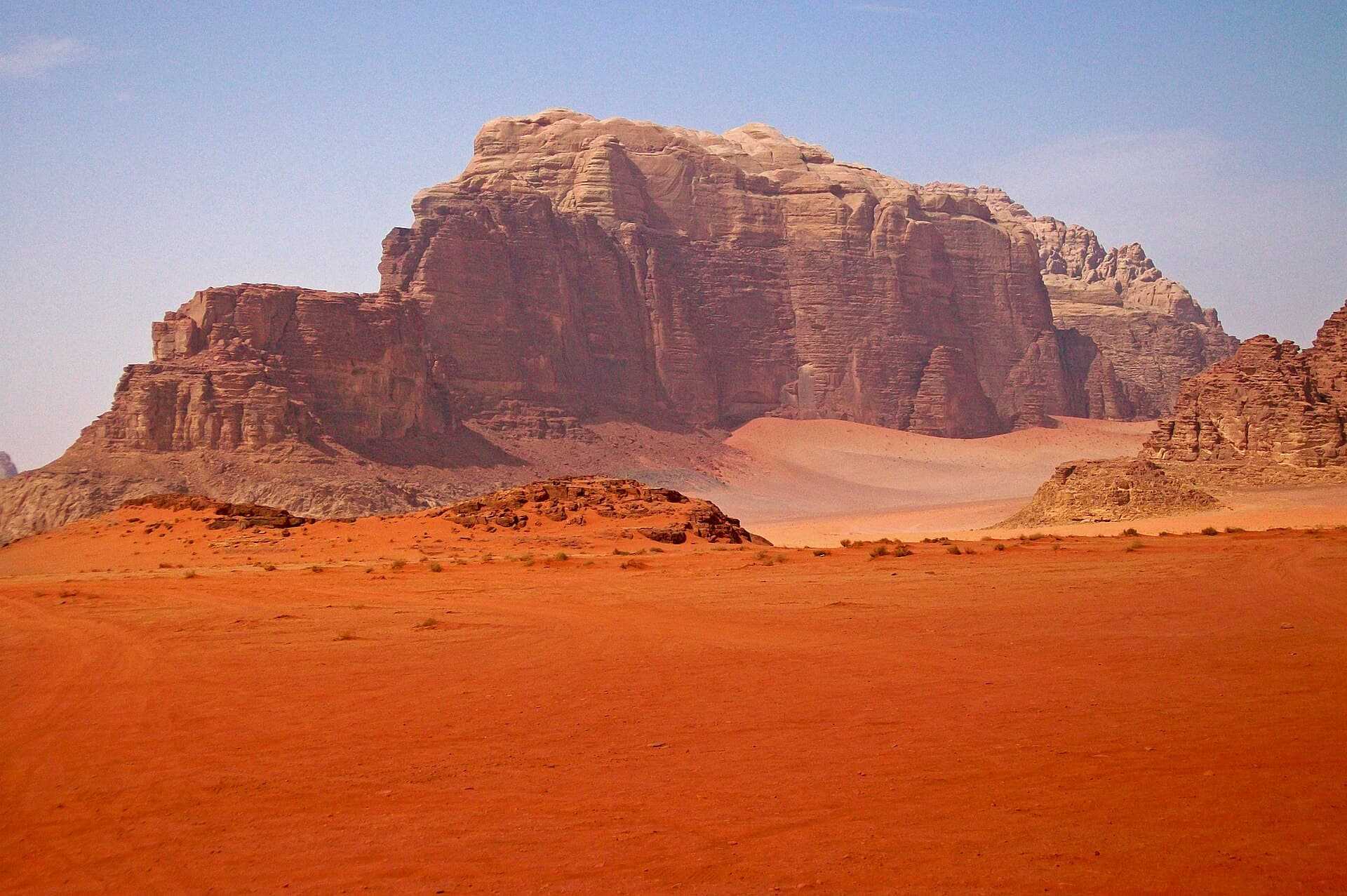
This iconic rock formation, named after T.E. Lawrence's famous book, has a surprising connection to the literary work.
Full story unlocks in the tour
 Daniel Case / CC BY-SA 3.0, via Wikimedia Commons
Self-guided audio walking tour of Wadi Rum — GPS route, offline playback, story-driven narration in 32 languages.
“Where the desert breathes ancient stories and Martian dreams.”
Not the postcards. The stories even locals don't know — whispered in your ear, right where they happened.
This iconic rock formation, named after T.E. Lawrence's famous book, has a surprising connection to the literary work.
Beyond the famous red sands, there's a lesser-known side to Wadi Rum that offers a dramatic shift in scenery.
Thousands of years ago, the inhabitants of Wadi Rum left messages etched into the rock, but these weren't just decorative.
Discover every secret of Wadi Rum
Every address, every reveal in full — in your ear, right where it happened.
You pick your stops. You walk. The voice reveals what the others miss.
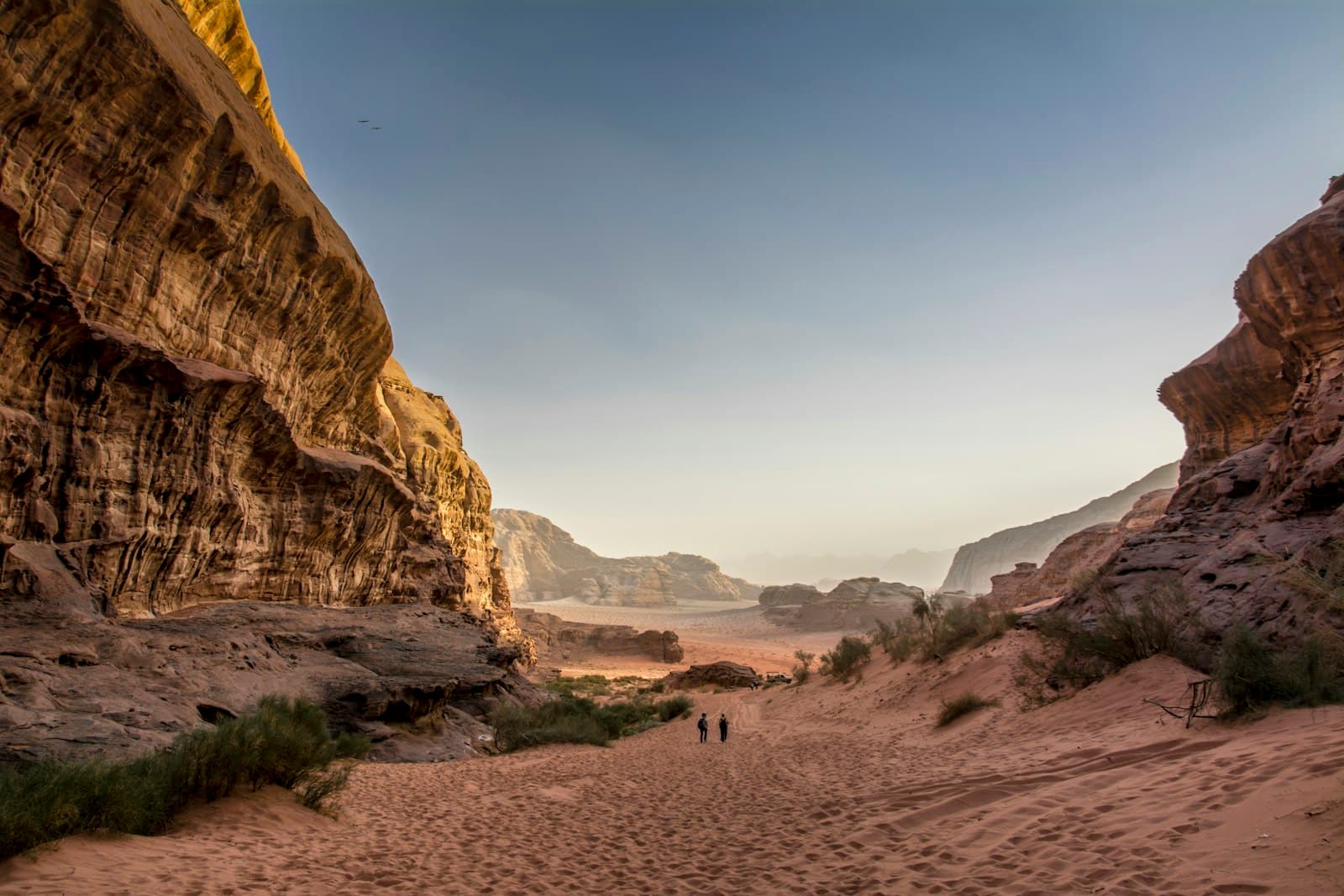
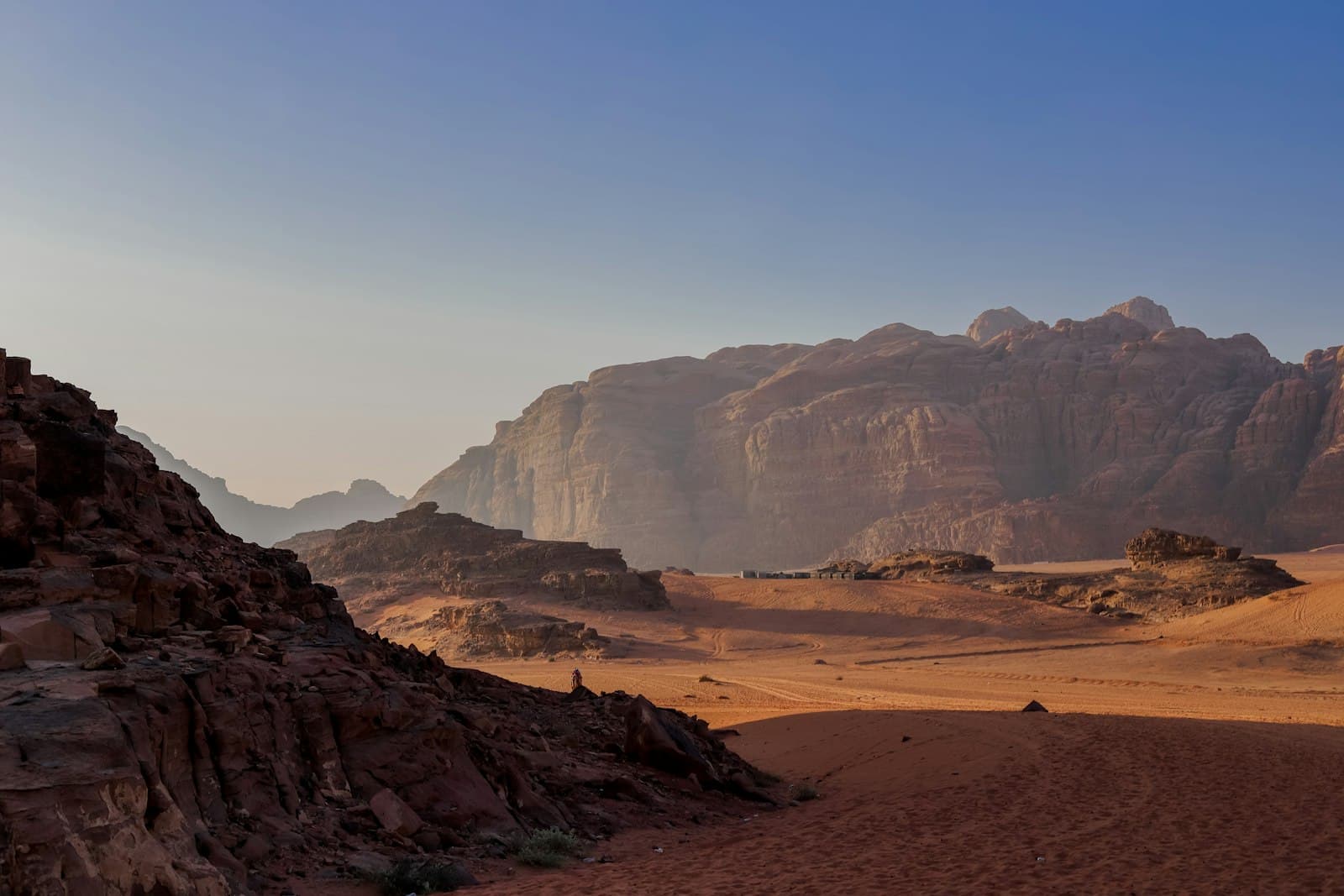
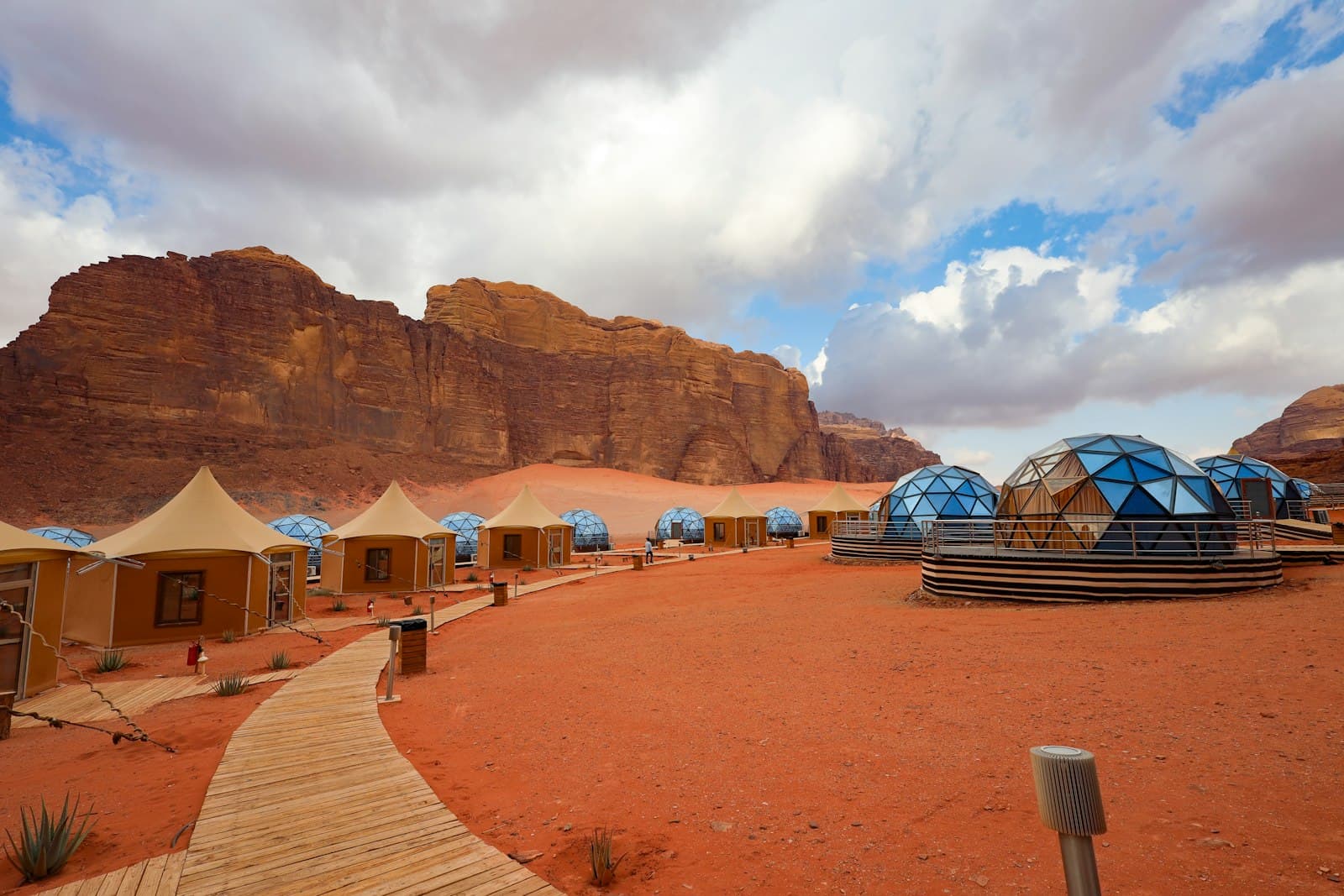
Your self-guided audio tour of Wadi Rum is ready — pick your landmarks, choose your language, and start the moment you arrive.
BuyLume has a built-in augmented-reality guide. Hold your phone up and its camera shows the street ahead of you, with a glowing arrow laid over the real view that always points to your next stop — no map to puzzle over, no wrong turns. Like everything in Lume, it works fully offline.
Wadi Rum, often called the Valley of the Moon, is a vast desert wilderness in southern Jordan, characterized by towering sandstone and granite mountains that dramatically rise from flat valleys of pink and red sands. This protected area, covering 720 square kilometers, is a UNESCO World Heritage site, recognized for both its natural grandeur and cultural heritage. Its otherworldly landscapes, sculpted by millions of years of geological evolution, wind, and water, have even served as a cinematic stand-in for Mars.
The allure of Wadi Rum extends beyond its striking scenery. It is a living landscape where Bedouin communities continue their traditional way of life, offering visitors a unique opportunity to experience desert hospitality, explore ancient sites, and sleep under a blanket of stars. Whether traversing the dunes by jeep, riding camels, or hiking through narrow canyons, Wadi Rum offers a profound connection to a timeless desert environment.
Wadi Rum's history stretches back over 12,000 years, with various human cultures inhabiting this seemingly harsh environment. Evidence of their presence is visible in the form of over 25,000 petroglyphs and 20,000 inscriptions carved into the rock faces, documenting the evolution of human thought, pastoral life, and the development of four North Arabian scripts. These ancient carvings depict humans, animals, and offer insights into the environmental history of a region that has climatically shifted from mildly humid to semi-arid.
Among the notable ancient inhabitants were the Nabataeans, renowned builders of Petra, who left their mark with temple ruins and ingenious water preservation systems. The area also served as a crucial trade route connecting Arabia to the Levant, contributing to its prosperity. Later, in the early 20th century, Wadi Rum gained international recognition as a pivotal location during the Arab Revolt of 1917–18. British officer T.E. Lawrence, famously known as Lawrence of Arabia, spent significant time here, forging relationships with Bedouin tribes and using the desert as an operational base in the campaign against Ottoman rule.
The government of Jordan recognized Wadi Rum's unique natural and cultural significance, declaring it a protected area in 1998. In 2011, the Wadi Rum Protected Area was officially inscribed as a UNESCO World Heritage site, acknowledged for both its cultural criteria, reflecting 12,000 years of human occupation and diverse traditions, and its natural criteria, highlighting its spectacular desert landscapes and geological formations. Today, the majority of Wadi Rum's inhabitants are the Zalabieh Bedouins, who arrived in the region around 1980 and play a crucial role in developing and managing eco-adventure tourism, which benefits the protected area and sustains their traditional lifestyle.
Wadi Rum offers a range of captivating sights and experiences. Many visitors opt for a 4x4 jeep tour, the most popular way to explore the vast terrain and access landmarks. Key stops often include Lawrence's Spring, a natural water source with views of the valley, and Khazali Canyon, a narrow gorge adorned with ancient Nabataean inscriptions. The Seven Pillars of Wisdom rock formation, a dramatic mountain near the visitor center, is another iconic landmark. For those seeking a climb, the Umm Fruth Rock Bridge and Burdah Rock Bridge offer accessible and more challenging ascents, respectively, providing expansive desert views. Do not miss the red sand dunes, particularly the one near Jabal Khazali, which is easy to climb and offers panoramic vistas of Khor al-Ajram. For a deeper immersion, consider an overnight stay in a Bedouin desert camp, complete with traditional dinner and unparalleled stargazing opportunities.
The best times to visit Wadi Rum for pleasant weather and fewer crowds are the shoulder seasons: late February, early May, early August, or mid-November. Spring (March to May) and autumn (September to November) offer comfortable daytime temperatures, though these are also the busiest periods. During spring, the desert can even bloom with wildflowers, and you might spot newborn camels and goats. Summers (June to August) are extremely hot, with daytime highs often exceeding 37°C, making early morning or evening activities preferable. Winters (December to February) bring colder nights, occasionally dropping below freezing, and even a few days of snow at higher elevations.
Entry to the Wadi Rum Protected Area requires a permit, obtainable at the Visitor Center, which most travelers pass upon arrival. While self-driving to the Visitor Center is possible, you cannot enter the protected area with your own car; your desert camp or tour operator will arrange a jeep pickup. The closest airport is King Hussein International Airport in Aqaba, about an hour's drive away. From Aqaba, JETT offers a daily bus service to Wadi Rum, or you can arrange a taxi. If traveling from Amman, a JETT bus to Aqaba or Petra, followed by a taxi or local bus, is a common route. Pack layers of clothing, as desert temperatures fluctuate significantly between day and night. Bring plenty of water, sun protection, and sturdy walking shoes.
Wadi Rum in Korean, in Chinese or in Hebrew — and 29 more languages, every stop narrated by a native voice. The widest language range of any self-guided audio tour.
Available in: