Wadowice Hoofdplein
Er is een specifiek gebakje in Wadowice dat meer is dan alleen een zoete traktatie; het is een directe link naar de jeugd van een toekomstige Paus.
Volledig verhaal ontgrendeld in de tour
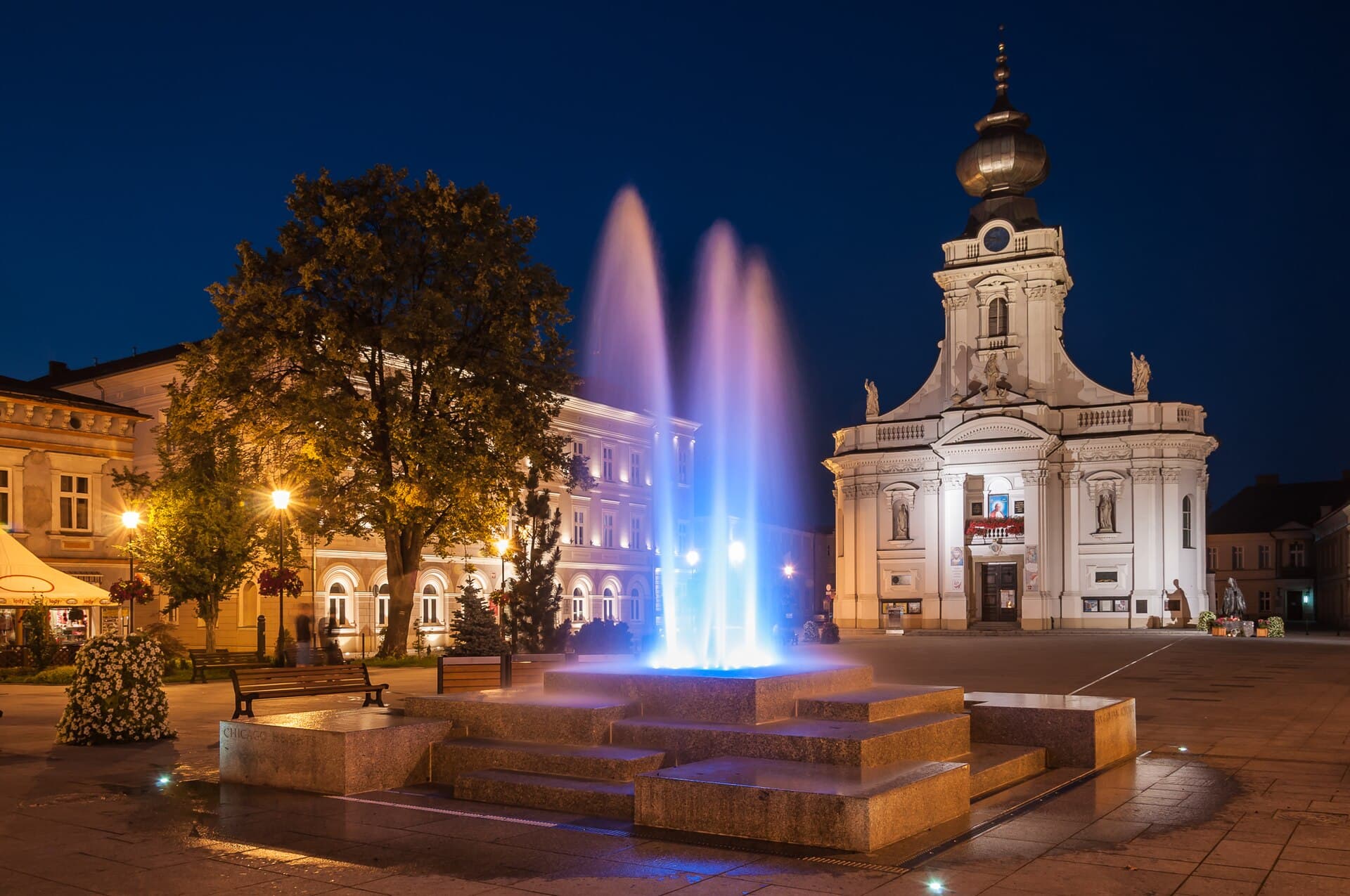 Krzysztof Cabak / CC BY-SA 4.0, via Wikimedia Commons
Zelfgeleide audiowandeling door Wadowice — GPS-route, offline afspelen, meeslepende vertelling in 32 talen.
“Voordat het Vaticaan bestond, vormde een klein stadsplein een toekomstige heilige.”
Niet de ansichtkaarten. De verhalen die zelfs locals niet kennen — gefluisterd in je oor, precies waar ze gebeurden.
Er is een specifiek gebakje in Wadowice dat meer is dan alleen een zoete traktatie; het is een directe link naar de jeugd van een toekomstige Paus.
Kijk goed naar de doopvont in de basiliek en u vindt een detail dat het verbindt met een wereldfiguur, lang voordat hij er een werd.
Het appartement waar Karol Wojtyła opgroeide, bevat een verrassend detail over zijn vroege aspiraties, naast het priesterschap.
Ontdek elk geheim van Wadowice
Elk adres, elke onthulling volledig — in je oor, precies waar het gebeurde.
Jij kiest je stops. Jij wandelt. De stem onthult wat de anderen missen.


Je zelfgeleide audiotour van Wadowice is klaar — kies je bezienswaardigheden, kies je taal en start zodra je aankomt.
KopenLume heeft een ingebouwde augmented-reality-gids. Houd je telefoon omhoog: de camera toont de straat voor je, met een oplichtende pijl over het echte beeld die altijd naar je volgende stop wijst — geen kaart om uit te puzzelen, geen verkeerde afslagen. Zoals alles in Lume werkt het volledig offline.
Wadowice, een rustige stad aan de voet van de Beskid Mały in Zuid-Polen, heeft een uniek predicaat: het is de geboorteplaats van Karol Wojtyła, die later Paus Johannes Paulus II zou worden. Dit stadje, met zijn uitnodigende marktplein en de serene rivier de Skawa in de buurt, biedt een diepgaande reis door het vroege leven van een van de meest invloedrijke figuren van de 20e eeuw. Het is een plek waar het alledaagse leven in Polen verweven is met het buitengewone pad van een toekomstige heilige.
Naast de pauselijke connectie presenteert Wadowice zich als een typisch Poolse stad, waar bezoekers worden uitgenodigd om de lokale ritmes te ervaren. De lucht draagt vaak de geur van kremówki, de roomgebakjes waar de jonge Karol zo dol op was. Een wandeling door de stad onthult een mix van historische architectuur en modern leven, allemaal onder het waakzame oog van de Basiliek van de Presentatie van de Heilige Maagd Maria, een centraal herkenningspunt dat eeuwen van het verhaal van Wadowice heeft meegemaakt.
Wadowice's geregistreerde geschiedenis gaat terug tot de 13e eeuw, met de eerste vermelding in historische documenten uit 1327. Oorspronkelijk een nederzetting aan een handelsroute, ontwikkelde het zich geleidelijk tot een stad. De toekenning van stadsrechten in 1430 door koning Władysław Jagiełło verstevigde zijn status en stimuleerde de groei. Eeuwenlang bleef Wadowice een bescheiden administratief en commercieel centrum binnen het Hertogdom Zator, en later, na de Poolse Delingen, als onderdeel van het Habsburgse Rijk.
De 19e en vroege 20e eeuw brachten geleidelijke modernisering, met de komst van de spoorlijn in de late 19e eeuw die Wadowice verbond met grotere steden zoals Krakau. De geboorte van Karol Wojtyła op 18 mei 1920 plaatste Wadowice echter onherroepelijk op de wereldkaart. Zijn jeugd en vormende jaren in de stad, waar hij lokale scholen bezocht en deelnam aan het parochieleven, legden de basis voor zijn toekomst. De periode tussen de wereldoorlogen in Wadowice, hoewel gekenmerkt door Poolse onafhankelijkheid, was nog steeds een tijd van relatieve eenvoud, diep beïnvloed door katholieke tradities.
Tijdens de Tweede Wereldoorlog leed Wadowice, net als een groot deel van Polen, onder de Duitse bezetting. De stad werd onderdeel van het Generaal Gouvernement en de Joodse bevolking, een aanzienlijk deel van de gemeenschap, werd tragisch gedecimeerd. Karol Wojtyła ervoer zelf de harde realiteit van de oorlog in Krakau, maar de herinneringen en lessen uit zijn opvoeding in Wadowice vormden ongetwijfeld zijn wereldbeeld. Na de oorlog werd Wadowice onderdeel van de Volksrepubliek Polen. Het communistische tijdperk bracht industrialisatie en sociale veranderingen, maar de stad behield haar sterke religieuze identiteit.
De verkiezing van Karol Wojtyła tot Paus Johannes Paulus II in 1978 bracht ongekende aandacht naar Wadowice. De stad transformeerde in een bedevaartsoord, waar miljoenen bezoekers de voetsporen van de geliefde Paus volgden. Deze toename van toerisme leidde tot aanzienlijke ontwikkeling, waaronder de oprichting van musea en verbeteringen aan de infrastructuur. Vandaag de dag omarmt Wadowice zijn pauselijke erfgoed en functioneert het tevens als regionaal centrum. Het blijft zijn historische identiteit balanceren met de eisen van het moderne leven, een plaats van spirituele betekenis en een bewijs van de blijvende erfenis van zijn beroemdste zoon.
Begin uw bezoek bij het Geboortehuis van Johannes Paulus II, nu een modern museum. Het biedt een intieme kijk op het vroege leven van Karol Wojtyła door middel van persoonlijke bezittingen, foto's en interactieve tentoonstellingen. Een paar stappen verderop staat de Basiliek van de Presentatie van de Heilige Maagd Maria, waar hij werd gedoopt en misdienaar was. Binnen kunt u de doopvont en een kapel gewijd aan Johannes Paulus II zien.
Het Hoofdmarktplein (Rynek) is het hart van Wadowice, omringd door historische gebouwen en cafés. Het is de perfecte plek om een kremówka papieska te proberen, het roomgebakje waar de jonge Karol Wojtyła beroemd om was. Vlakbij het plein biedt het Karmelietenklooster 'Na Górce' een vredig toevluchtsoord en een aangenaam uitzicht over de stad. Voor degenen die geïnteresseerd zijn in lokale geschiedenis buiten de pauselijke connectie, biedt het Regionaal Museum in Wadowice inzichten in het verleden van de stad en de regionale cultuur.
De beste tijd om Wadowice te bezoeken is in de lente (april tot juni) of vroege herfst (september tot oktober). Het weer is aangenaam, ideaal om te wandelen en de bezienswaardigheden van de stad te verkennen. De zomer (juli en augustus) is ook populair, maar kan drukker zijn met pelgrims en toeristen. De winters zijn koud, met vaak sneeuw, maar bieden een rustige, reflectieve sfeer, vooral rond Kerstmis.
Wadowice is gemakkelijk bereikbaar per trein of bus vanuit Krakau, met frequente verbindingen. De reis duurt ongeveer een uur. Eenmaal in Wadowice zijn de meeste belangrijke bezienswaardigheden op loopafstand van elkaar rond het Hoofdmarktplein. Er zijn verschillende hotels, pensions en particuliere appartementen beschikbaar voor accommodatie, voor verschillende budgetten. De lokale keuken is traditioneel Pools, met tal van restaurants en cafés die regionale specialiteiten aanbieden. Engels wordt gesproken in de meeste toeristisch georiënteerde etablissementen, maar het leren van een paar basis Poolse zinnen wordt gewaardeerd.
Wadowice — Koreaans, Chinees, Hebreeuws en nog 29 talen, elke stop verteld door een moedertaalspreker. Het grootste taalaanbod van alle zelfgeleide audiotours.
Beschikbaar in: