Lion's Mound
The prominent Lion's Mound, a symbol of victory, did not always stand upon the battlefield.
Full story unlocks in the tour
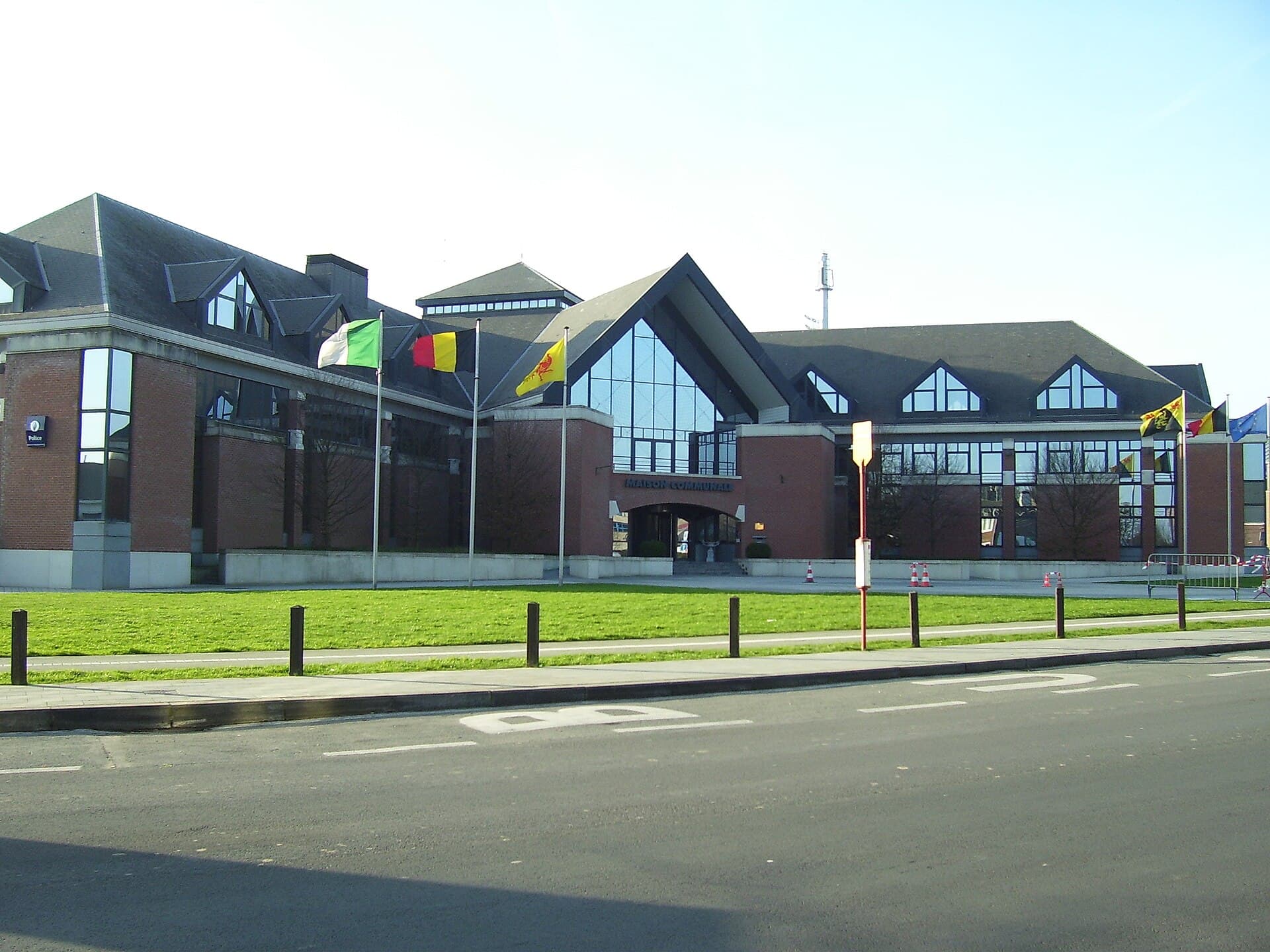 LLN / CC BY-SA 3.0, via Wikimedia Commons
Self-guided audio walking tour of Waterloo — GPS route, offline playback, story-driven narration in 32 languages.
“Where a 'wet meadow' changed the course of empires.”
Not the postcards. The stories even locals don't know — whispered in your ear, right where they happened.
The prominent Lion's Mound, a symbol of victory, did not always stand upon the battlefield.
A critical defensive stronghold during the battle, Hougoumont Farm holds a literary secret within its old walls.
The celebrated battle that reshaped Europe is not actually named after the precise location where the fiercest fighting unfolded.
Discover every secret of Waterloo
Every address, every reveal in full — in your ear, right where it happened.
You pick your stops. You walk. The voice reveals what the others miss.


Your self-guided audio tour of Waterloo is ready — pick your landmarks, choose your language, and start the moment you arrive.
BuyLume has a built-in augmented-reality guide. Hold your phone up and its camera shows the street ahead of you, with a glowing arrow laid over the real view that always points to your next stop — no map to puzzle over, no wrong turns. Like everything in Lume, it works fully offline.
Waterloo, Belgium, a seemingly quiet town in Walloon Brabant, carries the weight of a monumental moment in European history. Just 16 kilometers south of Brussels, its name is synonymous with the final defeat of Napoleon Bonaparte in 1815. This pivotal battle not only ended Napoleon's reign but also redrew the political map of the continent, ushering in a new era.
Beyond its battlefield, Waterloo offers a blend of historic landmarks, engaging museums, and serene countryside. The town, whose name means 'wet meadow,' has evolved from a small hamlet known for its expert pavers to a thriving community that seamlessly blends its profound past with modern life. Whether you are a history enthusiast or simply seeking a compelling escape, Waterloo provides a journey through a defining chapter of human history.
The origins of Waterloo can be traced back to 1102, when it was first mentioned as a small hamlet situated at the edge of the Sonian Forest. Its strategic location along a major road connecting Brussels with a southern coal mine made it a crucial resting and protection point for travelers and merchants, particularly those transporting coal. The area became part of the Duchy of Brabant in 1183, with Brussels later becoming its capital.
Waterloo began to develop significantly in the 17th century. A royal chapel, built in 1687, was later expanded to become the Church of Saint Joseph of Waterloo. By the 19th century, the town had grown into a bustling village, known for its windmills, breweries, distilleries, a sugar factory, and notably, several paving companies that earned it an international reputation.
The town's destiny was irrevocably altered on June 18, 1815, with the Battle of Waterloo. This decisive engagement, fought between Napoleon's French Imperial Army and the Seventh Coalition (a British-led force under the Duke of Wellington and a Prussian army under Field Marshal Blücher), marked Napoleon's final defeat and the end of the Napoleonic Wars. The battle, described by Wellington as 'the nearest-run thing you ever saw in your life,' lasted approximately eight hours and concluded with Napoleon's retreat and subsequent abdication. The battlefield itself, located south of the village near Mont St. Jean, has largely remained unchanged since the 19th century, serving as a powerful testament to the events of that fateful day.
The Lion's Mound (Butte du Lion) is Waterloo's most recognizable landmark, an artificial hill offering sweeping views of the battlefield from its summit, accessible by climbing 226 steps. At its base, the Memorial 1815 Museum provides an immersive experience into the battle's history, featuring a 3D film and extensive exhibits. Nearby, the Panorama of the Battle of Waterloo houses a monumental circular painting depicting the conflict.
Hougoumont Farm served as a critical defensive point for the Allied forces during the battle and now hosts exhibitions detailing its role. The Wellington Museum, housed in the Duke of Wellington's former headquarters, displays artifacts and tells the story from the Allied perspective. Conversely, Napoleon's Last Headquarters (Le Caillou) offers insights into the French command, preserving the farm where Napoleon spent the night before the battle. For a unique local flavor, visit the Mont-Saint-Jean Farm, which served as a field hospital during the battle and now includes a museum, restaurant, and a microbrewery.
The ideal time to visit Waterloo is during spring and summer, from April to September, when the weather is mild and the countryside is in full bloom. June is particularly lively, as the anniversary of the Battle of Waterloo on the 18th brings special events and large-scale reenactments. Autumn offers beautiful foliage and fewer crowds, while winter provides a quieter atmosphere, though some attractions may have reduced hours.
Waterloo is easily accessible, situated about 20 kilometers south of Brussels. Trains from Brussels to Waterloo take approximately 20 minutes, and local buses or taxis can connect you to the battlefield and other attractions. For those driving, the town is accessible via the E19 motorway, though navigating the Brussels ring road can be congested. The main battlefield sites, including the Memorial 1815, Lion's Mound, Panorama, and Hougoumont Farm, can often be visited with a single ticket or pass. Parking in Waterloo is generally free, though many zones are 'blue zones' requiring a parking disc. Most museums are open on Sundays and public holidays, but it's always wise to check specific opening hours, especially for Mont-Saint-Jean Farm, which is closed on Mondays and Tuesdays. While individual visits do not require advance booking, groups are advised to reserve tickets.
Waterloo in Korean, in Chinese or in Hebrew — and 29 more languages, every stop narrated by a native voice. The widest language range of any self-guided audio tour.
Available in: