The imposing rock-cut figure in Weligama holds a secret about an ancient king's miraculous recovery.
Honeplus / CC BY-SA 3.0, via Wikimedia CommonsWeligama
“Where golden sands meet ancient echoes, and the ocean invites you to ride its gentle rhythm.”
Weligama, as no one tells it.
Not the postcards. The stories even locals don't know — whispered in your ear, right where they happened.
The iconic stilt fishermen, a symbol of Sri Lanka, have a surprising origin story tied to wartime scarcity.
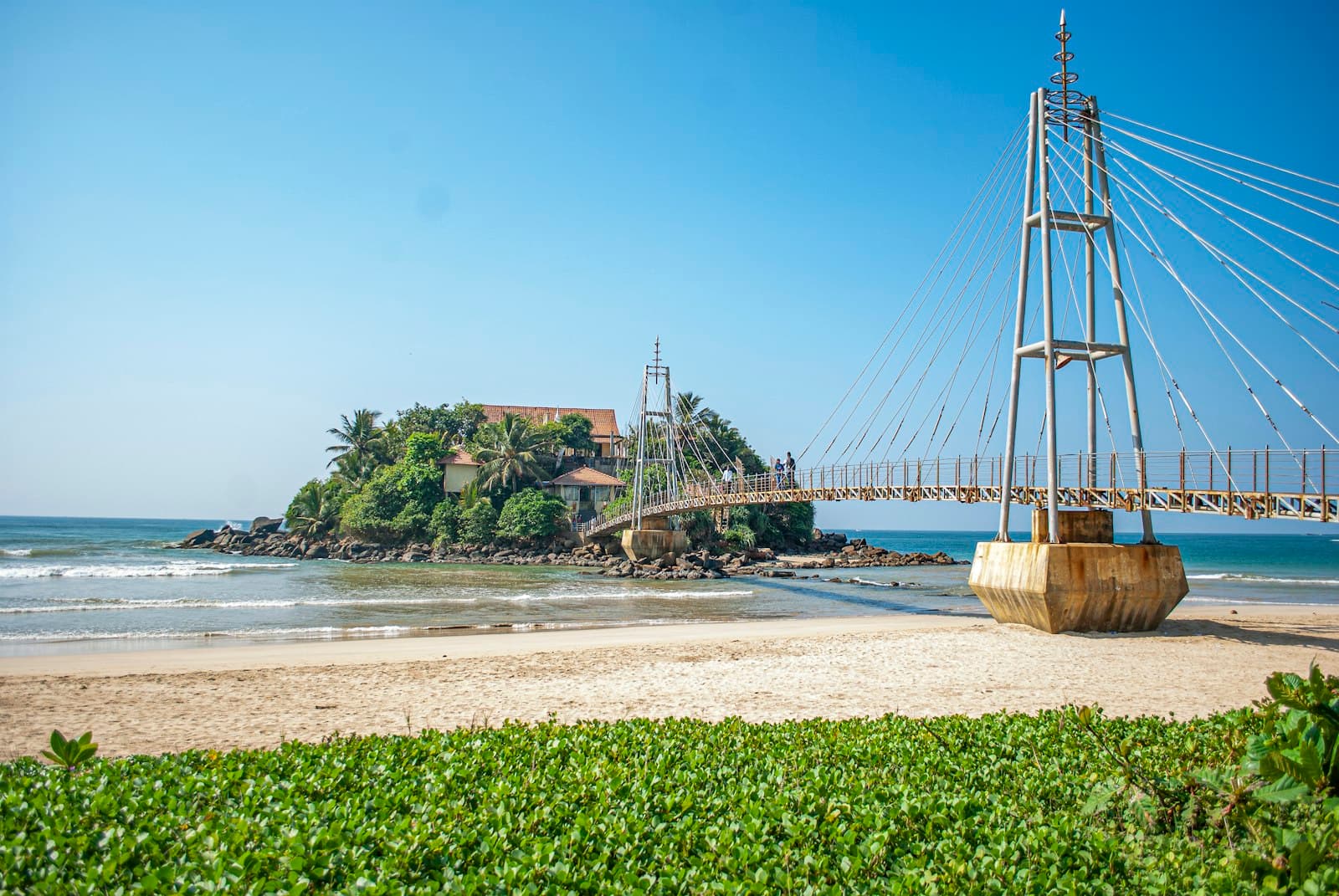
Just a short wade from Weligama Beach, a tiny private island holds a captivating past.
Discover every secret of Weligama
Every address, every reveal in full — in your ear, right where it happened.
You pick your stops. You walk. The voice reveals what the others miss.
How long do you have in Weligama?
No tours available yet. Check back soon — we're preparing them.
The story of Weligama
Weligama, meaning "sandy village" in Sinhala, lives up to its name with a sweeping bay of golden sands along Sri Lanka's southern coast. Approximately 144 kilometers south of Colombo, this coastal town has evolved from a traditional fishing community into a cherished destination, particularly known for its beginner-friendly surf.
The town offers a relaxed pace where the scent of salt and fresh fish fills the mornings, and surf instructors lead lessons before 7 AM. Beyond the waves, Weligama blends a lively local economy, centered on fishing, with a growing influx of boutique hotels, cafes, and international visitors drawn to its peaceful atmosphere and proximity to cultural and natural attractions.
Early Beginnings and Ancient Legends
The historical development of Weligama is deeply intertwined with Sri Lanka's broader coastal narrative. Archaeological evidence suggests human activity in the region dates back to ancient times, with nearby temple complexes like Agrabodhi Rajamaha Vihara constructed around the 3rd century BCE. Weligama likely emerged as a fishing village, integral to ancient maritime trade and cultural exchange along the southern coast.
One of Weligama's most significant historical landmarks is the Kushtarajagala Statue, a 3-meter-high bas-relief carving of Bodhisattva Avalokiteśvara. Carved into the rock face between the 6th and 9th centuries AD, local lore attributes its creation to an ancient king who found a miraculous cure for a severe skin disease in Weligama Bay.
Colonial Influences and Traditional Crafts
The Portuguese, who arrived in the 16th century, gave Weligama the name "Beligao" and recognized its favorable position on the bay. They introduced the art of lace weaving, a handicraft that continues to be practiced by women along the coast today. Later, the Dutch East India Company (VOC) utilized Weligama as a guard post, with the surrounding region producing cinnamon, roof and floor tiles, and bricks for the company.
Modern Transformations and Resilience
Weligama gained prominence as the birthplace of Weligama Sri Sumangala Thero (1825–1875), a respected Buddhist scholar who played a key role in the 19th-century Buddhist revival. In the late 20th century, infrastructure improvements included the Kapparathota Fisheries Harbour. The town faced a devastating blow during the 2004 Indian Ocean tsunami, which destroyed 15% of the area, damaged over 2,200 houses, and resulted in 469 reported deaths. However, through international aid and community efforts, Weligama has recovered, transforming into a center for surfing and eco-tourism by the 2010s.
Weligama Bay is the heart of the town, a long, wide expanse of sandy beach with gentle waves perfect for learning to surf. Numerous surf schools line the shore, offering lessons for beginners and board rentals. Even if surfing isn't your pursuit, the beach is ideal for relaxing, walking, and enjoying the coastal ambiance.
Just offshore, Taprobane Island presents a picturesque sight with its historic villa, a short wade away at low tide. The Kushtarajagala Statue, an ancient rock carving dating back to the 6th-9th century, offers a glimpse into Weligama's deep historical roots. You can also observe the traditional craft of lace weaving, introduced by the Portuguese, still practiced by local women along the beach road.
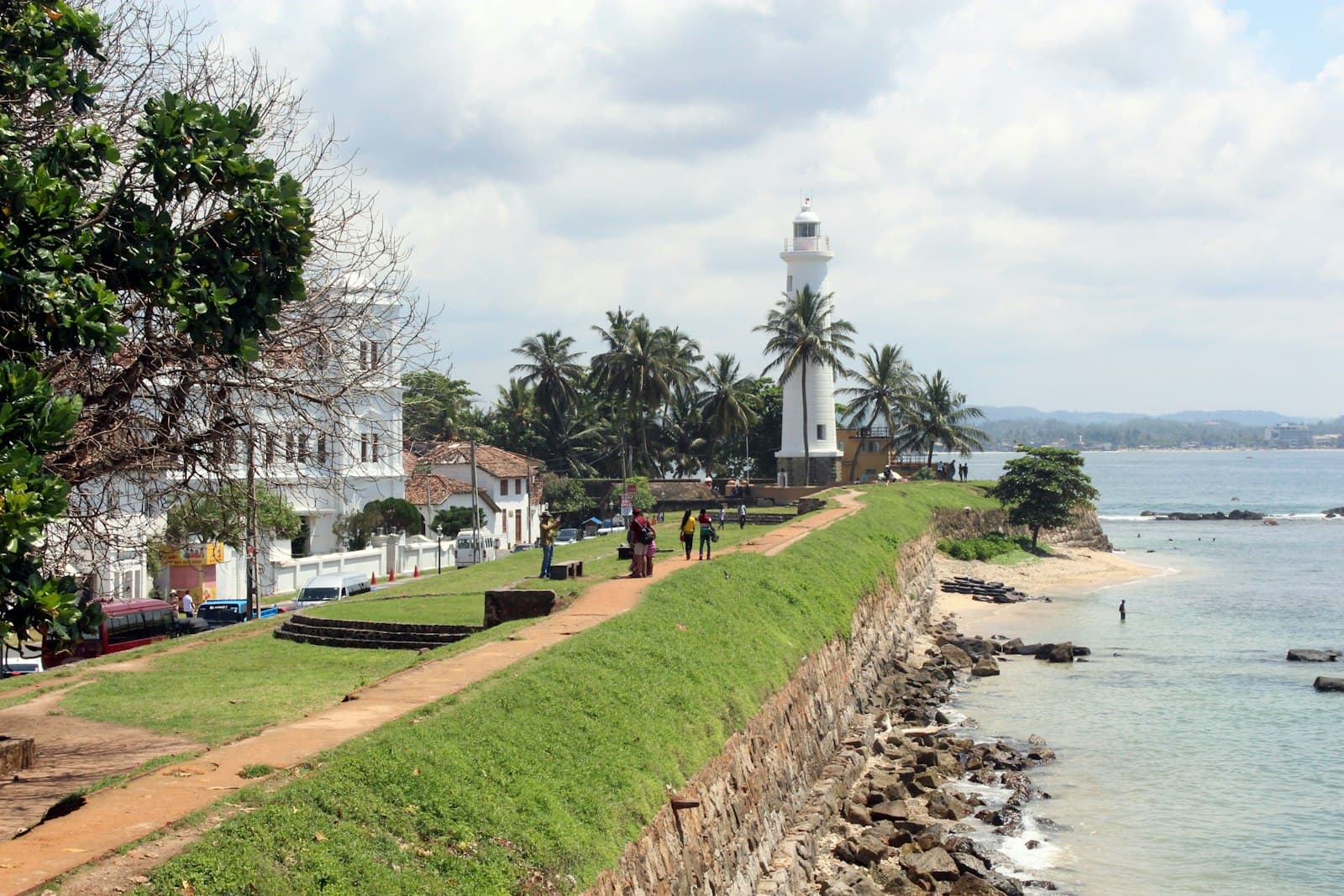
For a taste of local life, visit the Kapparathota Fisheries Harbour and the bustling fish market in the mornings, where the day's catch is auctioned. Day trips to nearby attractions are easily arranged, including whale and dolphin watching tours from Mirissa (especially December to April), and visits to the Handunugoda Tea Estate to learn about Ceylon tea production. The historic Galle Fort, a UNESCO World Heritage site, is also a short drive away.
The best time to visit Weligama is during the dry season, which runs from November to April. During these months, you can expect consistent surf conditions with smaller swells and lighter winds, making it ideal for both beginner and experienced surfers. The weather is generally warm and sunny, with average temperatures between 26-28°C (79-82°F) and less rainfall. While July and August are also dry, they can be busier with summer vacationers, so consider February, March, April, June, or September for fewer crowds.
Weligama is approximately 144 kilometers south of Colombo. From Bandaranaike International Airport (CMB), a car or private transfer via the Southern Expressway takes about 3-4 hours. The scenic coastal train from Colombo Fort to Weligama offers a beautiful journey, lasting 2.5 to 4 hours, with affordable tickets. Once in Weligama, tuk-tuks are readily available for short rides to nearby beaches and attractions, typically costing 60-100 LKR per kilometer. Scooters and motorbikes can also be rented from local shops.
Weligama is considered safe for tourists, including solo travelers. Tap water is not potable, so bottled water is recommended. While Weligama itself doesn't have formal coworking spaces, it's a popular spot for remote workers, especially from November to April, with improving Wi-Fi speeds in hotels and cafes.
- Is Weligama good for beginner surfers?
- Yes, Weligama is widely considered one of the best places in Sri Lanka, and even the world, for beginner surfers. The bay offers a long, wide sandy bottom with gentle, consistent waves, making it ideal for learning and practicing.
- How many days should I spend in Weligama?
- Three to five days is a good amount of time to experience surfing, explore the town, and take a day trip or two. If you're planning to work remotely or join a surf camp, a week or two is common.
- What are some popular day trips from Weligama?
- Popular day trips include whale watching in Mirissa (December to April), visiting the historic Galle Fort, exploring the Handunugoda Tea Estate, and visiting nearby beaches like Mirissa Beach or Jungle Beach.
- Where can I see the stilt fishermen?
- The iconic stilt fishermen can be seen along the coastal road between Ahangama and Koggala, about 10-15 kilometers west of Weligama. Kathaluwa and the area near Koggala Lagoon are reliable spots. The best times for photographs are sunrise or the hour before sunset.
- Is Weligama suitable for families?
- Yes, Weligama's sandy beach and gentle waves make it a good destination for families, especially those with children who want to play in calm waters or learn to surf.
- What kind of food can I expect in Weligama?
- Weligama offers a delightful mix of local and international flavors, with a strong emphasis on fresh seafood. You can find beachfront restaurants serving grilled seafood, alongside Sri Lankan staples like hoppers, kottu roti, and coconut sambol.