Maiden Street
Onderzoek een bepaalde muur langs Maiden Street en je ontdekt misschien een tastbare echo uit een turbulente tijd.
Volledig verhaal ontgrendeld in de tour
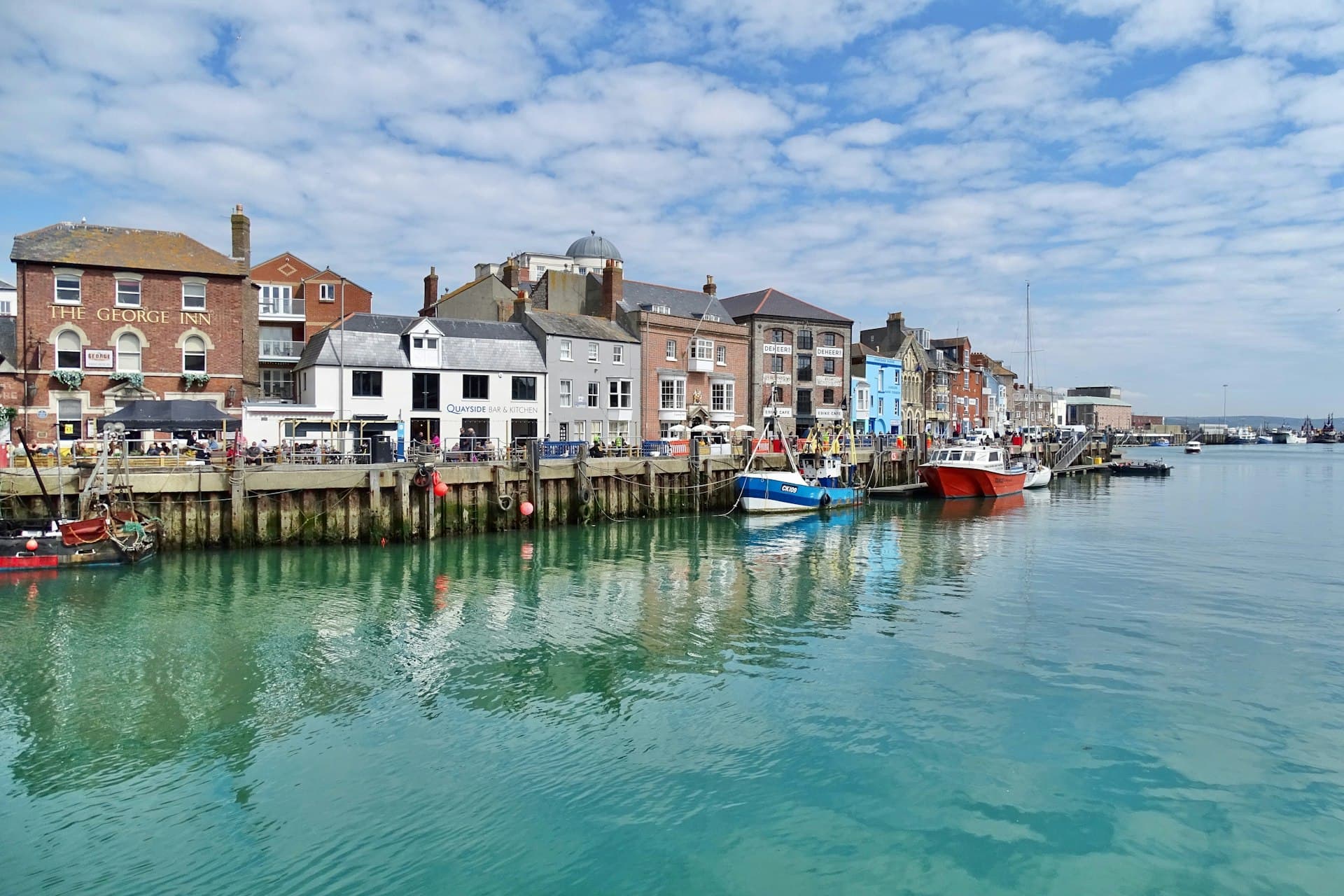 Photo: Belinda Fewings / Unsplash
Zelfgeleide audiowandeling door Weymouth — GPS-route, offline afspelen, meeslepende vertelling in 32 talen.
“Waar Georgische elegantie oud kustdrama ontmoet.”
Niet de ansichtkaarten. De verhalen die zelfs locals niet kennen — gefluisterd in je oor, precies waar ze gebeurden.
Onderzoek een bepaalde muur langs Maiden Street en je ontdekt misschien een tastbare echo uit een turbulente tijd.
Deze Victoriaanse kustversterking bewaakt meer dan alleen militaire kronieken in zijn ondergrondse gangen.
De voorliefde van Koning George III voor Weymouth ging verder dan de zeelucht; het betrof een bijzondere methode om de helende wateren binnen te gaan.
Ontdek elk geheim van Weymouth
Elk adres, elke onthulling volledig — in je oor, precies waar het gebeurde.
Jij kiest je stops. Jij wandelt. De stem onthult wat de anderen missen.


Je zelfgeleide audiotour van Weymouth is klaar — kies je bezienswaardigheden, kies je taal en start zodra je aankomt.
KopenLume heeft een ingebouwde augmented-reality-gids. Houd je telefoon omhoog: de camera toont de straat voor je, met een oplichtende pijl over het echte beeld die altijd naar je volgende stop wijst — geen kaart om uit te puzzelen, geen verkeerde afslagen. Zoals alles in Lume werkt het volledig offline.
Weymouth, een kustplaats aan de kust van Dorset in Engeland, biedt een samensmelting van klassieke allure en natuurlijke grandeur. De uitgestrekte gouden zandstranden en zacht glooiende wateren trekken al eeuwenlang bezoekers, wat de reputatie als een typisch Brits badplaatsbestemming heeft gevestigd. De stad wordt omlijst door sierlijke Georgische architectuur, vooral langs de Esplanade, die uitkijkt over de baai.
Voorbij het strand bruist de historische haven van Weymouth van de activiteit, omzoomd met felgekleurde vissersboten, eetgelegenheden aan het water en onafhankelijke winkels. Als toegangspoort tot de UNESCO Werelderfgoedlijst van de Jurassic Coast, biedt Weymouth toegang tot dramatische kliffen, oude geologische formaties en kansen om fossielen te ontdekken. Het milde klimaat en de zonnige uitstraling van de stad maken het een uitnodigende plek voor wie op zoek is naar kustrust of buitenavontuur.
Het verhaal van Weymouth is zichtbaar verweven in de stof van de stad, van het King's Statue dat koninklijk patronaat herdenkt tot het Victoriaanse Nothe Fort dat de haveningang bewaakt. Het is een plek waar men kan genieten van klassiek kustvermaak, belangrijke historische locaties kan verkennen en reizen kan ondernemen naar enkele van de meest herkenbare natuurlijke bezienswaardigheden van Engeland.
De hedendaagse stad Weymouth ontstond uit twee afzonderlijke middeleeuwse nederzettingen: Weymouth op de zuidoever van de rivier de Wey en Melcombe Regis op de noordoever. Weymouth was tegen de 10e eeuw een be charterde borough en zeehaven, betrokken bij de import van wijn, terwijl Melcombe Regis, opgemerkt in de 11e eeuw, tegen 1310 een gelicentieerde wolhaven werd. Deze twee steden, die een ongemakkelijke haven deelden, betwistten regelmatig het economische leven ervan. De Zwarte Dood wordt verondersteld Engeland te zijn binnengekomen via de haven van Melcombe Regis in 1348, en verspreidde zich snel over het land.
In 1571 voegde Koningin Elizabeth I de concurrerende steden formeel samen tot één borough via een parlementswet, en jaren later werden ze fysiek verbonden door de eerste brug over de haven. De haven speelde ook een rol in belangrijke historische gebeurtenissen, leverde schepen voor het beleg van Calais in 1347 en stuurde zes schepen om de Spaanse Armada in 1588 te confronteren, waarbij zelfs het Spaanse schip 'San Salvador' werd veroverd. Het midden van de 17e eeuw zag Weymouth diep betrokken bij de Engelse Burgeroorlog, met bewijzen van veldslagen die vandaag de dag nog zichtbaar zijn.
De evolutie van Weymouth tot een gevierd badplaats begon in de Georgische periode, toen zeebaden als heilzaam voor de gezondheid werd beschouwd. De beslissing van Koning George III om Weymouth zijn zomerresidentie te maken in 1789, waarbij hij veertien keer terugkeerde tussen 1789 en 1805, verhoogde de populariteit en status van de stad aanzienlijk. Deze koninklijke goedkeuring leidde tot de bouw van veel van de Georgische gebouwen die vandaag de dag nog langs de Esplanade te zien zijn. De komst van de spoorlijn in 1857 verstevigde de aantrekkingskracht van Weymouth als toeristische bestemming en ondersteunde de bloeiende havenhandel met de Kanaaleilanden.
In de 20e eeuw kreeg Weymouth te maken met uitdagingen, waaronder bombardementen tijdens de Tweede Wereldoorlog. Het diende als een cruciaal vertrekpunt voor Amerikaanse troepen op weg naar Normandië in 1944. In de tweede helft van de eeuw zag de populariteit van de stad als badplaats een daling met de opkomst van betaalbare buitenlandse vakanties, en de havenhandel nam uiteindelijk af. Weymouth is echter doorgegaan met het omarmen van zijn erfgoed en natuurlijke schoonheid, en blijft een belangrijke bestemming aan de kust van Dorset.
Weymouth Beach, met zijn gouden zand en kalme wateren, is een centrale trekpleister en biedt klassieke strandervaringen zoals ezelritjes en Punch and Judy shows. Wandel langs de Esplanade en bewonder de Georgische architectuur en de kenmerkende Jubilee Clock Tower, opgericht in 1887 ter ere van het Gouden Jubileum van Koningin Victoria.
De historische Weymouth Harbour is een levendige wijk met felgekleurde vissersboten, pubs en restaurants. Overweeg een korte ferrytocht voor een ander perspectief of kijk hoe de Town Bridge omhoog gaat om schepen doorgang te verlenen. Voor een weids uitzicht over Weymouth Bay en de Jurassic Coast, verken Nothe Fort, een Victoriaanse militaire vesting met ondergrondse gangen en een museum.
Op korte rijafstand ligt het opvallende Chesil Beach, een 18 mijl lange kiezelbank, uitstekend voor het ontdekken van fossielen en kustwandelingen. Het Isle of Portland, verbonden door een dam, biedt extra kustpaden, vuurtorens en de overblijfselen van Portland Castle. Natuurliefhebbers kunnen Radipole Lake Nature Reserve verkennen, een toevluchtsoord voor vogels kijken nabij het stadscentrum. Sandsfoot Castle, een verwoest Tudor artillerie fort, biedt intrigerende geschiedenis en uitzicht over Portland Harbour.
Voor een unieke lokale ervaring, zoek naar de Osmington White Horse, een krijttekening op een heuvel met een interessante link naar Koning George III.
Weymouth kan het best worden ervaren van de late lente tot het vroege najaar, meestal van juni tot september, wanneer het weer mild is en de sfeer levendig. Juli en augustus zijn de drukste periodes, met de zonnigste en droogste omstandigheden, waarbij de gemiddelde dagtemperaturen ongeveer 20-21°C (68-70°F) bereiken. Deze maanden zijn ideaal voor strandplezier, watersporten en buitenactiviteiten.
Lente en herfst bieden mildere temperaturen en minder drukte, waardoor ze geschikt zijn voor het verkennen van de Jurassic Coast en wandelingen op het platteland. Hoewel regen het hele jaar door mogelijk is, is deze doorgaans lichter en minder frequent tijdens de zomermaanden.
Weymouth is zowel over de weg als per spoor goed bereikbaar. Directe treindiensten vanaf London Waterloo duren ongeveer 2,5 uur. Met de auto is de stad te bereiken via de A354 vanaf Dorchester. Regelmatige busdiensten verbinden Weymouth ook met grote steden in het zuiden van Engeland.
Eenmaal in Weymouth zijn het stadscentrum en de belangrijkste attracties grotendeels beloopbaar. Voor verdere verkenningen, zoals de Jurassic Coast of het Isle of Portland, is er een openbaar bussysteem beschikbaar, waaronder de X53 Jurassic Coaster service. Een kleine roeibootveerboot vaart over de haven en biedt een snelle en schilderachtige alternatief voor lopen.
Parkeren is mogelijk op diverse parkeerplaatsen rond de stad en de haven. Openbare toiletten bevinden zich verspreid over de stad. Het is raadzaam om de openingstijden en prijzen van specifieke attracties van tevoren te verifiëren, aangezien deze seizoensgebonden kunnen fluctueren.
Weymouth — Koreaans, Chinees, Hebreeuws en nog 29 talen, elke stop verteld door een moedertaalspreker. Het grootste taalaanbod van alle zelfgeleide audiotours.
Beschikbaar in: