Theresian Military Academy
De oudste militaire academie ter wereld bewaart een geheim motto, dat veel zegt over de ambities van zijn Habsburgse stichters.
Volledig verhaal ontgrendeld in de tour
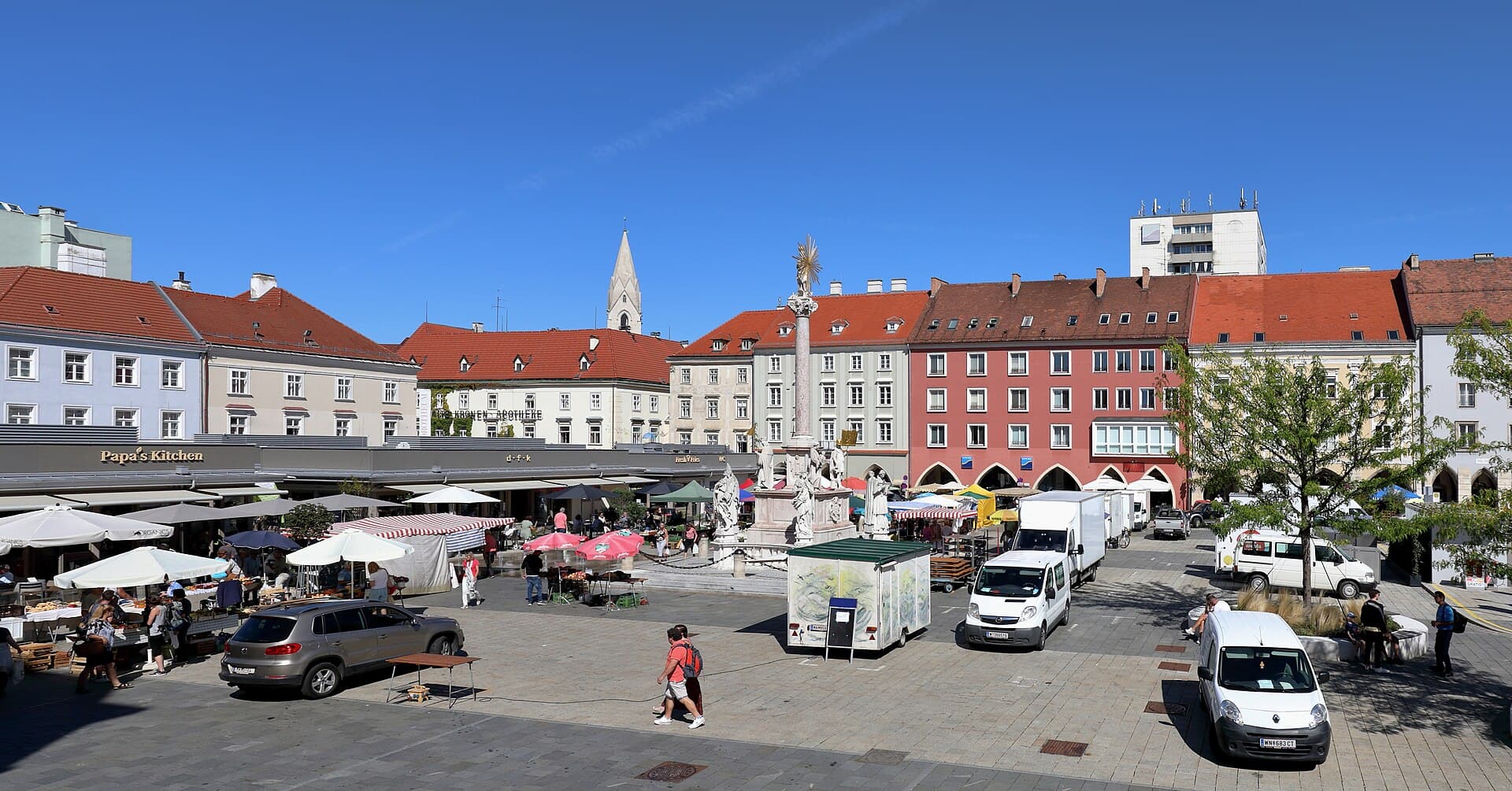 C.Stadler/Bwag / CC BY-SA 4.0, via Wikimedia Commons
Zelfgeleide audiowandeling door Wiener Neustadt — GPS-route, offline afspelen, meeslepende vertelling in 32 talen.
“Waar keizerlijke erfenissen en militaire precisie de blijvende geest van een stad vormen.”
Niet de ansichtkaarten. De verhalen die zelfs locals niet kennen — gefluisterd in je oor, precies waar ze gebeurden.
De oudste militaire academie ter wereld bewaart een geheim motto, dat veel zegt over de ambities van zijn Habsburgse stichters.
De kathedraal van de stad herbergt een hemels geheim, dat al eeuwenlang zichtbaar is.
Keizer Maximiliaan I, 'de laatste der ridders', koos een verrassende laatste rustplaats, met een bijzondere regeling voor een deel van zijn wezen.
Ontdek elk geheim van Wiener Neustadt
Elk adres, elke onthulling volledig — in je oor, precies waar het gebeurde.
Jij kiest je stops. Jij wandelt. De stem onthult wat de anderen missen.


Je zelfgeleide audiotour van Wiener Neustadt is klaar — kies je bezienswaardigheden, kies je taal en start zodra je aankomt.
KopenLume heeft een ingebouwde augmented-reality-gids. Houd je telefoon omhoog: de camera toont de straat voor je, met een oplichtende pijl over het echte beeld die altijd naar je volgende stop wijst — geen kaart om uit te puzzelen, geen verkeerde afslagen. Zoals alles in Lume werkt het volledig offline.
Wiener Neustadt, vaak de 'Nieuwe Stad van Wenen' genoemd, is een stad in Neder-Oostenrijk met een boeiend verleden. Gesticht in 1192 met het losgeld voor Richard Leeuwenhart, werd het opgevat als een verdedigingsbolwerk tegen dreigingen uit het oosten. Tegenwoordig biedt deze stad, gelegen ongeveer 50 kilometer ten zuiden van Wenen, een unieke mix van historische betekenis en moderne dynamiek.
De middeleeuwse kern van de stad, met zijn indrukwekkende vestingwerken en historische gebouwen, staat in contrast met het hedendaagse stadsleven. Wiener Neustadt diende eeuwenlang als keizerlijke residentie, met name voor keizer Frederik III en zijn zoon Maximiliaan I, wat een onuitwisbare stempel heeft gedrukt op de architectuur en instellingen. Het is een plek waar je de voetsporen van keizers en militaire leiders kunt volgen, oude ondergrondse gangen kunt verkennen en kunt genieten van de levendige sfeer van de voetgangerszones en markten.
Naast de historische bezienswaardigheden is Wiener Neustadt ook een toegangspoort tot de Wener Alpen, die mogelijkheden biedt voor buitenactiviteiten en uitstapjes in de omliggende natuurlijke schoonheid. Of je nu aangetrokken wordt door het rijke verleden, culturele evenementen of de rol als regionaal centrum, Wiener Neustadt presenteert zich als een fascinerende bestemming die zijn geschiedenis balanceert met een vooruitstrevende geest.
De oorsprong van Wiener Neustadt is nauw verbonden met een dramatische historische gebeurtenis: het losgeld voor koning Richard Leeuwenhart. In 1192 gebruikte hertog Leopold V van Oostenrijk een aanzienlijk deel van het losgeld om de stad te stichten, die strategisch werd gepositioneerd als een verdedigingsfort tegen aanvallen uit het oosten, met name de Magyaren. Deze daad vestigde Wiener Neustadt als een geplande stad, in plaats van een stad die organisch was gegroeid.
Gedurende de 13e en 14e eeuw diende Wiener Neustadt als residentie voor de Habsburgse dynastie. De periode van grootste welvaart kwam in de 15e eeuw, toen keizer Frederik III het tot zijn favoriete zetel maakte, omdat hij Wenen verkoos boven de lokale weerstand daar. Onder zijn bewind kende de stad een aanzienlijke opleving, met talrijke projecten om het keizerlijke belang te benadrukken, waaronder de uitbreiding van de oude Babenbergse citadel en de verheffing van Wiener Neustadt tot bisdom in 1469. Frederik III's zoon, Maximiliaan I, werd geboren in het kasteel in 1459 en ligt begraven in de Sint-Joriskerk op het kasteelterrein.
Het militaire belang van de stad bleef in latere eeuwen voortduren. In 1751 transformeerde keizerin Maria Theresia het kasteel tot de Theresiaanse Militaire Academie, die de oudste militaire academie ter wereld blijft. Deze instelling werd opgericht om officieren voor het Oostenrijkse leger op te leiden en speelde een cruciale rol in het vormgeven van de militaire leiding van het land.
Ondanks zijn sterke vestingwerken en strategische belang, kende Wiener Neustadt aanzienlijke uitdagingen. Het werd in de 16e eeuw bezet door Ottomaanse troepen. Tijdens de Tweede Wereldoorlog leed de stad aanzienlijke schade door geallieerde bombardementen, die gericht waren op de rangeerterreinen en fabrieken. Naar schatting werd 60% van de gebouwen verwoest, met slechts 18 van de 4.000 gebouwen die onbeschadigd bleven. Na de oorlog vonden er aanzienlijke wederopbouwactiviteiten plaats, wat leidde tot een mix van middeleeuws erfgoed en moderne ontwikkeling die Wiener Neustadt vandaag de dag kenmerkt.
Begin uw verkenning op de Hauptplatz (Grote Markt), een levendig centrum met voetgangerszones, cafés en markten. Vanaf hier zijn de imposante dubbele torenspitsen van de Wiener Neustadt Kathedraal, ook bekend als de Kathedraal van Onze Lieve Vrouw, een prominent herkenningspunt. Deze 13e-eeuwse Romaanse kerk, met gotische toevoegingen, pronkt met indrukwekkende architectuur en een boeiende kunstgeschiedenis.
Een korte wandeling brengt u naar het Wiener Neustadt Kasteel, dat de Theresiaanse Militaire Academie huisvest, de oudste militaire academie ter wereld. Hoewel het een functionerende academie is, bieden rondleidingen inzicht in de geschiedenis en het terrein, waaronder de Sint-Joriskerk, waar keizer Maximiliaan I begraven ligt. Het kasteelterrein omvat ook het Academiepark, een ruim groen gebied met uitzicht op de historische Watertoren, een ander stadsicoon.
Duik in de unieke ondergrondse verdedigingswerken van de stad bij de Kasematten & Museum St. Peter an der Sperr. Deze 16e-eeuwse vestingwerken bevatten Oostenrijks enige bewaard gebleven Strada Coperta, een ondergrondse verdedigingsgang, die nu wordt gebruikt voor rondleidingen en evenementen. Het aangrenzende St. Peter an der Sperr Museum, gevestigd in een voormalig klooster, toont de 800-jarige geschiedenis van de stad en herbergt kostbare artefacten zoals een keizerlijke kelk. Overweeg voor een breder uitzicht een uitstapje naar het Natuurpark Hohe Wand, dat weidse vergezichten biedt vanaf de Skywalk en de uitkijktoren.
De beste tijd om Wiener Neustadt te bezoeken voor aangenaam weer en buitenactiviteiten is van mei tot september. Gedurende deze maanden liggen de gemiddelde dagtemperaturen tussen 20°C en 25°C, ideaal voor sightseeing en verkenning. Juli is doorgaans de warmste maand, met een gemiddelde maximumtemperatuur van 25°C en de meeste zonneschijn. Hoewel juli ook de hoogste neerslag kent, is de regenval het hele jaar door over het algemeen gematigd. Voor culturele evenementen en de charme van de oude stad biedt de late zomer of vroege herfst mild weer en gouden tinten, met festivals zoals het Bösendorfer Festival.
Wiener Neustadt ligt gunstig op ongeveer 50 kilometer ten zuiden van Wenen en is gemakkelijk bereikbaar. Regelmatige treindiensten verbinden Wenen met Wiener Neustadt, met een reistijd van ongeveer 30 minuten, waardoor het geschikt is voor een dagtocht. De stad is ook met de auto bereikbaar via de A2 Süd Autobahn of de S4 Mattersburger Schnellstraße.
Eenmaal in Wiener Neustadt zijn veel van de belangrijkste bezienswaardigheden in het stadscentrum op loopafstand van elkaar en het treinstation. Openbaar vervoer binnen de stad is over het algemeen goed. Voor degenen die met de auto reizen, zijn er parkeergarages beschikbaar, waar doorgaans uurtarieven of dagtarieven worden berekend. De lokale valuta is de Euro (€). Hoewel Duits de primaire taal is, wordt Engels vaak gesproken in toeristische gebieden.
Wiener Neustadt — Koreaans, Chinees, Hebreeuws en nog 29 talen, elke stop verteld door een moedertaalspreker. Het grootste taalaanbod van alle zelfgeleide audiotours.
Beschikbaar in: