El Kochbrunnen
El manantial termal más famoso de Wiesbaden no es solo para remojarse.
La historia completa se desbloquea en el tour
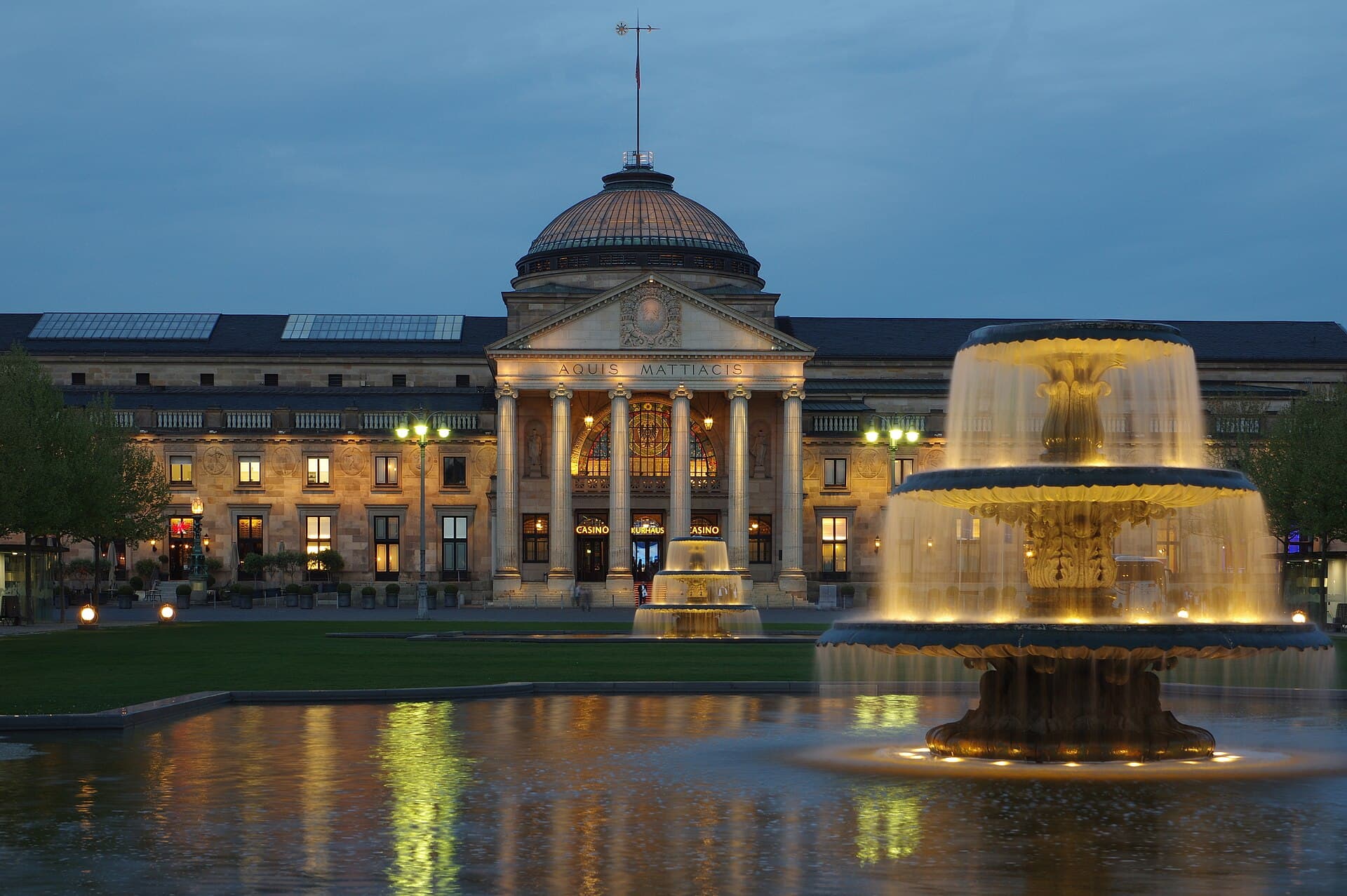 Berthold Werner / CC BY-SA 3.0, via Wikimedia Commons
Tour de audio autoguiado de Wiesbaden — ruta GPS a pie, reproducción offline, narración en 32 idiomas.
“Donde la historia romana y la elegancia de la Belle Époque se encuentran con el poder curativo del agua.”
No las postales. Las historias que ni los locales conocen — al oído, justo donde ocurrieron.
El manantial termal más famoso de Wiesbaden no es solo para remojarse.
Un gran casino del siglo XIX en Wiesbaden guarda un secreto literario.
Este histórico ferrocarril ofrece vistas panorámicas, pero su fuente de energía es sorprendentemente elemental.
Descubre todos los secretos de Wiesbaden
Cada dirección, cada revelación al completo — a tu oído, justo donde ocurrió.
Eliges tus paradas. Caminas. La voz te revela lo que los demás ignoran.
Tu tour de audioguía por Wiesbaden te espera — elige tus lugares, tu idioma y empieza al llegar.
ComprarLume incluye una guía de realidad aumentada. Levanta el móvil y su cámara muestra la calle que tienes delante, con una flecha luminosa sobre la imagen real que siempre apunta a tu próxima parada — sin mapas que descifrar, sin giros equivocados. Como todo en Lume, funciona completamente sin conexión.
Wiesbaden, la capital del estado alemán de Hesse, es una ciudad donde los ecos de la antigüedad romana se mezclan a la perfección con la grandeza de la Belle Époque. Conocida como una de las ciudades balneario más antiguas de Europa, su nombre, "baños de pradera", insinúa su perdurable conexión con sus manantiales termales. Con 15 manantiales de agua caliente aún activos en el centro de la ciudad, Wiesbaden sigue atrayendo a visitantes que buscan las propiedades restauradoras de sus aguas ricas en minerales.
Más allá de sus aguas terapéuticas, Wiesbaden presenta una elegante fachada de arquitectura del siglo XIX, un testimonio de su pasado como destino favorito de la aristocracia europea y figuras culturales como Goethe, Dostoievski y Wagner. El clima templado de la ciudad, resguardado por las montañas Taunus, contribuye a su reputación como la "Niza del Norte". Hoy en día, Wiesbaden ofrece una sofisticada combinación de bienestar, cultura y un ritmo relajado, invitando a la exploración de sus grandes edificios, parques frondosos y la región vinícola circundante de Rheingau.
A diferencia de muchas ciudades alemanas, la arquitectura de Wiesbaden anterior a la guerra sobrevivió en gran medida a la Segunda Guerra Mundial, conservando sus impresionantes edificios del siglo XIX. Esto permite un viaje único a través del tiempo, desde ruinas romanas hasta opulentos balnearios, todo dentro de una ciudad que mantiene un encanto tranquilo.
La historia de Wiesbaden comienza en la profunda antigüedad, con evidencia de asentamientos que datan del Neolítico. La ocupación continua está documentada después de que se estableciera un fuerte romano en el año 6 d.C., albergando una unidad de caballería auxiliar. Los manantiales termales, mencionados por Plinio el Viejo en su Naturalis Historia alrededor del 77 d.C., ya eran famosos, utilizados para la recreación por los caballos del ejército romano y posiblemente como fuente de tinte para el cabello rojo. El asentamiento romano, conocido como Aquae Mattiacorum ("Aguas de los Mattiaci"), se convirtió en la capital de la región de Mattiac. Un fragmento de su muralla defensiva, el Heidenmauer (Muralla Pagana), aún se puede ver hoy en día.
Después de que los romanos partieran en el siglo IV, los francos finalmente desplazaron a los alamanes en el área de Wiesbaden durante el siglo VI. El nombre "Wisibada" ("baño en los prados") apareció por primera vez entre 828 y 830, mencionado por el biógrafo de Carlomagno, Eginardo. Wiesbaden se convirtió en ciudad imperial del Sacro Imperio Romano Germánico en 1232, aunque fue destruida por el arzobispo de Maguncia en 1242 durante un conflicto con el emperador Federico II. La ciudad volvió al control de la Casa de Nassau en 1270.
El verdadero florecimiento de la ciudad comenzó en el siglo XIX, cuando se convirtió en la capital del Ducado de Nassau en 1806. Un plan de desarrollo general en 1818, conocido como el "Pentágono Histórico", sentó las bases de su elegante estilo clasicista. Durante este período, Wiesbaden se transformó en una majestuosa residencia, con edificios icónicos como el Palacio de la Ciudad (1837–1841) y el lujoso Kurhaus (1907) con su famoso casino. La ciudad se convirtió en un centro de vida social y un destino vacacional favorito para la aristocracia europea, lo que le valió el apodo de "Niza del Norte" debido a su clima templado y su ambiente lujoso. El Kaiser Guillermo II la visitaba con frecuencia, encargando el elaborado Kurhaus, que sigue siendo el edificio balneario más ornamentado de Alemania. En 1946, Wiesbaden se convirtió en la capital del recién creado estado de Hesse.
A diferencia de muchas ciudades alemanas, la arquitectura de Wiesbaden anterior a la guerra sobrevivió en gran medida a la Segunda Guerra Mundial, conservando sus impresionantes edificios del siglo XIX. Esto permitió a la ciudad conservar gran parte de su elegancia histórica, un contraste notable con otros centros urbanos que sufrieron una extensa reconstrucción de posguerra.
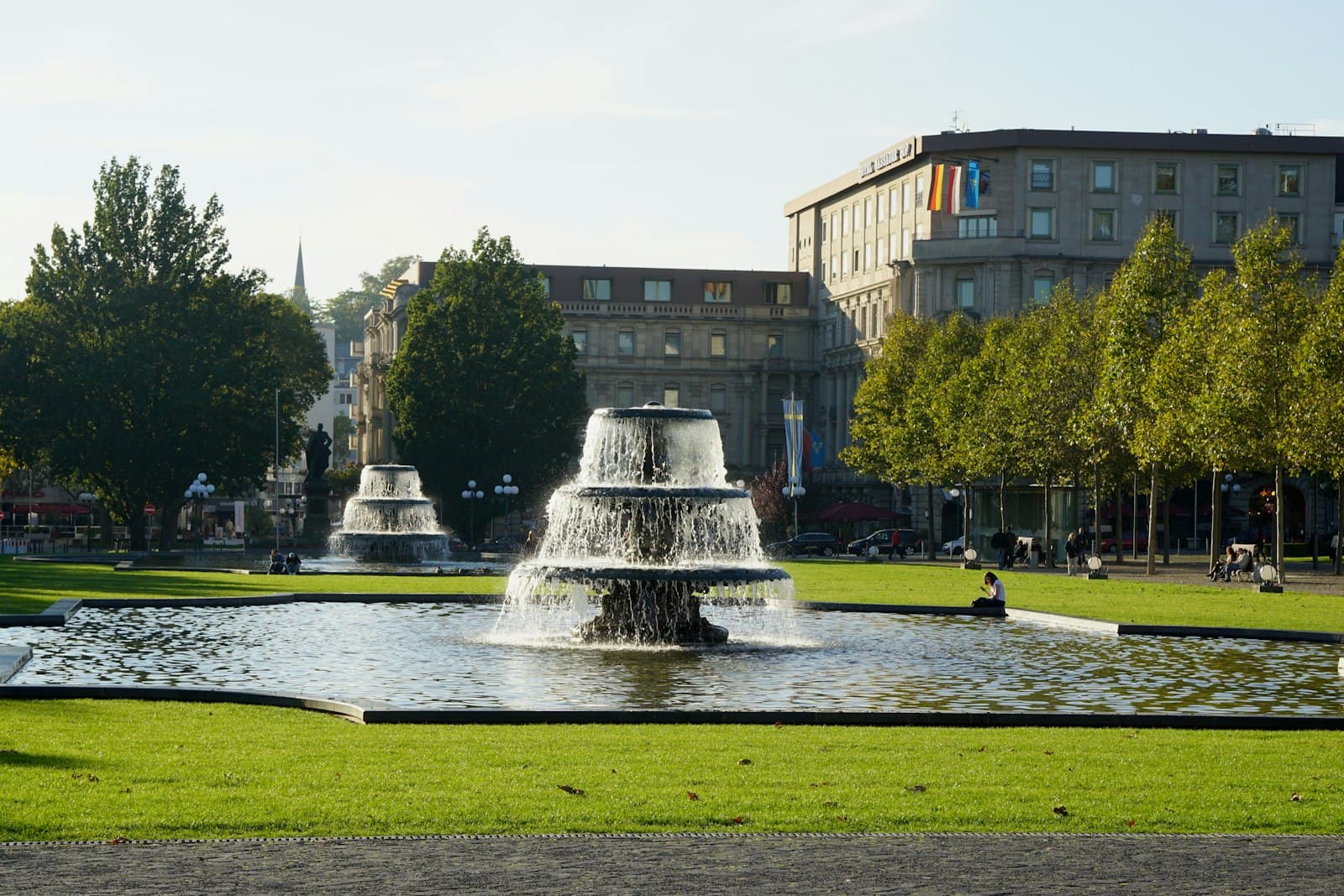
Comience su exploración en el Kurhaus Wiesbaden, un magnífico edificio neoclásico con elementos Art Nouveau, que alberga un reconocido casino y sirve como centro cultural. Adyacente a él se encuentra el Bowling Green, un césped cuidado enmarcado por la elegante columnata del Kurhaus. Pasee por la Wilhelmstraße, considerada una de las calles comerciales más exclusivas de Alemania, bordeada de fachadas neoclásicas, neorrenacentistas y Jugendstil.
Ascienda al Neroberg a través de su histórico funicular impulsado por agua, el Nerobergbahn, para disfrutar de amplias vistas de Wiesbaden y el valle del Rin. En la cima, descubra la Iglesia Ortodoxa Rusa (Griechische Kapelle), construida en la década de 1850 como mausoleo con distintivas cúpulas doradas. En el centro de la ciudad, la llamativa Marktkirche (Iglesia del Mercado) de ladrillo rojo, terminada en 1862, se erige como el edificio más alto de Wiesbaden y un ejemplo prominente de arquitectura neogótica. La Schlossplatz (Plaza del Palacio), rodeada por el Antiguo Ayuntamiento, el Nuevo Ayuntamiento y la Marktkirche, es el corazón histórico de la ciudad. No se pierda el Kochbrunnen, el manantial termal más caliente de Wiesbaden, donde podrá observar sus humeantes aguas ricas en minerales. Para vislumbrar los orígenes romanos de la ciudad, busque los restos de la Heidenmauer (Muralla Pagana).
Wiesbaden se disfruta mejor desde finales de primavera hasta principios de otoño, específicamente de mediados de mayo a mediados de septiembre, cuando el clima es templado y soleado. Las temperaturas promedio durante el verano (junio-agosto) oscilan entre 18 y 20 °C (65 y 68 °F), lo que lo hace ideal para actividades al aire libre, la vida en los cafés y los festivales. La ciudad alberga el Festival Internacional de Mayo y el Festival del Vino de Rheingau en agosto, atrayendo a visitantes para disfrutar de música, vino y eventos culturales. Si bien julio es el mes más cálido, las noches ocasionalmente frescas significan que una chaqueta ligera sigue siendo una buena idea.
Wiesbaden está bien conectada y es fácil de navegar. El aeropuerto de Frankfurt (FRA) es el aeropuerto internacional principal más cercano, aproximadamente a 20 minutos en coche o fácilmente accesible en S-Bahn (tren de cercanías) en menos de 40 minutos. La ciudad ofrece una extensa y eficiente red de autobuses municipales, con servicios frecuentes durante todo el día. Los billetes se pueden comprar directamente al conductor del autobús. Los trenes regionales y los servicios de S-Bahn conectan Wiesbaden con las zonas cercanas, incluyendo Maguncia y Fráncfort. Si bien algunas partes del centro histórico son peatonales, un coche de alquiler puede ser útil para explorar la región más amplia de Rheingau. Sin embargo, puede haber congestión de tráfico y la disponibilidad de aparcamiento varía. Caminar y andar en bicicleta también son excelentes maneras de experimentar la ciudad, con rutas ciclistas designadas y un diseño compacto.
Wiesbaden en coreano, en chino o en hebreo — y 29 idiomas más, cada parada narrada por una voz nativa. La mayor variedad de idiomas de cualquier audioguía autoguiada.
Disponible en: