Ostrów Tumski (Cathedral Island)
On Wrocław's most ancient island, a lamplighter still performs his duties each evening, casting a gentle illumination upon the old streets.
Full story unlocks in the tour
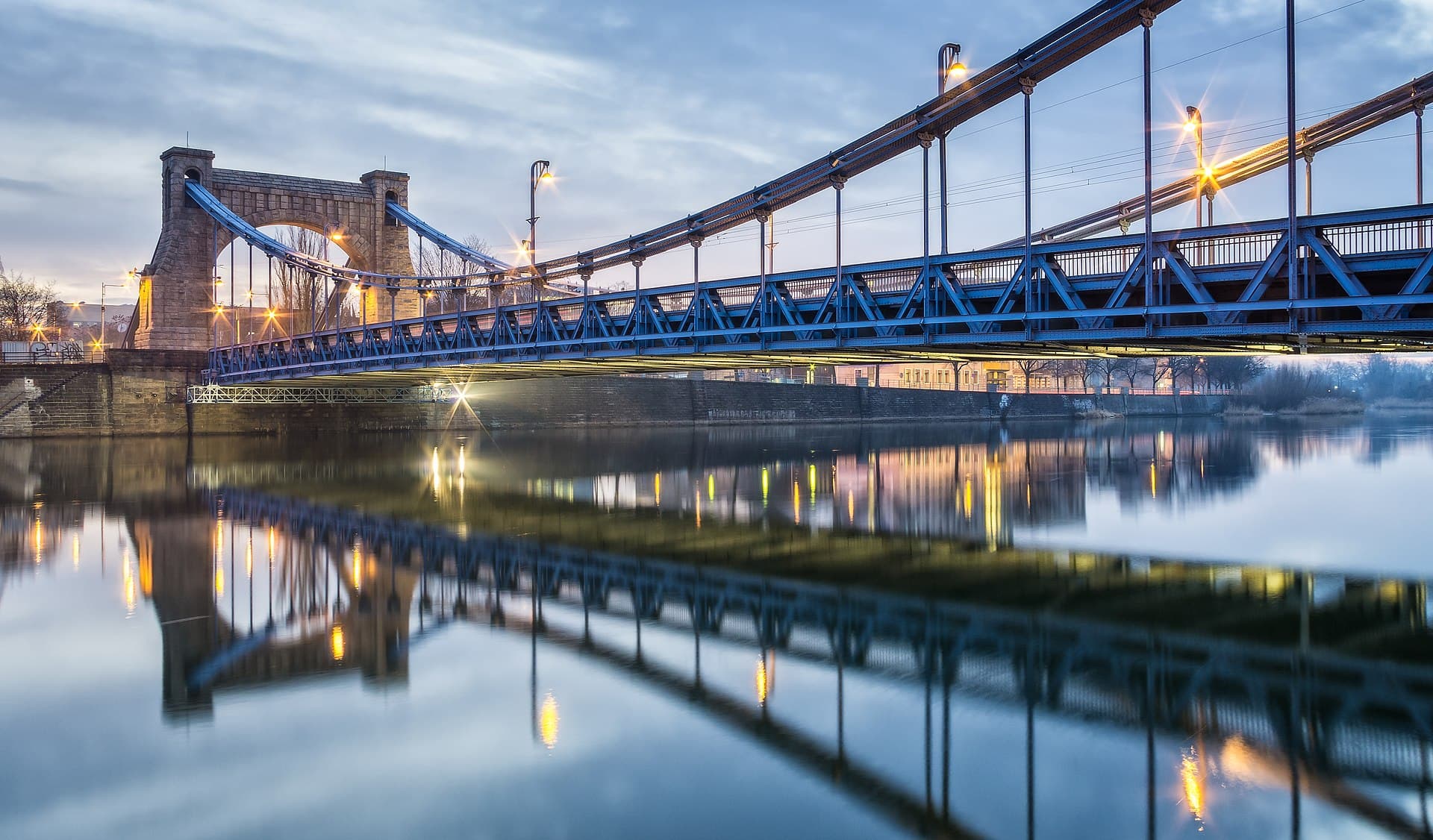 Jar.ciurus / CC BY-SA 3.0 pl, via Wikimedia Commons
“Wrocław: Where ancient stones speak and miniature figures dance through the thoroughfares.”
Not the postcards. The stories even locals don't know — whispered in your ear, right where they happened.
On Wrocław's most ancient island, a lamplighter still performs his duties each evening, casting a gentle illumination upon the old streets.
The lively Market Square, Poland's second largest, holds a surprising detail about its ground level.
Between the spires of St. Mary Magdalene Church, a slender walkway stretches high above the city, carrying a narrative of a cursed young woman.
Discover every secret of Wrocław
Every address, every reveal in full — in your ear, right where it happened.
You pick your stops. You walk. The voice reveals what the others miss.
No tours available yet. Check back soon — we're preparing them.
Wrocław, a city in southwestern Poland, presents a fascinating convergence of enduring history and contemporary life. Positioned on the Oder River, it is often referred to as the "Venice of the North" due to its numerous islands and over 120 bridges. As the historical capital of Silesia, Wrocław has witnessed centuries of shifting governance, from Polish and Bohemian to Austrian, Prussian, and German, before its return to Poland after World War II. This layered past has left a profound imprint on its architecture and culture, making it a distinctive destination.
The city serves as a center of cultural activity, having been a European Capital of Culture in 2016 and a UNESCO City of Literature in 2019. Its substantial student population, exceeding 130,000, contributes to a youthful and dynamic atmosphere. Beyond its historical landmarks, Wrocław is recognized for its charming bronze dwarf statues, which have become an unofficial emblem and a city-wide quest for visitors of all ages.
Wrocław offers a particular experience compared to other Polish cities like Warsaw or Kraków, being more relaxed and individualistic, with a strong emphasis on art, music, and innovation. Whether you are drawn to its historical treasures, its thriving cultural scene, or simply the allure of its colorful Market Square, Wrocław promises a memorable journey.
Wrocław's origins can be traced to the 10th century, emerging as a fortified settlement at the intersection of significant trade routes like the Via Regia and the Amber Road. The city was likely established by a local duke named Wrocisław, who may also be its namesake. Initially confined to Ostrów Tumski, or Cathedral Island, the settlement was first documented in 1000 AD as "Wrotizlava" by Thietmar of Merseburg. At the Gniezno Congress in 1000, a bishopric was founded in Wrocław, solidifying its role as a religious center.
Throughout its thousand-year existence, Wrocław has experienced a complex sequence of governance, passing between Polish, Bohemian, Austrian, Prussian, and German authorities. In the 13th century, it functioned as a political hub for the divided Polish kingdom. The city suffered extensive damage in 1241 during the first Mongol incursion into Poland, with inhabitants burning their own city for strategic reasons. German settlers arrived in increasing numbers following this invasion. In 1335, Wrocław came under Bohemian control, and later, in 1526, it became part of the Habsburg monarchy.
The 18th century saw Wrocław absorbed by the Kingdom of Prussia in 1742 following the War of the Austrian Succession, and it was renamed Breslau. It became part of the German Reich in 1871. World War II brought immense devastation to the city, with approximately 50% of it destroyed, some by Nazi fortifications and the remainder by Russian bombing. After the war, in 1945, Wrocław became part of Poland, and its German population was displaced, replaced by Poles relocated from eastern territories. This dramatic shift in population and borders reshaped Wrocław's identity, making it a powerful symbol of endurance and cultural exchange.
Wrocław's Market Square (Rynek) serves as a lively core, one of Europe's largest medieval squares, bordered by colorful buildings and the Old Town Hall, a testament to Gothic architecture. You can ascend the tower of St. Elizabeth's Church for expansive views of the Old Town.
Ostrów Tumski, or Cathedral Island, is the city's most ancient district and its spiritual center. Here, the grand Cathedral of St. John the Baptist dominates the horizon, and in the evenings, a lamplighter still ignites the gas lamps by hand.
Beyond these central points, Wrocław presents distinctive attractions. The Centennial Hall, a UNESCO World Heritage site, is a significant example of early 20th-century reinforced concrete architecture. The Panorama of Racławice, a vast 360-degree painting depicting the 1794 battle, offers an immersive historical encounter. Remember to embark on a quest for the hundreds of small bronze dwarf statues dispersed throughout the city, each possessing its own character and narrative.
The ideal period to experience Wrocław is from May through September, when the weather is mild and favorable for exploration on foot. June and September are particularly pleasant, offering comfortable temperatures for outdoor pursuits and fewer visitors than the peak summer months of July and August. While summer brings the warmest weather and many festivals, it also means elevated prices and more tourists. For those who appreciate a festive atmosphere, the Wrocław Christmas Market from late November through December is highly recommended, transforming the Market Square into a winter scene.
Wrocław is a city easily navigated on foot, particularly its historic core, making comfortable footwear essential. Public transportation, including trams and buses, efficiently links various neighborhoods and attractions beyond the Old Town. For those arriving by car, remember that the Market Square is a pedestrian area, and parking is available in paid lots surrounding the Old Town.
While Polish is the official language, English is frequently spoken in tourist areas, though a translation application can be beneficial. Shops may not be open on Sundays, so plan accordingly. Wrocław is considered a secure city, even in the evenings, with general awareness being sufficient for a pleasant visit. The local currency is the Polish Złoty (PLN).