El 'Puente dentro de un Puente'
Wuzhen posee un puente con un diseño tan único que ofrece una vista de sí mismo a través de su propio arco.
La historia completa se desbloquea en el tour
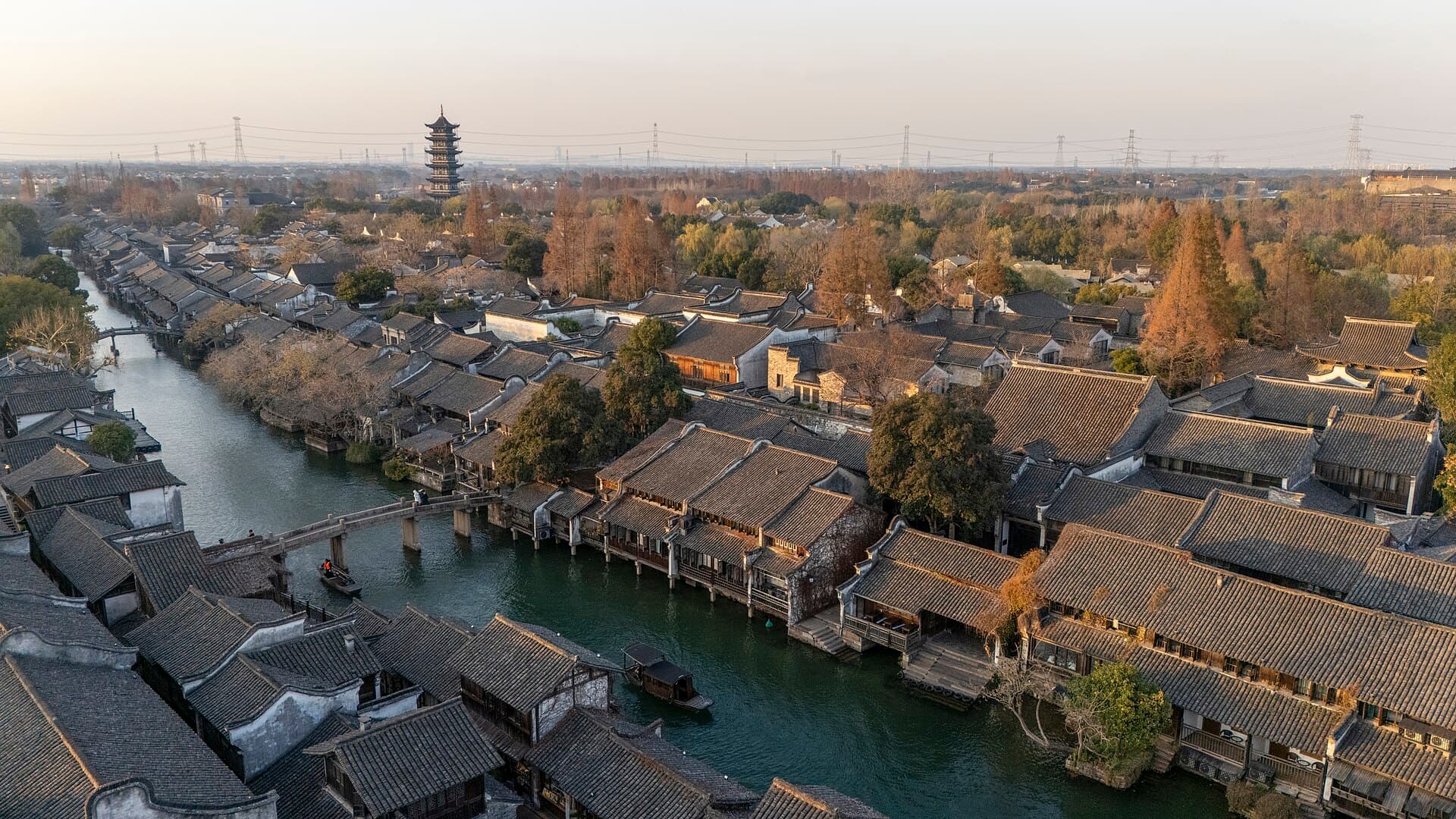 Chensiyuan / CC BY-SA 4.0, via Wikimedia Commons
Tour de audio autoguiado de Wuzhen — ruta GPS a pie, reproducción offline, narración en 32 idiomas.
“Donde antiguos canales tejen historias a través de puentes de piedra y tradiciones susurradas.”
No las postales. Las historias que ni los locales conocen — al oído, justo donde ocurrieron.
Wuzhen posee un puente con un diseño tan único que ofrece una vista de sí mismo a través de su propio arco.
Antes de que la niebla matutina se disipe por completo, un bullicioso mercado aparece sobre el agua misma.
El característico vino 'tres blancos' de Wuzhen es más que una bebida; su lugar de producción guarda un secreto cinematográfico.
Descubre todos los secretos de Wuzhen
Cada dirección, cada revelación al completo — a tu oído, justo donde ocurrió.
Eliges tus paradas. Caminas. La voz te revela lo que los demás ignoran.


Tu tour de audioguía por Wuzhen te espera — elige tus lugares, tu idioma y empieza al llegar.
ComprarLume incluye una guía de realidad aumentada. Levanta el móvil y su cámara muestra la calle que tienes delante, con una flecha luminosa sobre la imagen real que siempre apunta a tu próxima parada — sin mapas que descifrar, sin giros equivocados. Como todo en Lume, funciona completamente sin conexión.
Wuzhen, una antigua ciudad acuática en la provincia china de Zhejiang, ofrece un viaje en el tiempo. Con una historia documentada que abarca más de 1300 años, su arquitectura meticulosamente conservada, su intrincada red de canales y su estilo de vida tradicional cautivan a los visitantes. Este destino, a veces conocido como la 'Venecia de Oriente', está situado dentro de un triángulo formado por las ciudades prominentes de Shanghái, Hangzhou y Suzhou, lo que lo convierte en un destino accesible y gratificante. La ciudad se divide en cuatro secciones escénicas: Dongzha, Nanzha, Xizha y Beizha, siendo Dongzha y Xizha las más populares para los visitantes que buscan sumergirse en su patrimonio cultural.
La vida en Wuzhen ha girado durante mucho tiempo en torno a sus vías fluviales, con casas construidas a lo largo de los ríos y mercados cerca de los numerosos puentes. El atractivo perdurable de la ciudad reside en su capacidad para mezclar tradiciones antiguas con comodidades modernas, ofreciendo Wi-Fi gratuito y opciones de pago móvil junto con su paisaje histórico. Desde tranquilos paseos en góndola por los canales hasta la exploración de talleres tradicionales y la experiencia de actuaciones folclóricas locales, Wuzhen ofrece una visión única de una época pasada, todo ello manteniendo su identidad como una comunidad viva y vibrante.
La historia de Wuzhen se remonta a más de 7000 años, con evidencia de asentamientos neolíticos de la cultura Majiabang encontrados en el sitio de Tanjiawan. La ciudad misma fue establecida formalmente en el año 872 d.C. durante la dinastía Tang, y notablemente, su nombre, sistema de agua y estilo de vida tradicional han permanecido en gran parte inalterados durante más de un milenio. Su ubicación estratégica en la llanura aluvial de Hangzhou-Jiaxing-Huzhou, intersectada por el Gran Canal Beijing-Hangzhou, contribuyó significativamente a su prosperidad como centro comercial regional.
A lo largo de las dinastías Song, Ming y Qing, Wuzhen atrajo a artistas, escritores e intelectuales, consolidando su reputación como centro cultural. La arquitectura de la ciudad, caracterizada por paredes blancas, tejas negras, intrincadas tallas de madera y senderos de piedra, refleja la riqueza y la sensibilidad estética de estos períodos. Muchas de las casas ribereñas y puentes que aún se mantienen en pie hoy en día datan del siglo XIV, de la dinastía Ming. En 1991, Wuzhen fue reconocida como Ciudad Antigua Provincial de Historia y Cultura.
En la historia más reciente, las ciudades separadas de Wu y Qing se fusionaron en mayo de 1950 para convertirse oficialmente en Wuzhen. Desde 2014, Wuzhen ha ganado reconocimiento internacional como anfitrión permanente de la Conferencia Mundial de Internet, a menudo conocida como la Cumbre de Wuzhen. Este papel moderno ha visto a la ciudad adoptar iniciativas de 'viaje inteligente', ofreciendo comodidades digitales mientras mantiene su integridad histórica.
El encanto de Wuzhen reside en su arquitectura tradicional bien conservada y el sereno fluir de sus canales. La ciudad se explora principalmente a través de sus dos principales áreas escénicas: Dongzha (Área Este) y Xizha (Área Oeste).
En Dongzha, encontrará una atmósfera más tradicional con varios museos y centros de exposiciones. Visite el Museo de la Cama Antigua, el primer museo de China dedicado a camas antiguas, algunas que datan de la dinastía Ming. El Museo de Costumbres Populares ofrece información sobre las costumbres históricas de Wuzhen, incluidas bodas, cambios estacionales y partos. No se pierda las actuaciones folclóricas tradicionales como los espectáculos de marionetas de sombras, la Ópera Huagu y las demostraciones de artes marcial en barcas. También puede ver la Casa de Tintes Hong Yuan Tai, que exhibe métodos tradicionales de teñido de telas de índigo.
Xizha ofrece atractivas vistas de los canales y es particularmente cautivadora por la noche cuando los edificios a lo largo de las vías fluviales están iluminados. Tome un paseo en góndola por la noche para una perspectiva mágica. Explore el Museo de la Cultura del Vendaje de Pies Chino para conocer esta práctica histórica. Xizha también alberga el Museo de Arte Mu Xin, dedicado al poeta, calígrafo y pintor contemporáneo, nativo de Wuzhen. El Templo de la Torre del Loto Blanco, el edificio antiguo más alto de la zona, ofrece un lugar para la contemplación tranquila.
Las épocas más agradables para visitar Wuzhen son durante la primavera (marzo a mayo) y el otoño (septiembre a noviembre). La primavera trae temperaturas agradables, que oscilan entre 16.7 y 26.7 °C (62 a 80 °F), y la atmósfera brumosa realza la belleza escénica de la ciudad. El otoño ofrece un clima fresco, cielos despejados y temperaturas entre 5.6 y 12.2 °C (42 a 54 °F), lo que lo hace ideal para la exploración al aire libre. Si bien el verano puede ser caluroso y húmedo con multitudes más grandes, el invierno es generalmente más seco y menos concurrido, aunque las temperaturas pueden ser bastante frías, de 0.6 a 7.2 °C (33 a 45 °F).
Wuzhen es fácilmente accesible desde las principales ciudades como Shanghái, Hangzhou y Suzhou. Hay autobuses directos disponibles desde la Estación de Autobuses del Sur de Shanghái (aproximadamente 2 horas) y la Estación Central de Transporte de Pasajeros de Hangzhou (alrededor de 50 minutos). Los trenes de alta velocidad a la Estación de Tren de Tongxiang también son una opción, seguidos de un autobús local o taxi a Wuzhen. Considere comprar un billete combinado si planea visitar tanto Dongzha como Xizha, ya que ofrece una mejor relación calidad-precio. Un autobús lanzadera gratuito opera entre las dos áreas escénicas.
Los zapatos cómodos son esenciales para explorar los senderos de piedra. Si bien la mayoría de los lugares aceptan pagos móviles como Alipay y WeChat, es aconsejable tener algo de efectivo a mano. Hay consigna de equipaje disponible en la entrada principal. Para una experiencia completa, considere pasar al menos una noche en Wuzhen, especialmente para disfrutar del área iluminada de Xizha por la noche.
Wuzhen en coreano, en chino o en hebreo — y 29 idiomas más, cada parada narrada por una voz nativa. La mayor variedad de idiomas de cualquier audioguía autoguiada.
Disponible en: