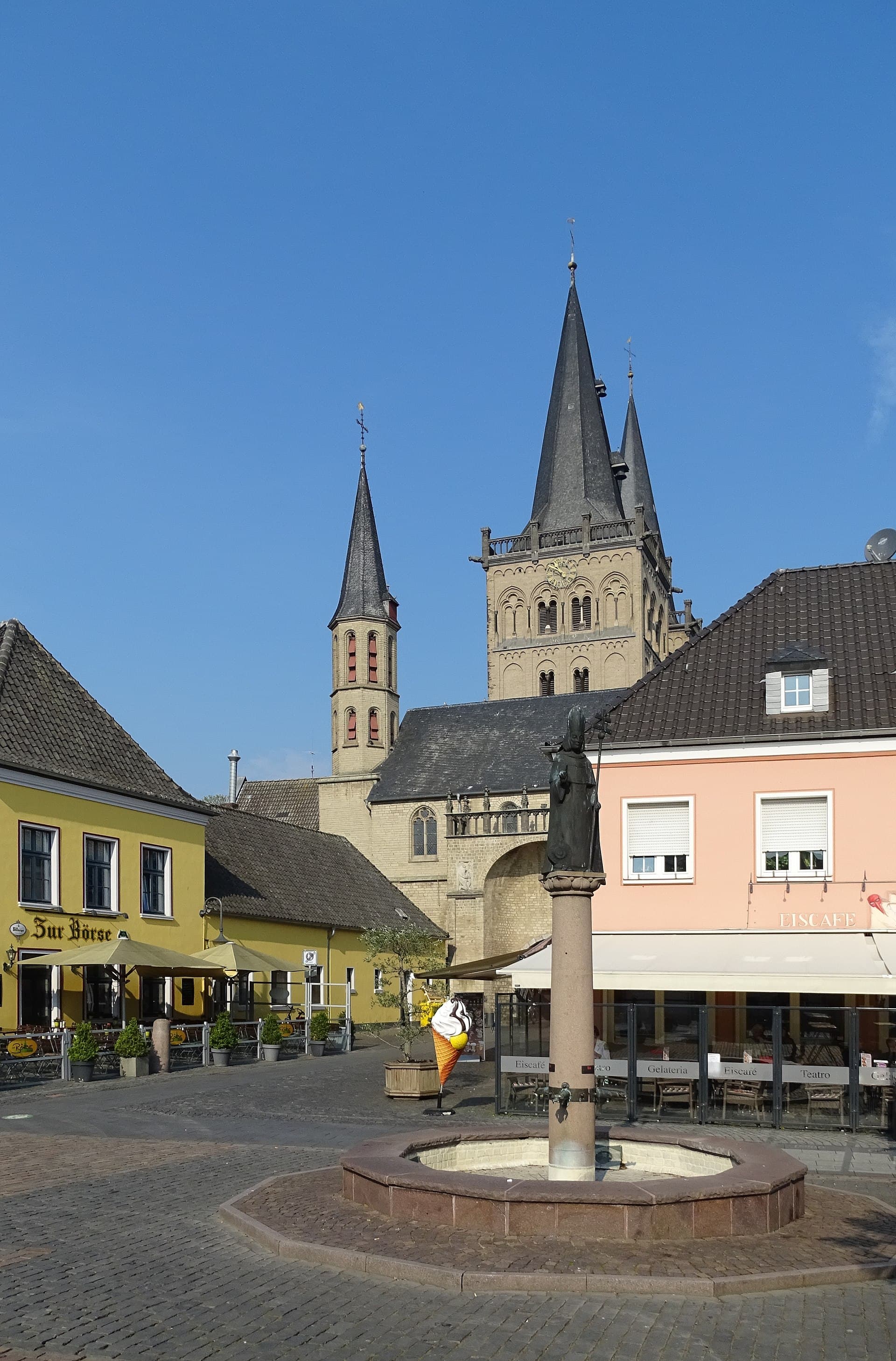
The grand Xanten Cathedral, a testament to Gothic architecture, conceals a secret beneath its venerable stones, linking it to the very genesis of the city's designation.
Ad Meskens You are free to use this picture for any purpose as long as you credit its author, Ad Meskens. Example: © Ad Meskens / Wikimedia Commons If you use this work outside of the Wikimedia projects, a message or a copy is very much appreciated. This image is not in the public domain. A statement such as "From Wikimedia Commons" or similar is not by itself sufficient. If you do not provide clear attribution to the author you do not comply with the terms of the file's license and you may not use this file. If you are unable or unwilling to provide attribution you should contact Ad Meskens to negotiate a different license. / CC BY-SA 4.0, via Wikimedia CommonsXanten
“Where Roman legions marched and medieval saints rest, Xanten bridges two millennia.”
Xanten, as no one tells it.
Not the postcards. The stories even locals don't know — whispered in your ear, right where they happened.
This expansive open-air museum meticulously rebuilds Roman life, yet the very existence of such a well-preserved site owes itself to a surprising historical oversight.
Xanten holds a singular distinction among all German cities, a linguistic peculiarity that uncovers a deeper historical thread.
Discover every secret of Xanten
Every address, every reveal in full — in your ear, right where it happened.
You pick your stops. You walk. The voice reveals what the others miss.
How long do you have in Xanten?
No tours available yet. Check back soon — we're preparing them.
The story of Xanten
Xanten, a tranquil city on the Lower Rhine in western Germany, offers a passage through two millennia of human endeavor. With a population of around 21,500, it presents a blend of small-town allure and profound cultural legacy. The city's surroundings, marked by green meadows and ancient woodlands, provide a peaceful backdrop for exploration.
Known as a 'Roman city' (Römerstadt), Xanten is primarily recognized for its Archaeological Park, one of the largest open-air archaeological museums in Europe. Here, visitors can walk among rebuilt Roman structures, including an amphitheater, temples, and baths, gaining a vivid sense of life in the Roman province of Germania nearly two thousand years ago. Beyond its Roman past, Xanten's medieval town center, with its Gothic cathedral and historic market square, invites unhurried walks and offers a glimpse into later periods of its compelling story.
Xanten's narrative commences around 2000 BC with early tribal encampments. Roman legions arrived around 15 BC, establishing a military camp called Vetera on the Fürstenberg hill, intended as a base for campaigns into Germania. This camp accommodated 8,000 to 10,000 legionaries and served as a significant station for the Roman fleet, the Classis Germanica. A civilian settlement, a cannabae legionis, grew around the fort, flourishing until its destruction during the Batavian Revolt in 70 AD.
After Vetera's destruction, a second camp, Castra Vetera II, was constructed, and a nearby settlement of 10,000 to 15,000 people was granted the rights of a colonia by Emperor Trajan in 110 AD, named Colonia Ulpia Traiana (CUT). This Roman city, one of the most important in present-day Germany, featured grand temples, an amphitheater, baths, and city walls. The economy prospered with crafts like pottery and metal production, and trade along the Rhine. The CUT was largely destroyed by Frankish incursions in 275 AD, rebuilt on a smaller, more fortified scale as Tricensimae, and eventually abandoned in the 5th century.
In the latter half of the 8th century, a church was erected on an old Roman cemetery, named Sanctos (super Rhenum) or Ad Sanctum, believed to be the burial site of Saint Victor and other martyrs. This gave rise to the modern name Xanten. Xanten gained prominence as a trading town by 1122 and was granted city rights by the Archbishop of Cologne in 1228. Construction of the majestic St. Victor's Cathedral began in 1263 and was completed in 1544. The city was fortified with walls by the late 13th century. The 19th century saw archaeological interest in the Roman ruins, which had previously been used as a quarry. In 1975, the Xanten Archaeological Park (APX) opened, partially rebuilding the Roman city, and has since expanded to become Germany's largest open-air archaeological museum.
Begin your exploration at the LVR Archaeological Park Xanten (APX), Germany's largest open-air archaeological museum. Wander through full-size reconstructions of Roman buildings, including an amphitheater, a harbor temple, and bathhouses, offering a tangible sense of ancient life. Inside the park, the LVR-RömerMuseum showcases a collection of artifacts unearthed during excavations, detailing daily life, crafts, and military affairs of the Romans.
From the Roman park, a short walk leads to Xanten's medieval Old Town. The focal point is the imposing Xanten Cathedral (St. Victor's Cathedral), a magnificent example of Gothic architecture built between 1263 and 1544. Its richly decorated interior and 15 altars reflect Xanten's medieval prosperity. Explore the charming Market Square, surrounded by historic buildings and cafes. Do not overlook the Klever Tor City Gate and the Kriemhildmühle Windmill, remnants of the medieval fortifications. For a deeper dive into local legend, the SiegfriedMuseum Xanten explores the connection to the mythical hero Siegfried of the Nibelungenlied.
Beyond history, the Xantener Südsee and Xantener Nordsee offer opportunities for water sports and relaxation. The Bislicher Insel Nature Reserve, a sanctuary for migratory birds, provides a natural escape with its unique floodplain landscape.
The ideal time to visit Xanten for pleasant weather and outdoor activities stretches from mid-June to early September. During these summer months, average daytime temperatures hover between 18-19°C, with highs reaching 23-24°C, making it suitable for walking and sightseeing. June typically experiences the fewest rainy days. Spring (April-May) and early autumn (September-October) also offer good conditions with mild, though changeable, weather. Winters are cool, with average temperatures around 4-5°C, and more frequent precipitation.
Xanten is easily explored on foot, particularly the medieval town center. The Xanten Archaeological Park is extensive, so plan for at least half a day, or preferably a full day, to thoroughly explore its rebuilt structures and museum. The park has multiple entry points. Xanten is situated on the left bank of the Rhine River, approximately 65km north of Düsseldorf. It can be reached by car via the A57 motorway or by hourly trains from Duisburg. The closest international airport is Weeze Airport, about 25 kilometers away, with Düsseldorf Airport being a larger option at 60 kilometers. For accommodation, options range from hotels in the town center to apartments and a German youth hostel near the lakes. Taxis can be found near Market Square, especially on weekends, or booked in advance.
- What is Xanten most known for?
- Xanten is most known for its Archaeological Park (APX), one of the largest open-air archaeological museums in the world, built on the site of the ancient Roman city of Colonia Ulpia Traiana.
- Is Xanten a good day trip destination?
- Yes, Xanten is an appealing day trip or short getaway, offering a unique combination of archaeological sites, historical architecture, and outdoor activities.
- What is the Xanten Archaeological Park?
- The Xanten Archaeological Park is Germany's largest open-air archaeological museum, featuring rebuilt Roman buildings like an amphitheater, temples, and baths, offering insights into Roman life.
- What is the significance of Xanten Cathedral?
- Xanten Cathedral, also known as St. Victor's Cathedral, is a significant example of Gothic architecture built between 1263 and 1544. It is considered the largest cathedral between Cologne and the North Sea.
- Are there activities in Xanten beyond historical sites?
- Yes, Xanten offers various recreational activities, including water sports on the Xantener Südsee and Nordsee lakes, and nature exploration at the Bislicher Insel Nature Reserve.
- How did Xanten get its unique name?
- Xanten's name originates from the Latin 'ad Sanctos' (at the saints), referring to the burial site of early Christian martyrs, Saint Victor and others, which eventually evolved into 'Xanten'.