Monasterio de Spassky (Kremlin de Yaroslavl)
Esta imponente fortaleza, a menudo confundida con un Kremlin, guarda un secreto que la vincula a una de las obras literarias más famosas de Rusia.
La historia completa se desbloquea en el tour
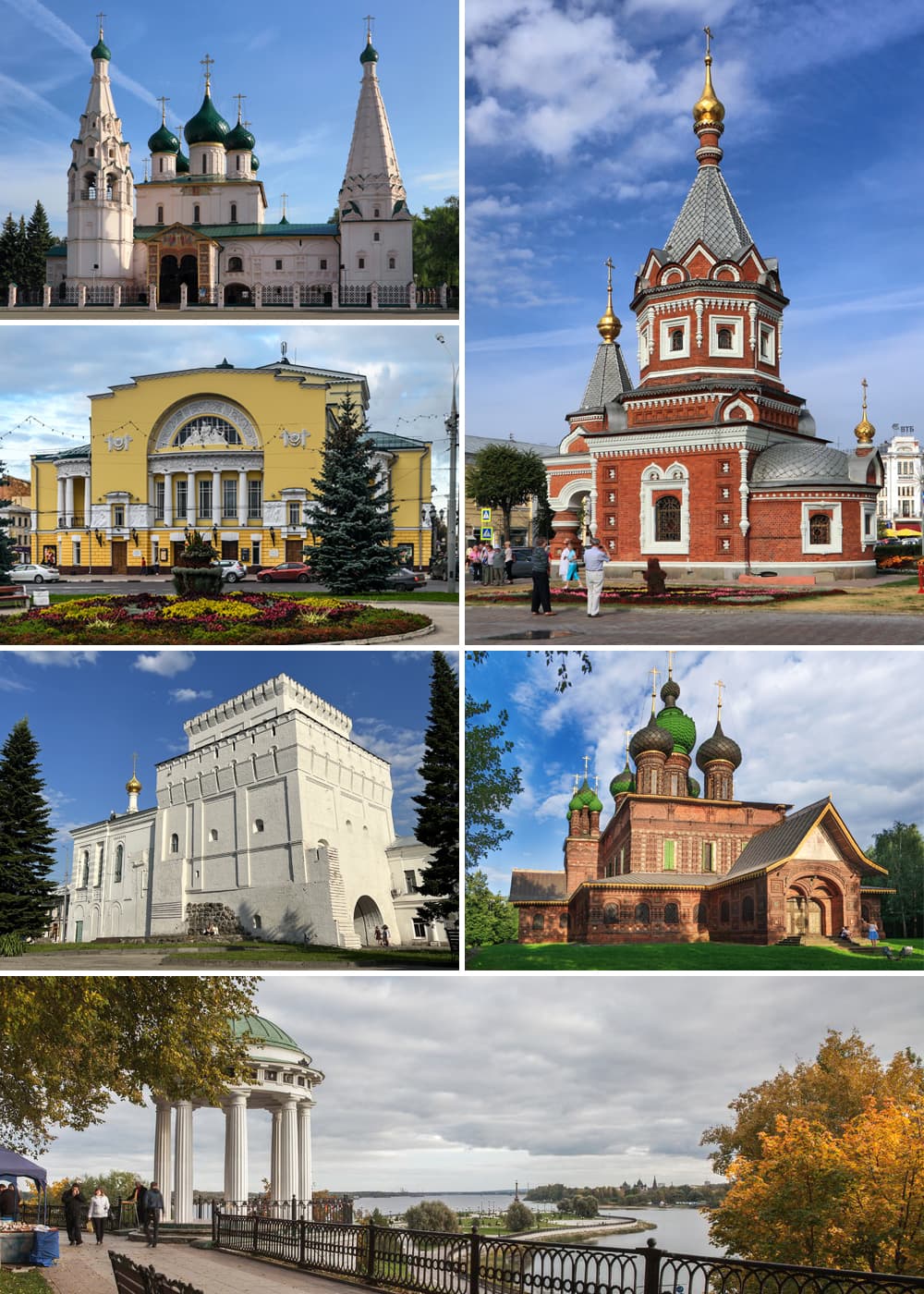 Allmyexesliveintexas22 / CC BY-SA 4.0, via Wikimedia Commons
Tour de audio autoguiado de Yaroslavl — ruta GPS a pie, reproducción offline, narración en 32 idiomas.
“Donde las leyendas antiguas se encuentran con cúpulas doradas en el abrazo del Volga.”
No las postales. Las historias que ni los locales conocen — al oído, justo donde ocurrieron.
Esta imponente fortaleza, a menudo confundida con un Kremlin, guarda un secreto que la vincula a una de las obras literarias más famosas de Rusia.
Las parejas suelen visitar una rotonda específica a lo largo del Volga para darse un beso, creyendo que posee un poder especial para su futuro.
Si observas de cerca en Yaroslavl, encontrarás un motivo animal específico por todas partes, a menudo sosteniendo un objeto inesperado.
Descubre todos los secretos de Yaroslavl
Cada dirección, cada revelación al completo — a tu oído, justo donde ocurrió.
Eliges tus paradas. Caminas. La voz te revela lo que los demás ignoran.


Tu tour de audioguía por Yaroslavl te espera — elige tus lugares, tu idioma y empieza al llegar.
ComprarLume incluye una guía de realidad aumentada. Levanta el móvil y su cámara muestra la calle que tienes delante, con una flecha luminosa sobre la imagen real que siempre apunta a tu próxima parada — sin mapas que descifrar, sin giros equivocados. Como todo en Lume, funciona completamente sin conexión.
Yaroslavl, una ciudad radiante dentro del Anillo de Oro de Rusia, se alza grácilmente en la confluencia de los ríos Volga y Kotorosl. Fundada en 1010 por el Príncipe Yaroslav el Sabio, es una de las ciudades más antiguas a lo largo del Volga y ostenta la distinción de ser Patrimonio de la Humanidad por la UNESCO.
Conocida por sus iglesias del siglo XVII notablemente conservadas y un plan urbano diseñado por Catalina la Grande, Yaroslavl ofrece una cautivadora mezcla de historia y belleza arquitectónica. Sus edificios pintados en tonos pastel y sus serenos paseos junto al río invitan a los visitantes a explorar una ciudad que una vez sirvió como capital temporal de Rusia durante el Período Tumultuoso.
Más allá de su importancia histórica, Yaroslavl es una ciudad de primicias culturales, hogar del primer teatro nacional público de Rusia y lugar de nacimiento de la primera mujer cosmonauta del mundo, Valentina Tereshkova. Su carácter único y su patrimonio perdurable la convierten en un destino fascinante para quienes buscan sumergirse en la historia y la cultura rusas.
Los orígenes de Yaroslavl se remontan a 1010, cuando el Príncipe Yaroslav el Sabio, entonces Príncipe de Rostov Veliky, se encontró con una tribu pagana en el punto de encuentro de los ríos Volga y Kotorosl. La leyenda cuenta que fundó una fortaleza aquí después de matar a una feroz osa, dando a la ciudad su nombre y su perdurable emblema del oso con un hacha. Esta ubicación estratégica convirtió a Yaroslavl en la primera ciudad cristiana del Volga y un puesto avanzado vital para la difusión del cristianismo en el noreste de Rusia.
En los siglos XII y XIII, Yaroslavl floreció como un importante centro de comercio y artesanía, con fuertes vínculos con otras tierras rusas e incluso con Escandinavia. Sin embargo, esta prosperidad fue puntuada por períodos de devastación, incluidas las invasiones mongolas en 1238 y ataques posteriores, así como brotes de la Peste.
El siglo XVII marcó la 'Edad de Oro' de Yaroslavl. Durante el Período Tumultuoso, la ciudad desempeñó un papel crucial, sirviendo como capital de facto de Rusia durante varios meses en 1612, cuando la Milicia Popular estuvo estacionada allí. Este período vio una expansión significativa de la población de la ciudad, convirtiéndola en la segunda ciudad más grande de Rusia después de Moscú, y un auge en la construcción de iglesias de piedra, muchas de las cuales definen su centro histórico hoy en día. El plan de desarrollo urbano de Catalina la Grande a finales del siglo XVIII dio forma aún más a Yaroslavl, fusionando monumentos antiguos con arquitectura neoclásica y amplios bulevares, lo que le valió el apodo de 'Florencia del Norte de Rusia'.
Si bien la era soviética trajo industrialización y crecimiento, también vio la destrucción de algunos edificios históricos, incluida la Catedral de la Asunción original. Durante la Segunda Guerra Mundial, Yaroslavl se convirtió en un centro crucial, evacuando a miles de niños de Leningrado y sirviendo como objetivo de ataques aéreos debido a su estratégico puente ferroviario sobre el Volga. Hoy en día, la ciudad continúa honrando su pasado mientras abraza su papel como un importante centro cultural e industrial.
Comience su exploración en el Monasterio de Spassky, a menudo conocido como el Kremlin de Yaroslavl debido a su aspecto fortificado. Este complejo del siglo XII alberga la Catedral de la Transfiguración, el edificio intacto más antiguo de la ciudad, y ofrece vistas panorámicas desde su campanario.
Un corto paseo conduce a la Iglesia de Elías el Profeta, una obra maestra del siglo XVII de la arquitectura de Yaroslavl. Sus cúpulas verdes y sus detallados frescos, que representan tanto narrativas religiosas como la vida cotidiana rusa del siglo XVII, son particularmente notables.
Pasee por el pintoresco Malecón del Volga, que se extiende por tres kilómetros, ofreciendo vistas panorámicas y un lugar popular para paseos tranquilos. No pase por alto el Monumento a Yaroslav el Sabio en la Plaza Bogoyavlenskaya, un punto de referencia prominente.
Para una inmersión más profunda en el arte y la historia, visite el Museo de Arte de Yaroslavl, ubicado en la Casa del Gobernador en el malecón del Volga, que exhibe una colección de arte ruso. Junto a él se encuentra el Jardín del Gobernador, un parque bellamente ajardinado. El Museo de la Historia de Yaroslavl ofrece información sobre el pasado de la ciudad y la vida cotidiana de sus ciudadanos.
Observe las numerosas estatuas de osos por toda la ciudad, un guiño a la leyenda fundacional de Yaroslavl.
La época más favorable para visitar Yaroslavl es durante los meses más cálidos, de mayo a agosto. Las temperaturas durante este período suelen oscilar entre 19°C y 25°C (65°F y 77°F), creando condiciones cómodas para explorar las atracciones al aire libre de la ciudad y disfrutar de paseos a lo largo del Volga. Aunque hay algunas lluvias durante estos meses, las agradables temperaturas y las horas de luz más largas lo hacen ideal para hacer turismo. Junio es particularmente soleado.
Yaroslavl es fácilmente accesible en tren desde Moscú, con viajes que suelen durar de 3 a 4 horas. La estación principal de tren, Yaroslavl-Glavny, está aproximadamente a 3 km del centro de la ciudad, con taxis disponibles. Dentro del centro histórico, muchas atracciones son accesibles a pie. El transporte público, incluidos autobuses, marshrutkas y trolebuses, opera en toda la ciudad.
Si bien el personal de hoteles y restaurantes orientados al turismo puede hablar inglés, es menos común entre la población general, por lo que tener una aplicación de traducción sin conexión puede ser útil. Se recomienda beber agua embotellada. Yaroslavl es generalmente una ciudad segura, pero se aconsejan precauciones estándar para las pertenencias personales en áreas concurridas.
Yaroslavl en coreano, en chino o en hebreo — y 29 idiomas más, cada parada narrada por una voz nativa. La mayor variedad de idiomas de cualquier audioguía autoguiada.
Disponible en: