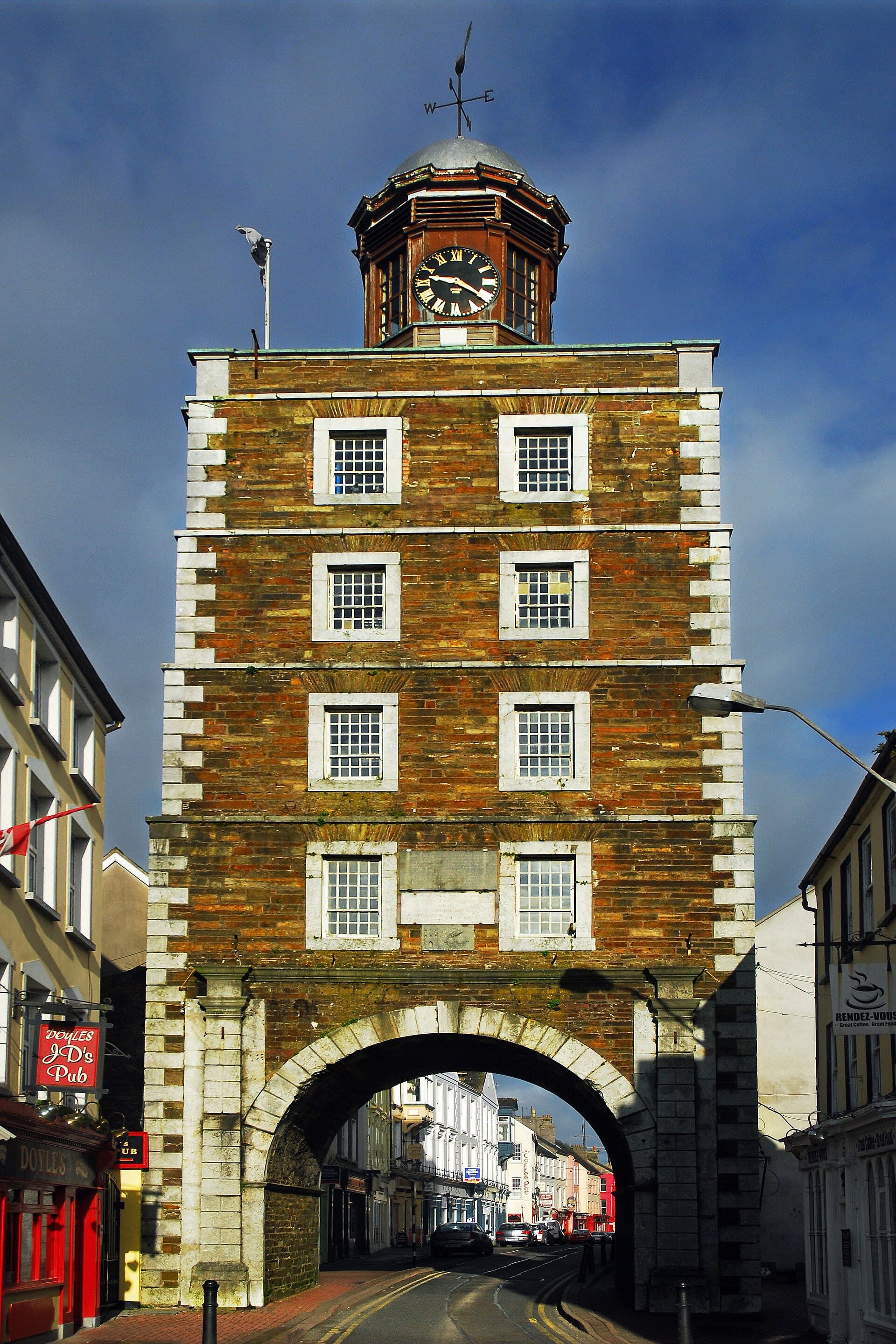
Torre del Reloj de Youghal
Esta formidable torre sirvió una vez para un sorprendente doble propósito, más allá de simplemente marcar las horas.
La historia completa se desbloquea en el tour
 Will McGoldrick / CC BY-SA 3.0, via Wikimedia Commons
Tour de audio autoguiado de Youghal — ruta GPS a pie, reproducción offline, narración en 32 idiomas.
“Donde las antiguas murallas saludan al mar, y el murmullo de la historia cabalga en cada marea.”
No las postales. Las historias que ni los locales conocen — al oído, justo donde ocurrieron.
Esta formidable torre sirvió una vez para un sorprendente doble propósito, más allá de simplemente marcar las horas.
La antigua morada de Sir Walter Raleigh guarda un secreto sobre dos introducciones del Nuevo Mundo a Irlanda.
Dentro de los venerables confines de esta iglesia yace un detalle distintivo que insinúa los orígenes vikingos de Youghal.
Descubre todos los secretos de Youghal
Cada dirección, cada revelación al completo — a tu oído, justo donde ocurrió.
Eliges tus paradas. Caminas. La voz te revela lo que los demás ignoran.


Tu tour de audioguía por Youghal te espera — elige tus lugares, tu idioma y empieza al llegar.
ComprarLume incluye una guía de realidad aumentada. Levanta el móvil y su cámara muestra la calle que tienes delante, con una flecha luminosa sobre la imagen real que siempre apunta a tu próxima parada — sin mapas que descifrar, sin giros equivocados. Como todo en Lume, funciona completamente sin conexión.
Youghal, una venerable ciudad costera en el Condado de Cork, Irlanda, presenta una cautivadora fusión de legado antiguo y encanto costero. Situada en la desembocadura del estuario del río Blackwater, su forma alargada y estrecha traza una empinada orilla del río. La designación de la ciudad, derivada del irlandés 'Eochaill', que significa 'bosque de tejos', alude a los densos bosques que una vez cubrieron esta área.
Con orígenes que se extienden a los asentamientos vikingos en el siglo XI y una carta otorgada en 1209, Youghal ha mantenido su importancia como centro militar y económico a lo largo de su existencia. Hoy en día, se erige como un destino preciado para los viajeros, atrayendo a los visitantes con su paisaje urbano medieval meticulosamente conservado, sus monumentos perdurables y sus extensas playas de arena.
La narrativa de Youghal comienza mucho antes de su incorporación formal. La evidencia apunta a una habitación neolítica cercana, y una iglesia del siglo V, la Iglesia de Coran, se encontraba en los suburbios occidentales de la ciudad. Los vikingos establecieron un asentamiento aquí en 853, sentando las bases para un puerto comercial. Se cree que una feroz tormenta poco después de su llegada esculpió el puerto de Youghal al alterar el curso del río Blackwater.
En el siglo XIII, los anglo-normandos fortificaron Youghal, y el rey Juan le concedió una carta en 1209. La ciudad floreció, evolucionando hacia un importante centro comercial con extensas conexiones europeas. Para 1223, la importancia comercial de Youghal era tal que justificaba una 'carretera'. En 1462, el rey Eduardo IV designó a Youghal como uno de los 'Cinque Ports' de Irlanda, otorgándole un estatus aduanero especial.
Finales del siglo XVI presenciaron un declive en el comercio tras las Rebeliones de Desmond, durante las cuales Youghal fue asediada en 1579. Sin embargo, la ciudad pronto recibió a nuevos colonos ingleses, incluido el célebre aventurero Sir Walter Raleigh, a quien se le concedieron 42.000 acres de tierra y sirvió como alcalde de Youghal de 1588 a 1589. Su morada, Myrtle Grove, sigue siendo un raro ejemplo de una casa isabelina con gabletes sin fortificar del siglo XVI en Irlanda.
Richard Boyle, primer conde de Cork, adquirió la propiedad irlandesa de Raleigh en 1602 y se le atribuye la rápida expansión de Youghal en el siglo XVII. Durante esta época, Youghal se convirtió en uno de los principales puertos de Irlanda, incluso superando en importancia al puerto de Cork durante un período, particularmente para la exportación de lana. La ciudad también experimentó actividad pirata, con figuras notorias como Nutt entrando en Youghal en varias ocasiones en 1631. Oliver Cromwell hizo de Youghal su base durante su campaña irlandesa en 1649, y se dice que pronunció un elogio fúnebre desde un cofre que aún se conserva en la Iglesia Colegiata de St. Mary.
Aunque el comercio disminuyó a mediados del siglo XIX debido a una barra de arena poco profunda en la desembocadura del puerto que impedía el paso de embarcaciones más grandes, la llegada del ferrocarril en la década de 1860 reanimó a Youghal como un balneario victoriano. La ciudad ha mantenido cuidadosamente su paisaje urbano de los siglos XVIII y XIX, contribuyendo a su carácter distintivo. En 1954, Youghal atrajo la atención internacional cuando Hollywood la seleccionó como lugar de rodaje para Moby Dick, protagonizada por Gregory Peck. Hoy en día, Youghal continúa abrazando su pasado perdurable mientras ofrece comodidades contemporáneas y una animada cultura local.
Comience su exploración en la Torre del Reloj de Youghal, un llamativo monumento del siglo XVIII que una vez sirvió tanto como reloj público como prisión. Las visitas guiadas ofrecen un viaje sensorial a través de su historia, culminando en amplias vistas de la bahía de Youghal.
A continuación, sumérjase en el Barrio de Raleigh, que abarca la magnífica Iglesia Colegiata de St. Mary. Data de 1220 y es una de las iglesias más antiguas de Irlanda en uso continuo, con un techo de roble del siglo XIII y la elaborada tumba de Richard Boyle. Cerca se encuentra Myrtle Grove, la antigua residencia de Sir Walter Raleigh, una rara casa isabelina sin fortificar (privada, pero visible desde el exterior).
Camine por secciones de las bien conservadas Murallas Medievales de la Ciudad, que ofrecen vislumbres del pasado defensivo de Youghal y vistas de la ciudad. Para una perspectiva diferente, tome un crucero por el río Blackwater para observar mansiones, monasterios y castillos desde el agua. Youghal también ofrece varias playas de Bandera Azul de arena ideales para nadar y pasear, incluyendo Front Strand, Claycastle y Redbarn. No se pierda el Paseo Marítimo Ecológico de Youghal, el más largo de Irlanda con 7 km, que ofrece pintorescos paseos costeros.
La época más favorable para visitar Youghal para actividades al aire libre y un clima agradable es durante los meses de verano, desde finales de junio hasta principios de septiembre. Julio es particularmente agradable, con temperaturas medias que oscilan entre 13°C y 18°C (55-65°F). Este período también coincide con muchos festivales y eventos locales, incluido el Festival Medieval de Youghal y el Festival Moby Dick.
Youghal es fácilmente accesible, situada aproximadamente a una hora en coche o autobús desde Cork City. El centro de la ciudad es apto para peatones, lo que facilita la exploración de sus sitios históricos a pie. Para aquellos que buscan una visión histórica más profunda, hay visitas guiadas a pie disponibles en el Centro de Patrimonio y Oficina de Turismo de Youghal, o puede utilizar un mapa de patrimonio autoguiado.
Las opciones de alojamiento van desde casas de huéspedes hasta hoteles, con opciones adecuadas para varios presupuestos. Los establecimientos de restauración incluyen pubs irlandeses tradicionales, restaurantes contemporáneos y cafeterías, muchos de los cuales ofrecen productos frescos y mariscos de origen local. Si bien el clima puede ser impredecible, es aconsejable llevar calzado cómodo para caminar, capas y un impermeable.
Youghal en coreano, en chino o en hebreo — y 29 idiomas más, cada parada narrada por una voz nativa. La mayor variedad de idiomas de cualquier audioguía autoguiada.
Disponible en: